How Many Square Feet Are in a Box of Hardwood Flooring?
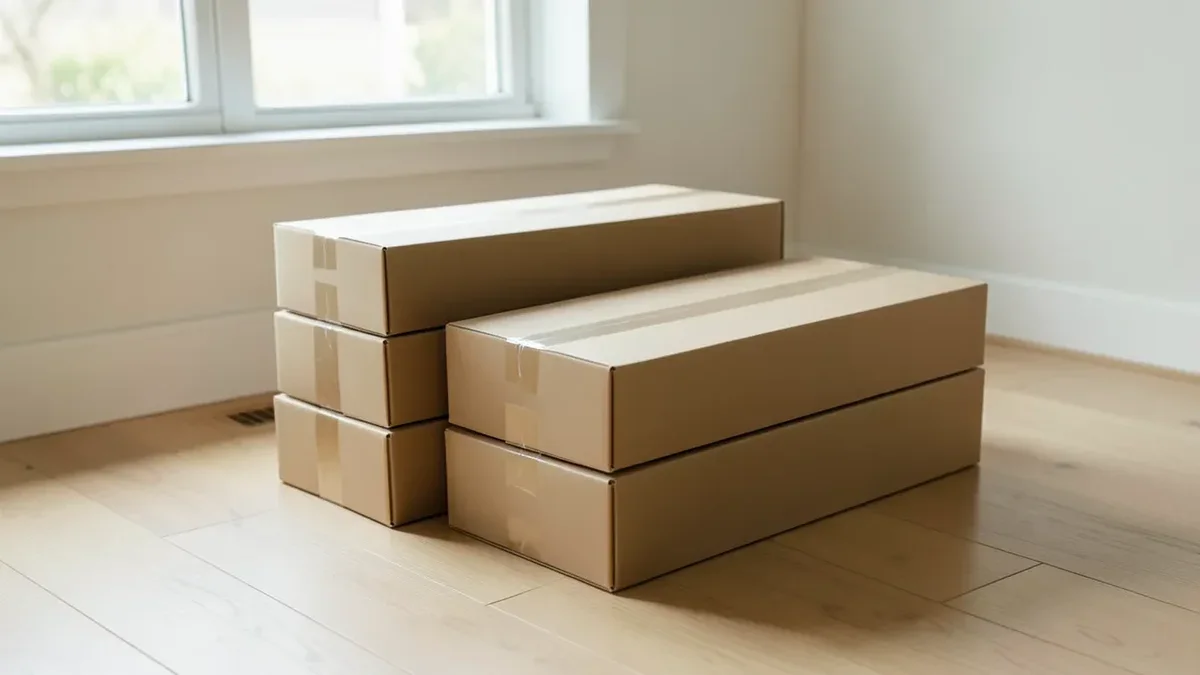
A standard box of hardwood flooring covers somewhere between 18 and 25 square feet, but that range is wider than most guides admit, and the number printed on your specific carton is the only one that actually matters. Plank width, thickness, and whether you’re buying solid or engineered flooring all change how much material fits in a box, sometimes by several square feet. Below is the real range with an actual retail example, how to calculate exactly how many boxes your room needs, and why you should always order more than the bare minimum.
The Real Range: 18 to 25 Square Feet Per Box
Most solid hardwood flooring boxes cover 18 to 25 square feet, and 20 to 22 square feet is a reasonable middle estimate if you cannot find the number for your specific product yet. Home Depot’s own listing for a common 3/4 inch thick, 2 1/4 inch wide solid red oak strip flooring, for example, lists 19.5 square feet per case, right in that range.
That said, “standard” is doing a lot of work in that sentence. Manufacturers set box coverage based on how many planks fit at a given width and length, not around a round number, so two boxes of hardwood from two different brands can legitimately cover different square footage even if they look similar on the shelf. The only number you should actually plan a purchase around is the one printed on the box or listed on the product’s spec sheet, not a number from an article, including this one.
Best For Measuring Your Room First
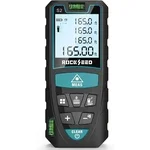 |
RockSeed Digital Laser Distance Measure ($20.38) Get your room’s exact square footage in seconds so you can match it against your box’s real coverage number instead of guessing.
|
Why Coverage Varies by Plank Width and Thickness
Plank width has the single biggest effect on box coverage. Narrower strip flooring, in the 2 to 2.25 inch range, typically covers less per box, often 18 to 20 square feet, because narrow planks need more linear feet of wood and more packaging per square foot of finished floor. Wider planks, from about 4 to 7 inches, usually cover more per box, commonly 20 to 25 square feet, since fewer, larger pieces fill the same carton more efficiently.
Thickness matters less than width but still shifts the number. Standard 3/4 inch solid hardwood is the most common thickness and the range most competitor pages quote, correctly, as 20 to 25 square feet. Thinner engineered flooring, often 3/8 to 1/2 inch, can pack more square footage into the same box weight, sometimes pushing coverage toward 25 to 30 square feet for certain wide-plank engineered products.
| Plank Width | Typical Coverage per Box |
|---|---|
| 2 to 2.25 in (strip) | 18 to 20 sq ft |
| 3 to 3.25 in | 20 to 22 sq ft |
| 4 to 5 in | 20 to 25 sq ft |
| 6 to 7+ in (wide plank) | 22 to 25+ sq ft |
Solid vs. Engineered Hardwood: Coverage Compared
Solid hardwood, milled from a single piece of wood top to bottom, is almost always sold at 3/4 inch thick and generally covers 20 to 25 square feet per box. Engineered hardwood, a real hardwood veneer bonded over layers of plywood or high-density fiberboard, is thinner and often comes in wider, longer planks, which is why engineered boxes can run higher, sometimes 25 to 30 square feet, especially in premium wide-plank lines.
Neither type is “more” hardwood flooring than the other in terms of quality; engineered simply uses less raw hardwood per square foot of coverage, which is part of why it can cost less and hold up better to humidity swings. But do not assume engineered always means more coverage per box; check the label, because some engineered products are boxed in smaller quantities for handling weight, not material efficiency.
How to Calculate Exactly How Many Boxes You Need
Once you know your box’s real coverage in square feet, the math is simple:
- Measure the length and width of the room in feet, then multiply them together for the total square footage. For an L-shaped or irregular room, break it into rectangles, calculate each separately, and add the totals together.
- Subtract space you will not be flooring, such as a fixed island or a masonry hearth, if it is genuinely permanent.
- Divide your total square footage by the coverage per box printed on your carton.
- Round up to the next full box, then add your waste buffer (below) before rounding up again.
Worked example: a 14 by 16 foot bedroom is 224 square feet. At 20 square feet per box, that is 11.2 boxes, which rounds up to 12 boxes before any waste allowance. Add a 10 percent waste buffer (22.4 square feet) and you are at 246.4 square feet, or 13 boxes total, not 12.
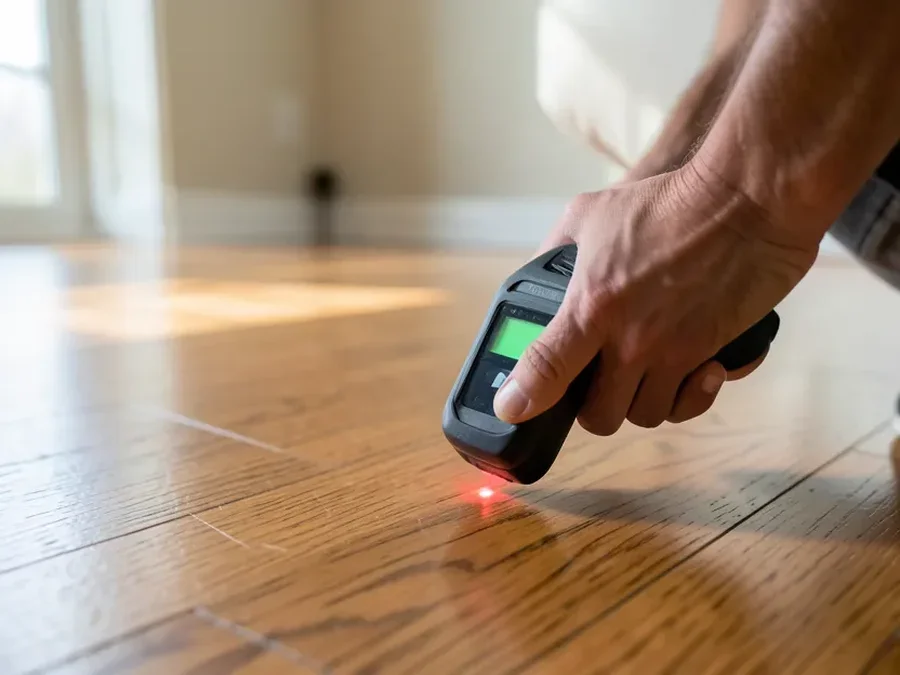
A laser distance measurer makes this step faster and more accurate than a tape measure alone, especially in rooms with awkward corners or furniture in the way, since you can measure length and width from one spot without unrolling a tape across the whole floor.
Always Order 5 to 10 Percent Extra
Ordering the exact square footage your calculation produces is one of the most common hardwood flooring mistakes. Professional installers routinely order 5 to 10 percent more material than the room’s bare square footage, and for good reason:
- Cutting waste: every plank cut to fit a wall, doorway, or closet leaves an offcut that usually cannot be reused elsewhere.
- Defects: even good boxes occasionally include a warped, cracked, or poorly milled plank you will want to skip.
- Diagonal or herringbone patterns: these layouts waste significantly more material than straight-laid flooring, closer to 15 to 20 percent, because of the angled cuts.
- Future repairs: keeping a box or two from the exact same dye lot on hand means you can replace a damaged plank years later without an exact color match, since hardwood dye lots vary between production runs and older stock is often unavailable when you need it.
If your calculated square footage already rounds up to a full box’s worth of buffer, like the 13-box example above, that is your final number. If it does not, round up anyway. It is far cheaper to have one leftover box in storage than to special-order a single box later and hope the color and finish batch still match.
Where to Find Your Box’s Real Coverage Number
Skip the guesswork whenever you can. Every hardwood flooring box discloses its actual coverage, and manufacturers print it in one of a few predictable spots:
- On the end panel of the box, usually next to the SKU or UPC barcode, listed as “sq ft” or “coverage.”
- On the product listing or spec sheet on the retailer’s website, if you are buying before the box is in hand.
- On a printed insert inside the box, on some imported or boutique brands.
If you already have a box open and cannot find the number anywhere, count the planks, measure one plank’s length and width in inches, multiply length by width, divide by 144 to get square feet per plank, then multiply by the plank count in the box. That is the same math the manufacturer used to print the number in the first place. Our own flooring and decking cost calculator can also run this math for you once you know your box’s coverage number, including the waste buffer.
Frequently Asked Questions
How many square feet are in a standard box of hardwood flooring?
Most boxes cover 18 to 25 square feet, with 20 to 22 square feet as a common middle figure for standard 3/4 inch solid strip flooring. The exact number depends on the manufacturer and is printed on the box itself, so treat any general estimate, including this one, as a starting point rather than a purchase number.
Does plank width really change how much a box covers?
Yes. Narrower strip flooring, around 2 to 2.25 inches wide, typically covers less per box, often 18 to 20 square feet, while wider planks of 4 inches or more commonly cover 20 to 25 square feet or slightly higher, since fewer, larger pieces fill the same box more efficiently.
How much extra hardwood flooring should I buy?
Order 5 to 10 percent more than your room’s exact square footage for straight-laid flooring, and closer to 15 to 20 percent extra for diagonal or herringbone patterns. That buffer covers cutting waste, occasional defective planks, and leaves material from the same dye lot on hand for future repairs.
Does engineered hardwood cover more per box than solid hardwood?
Often, yes. Engineered hardwood is thinner and frequently milled in wider, longer planks than standard 3/4 inch solid hardwood, so some engineered boxes cover 25 to 30 square feet compared to the 20 to 25 square feet typical of solid hardwood. This is not universal, so check the label on the specific product.
Can I buy hardwood flooring by the square foot instead of by the box?
Some retailers sell hardwood by the square foot, but full-box pricing is usually cheaper per square foot, and you will still need to round up to a whole box for pattern matching and future repairs. Buying loose square footage mainly makes sense for small patch repairs, not a full room.
Sponsored / affiliate links. As an Amazon Associate I earn from qualifying purchases. I may earn additional commission from eligible campaigns.