How Much Is MDF Board in Nigeria? What Actually Drives the Price (2026)
If you’ve searched around for MDF board prices in Nigeria, you’ve probably noticed the numbers don’t agree with each other. One listing says a sheet costs a few thousand naira, another quotes what looks like a monthly rent payment, and a wholesale import site quotes everything in dollars. That’s not a sign the market is broken — it’s a sign that “MDF price” in Nigeria isn’t one number at all. It depends on whether the board was made locally or imported, its thickness and grade, current exchange-rate movement, and which part of the country you’re buying in. This guide walks through what actually moves the price, why the swings are bigger here than in markets with more local production, and how to get a number you can actually budget against instead of a headline figure that’s already stale by the time you read it.
What Actually Determines MDF Board Prices in Nigeria
Five factors do almost all the work in setting the price you’re quoted, and they interact with each other rather than stacking neatly:
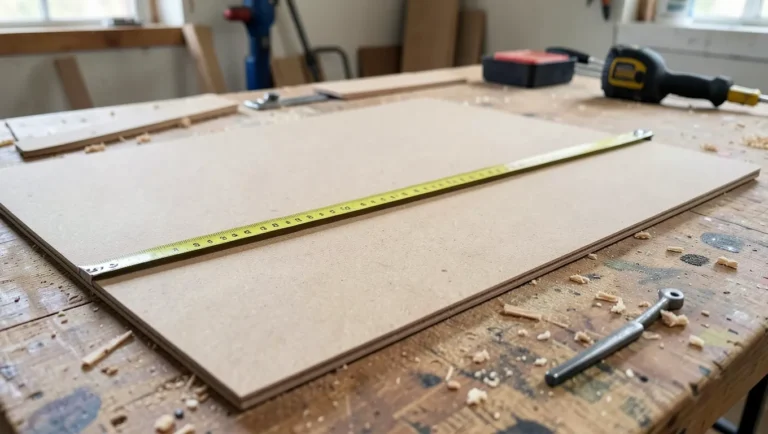
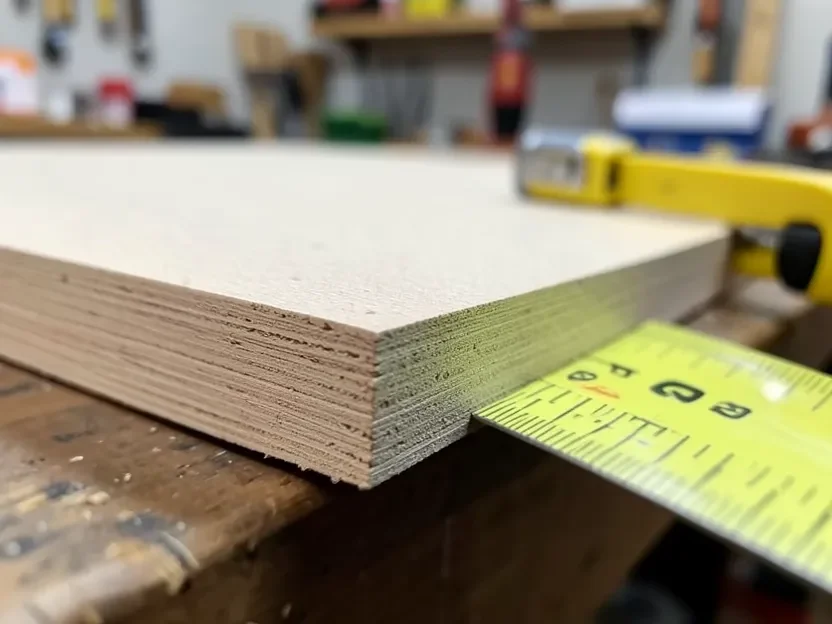
- Thickness. MDF is sold by nominal thickness — commonly 3mm up to 25mm or thicker for specialty panels. A thicker sheet uses more raw fiber and resin, so cost rises with thickness, but not in a straight line; very thick or very thin panels are often niche sizes that cost more per square foot than the mid-range 12-18mm sheets most cabinetry and furniture work uses.
- Grade and facing. Plain, unfaced MDF is the cheapest tier. Melamine-faced boards (a printed, laminated surface bonded to the core) cost more because of the extra manufacturing step and material. Moisture-resistant (MR) MDF, which uses a different resin formulation to slow water absorption, sits above standard interior-grade board. A high-gloss or specialty-finish panel is the most expensive tier.
- Local production versus imported stock. This is the single biggest source of Nigeria-specific price variation, covered in more detail below.
- Exchange-rate movement. Because a meaningful share of MDF sold in Nigeria is either fully imported or made with imported resin and equipment, the naira-to-dollar rate at the time of purchase (or at the time the supplier last restocked) feeds directly into the shelf price.
- Logistics and dealer markup. Transport distance from the port or factory, state-level differences in demand, and each middleman’s margin all add to the final number. A board that left the factory at one price can carry a noticeably different price tag by the time it reaches a smaller town far from Lagos or Port Harcourt.
Because of that last point, a fair comparison always has to be “price for the same thickness and grade, from a similarly-located supplier” — comparing a plain 6mm board from one seller to a moisture-resistant 18mm melamine-faced board from another and concluding one is “expensive” is comparing two different products, not two prices for the same thing.
Local Production vs Imported MDF: Why the Price Gap Is So Wide
This is the part most generic pricing pages skip, and it’s the actual reason Nigeria’s MDF prices swing harder than in markets like the US or UK. Domestic engineered-wood manufacturing capacity in Nigeria hasn’t kept pace with demand from the furniture and construction sectors, so a significant share of MDF sold — especially melamine-faced and specialty grades — comes in through import channels, largely from Asian and, to a lesser extent, European manufacturers. Plain utility-grade board is more likely to have a local production component.
That import dependence matters for two practical reasons. First, it means the price you’re quoted has effectively already priced in a dollar-denominated cost even if you’re paying in naira — the supplier bought their stock in dollars (or at a dollar-linked rate) and has to reprice as the exchange rate moves, sometimes faster than general inflation would suggest. Second, it means import duties, port clearance costs, and inland freight from the port to your city are baked into the shelf price in a way that a locally-manufactured board sold near its factory simply doesn’t carry. A Lagos buyer close to the port and a buyer several hours inland can see a real difference in landed cost for what is otherwise an identical sheet.
MDF Grades and Thickness: What Costs More, and Why
Rather than quoting a specific naira figure that will be outdated within weeks — exchange-rate and supply swings move faster than most published price guides get updated — it’s more useful to understand the relative cost order, which stays consistent even as the absolute numbers move:
- Plain, standard-grade MDF — the baseline, cheapest option, suitable for painted furniture, shelving, and interior work that won’t see moisture.
- Melamine-faced MDF — a step up in cost for a ready-to-use decorative surface, common for kitchen cabinet carcasses and wardrobe interiors.
- Moisture-resistant (MR) MDF — costs more than standard board due to its resin formulation; worth the premium for kitchens, bathrooms, and any humid environment.
- High-gloss, UV-coated, or fire-rated specialty MDF — the most expensive tier, aimed at commercial fit-outs and high-end cabinetry rather than general DIY use.
Within any of those tiers, going from a thinner panel to a thicker one raises the price, but the jump from say 12mm to 18mm is usually smaller in percentage terms than the jump from standard-grade to melamine-faced at the same thickness — the facing and resin grade tend to move the price more than an extra few millimeters of core thickness does.
How to Get an Accurate Price for Your Project
Since no published figure — including anything you’ll read on marketplace listing sites — stays accurate for long in a market this sensitive to import costs and exchange rates, the reliable approach is to get a same-day quote rather than budget off a number you found online:
- Specify thickness and grade exactly when you ask for a quote — “MDF board” alone isn’t enough information for a supplier to give you a real number.
- Ask whether the stock is locally produced or imported. Imported stock is more exposed to exchange-rate movement between the day you ask and the day you buy, so if your project timeline has flexibility, that’s worth knowing upfront.
- Get quotes from at least two or three suppliers, ideally including one closer to a port city if you’re inland, so you can see how much of the price difference is logistics versus the board itself.
- Ask for the landed, delivered price, not just the per-sheet cost — transport for full sheets isn’t trivial and some sellers quote the panel price separately from delivery.
- Buy in bulk where your project allows it. Suppliers routinely offer better per-sheet pricing on multi-sheet or pallet-quantity orders than on single-sheet purchases.
MDF vs Plywood vs Particle Board in Nigeria
MDF board isn’t the only board material available, and the right choice depends on what you’re building, not just which one is cheapest per sheet:
- MDF is smooth, dense, and has no grain or knots, which makes it the easiest of the three to paint to a flawless finish. It swells if it gets and stays wet, so it needs sealed edges and isn’t the first choice for exposed exterior use.
- Plywood generally costs more than standard MDF at a comparable thickness but handles moisture and structural loads better, thanks to its cross-laminated layers. It’s the stronger pick for load-bearing shelving, cabinet carcasses that will see real weight, or anywhere near water.
- Particle board is usually the cheapest of the three but also the least durable — it doesn’t hold screws as well as MDF or plywood and breaks down faster under repeated stress or moisture exposure, so it’s better suited to low-stress, budget-first furniture than anything meant to last for years.
For most furniture and cabinetry projects where a painted, smooth finish matters more than raw structural strength, MDF is often cheaper than solid wood and remains the practical middle ground between plywood’s durability and particle board‘s low cost. If you’re weighing MDF against another sheet option for wall coverage specifically, a 4×8 sheet comparison is worth a look too.
Frequently Asked Questions
Why don’t MDF prices in Nigeria match what I see online?
Because most published figures are either from a different market (international wholesale/export listings priced in dollars), from a specific seller’s one-time listing, or already out of date. Local MDF prices move with the naira exchange rate and import costs faster than most articles get updated, so a same-day quote from a local supplier is more reliable than any number published online, including this one.
Is imported MDF always more expensive than locally produced MDF?
Usually, yes, once import duty, port clearance, and inland freight are factored in — but not always in every grade. Some specialty finishes (high-gloss, fire-rated, certain melamine patterns) may not have a strong local equivalent at all, so “imported vs local” isn’t a straight price comparison for those tiers; it’s a question of whether a local option exists in the first place.
What size is a standard MDF sheet?
The most common full sheet size is 4 feet by 8 feet (roughly 1220mm by 2440mm), sold in thicknesses commonly ranging from around 3mm up to 25mm or more for specialty panels. Some suppliers also stock metric sheet sizes closer to 1220mm by 2440mm exactly, which is functionally the same size under a different labeling convention.
Is MDF cheaper than solid wood in Nigeria?
Generally yes — MDF is manufactured from wood fiber byproducts rather than solid timber, which typically keeps it cheaper than comparable solid wood like 2 by 2 lumber, especially for large flat panels like cabinet sides or shelving where solid wood would also need joining and more finishing work. The gap narrows for premium moisture-resistant or specialty-faced MDF grades compared to lower-grade solid wood options.
What factors affect MDF board prices in Nigeria the most?
Thickness and grade (plain, melamine-faced, moisture-resistant, or specialty), whether the board is locally produced or imported, the naira exchange rate at the time of sale, and logistics costs from the port or factory to your location all combine to set the final price — which is why the same “MDF board” can carry noticeably different price tags from one supplier or city to the next.
MDF board pricing in Nigeria isn’t a single number you can look up once and rely on — it’s a moving target shaped by thickness, grade, how much of the supply chain runs through imports, and where the naira sits against the dollar on any given week. The most useful thing you can do isn’t memorize a price range; it’s know which of those factors matter for your specific project (grade and moisture resistance especially), get quotes from a couple of suppliers with your exact specs, and treat any online price figure — including the ranges in this guide — as a starting point for a conversation with a local supplier, not a final number.
Sponsored / affiliate links. As an Amazon Associate I earn from qualifying purchases. I may earn additional commission from eligible campaigns.