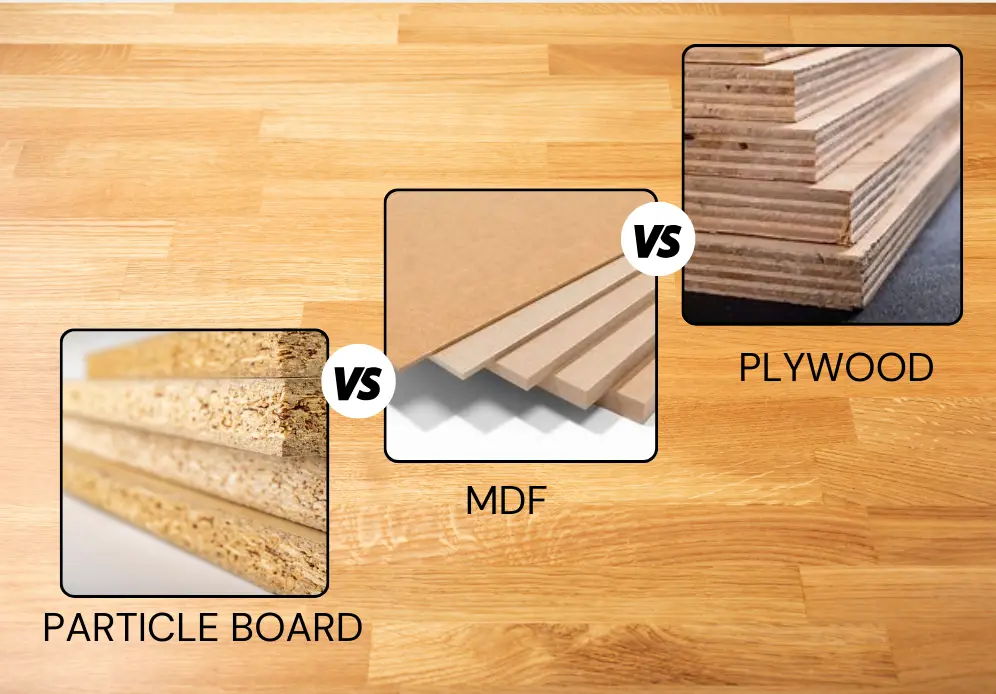
MDF vs Particle Board: Which Is Better
MDF is denser, smoother, and holds screws better than particle board, making it the better choice for painted furniture, cabinet doors, and anything routed or shaped. Particle board is lighter and cheaper, and it’s what most flat-pack furniture and cabinet boxes are actually built from. Neither one is “better” across the board – they’re suited to different jobs.
Here’s the real difference in how each is made, where each one actually holds up, and which one fits your specific project.
How Each One Is Actually Made
Best Blade For Chip-Free MDF and Particle Board Cuts
 |
Diablo 10″ 80-Tooth Fine Finish Blade – $60.02 A high tooth count keeps both MDF’s brittle edges and particle board’s chip-prone surface from tearing out on the cut line.
|
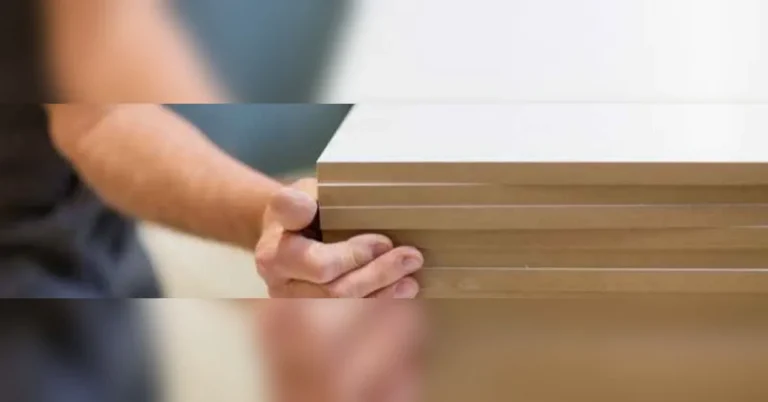
MDF (medium-density fiberboard) starts as wood broken all the way down into fine fibers, which are mixed with resin and pressed under heat into a dense, uniform panel. Because the raw material is fiber rather than chunks, MDF has no visible grain, no internal voids, and a completely consistent density from face to edge – which is exactly why it routs and paints so cleanly.
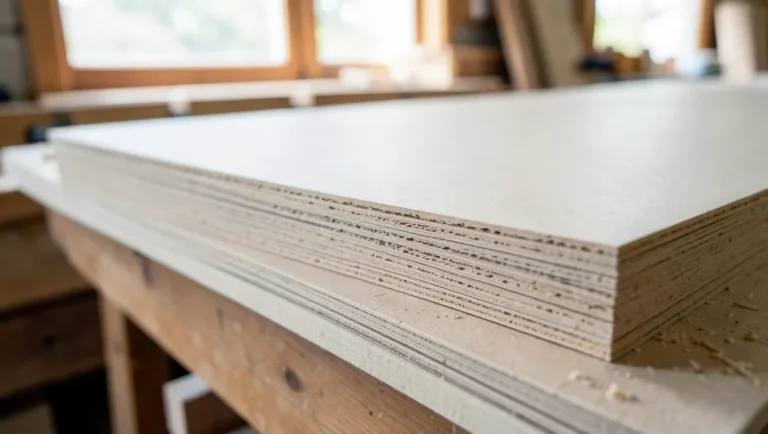
Particle board is made from coarser wood chips and shavings (often sawmill waste) bonded with resin and pressed into panels. The particles are visibly larger than MDF’s fibers, which is why particle board has a rougher, more visibly textured core and a lower overall density for the same thickness.
Strength and Screw-Holding: Where the Real Difference Shows Up
MDF’s biggest practical advantage isn’t looks – it’s screw-holding. Particle board is notorious for stripping out around screws, especially on edges and especially on repeated assembly/disassembly (think flat-pack furniture that’s been moved a few times). MDF’s denser, more uniform structure holds a screw thread far more securely, though neither material holds screws as well as plywood or solid wood, and pre-drilling pilot holes helps a lot with both.
For anything that will be assembled and disassembled more than once, or that needs to support real weight on a cantilevered edge (a wall-mounted shelf bracket, for example), that screw-holding difference matters more than raw panel strength.
Moisture: Neither One Is Actually Moisture-Resistant
This is worth correcting directly: standard MDF is not a moisture-resistant material, despite sometimes being described that way. Both MDF and particle board will swell, delaminate, or fall apart if they get and stay wet – neither is a substitute for plywood in a genuinely damp location. What does exist is moisture-resistant MDF (often tinted green), a specific product formulated with different resins for bathroom vanities, kickboards, and similar applications. If moisture exposure is a real concern, look specifically for MR-rated board rather than assuming standard MDF will handle it.
Where Each One Actually Gets Used
MDF Is the Better Choice For
Painted cabinet doors and drawer fronts (paint goes on smoothly with no visible grain telegraphing through)
Molding, baseboards, and trim that needs to be shaped or routed
Speaker boxes and other projects where a dense, resonance-controlled panel matters
Any project where a crisp, clean edge profile is part of the design
Particle Board Is the Better Choice For
Flat-pack and budget furniture where cost matters more than longevity
Cabinet boxes and shelving that will be covered with laminate or edge banding rather than left exposed
Subflooring underlayment
Any project where the panel is hidden and won’t be shaped, routed, or repeatedly disassembled
Cost: The Gap Is Real But Shrinks Over Time
Particle board is reliably cheaper per sheet than MDF. But factor in the whole lifecycle: particle board furniture that strips its screws or delaminates at an edge often gets replaced rather than repaired, while MDF furniture tends to survive normal wear (and the occasional reassembly) without failing outright. For furniture you’ll actually keep, the MDF premium is often worth it; for something you expect to replace anyway, particle board’s lower price is the more rational choice.
Working With Each Material
Both materials release fine dust when cut that contains formaldehyde-based resin particles – wear a proper dust mask and cut outdoors or with dust collection when possible, for either material, not just one. MDF’s fine dust is often considered the more irritating of the two because of how fine the particles are.
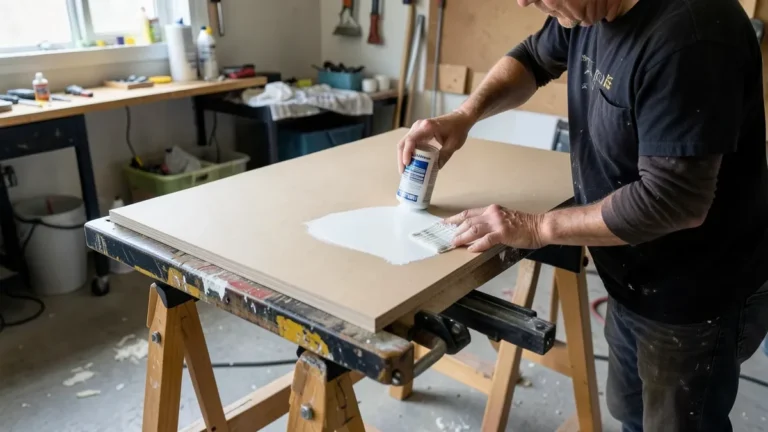
For finishing, MDF’s smooth, uniform surface takes paint and primer far better than particle board’s rougher texture – if you’re painting the finished piece, that alone is often reason enough to choose MDF. Particle board is more commonly finished with laminate, veneer, or edge banding applied at the factory rather than painted directly.
Frequently Asked Questions
Is MDF as strong as particle board?
MDF is generally denser and holds screws better than particle board, and its uniform structure makes it more resistant to chipping at cut edges. Particle board is lighter and less expensive but more prone to crumbling or stripping out around fasteners, especially after repeated assembly.
What are the disadvantages of using MDF?
MDF swells and doesn’t recover well if it gets wet, it’s heavier than particle board for the same size, and cutting it produces fine dust that should be controlled with a mask and dust collection. It also doesn’t hold screws as well as plywood or solid wood, though it outperforms particle board on that front.
Which is more expensive, MDF or particle board?
MDF costs more per sheet than particle board because of its denser fiber construction and more involved manufacturing process. Particle board is the budget option, though MDF’s better durability can offset the price difference over the life of a piece of furniture.
What are the disadvantages of particle board?
Particle board is more prone to sagging under sustained weight, chips more easily at cut edges, and strips out around screws faster than MDF, especially with repeated assembly and disassembly. It also swells if exposed to moisture and isn’t suitable for outdoor use.
Bottom Line
Choose MDF when you’re painting, routing, or building something meant to last through more than one move. Choose particle board when cost matters more than longevity and the panel will be covered with laminate rather than shaped or exposed. Neither one belongs anywhere genuinely wet unless it’s specifically rated moisture-resistant.
Sponsored / affiliate links. As an Amazon Associate I earn from qualifying purchases. I may earn additional commission from eligible campaigns.