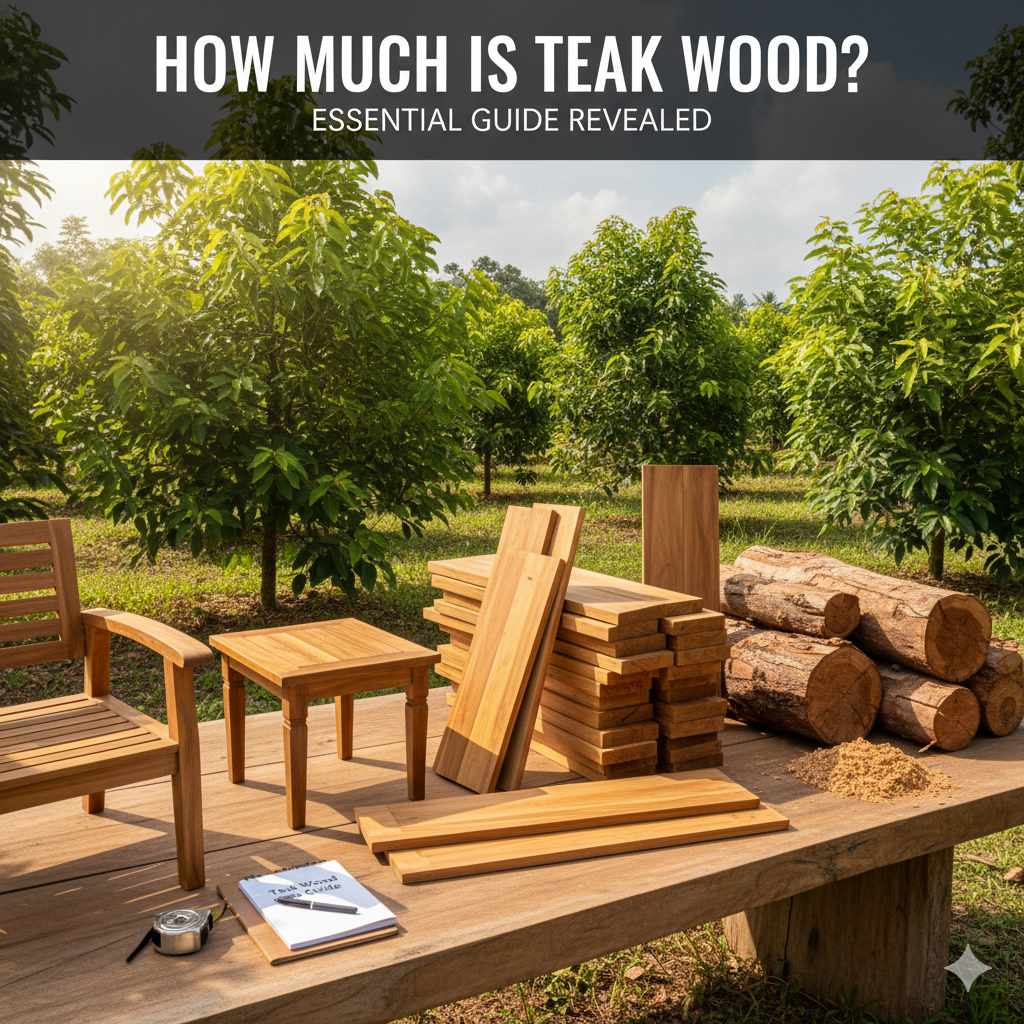
How Much Is Teak Wood: Essential Guide Revealed
Teak wood prices typically range from $20 to $100+ per board foot, with factors like grade, origin, and thickness significantly impacting cost. High-quality, sustainably sourced teak can be an investment for durable, beautiful projects.
Hey there, fellow woodworkers and DIY fans! Md Meraj here. Ever looked at a beautiful teak furniture piece or a sturdy deck and wondered, “Wow, how much did that cost?” Teak wood is famous for its stunning golden-brown color, incredible durability, and natural resistance to water and pests. It’s a dream wood for many projects, but that dream can sometimes feel out of reach when you start looking at prices. It’s easy to get a bit overwhelmed by the numbers you see online or at the lumberyard.
But don’t worry! Today, we’re going to break down exactly what goes into the cost of teak wood, making it super clear and helping you budget for your next amazing project. We’ll cover everything from what makes one piece of teak different from another to how you can find the best value. Let’s get started and unlock the secrets behind teak wood pricing together!
Understanding Teak Wood’s Value
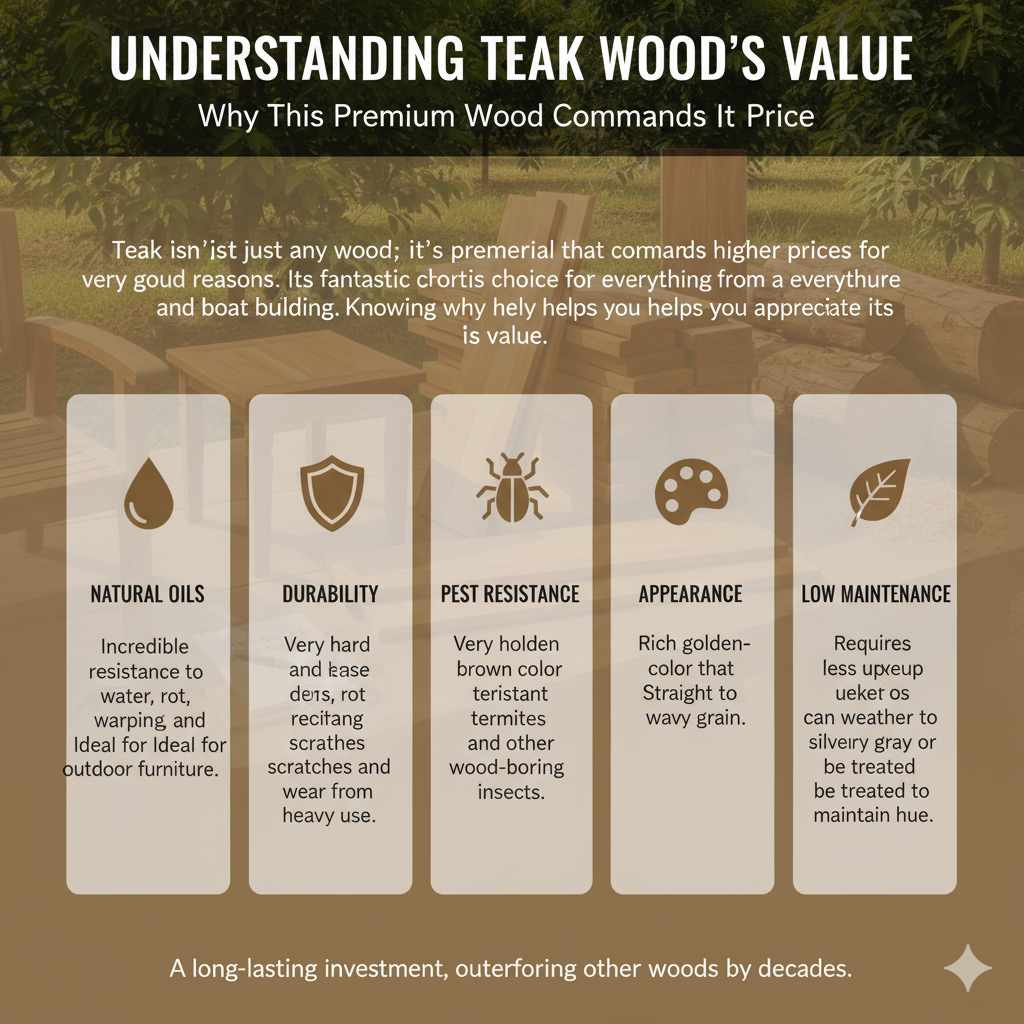
Teak isn’t just any wood; it’s a premium material that commands higher prices for very good reasons. Its unique properties make it a fantastic choice for everything from fine furniture and boat building to outdoor decking and garden benches. Knowing why it’s priced the way it is will help you appreciate its value and make informed decisions.
What Makes Teak So Special?
Teak (Tectona grandis) is native to South and Southeast Asia, particularly India, Indonesia, Malaysia, and Myanmar. What sets it apart are its natural oils.
- Natural Oils: These oils make teak incredibly resistant to water, preventing it from rotting, warping, or cracking when exposed to moisture. This is why it’s a top choice for boat decks and outdoor furniture that stays outside year-round.
- Durability: Teak is a very hard and dense wood, making it resistant to scratches and wear. It can withstand heavy use, which is essential for furniture and high-traffic areas.
- Pest Resistance: Those natural oils also act as a repellent against insects like termites and other wood-boring pests.
- Appearance: Teak has a beautiful, rich golden-brown color that darkens with age. Its grain is typically straight but can sometimes be wavy, adding to its unique appeal.
- Low Maintenance: Because of its natural properties, teak requires less maintenance than many other woods, especially for outdoor applications. It can be left to weather to a silvery gray or treated to maintain its golden hue.
These qualities combined mean that teak is a long-lasting investment, often outperforming other woods by decades, especially in challenging environments.
Factors Influencing Teak Wood Prices
When you see quotes for teak wood, you’ll notice a wide range. This isn’t random; several key factors determine the final price tag. Understanding these will help you decipher the cost and why some teak is more expensive than others.
1. Grade of Teak
Like many high-quality materials, teak is graded based on its quality, appearance, and the presence of defects. The highest grades command the highest prices. Here’s a general idea:
- Grade A (or First Grade): This is the best of the best. It typically comes from mature trees (40+ years old) and is known for its uniform golden-brown color, straight grain, and minimal knots or defects. It contains the highest concentration of natural oils.
- Grade B (or Second Grade): This teak might have a slightly less uniform color, a bit more variation in grain, or a few more small knots. It’s still excellent quality but not quite as perfect as Grade A.
- Grade C (or Third Grade): This grade can include wood with more significant color variations, knots, or imperfections. It’s suitable for applications where appearance is less critical or where the wood will be painted or heavily finished.
- Reclaimed Teak: Teak salvaged from old buildings, ships, or furniture can be very high quality, often from older, mature trees. Its price can vary widely depending on the source and condition, but it’s often considered a premium, eco-friendly option.
The visual appeal and structural integrity of the higher grades make them ideal for furniture and visible applications, driving up their cost.
2. Origin and Sustainability
Where the teak comes from and how it’s harvested plays a significant role in its price. Teak is now more commonly plantation-grown to meet demand and protect natural forests.
- Natural Forests (e.g., Myanmar): Historically, the finest teak came from the natural forests of Myanmar. Harvesting from these areas is now heavily regulated and often more expensive due to these controls and the prestige of old-growth timber.
- Plantation Teak: Teak grown in plantations, often in countries like Indonesia, Africa, or Central/South America, is more readily available. While still valuable, plantation teak may be harvested younger and might have slightly different properties than old-growth teak.
- Certified Sustainable Sources: Look for teak certified by organizations like the Rainforest Alliance or the Forest Stewardship Council (FSC). Certification ensures responsible forestry practices, which can add to the cost but guarantees ethical sourcing.
Sustainable sourcing is becoming increasingly important, and consumers are often willing to pay a premium for wood that is harvested responsibly.
3. Age of the Tree (For Harvested Teak)
Natural teak forests are a finite resource. Old-growth teak trees take many decades, often 50 to 100 years or more, to mature fully. This long growth period means that older, larger trees yield denser, more stable wood with richer oils and a more desirable grain pattern. Because these trees are harder to come by and take so long to grow, teak from mature, old-growth trees is significantly more expensive.
4. Lumber Dimensions and Form
The way teak is sold also affects the price. You’ll typically find it sold by the board foot, but the dimensions matter.
- Board Foot: A standard unit of volume for lumber. One board foot is equivalent to a piece of lumber that is 1 inch thick, 12 inches wide, and 1 foot long (144 cubic inches). The price is usually quoted per board foot (e.g., $/bf).
- Thickness: Thicker boards generally cost more per board foot because more raw material is needed, and they represent a larger, more usable piece of wood.
- Width: Wider boards are often more expensive than narrower boards of the same thickness and length, as they come from larger diameter logs and are less common.
- Length: Longer, straighter boards can also be more costly.
- Rough Sawn vs. Surfaced: Rough sawn lumber is less expensive because it hasn’t been planed or milled to exact dimensions. Surfaced lumber (planed on one or more sides) or S4S (surfaced four sides) will be more costly due to the extra milling process.
5. Market Demand and Availability
Like any commodity, the price of teak can fluctuate based on global supply and demand. If there’s a high demand for teak furniture or it’s a popular material for a particular construction trend, prices can increase. Conversely, if supply is abundant, prices might stabilize or even decrease slightly.
How Much Does Teak Wood Cost? A Price Breakdown
Now, let’s get to the numbers. Teak wood prices can vary wildly, but here’s a realistic look at what you might expect to pay. These are approximate figures and can change based on the factors mentioned above, as well as your specific location and the supplier.
Typical Price Ranges (Per Board Foot)
Prices are often quoted per board foot (bf). Remember, 1 bf = 1 inch x 12 inches x 1 foot.
| Type of Teak | Approximate Price Range (Per Board Foot) | Notes |
|---|---|---|
| Lower Grade (e.g., Grade C, lower quality plantation teak) | $20 – $40 | May have more knots, color variations. Suitable for less visible parts or smaller projects where appearance isn’t prime. |
| Mid-Grade (e.g., Grade B, common plantation teak) | $40 – $70 | Good balance of quality and cost. Suitable for furniture, general woodworking. |
| High Grade (e.g., Grade A, mature plantation teak) | $70 – $100+ | Excellent color, grain, and minimal defects. Ideal for fine furniture, cabinetry, and high-end outdoor pieces. |
| Premium/Old-Growth/Reclaimed Teak | $80 – $150+ | Often the highest quality, from rare sources or meticulously reclaimed. For the most demanding projects. |
It’s important to note that these are for lumber. Finished products like teak furniture will cost significantly more due to labor, design, and manufacturing.
Example Project Cost Estimation
Let’s say you want to build a small side table, roughly 2 feet by 2 feet, using 1-inch thick lumber.
- The surface area is 2 ft x 2 ft = 4 sq ft.
- To convert square feet to board feet for 1-inch thick lumber, multiply by 1 (since 1 inch thick means 1 board foot per square foot). So, you need approximately 4 bf for the table top.
- Let’s assume you also need about 2 bf for legs and supports.
- Total lumber needed: 4 bf + 2 bf = 6 bf.
- Using mid-grade teak at $55 per bf: 6 bf x $55/bf = $330.
- Using high-grade teak at $85 per bf: 6 bf x $85/bf = $510.
This is just for the raw lumber. Add in hardware, finishes, and your time, and the cost adds up! For larger projects like a full dining table or a deck, the cost of teak can easily run into thousands of dollars.
Where to Buy Teak Wood
Finding a reliable source for quality teak is key to getting good value. Here are a few places to look:
- Specialty Lumber Yards: These are your best bet for high-quality, dimensional teak lumber. They often have different grades and can provide expert advice.
- Online Hardwood Retailers: Many online stores sell teak lumber. Be sure to check shipping costs, which can be substantial for heavy wood. Look for reputable sellers with clear product descriptions and customer reviews.
- Boat Building Suppliers: If you’re working on a marine project, suppliers specializing in boat building materials will likely have high-grade teak.
- Reclaimed Wood Dealers: For eco-friendly and character-rich teak, search for dealers specializing in reclaimed lumber.
Always try to see the wood in person if possible, or ensure the seller has a good return policy and detailed photos. For a great resource on understanding lumber pricing and types, check out the Woodworking Network’s guide on lumber grades and prices.
Tips for Buying Teak on a Budget
Teak is an investment, but you can still manage its cost for your projects. Here’s how:
- Consider Smaller Projects: Use teak for accents, smaller decorative items, or handles instead of entire pieces of furniture.
- Mix and Match: Combine teak with less expensive woods. For example, use a teak tabletop with a base made from a more affordable hardwood.
- Look for Sales or Bundles: Sometimes, lumber yards offer discounts for larger purchases or have seasonal sales.
- Buy Rough Sawn and Mill It Yourself: If you have a planer and jointer, buying rough-sawn teak can save you money compared to surfaced lumber.
- Explore Plantation Teak: While not as premium as old-growth, well-managed plantation teak can offer a more accessible price point for good quality.
- Use Teak-Stained Woods: For purely cosmetic applications where the natural oils and durability aren’t essential, consider woods like acacia or even pine stained to mimic teak’s color. This is a budget-friendly alternative.
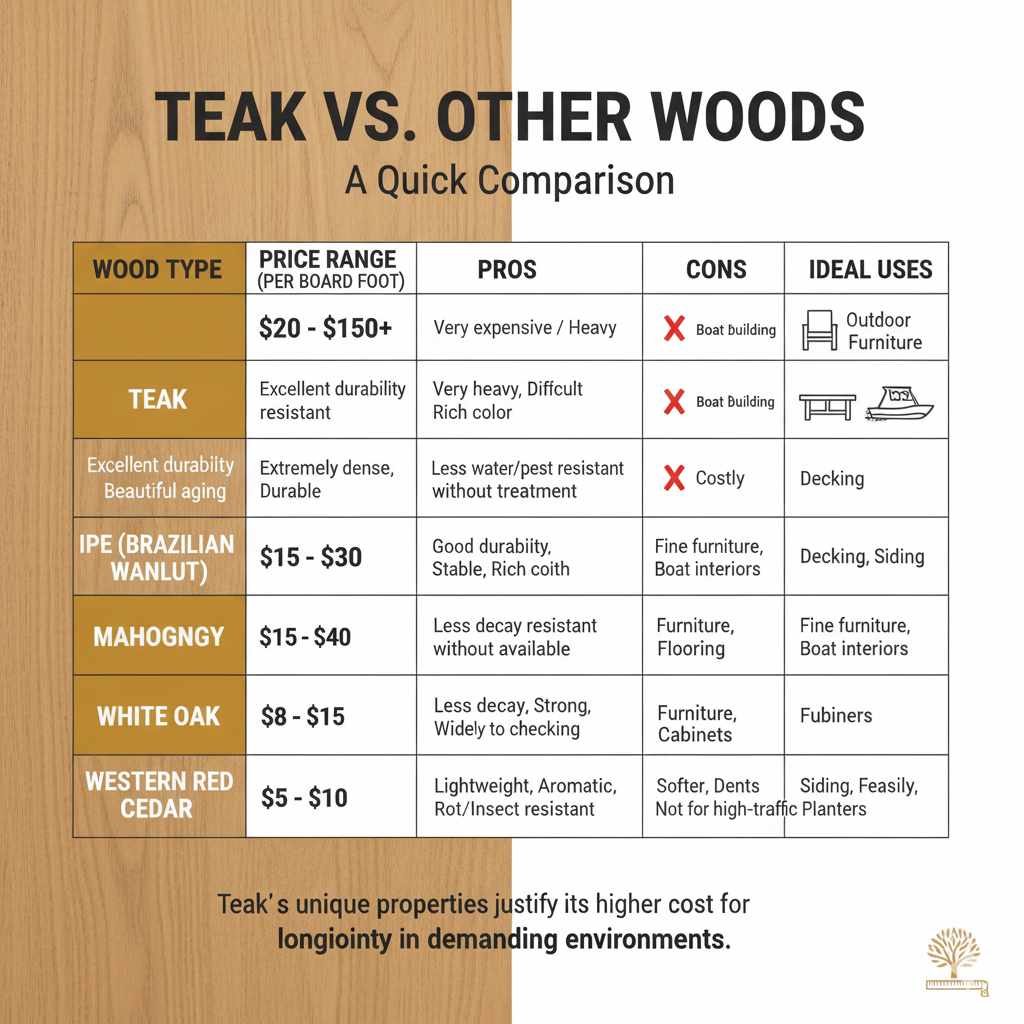
Teak vs. Other Woods: A Quick Comparison
To truly understand teak’s cost, it helps to compare it to other popular hardwoods used for similar applications, especially outdoors.
| Wood Type | Average Price Range (Per Board Foot) | Pros | Cons |
|---|---|---|---|
| Teak | $20 – $150+ | Excellent durability, water resistance, pest resistance, beautiful appearance, low maintenance. | Very expensive, can be heavy. |
| Ipe (Brazilian Walnut) | $15 – $30 | Extremely hard and dense, very durable, good for decking, natural resistance to decay and insects. | Very heavy, difficult to work with, can be expensive to ship, requires pre-drilling. |
| Mahogany | $15 – $40 | Good durability, stable, attractive reddish-brown color, machines well, good for furniture and boat building. | Less water/pest resistant than teak or ipe without treatment, can be costly. |
| White Oak | $8 – $15 | Good durability and strength, decent water resistance (especially closed-grain varieties), widely available. | Not as resistant to decay/insects as teak or ipe, can be prone to checking without proper drying. |
| Cedar (Western Red) | $5 – $10 | Lightweight, aromatic, naturally resistant to rot and insects, easy to work with. | Softer than hardwoods, can dent easily, not ideal for high-traffic surfaces like tabletops or dense decking. |
As you can see, teak sits at the higher end of the price spectrum, but its unique combination of properties often justifies the cost for specific, high-value applications where longevity and low maintenance are paramount. For more on choosing the right wood, the U.S. Forest Products Laboratory offers in-depth research on wood properties.
Frequently Asked Questions About Teak Wood Cost
Q1: Is teak wood expensive?
Yes, teak wood is considered one of the more expensive hardwoods available. Its high cost is due to its natural durability, resistance to water and pests, beautiful appearance, and the fact that it takes many years to mature.
Q2: How is teak price usually quoted?
Teak lumber is typically priced per board foot (bf), which is a measure of volume (1 inch thick, 12 inches wide, 1 foot long). You might also see prices for specific finished products like furniture, which include labor and other costs.
Q3: Can I find cheap teak wood?
While “cheap” is relative with teak, you can find more affordable options by looking for lower grades, plantation-grown teak instead of old-growth, or by purchasing rough-sawn lumber if you have the tools to mill it yourself. Reclaimed teak can also sometimes offer value.
Q4: What is the difference between plantation teak and old-growth teak pricing?
Old-growth teak, harvested from mature, natural forests, is significantly more expensive because it comes from trees that are hundreds of years old. This wood is denser, has richer oils, and a more refined grain. Plantation teak comes from younger trees and is more readily available, making it less expensive, though still a premium wood.
Q5: Does the thickness of teak wood affect the price?
Yes, thicker teak boards generally cost more per board foot. This is because more raw material is consumed, and thicker dimensions are often more desirable for structural applications, reducing the number of usable pieces from a log.
Q6: Is teak wood worth the price?
For projects where extreme durability, water resistance, and low maintenance are critical (like boat decks, premium outdoor furniture, or harsh climates), teak is absolutely worth the investment. Its longevity often makes it more cost-effective over the long term compared to cheaper woods that need frequent replacement or repair.