Iroko vs Teak: Harder, Cheaper, But Is It as Durable?
Iroko is the closest thing to a budget teak, and on paper it is even a little harder: 1,190 lbf on the Janka scale against 1,070 lbf for true teak. Both woods are very durable outdoors, oily to the touch and easy to confuse at the lumberyard. Where they differ is price, dust, tool wear and how proven each is on boats. This guide compares real numbers from The Wood Database and clears up the biggest myth in this comparison, which is what “African teak” actually means. If you are also weighing other outdoor options, see our teak vs ipe comparison.
Iroko vs Teak at a Glance
Best Blade for Iroko and Teak
 |
DEWALT DWA11080 10-Inch 80-Tooth Fine Finish Carbide Table Saw Blade Teak carries silica and iroko can carry calcium carbonate deposits, and both blunt cutting edges, so a carbide-tipped blade is the sensible starting point.
|
Choose iroko when you want a durable, golden-brown outdoor hardwood at a moderate price. Choose teak when the project is a boat, a heirloom piece or anything where you want the longest track record and can afford a very expensive board. For most garden benches, tables and decking, iroko is a sound value pick; for marine work and the most demanding uses, teak is the safer specification.
| Feature | Iroko | Teak |
|---|---|---|
| Scientific name | Milicia excelsa and M. regia | Tectona grandis |
| Origin | Tropical Africa | Southern Asia, plus plantations worldwide |
| Heartwood color | Yellow to golden or medium brown, darkens | Golden to medium brown, darkens |
| Rot resistance | Very durable | Very durable, gold standard |
| Price tier | Moderate | Very expensive |
| Main tool-dulling agent | Calcium carbonate deposits (sometimes) | Silica (up to 1.4%) |
| Sensitizer | Yes | Yes |
Source: Wood Database iroko profile and teak profile.
What Does African Teak Mean? The Myth Behind the Name
Iroko is often sold as African teak, and that name causes most of the confusion. It suggests a cousin of teak grown on another continent. The Wood Database says otherwise: iroko is in the mulberry family, and it is not botanically related to genuine teak. It also points out that the name African teak is more commonly applied to afrormosia (Pericopsis elata), a different African hardwood that looks very similar to iroko.
The practical takeaway is to ask for the botanical name when you buy. Iroko should be Milicia excelsa or Milicia regia. Afrormosia has smaller, more numerous pores and narrower rays under a hand lens, according to The Wood Database, so the two can be told apart on close inspection. If you are trying to confirm real teak, read our guide to identifying Burma teak and our note on whether teak is a hardwood.
Iroko vs Teak: The Numbers Side by Side
Most comparison pages describe these woods in adjectives. The measured properties below are the averages published by The Wood Database, and they show a few surprises.
| Property | Iroko | Teak |
|---|---|---|
| Janka hardness | 1,190 lbf (5,310 N) | 1,070 lbf (4,740 N) |
| Average dried weight | 41.2 lbs/ft3 (660 kg/m3) | 40.9 lbs/ft3 (655 kg/m3) |
| Modulus of rupture | 14,080 lbf/in2 (97.1 MPa) | 14,080 lbf/in2 (97.1 MPa) |
| Elastic modulus | 1,580,000 lbf/in2 | 1,781,000 lbf/in2 |
| Crushing strength | 7,750 lbf/in2 (53.5 MPa) | 7,940 lbf/in2 (54.8 MPa) |
| Radial shrinkage | 3.3% | 2.6% |
| Tangential shrinkage | 4.8% | 5.3% |
| Volumetric shrinkage | 8.8% | 7.2% |
| T/R ratio | 1.5 | 2.0 |
- Hardness: 1,190 divided by 1,070 is about 1.11, so iroko resists dents roughly 11 percent better. That gap is small, and it will not change how either wood behaves on a deck.
- Strength: bending strength is identical at 14,080 lbf/in2, and teak is slightly stiffer and slightly stronger in crushing. Neither wood has a structural edge that matters for furniture.
- Movement: teak shrinks less overall (7.2% against 8.8% volumetric), but iroko has the lower T/R ratio (1.5 against 2.0). Woodworkers commonly read a lower ratio as a sign the board shrinks more evenly and cups less, so neither wood clearly wins on stability.
Durability: Is Iroko as Rot Resistant as Teak?
Very nearly, on the published ratings. The Wood Database rates iroko as very durable and resistant to both rot and insect attack. It rates teak heartwood as very durable as well, calls it the gold standard for decay resistance and says it resists termites. The same source adds a caveat that most teak articles skip: teak is only moderately resistant to marine borers and powder post beetles.
Both woods list boatbuilding among their common uses, and both feel slightly oily or greasy when unfinished, which is a sign of the natural extractives that help them shed water. The difference is history. Teak has been the benchmark for centuries, so there is far more real-world evidence behind it. Iroko is described as stable and durable, but you are leaning on shorter records when you specify it for a hull or a ground-contact post. The Wood Database does not publish year-by-year lifespans for either wood, so treat any exact service-life figure you see elsewhere with caution.
Outdoor Finishing: Let Them Gray or Keep the Gold
Both woods start golden or medium brown and darken with age, and left unfinished outdoors they weather to a silver-gray. That is a cosmetic change, not decay, and it is the lowest-maintenance route for decks and benches.
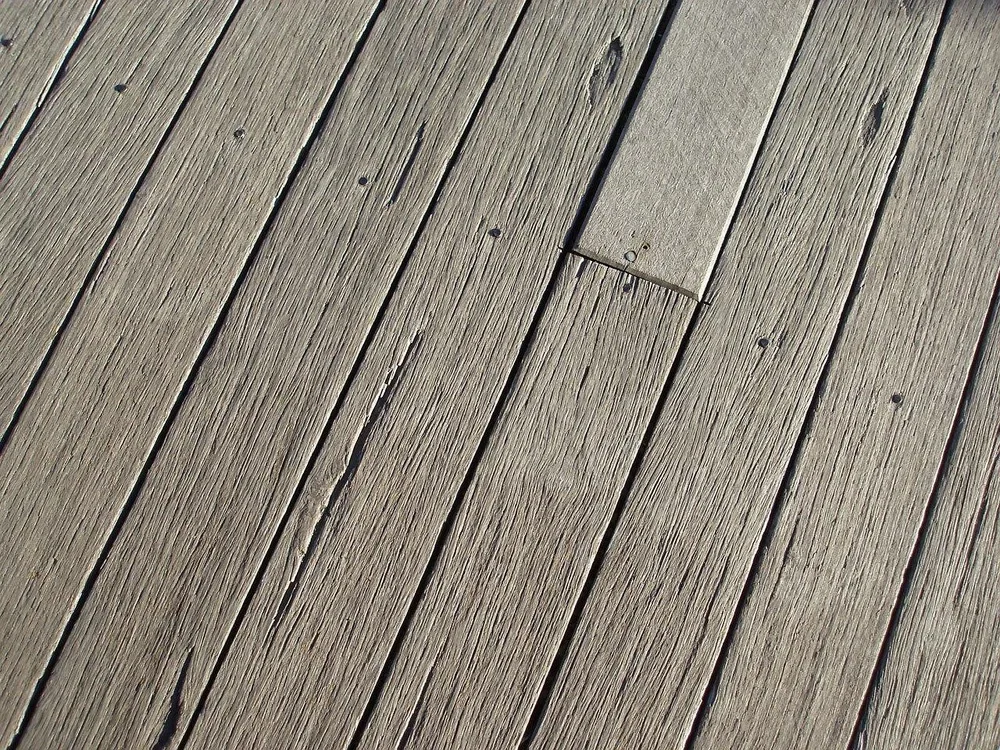
- Let it weather: wash with mild soap and water when dirt builds up and accept the gray tone.
- Keep the color: use a penetrating exterior oil made for hardwoods and reapply as the product label directs. Our guide to applying teak oil covers the method, and the same steps suit iroko.
- Glue and finish prep: teak can need a solvent wipe before gluing or finishing to cut surface oil, according to The Wood Database. Iroko is listed as gluing and finishing well, but a wipe-down is cheap insurance on either.
For more on care, see our guide to treating teak outdoor furniture and our page on teak wood color.
Working With Iroko and Teak: Tools and Dust
Both woods machine well, and both punish dull edges for different reasons.
- Teak: easy to work in nearly all respects, but silica (up to 1.4%) has a pronounced blunting effect on cutting edges. Grain is usually straight.
- Iroko: generally easy to work, but the grain is interlocked and sometimes irregular, so planing can cause tearout. Calcium carbonate deposits are sometimes present and can dull cutters significantly.
- Practical setup: use sharp carbide-tipped blades and cutters, take lighter planer passes on iroko, and check boards for hard deposits before you run them through a jointer.
Dust safety
Both woods are listed by The Wood Database as sensitizers. Most reactions are eye, skin and respiratory irritation, but iroko has also been linked to asthma-like symptoms, boils and hypersensitivity pneumonitis in sensitive people, and teak to rash, nausea and vision effects. Wear a respirator, not just a paper mask, connect dust collection to your saw and sander, and wash exposed skin after a session.
Cost and Availability
The Wood Database calls iroko imported and moderately priced, and calls teak very expensive, possibly one of the most expensive lumbers for large, non-figured boards despite widespread plantations. It does not give a price percentage, and any fixed ratio would depend on grade, thickness and supplier, so we do not quote one. Ask two or three yards for a quote on your actual board sizes. For a full look at why teak costs so much, read why teak is so expensive and where teak comes from.
Sustainability and Sourcing
Neither wood is listed in the CITES appendices, but each has a sourcing issue. On iroko, The Wood Database says the species is on the IUCN Red List: Milicia excelsa is near threatened and M. regia is vulnerable after a population decline of over 20 percent in three generations. On teak, it notes that after the February 2021 military takeover in Myanmar, the biggest source of teak, sanctions were placed on imported teak because the main exporter is government-owned. Buy from suppliers who can document origin, and look for FSC certification where it is available.
Which Should You Buy?
- Pick iroko for garden furniture, benches, planters, doors and decking where a moderate price matters and a slightly harder, stable wood is fine.
- Pick teak for boats, marine trim and heirloom furniture where the long track record justifies the price.
- Look at the alternatives if neither fits. Our teak vs mahogany, acacia vs teak and teak vs ipe guides cover other options.
Frequently Asked Questions
Is iroko the same as teak?
No. Iroko (Milicia excelsa and M. regia) is an African hardwood in the mulberry family, while true teak (Tectona grandis) comes from Asia. The Wood Database says neither iroko nor the other wood sold as African teak, afrormosia, is botanically related to true teak.
Is iroko harder than teak?
Yes, slightly. The Wood Database lists iroko at 1,190 lbf on the Janka scale and teak at 1,070 lbf, so iroko is about 11 percent harder. Both are only moderately hard compared with woods like ipe.
Is iroko as durable as teak outdoors?
Very close. The Wood Database rates iroko as very durable and resistant to rot and insect attack, and calls teak the gold standard for decay resistance with a very durable heartwood. Teak has the longer track record, especially for boats.
Is iroko cheaper than teak?
Usually yes. The Wood Database describes iroko as imported at a moderate price and teak as very expensive, one of the priciest lumbers on the market. Exact prices change with grade and supplier, so get current quotes for your board sizes.
Is iroko dust harmful?
It can be. The Wood Database lists iroko as a sensitizer, with eye, skin and respiratory irritation the usual reactions and asthma-like symptoms possible in sensitive people. Wear a well-fitted respirator and use dust extraction when cutting or sanding.
Does iroko or teak dull tools faster?
Both dull cutters. Teak contains up to 1.4 percent silica, and iroko can contain calcium carbonate deposits that the Wood Database says can have a significant dulling effect. Use sharp carbide-tipped tooling on either.
Conclusion
Iroko and teak are close relatives in performance and strangers in botany. Iroko is about 11 percent harder, similar in strength, very durable and priced at a moderate level, while teak has the longer record and a price to match. Wear a respirator with either, keep your blades sharp, and check the botanical name so you know which wood you are really buying.
Sponsored / affiliate links. As an Amazon Associate I earn from qualifying purchases. I may earn additional commission from eligible campaigns.