How Thick Should a Dining Table Top Be? (1 to 2 Inches)
A dining table top should run 1 to 1.5 inches thick for most homes, but tables over 6 feet need 1.5 to 2 inches to resist sagging, and softwoods like pine need more thickness than hardwoods like oak or maple. Go too thin and the top can wobble or crack under daily use; too thick adds needless weight and cost. This guide breaks down thickness by table length, wood type, and design style — part of our broader woodworking projects coverage.
Insert your Affiliate Disclosure reusable block here.
Why Table Top Thickness Matters
Best Thickness Planer Pick
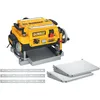
DEWALT 13-in Thickness Planer DW735X – $659.00
A three-knife planer that mills every board to the same thickness before glue-up — the exact step this guide calls out as the difference between a flat tabletop and one full of ridges.
- Best for: milling rough lumber to a precise, consistent thickness for a DIY tabletop glue-up
- Why we picked it: two-speed gearbox and automatic carriage lock reduce snipe, which matters most on long tabletop boards
- Main drawback: heavier and pricier than a hobbyist planer — overkill if you only plane one project a year
Compare more thickness planer options
 Option WEN PL1326 Spiral Thickness Planer – $418.00
|
 Option WOODERS 13-in Benchtop Thickness Planer – $299.99
|
 Option FindBuyTool Helical Cutterhead Planer – $759.99
|
As an Amazon Associate we earn from qualifying purchases.
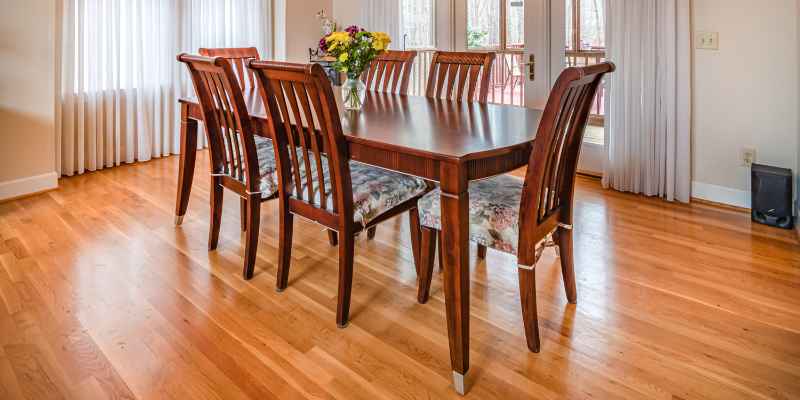
Thickness affects two things at once: how much weight and daily use the top can take without sagging, and how heavy or refined the table looks in the room. A table top that’s too thin for its length will flex and eventually crack at the center; one that’s thicker than it needs to be adds unnecessary weight, cost, and lumber.
📊 Most commercial dining tables ship with tops between 0.75 and 2 inches thick, with 1 to 1.5 inches the most common range for tables under 8 feet — Source: industry furniture retailers, 2026
Standard Thickness For Dining Tables
| Thickness | Typical Use |
|---|---|
| 0.75″ – 1″ | Lightweight, casual, or glass-top tables |
| 1″ – 1.5″ | Standard for most dining tables |
| 1.5″ – 2″ | Rustic, farmhouse, or high-end solid wood tables |
How Table Length Changes the Right Thickness
Thickness needs scale with span, not just style. A short table can get away with a thinner top; a long one needs extra material in the middle to keep from sagging over years of use.
- Under 6 feet: 0.75 to 1.25 inches is usually enough support for a table this short.
- 6 to 8 feet: 1 to 1.5 inches keeps the center from flexing under normal use.
- Over 8 feet: 1.5 to 2 inches, or add a center support leg, since the unsupported span between legs gets long enough to sag over time.
Material Matters: How It Impacts Thickness
Wood: Hardwoods vs. Softwoods
Hardwood is dense wood from broadleaf trees — oak, maple, cherry, walnut — that resists dents and can run thinner, typically ¾ to 1½ inches, while still holding up to daily use. Softwood, like pine or fir, dents and warps more easily, so it usually needs 1 to 2 inches to match a hardwood top’s durability. If you want a one-of-a-kind thickness and edge profile, a custom furniture maker can build to whatever spec fits your room.
Glass: Safety and Edge Work
Glass tops run ½ inch for small accent tables up to ¾ inch for large dining tables, and should always be tempered glass with polished, rounded (pencil or bullnose) edges — a sharp square edge on 3/8-inch glass is a real cut hazard.
Metal: Weight and Industrial Looks
Solid metal tops are rare because of weight; most “metal” dining tables use a thin steel or aluminum sheet, often under ¼ inch, over a plywood or MDF core for rigidity without the full weight of solid metal.
Thickness by Design Style
| Style | Typical Thickness | Why |
|---|---|---|
| Modern / minimalist | 1″ – 1.25″ | Thinner profile keeps the sleek, light look |
| Transitional | 1.25″ – 1.5″ | Balances classic and modern proportions |
| Farmhouse / rustic | 1.5″ – 2″ | Chunky edge reads as solid and handmade |
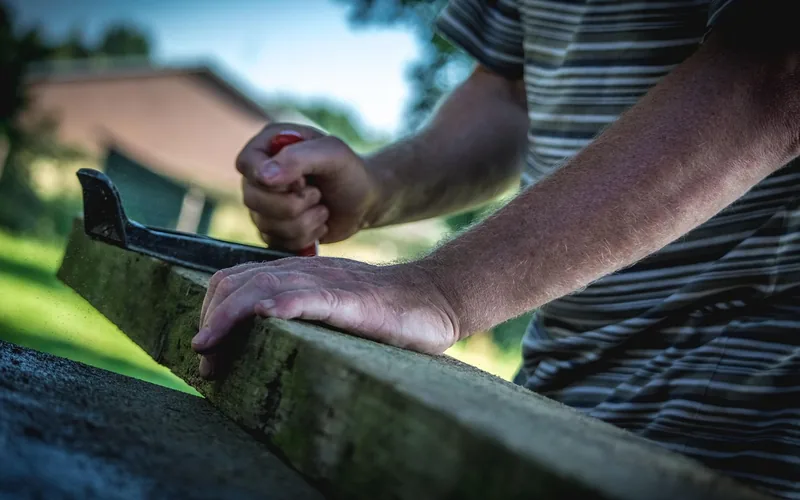
Building Your Own Table Top? Plan Thickness Before You Glue Up
If you’re edge-gluing boards into a solid top rather than buying one, start with rough lumber at least ¼ inch thicker than your final target — you lose material to planing and flattening after glue-up. For a 1.5-inch finished top, buy 8/4 (two-inch) rough lumber; for a 1-inch finished top, 5/4 rough lumber usually gets you there with room to flatten both faces. See our full guide to planing a table top with an electric planer for the pass-by-pass process.
- Mill boards to equal thickness: Run every board through a thickness planer so all boards are within 1/32 inch of each other before glue-up — mismatched boards leave visible ridges at the seams. Not sure which type to buy? See handheld planer versus benchtop for the tradeoffs.
- Glue and clamp: Edge-glue boards with a waterproof wood glue and clamp every 8 to 10 inches to keep the panel flat while it cures — our wood glue buying guide covers which type holds up best for a tabletop glue-up.
- Flatten and finish: Once cured, run the panel through a planer or use a router sled to flatten both faces to the final target thickness, then sand and finish.
Frequently Asked Questions
How thick should a dining table top be?
Most dining table tops run 1 to 1.5 inches thick, with up to 2 inches for tables longer than 8 feet, rustic styles, or softwoods that need extra material to resist denting.
What materials are best for dining table tops?
Hardwoods like oak, maple, and walnut hold up best because they resist dents and can run thinner (¾ to 1½ inches). Softwoods like pine need more thickness to match that durability, and tempered glass or a thin metal-over-plywood build work for a different look.
Does table top thickness affect stability?
Yes. A thicker top resists flex and wobble over a longer unsupported span between legs, which is why tables over 6 to 8 feet typically need 1.5 to 2 inches or a center support leg to avoid sagging.
Can I customize the thickness of my table top?
Yes, both custom furniture makers and DIY builds can target any thickness. For a DIY glue-up, buy rough lumber at least ¼ inch thicker than your target finished thickness to leave room for planing and flattening.
“The single biggest mistake in a DIY glue-up isn’t picking the wrong thickness — it’s milling boards to slightly different thicknesses before gluing them. Even 1/16 inch off leaves a ridge you’ll be sanding for an hour.”
Conclusion
For most dining tables, 1 to 1.5 inches is the right thickness — enough to resist sag and daily wear without adding unnecessary weight. Go thicker (1.5 to 2 inches) for tables over 6 to 8 feet, softwoods, or a rustic look, and thinner for modern hardwood or glass tops. If you’re buying, check the thickness in the spec sheet before you order; if you’re building, plan your rough lumber thickness before you glue up.
Sponsored / affiliate links. As an Amazon Associate I earn from qualifying purchases. I may earn additional commission from eligible campaigns.