How Often Should You Sweep a Wood Burner Chimney?
Sweep a wood burner chimney at least once a year, and book a mid-season sweep if you burn most days, use wet wood, or notice poor draft, soot, or tar build-up. Missed sweeping raises chimney-fire risk, cuts draft, and can push smoke or carbon monoxide back into the room. This guide gives a simple frequency rule by use pattern, plus the warning signs that mean you should schedule sooner.
How often should you sweep it?
The clean answer is this: the inspection floor is once a year, but sweeping should follow use pattern, not the calendar alone. NFPA 211 says chimneys, fireplaces, and vents should be inspected at least once a year, even if cleaning is not needed. For wood-burning systems, cleaning is usually once a year, with heavy winter use sometimes pushing that to twice-yearly service.
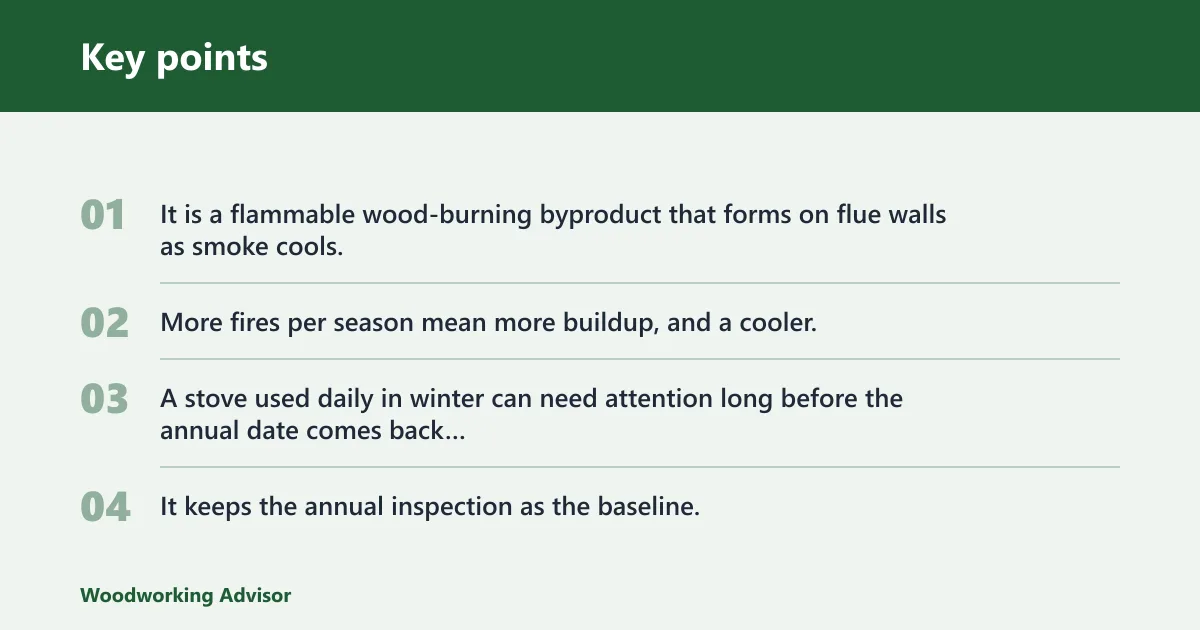
Creosote is the main reason. It is a flammable wood-burning byproduct that forms on flue walls as smoke cools. More fires per season mean more buildup, and a cooler, dirtier flue usually collects it faster. A stove used daily in winter can need attention long before the annual date comes back around.
Wood burner sweep schedule
Use the table below as a practical rule. It keeps the annual inspection as the baseline, then moves the sweep earlier when the stove sees more fire, more smoke, or more tar-forming fuel.
| Use pattern | Typical sweep interval | Book sooner if | Notes for fuel type and season |
|---|---|---|---|
| Occasional use | Once a year | Smoke rolls back, odors appear, black residue appears, or draft weakens | Best fit for a short burning season and mostly seasoned wood |
| Weekend use | Once a year | Tar smell, blackening glass, soot at the stove throat, or slow start-up | Season length matters; a long shoulder season can justify earlier cleaning |
| 3-4 fires/week | Once a year, with a mid-season inspection if buildup is suspected | Poor draft, smoky fire, visible soot, or repeated smoke rollback | Dry logs help; mixed fuel or cooler weather can increase deposit rate |
| Daily winter use | Twice a year is often sensible | Odor, black residue, weak draft, or blackening glass | Primary heating use often creates enough soot and creosote to warrant a second sweep |
| Smoky or wet-wood use | Twice a year, sometimes sooner | Any smoke rollback, tar smell, or slow, smoky fire | Wet or unseasoned wood pushes tar and creosote buildup faster, especially in cold flues |
Why buildup happens faster
Creosote buildup speeds up when smoke cools too quickly on the flue walls. A colder chimney, long smoldering burns, and restricted draft all give more time for vapors to condense. That is why a stove that looks fine in mild weather can need a sooner sweep once winter fires are longer and hotter in the firebox but cooler higher up the flue.
Dry logs versus damp logs
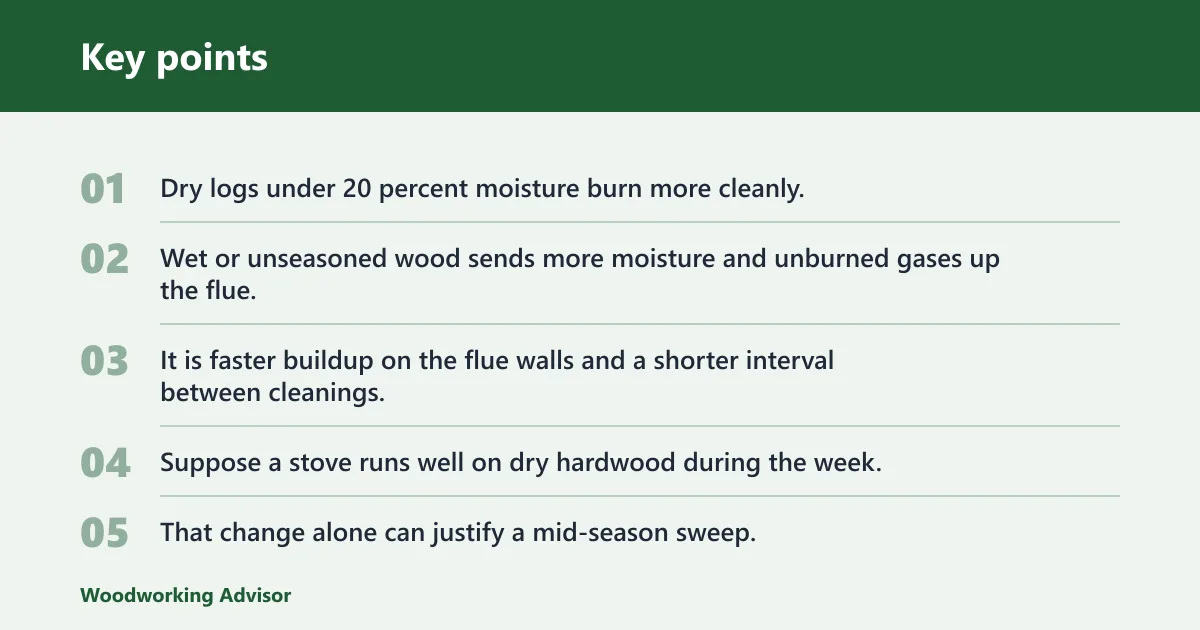
Dry logs under 20 percent moisture burn more cleanly. Wet or unseasoned wood sends more moisture and unburned gases up the flue, which raises tar and creosote deposits. The result is not just dirtier glass. It is faster buildup on the flue walls and a shorter interval between cleanings.
Suppose a stove runs well on dry hardwood during the week, then starts producing more black residue and a tar smell after a supply of damp logs is mixed in. That change alone can justify a mid-season sweep, even if the annual inspection is still months away.
Smokeless fuel and deposit load
Multi-fuel stoves that burn smokeless fuel may need more frequent sweeping than wood alone. Competitor guidance often places these stoves closer to twice-yearly cleaning, especially when they serve as primary heat. Mixed fuels can leave a different deposit load, so the sweep interval should follow the actual fuel blend, not the label on the stove.
That matters if a stove is used for both wood and smokeless fuel in the same season. A heavier deposit mix can move the schedule forward, especially once the flue sees cooler weather and longer burns.
What are the signs my wood burner chimney needs sweeping sooner?
Strong odors, poor drafting, smoke rollback, and a slow or smoky fire are the clearest signs that a sweep is due sooner. Black residue, blackening glass, and repeated soot at the stove door or throat are also warning signs. If the stove is trying hard to draw but the room still fills with smoke, do not wait for the annual date.
Smoke rollback and poor draft
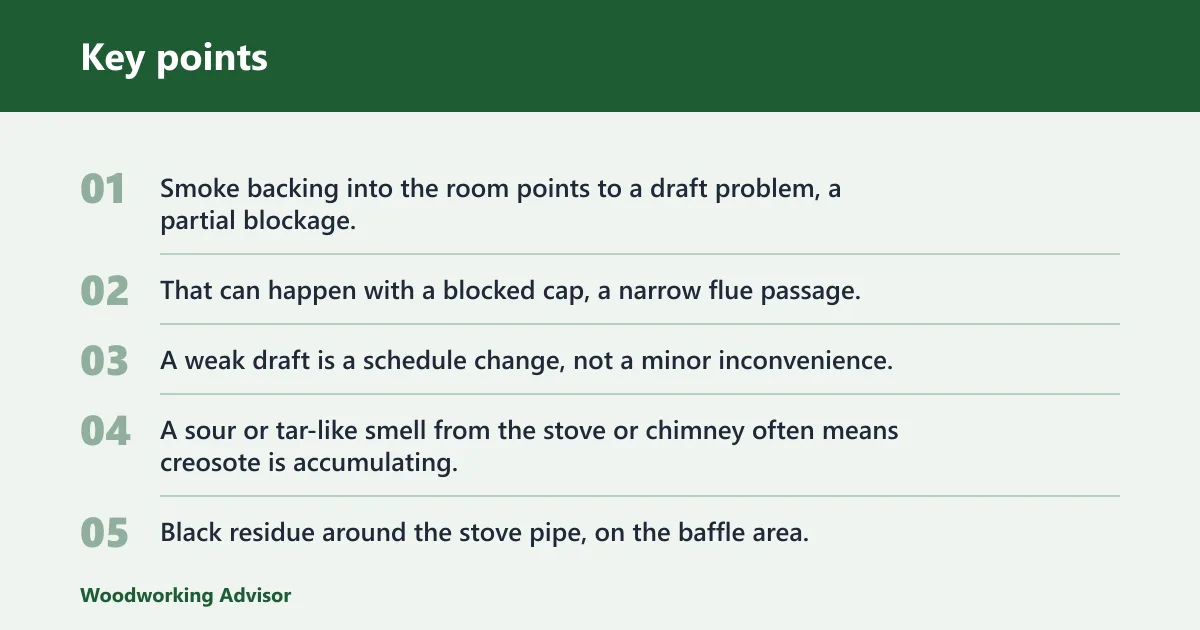
Smoke backing into the room points to a draft problem, a partial blockage, or heavy internal buildup. That can happen with a blocked cap, a narrow flue passage, or a flue that has not been cleaned since the last heavy burn stretch. A weak draft is a schedule change, not a minor inconvenience.
Odors, black residue, and soot
A sour or tar-like smell from the stove or chimney often means creosote is accumulating. Black residue around the stove pipe, on the baffle area, or at access points suggests soot is not moving through cleanly. Those signs are useful because they show buildup before a full blockage appears.
Blackening glass and slow fires
A blackening glass door and a fire that smolders instead of catching cleanly often go together. Slow fires keep flue temperatures low, which gives more time for creosote to settle on the walls. If a stove that usually lights cleanly starts acting lazy, the chimney should be checked sooner rather than later.
Is once a year enough for a log burner chimney sweep?
Once a year is enough for many light-use log burners, but not for every stove. The annual inspection is the floor, not the full answer. If the stove is used heavily, burns damp wood, or shows odor, soot, or poor draft, a second cleaning before the year ends is a sound choice.
Chimney sweep
- Start with the annual inspection requirement.
- Count how often you actually burn, not how old the stove is.
- Move the sweep earlier if fuel quality drops or the fire behaves badly.
- Book a second cleaning if the flue shows signs of fast buildup.
- Record the sweep date and the reason for service for maintenance files.
Keeping a dated record helps with routine maintenance history and can provide proof of regular sweeping if an insurer or property manager asks for it.
How often should a wood stove chimney be swept if it is used daily?
A wood stove used daily in winter often needs twice-yearly cleaning. Daily use means more fires per season, more smoke passing through the flue, and more creosote forming on the walls. If the stove is the main heat source, do not wait for a full year if draft weakens or residue shows up early.
A common first-timer mistake is to treat the calendar as the only trigger. A stove can be due in mid-winter because it has already run hard for months, especially if the owner has been using longer burns to stretch heat through the night.
Does burning damp wood mean I need chimney sweeping more often?
Yes. Burning damp or unseasoned wood usually means you need chimney sweeping more often. Wet fuel sends cooler, dirtier smoke into the flue, which increases tar and creosote buildup. If the logs are not under 20 percent moisture, the chimney will usually need more attention than a dry-wood stove.
That does not mean every damp-wood fire demands an emergency call. It means the next sweep should move forward on the calendar, especially if the fire is slow, smoky, or leaves a strong odor after shutdown.
How often should a chimney be swept if I burn smokeless fuel?
If you burn smokeless fuel in a multi-fuel stove, plan on more frequent sweeping than a wood-only stove may need. Twice-yearly cleaning is a common target when the stove sees steady use. The main issue is deposit load, which can be higher than many owners expect when the appliance is run for heat all winter.
That schedule can tighten further if the stove is used daily, the flue runs cool, or the appliance also burns wood that is not fully seasoned.
What does a proper inspection check?
A proper inspection checks more than soot. It should include the flue liner, the chimney cap, top and bottom access points, and evidence of blockage. The annual inspection standard matters because a clean flue can still have a cracked liner, a missing cap, or a nest that stops the draft.
Flue liner condition
Inspect the liner for cracks, gaps, or signs of movement. Common residential liners are 6 inches or 8 inches, and size matters because draft and fit both depend on the liner staying intact. A damaged liner can let heat or smoke escape where it should not.
Chimney cap and blockage
The chimney cap should be checked for animal nests, leaves, and other debris. A blocked cap can cause smoke rollback and poor venting even when the flue below is partly clean. Top-side blockages often show up as weak draft inside the room.
Top and bottom access points
Inspection should cover both ends of the system. The top reveals cap damage, nesting, and weather wear. The bottom shows soot pattern, access to the flue throat, and signs that the stove is venting poorly. Looking at both ends gives a better picture than a quick glance at the appliance door.
When is the best time of year to book a chimney sweep?
Spring, late summer, and early autumn are often cited as good booking windows. Those periods let you avoid the seasonal rush and leave time to fix defects before cold weather returns. If the stove is used heavily, do not wait until the first frost to call.
Book earlier if you want the inspection and sweep documented before the heating season starts. A dated maintenance record can help you track wear, note repeat problems, and show that the chimney has been kept on a regular schedule.
Frequently asked questions
How often should you sweep a wood burner chimney?
At least once a year is the baseline, but heavier use can push the schedule to twice a year. Daily winter burning, wet wood, or poor draft are the main reasons to move sooner. The inspection standard still applies even when cleaning is not needed.
Do you need to sweep a wood burner chimney every year?
Yes, annual inspection is the floor, and many wood-burning systems are cleaned once a year. That said, the need for cleaning can be more frequent if the stove is used hard or fuel quality is poor. Annual inspection does not always mean annual cleaning, but it often does for active stoves.
Sponsored / affiliate links. As an Amazon Associate I earn from qualifying purchases. I may earn additional commission from eligible campaigns.