Drying Firewood Next to a Wood Stove
Drying firewood next to a wood stove can finish already seasoned wood, but it should not replace outdoor seasoning. Stove heat dries the outer layers first, while the core can stay wet unless the wood is split small and exposed long enough. Done badly, it leaves smoky fires, creosote, and weak heat output, while overheated stacks can become a fire hazard. This guide explains what stove-side drying does, its safe limits, and how to finish wood without risk.
Can you dry firewood next to a wood stove?


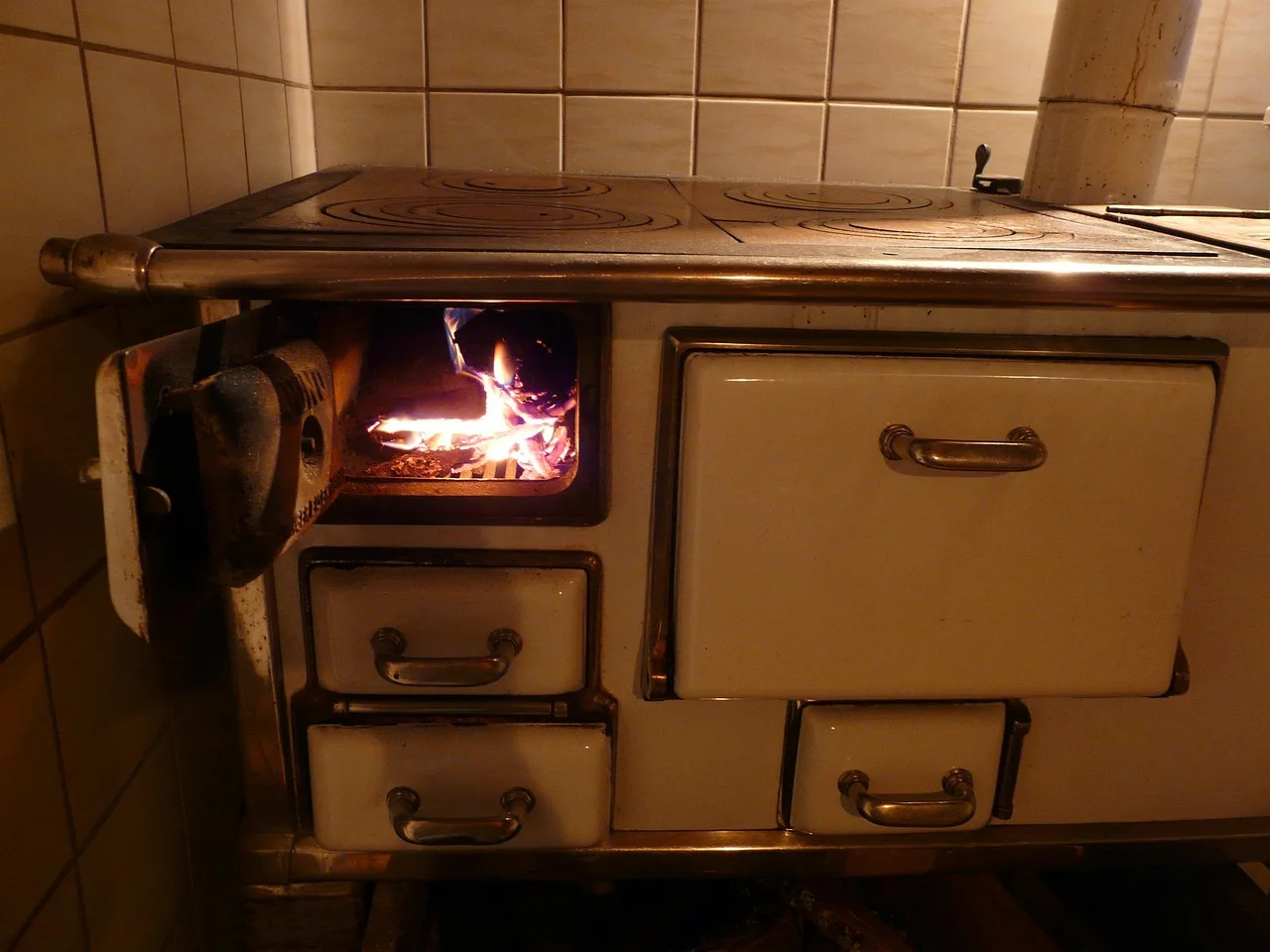
Yes, but only as a finishing step for wood that is already split and partly dried. Heat from the stove pulls moisture from the surface faster than from the center, so a piece may feel dry outside while still reading too wet on a split face. Keep any stack where the stove manual and listed clearances allow, and never place wood close enough to overheat the stove body or connector pipe.
What stove heat can and cannot do
A stove works best with dry wood for fast start-up and steady combustion. That is the point of stove-side drying: it can help wood lose the last bit of surface moisture before burning, especially if the pieces are already split and the room is dry. It cannot replace the long outdoor drying time needed to bring the core down to burn-ready levels.
Drying beside a stove changes the outer layers first. The inside can stay much wetter, especially in thick splits or bark-on pieces. That is why a piece that looks pale and dry on the outside may still hiss, smolder, or smoke once it is loaded into the firebox.
Why surface dryness can mislead you
Wood can hold up to 30% moisture by weight while still looking dry. Appearance alone is not a reliable sign of readiness. A dry-looking face is useful only as a clue, not proof.
A common mistake is putting a thick split near the stove overnight, then assuming it is ready because the outside feels warm and dry. The next morning, the split face may still show high moisture. The outer shell dried first; the core did not catch up.
When near-stove drying is reasonable
Use stove heat only for already split wood that is close to seasoning, not for green rounds or thick, freshly cut pieces. It is most useful when you need to finish a few pieces that were already air-dried outdoors and now need a final push before use. If the wood is still far above the burn target, keep drying it outside.
Safety note: follow the stove manual and the listed clearances for your model, keep firewood at least as far away from the stove body and connector pipe as those clearances require, and check local fire rules if you are storing wood indoors near a heater.
How dry should firewood be for burning?
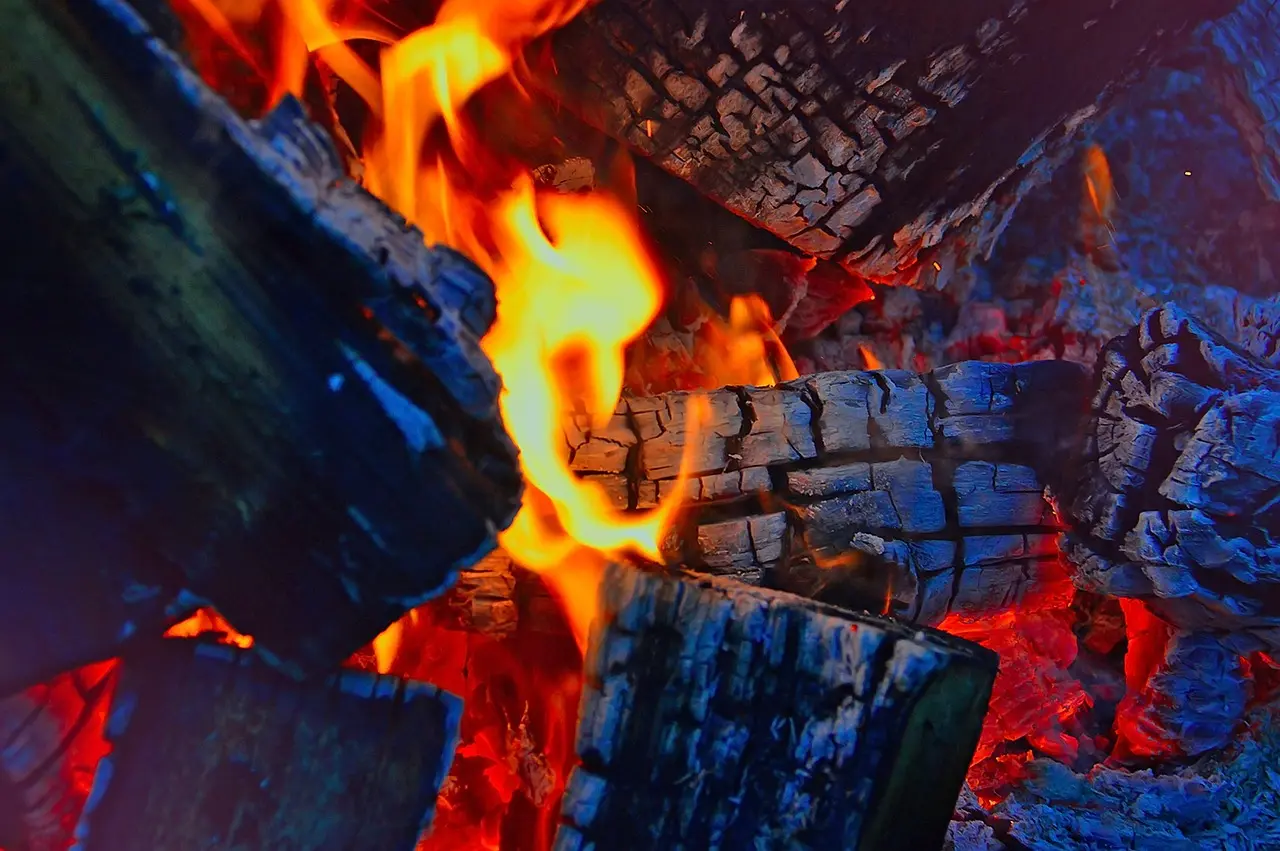
For wood-stove use, firewood should be at 20% moisture content or less. Wet wood lights slowly, makes more smoke, and raises creosote risk in the flue. Use a moisture meter on the split face, not on bark.
Target moisture content for wood-stove use
The practical target is 20% moisture content or less for burning. Seasoned wood typically measures around 20% moisture content, which is why some “seasoned” stacks are not ready yet. Kiln-dried firewood usually falls between 10% and 18% moisture, so it is often ready sooner and burns more consistently.
Wood above 25% moisture tends to hiss, smolder, and smoke more. That matters during start-up and during peak output, when a stove depends on steady combustion. Dry wood helps with fast start-up and steady combustion, and most wood stoves behave similarly.
Why wet wood smokes and starts poorly
Water in the fuel must be driven off before the wood can burn efficiently. That steals heat from the fire, slows ignition, and leaves more unburned material behind. The result is a weaker fire, more visible smoke, and more deposits in the flue.
Suppose you load a stove with a split that reads 27% on the meter at the split face. It may still light, but it is not a clean-burn candidate. Keep it out of the stove for now and give it more time.
How a moisture meter helps you decide
A moisture meter gives you a fast comparison between stacks and between pieces. Split a sample, press the probes into the fresh split face, and check several pieces from different spots in the stack. Do not read bark, since bark can hide a wetter interior.
Use the meter as a sorting tool. Pieces at or below the burn target go into the “ready now” pile. Pieces above that level stay in the drying pile, even if they look pale and feel light.
Drying firewood matrix
This matrix separates surface dryness from burn readiness. It also shows where stove-side drying helps and where it does not. Use it as a decision aid, not a substitute for a moisture meter.
| Scenario | Expected surface dryness | Core moisture risk | Safe use now | Next step |
|---|---|---|---|---|
| Green split | Damp or cool on the outside | Very high | No | Air-dry outdoors first |
| Damp split | Outer face may feel dry, edges still cool | High | Not for stove use | Continue seasoning and retest with a meter |
| Seasoned split | Dry to the touch | Moderate if split is thick or climate is humid | Sometimes, if the meter reads 20% or less | Burn only after a split-face meter check |
| Bark-on piece | May seem dry on bark, less so underneath | High under the bark | No, unless meter confirms burn-ready moisture | Split and dry further |
| Indoor near-stove piece | Often very dry on the surface | Core may still be too wet | Only if the split face already meets the moisture target | Use as a finishing step, not as the main drying method |
| Kiln-dried piece | Consistently dry | Low | Yes, if the piece is still clean and sound | Store dry and keep protected from re-wetting |
What changes drying speed?
Drying speed depends on split size, species, airflow, sun exposure, and humidity. Small pieces dry faster because they expose more surface area, while thick pieces hold moisture longer. Indoor heat helps finish a piece, but it cannot erase the time that species and thickness already need.
Split size and exposed face area
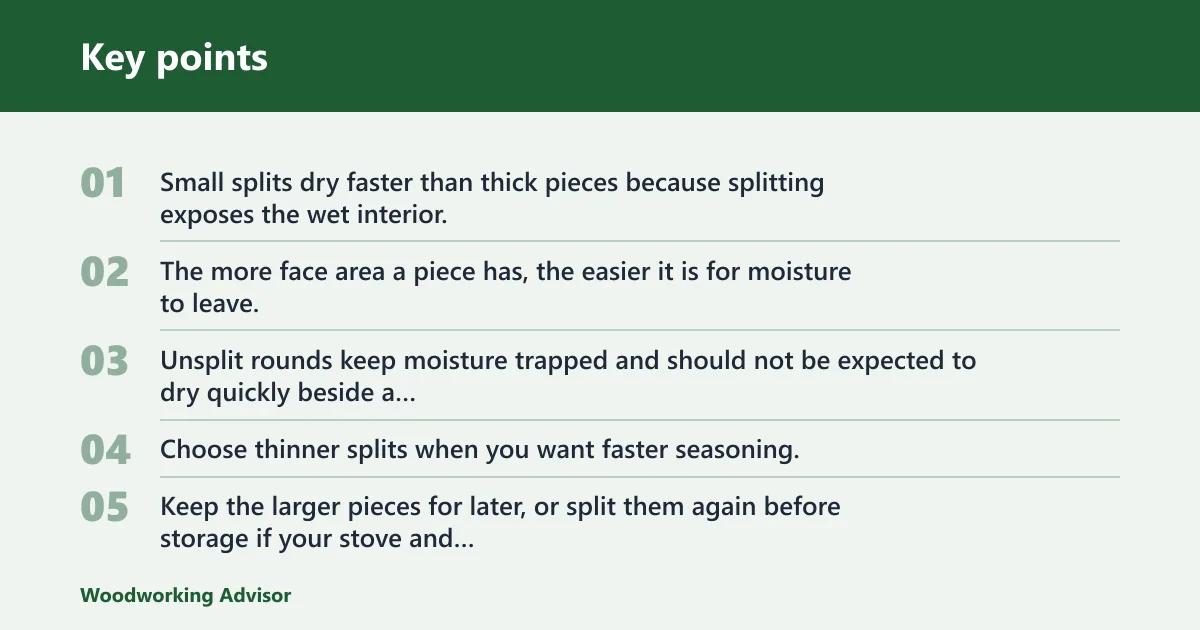
Small splits dry faster than thick pieces because splitting exposes the wet interior. The more face area a piece has, the easier it is for moisture to leave. Unsplit rounds keep moisture trapped and should not be expected to dry quickly beside a stove.
Choose thinner splits when you want faster seasoning. Keep the larger pieces for later, or split them again before storage if your stove and fuel plan allow.
Species differences and density
Dense hardwoods usually need more time than lighter woods. Species matters because water moves through wood at different rates, and thicker, denser pieces can hold moisture deep in the core. That is why a “seasoned” label alone is not enough.
Seasoned firewood usually takes 6 to 18 months to dry, and the exact time varies by species and climate. If the wood was not split early enough, or if the stack stayed in a shaded, damp spot, it can take longer.
Airflow, sun, and indoor humidity
Firewood dries best with airflow, sun exposure, and protection from rain. Outdoor air movement matters more than heat alone. Indoors, the air is usually drier than a damp woodshed, but that does not make a wet stack safe to burn.
Say your stack sits in a garage corner with no air movement. Even near a warm stove room, the outer pieces may dry faster than the middle of the pile. If the pile stays tightly packed, the center will lag behind.
Keep firewood off the ground, open to moving air, and protected from rain. Covered storage helps, but the cover should protect the top while leaving the sides open enough for airflow. If the stack cannot breathe, it dries slowly and unevenly.
Off the ground and out of standing water
Store wood on pallets, rails, or another dry base so it does not wick moisture from soil or snowmelt. A wet bottom layer can stay damp long after the top layer looks ready. Standing water around the stack works against seasoning.
Covered on top, open on the sides
Top coverage blocks rain and snow. Side ventilation lets moisture escape. This simple setup works better than wrapping the whole pile in plastic, which traps damp air and can lead to mold or slow drying.
Stack spacing and airflow basics
Leave space between rows and do not pack splits too tightly. Air needs paths through and around the pile. If you are drying wood outdoors, orient the stack where it gets some sun and steady wind, then keep the top covered and the sides open.
Do not rely on indoor storage alone to keep firewood dry if the wood is still wet. Indoor air can help finish a stack, but it also adds fire risk if the wood is too close to heat sources. Keep it well away from the stove body and pipe clearances in the manual.
How long does firewood take to dry?
Seasoned wood usually needs 6 to 18 months outdoors, while kiln-dried firewood is often dried in 36 to 48 hours, depending on the kiln, species, split size, and starting moisture. Indoor heat does not reset that clock. It may dry the outside faster, but the core still depends on split size, species, and starting moisture.
Seasoned wood timelines
Air-dried outdoor seasoning is the standard method for most firewood. The usual time is 6 to 18 months, with moisture variability by species and climate. Wood split early, stacked in sun, and exposed to airflow dries faster than wood left in a damp pile.
Do not treat “a season” as a fixed number of months. Humid summers, shaded storage, and large splits all extend the timeline.
Kiln-dried wood timelines
Kiln-dried firewood is dried in a controlled environment, often in 36 to 48 hours, depending on the kiln, species, split size, and starting moisture. That controlled process gives more consistent low moisture content, which is why kiln-dried wood often lights faster and burns more predictably than ordinary seasoned wood.
Why indoor heat does not reset the clock
Indoor heat may help a small, already split piece finish drying, but it cannot turn green wood into burn-ready wood overnight. The core must still lose enough moisture to reach the burn target. If the split face does not check out on a meter, leave it out of the firebox.
What should you burn tonight?
Burn only wood that reads 20% moisture content or less on a split face. If the wood is already seasoned or kiln-dried and the meter confirms it, it is ready now. If it is damp but close, keep it drying. If it is green or bark-heavy, do not burn it yet.
Ready to burn now
Use wood that is dry through the split face, not just on the outside. Kiln-dried pieces are usually the safest bet if they are clean, sound, and stored dry. Well-seasoned pieces can also work if the meter confirms the target.
Needs more drying time
Pieces that look dry but still read above the target belong back in storage. This includes thick splits, bark-on pieces, and wood that has only been sitting near the stove. Give them more outdoor time or more finishing time, then retest.
Do not burn yet
Reject wood that is green, visibly damp inside, or reading well above the target moisture range. Burning it now means harder starts, more smoke, and more creosote risk. If a piece is questionable, split it and test again before loading the stove.
Frequently asked questions
How to dry firewood quickly
Dry faster by splitting smaller, stacking where air moves, and keeping the top covered while the sides stay open. Smaller pieces lose moisture faster because they expose more surface area. If you need wood for tonight, use only pieces that already meet the burn target on a meter.
How dry should firewood be for burning: for wood-stove burning, aim
For wood-stove burning, aim for 20% moisture content or less. That target supports easier ignition, cleaner combustion, and less smoke. A piece that looks dry is not enough; test a split face with a moisture meter before it goes into the stove.
How long should firewood dry before burning?
Seasoned firewood usually takes 6 to 18 months, depending on species, split size, and climate. Kiln-dried wood is often dried in 36 to 48 hours and is usually ready sooner. Indoor warmth can help finish wood, but it does not replace that drying time.
How long to dry firewood faster
There is no safe shortcut that turns green wood into burn-ready fuel quickly. Smaller splits, better airflow, and drier storage can speed the process, but species and climate still matter. Use indoor heat only as a finishing step for already split, mostly seasoned wood.
Sponsored / affiliate links. As an Amazon Associate I earn from qualifying purchases. I may earn additional commission from eligible campaigns.
 FIRElood Wood Burning Tool,Wood Burning kit Pen 25~750℃,Professional Wood Burning kit,with Digital Thermometer Temperature Adjustable Temperature,1 Wood Burning pens, 30 Wood Burning Pen Tips
 FIRElood LH30-1 wood burning tool,wood burning kit pen 25~750℃,professional wood burning kit,with digital thermometer temperature adjustable temperature,1 wood burning pens, 30 pen tips(LH30-1A pen)