How Thick Is a Table Saw Blade? Plate vs. Kerf Explained
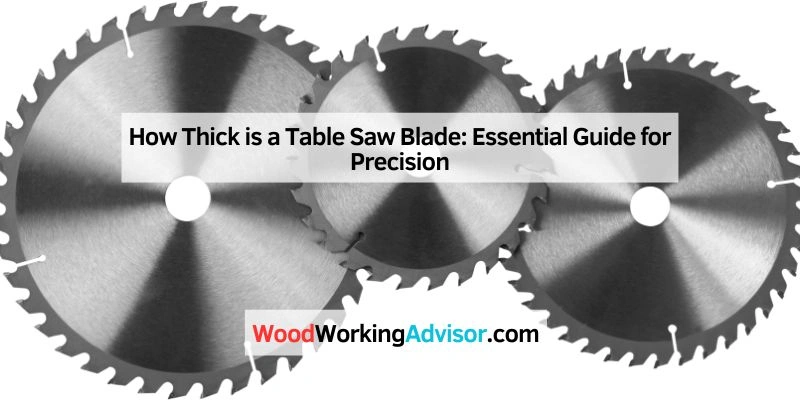
Full-kerf table saw blades run about 0.125 inches (1/8″) thick; thin-kerf blades run about 0.091-0.098 inches (roughly 3/32″). But the number stamped on the box is the steel plate thickness, not the width of the cut — the actual kerf is slightly wider because the carbide teeth are set beyond the plate on both sides. That difference matters more than most buying guides mention, and it’s the reason two blades with the “same” thickness spec can cut different widths.
Plate Thickness vs. Actual Kerf Width
OUR PICK FOR SMALLER SAWS
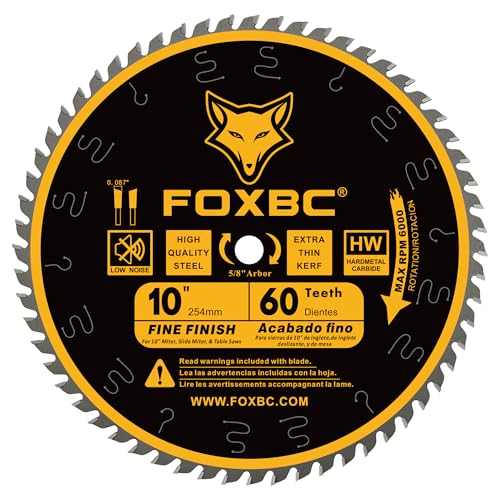 |
FOXBC 10″ Thin Kerf Fine Finish Blade, 60T – $26.99 A thin-kerf blade like this is the fix described above for underpowered contractor and benchtop saws that bog down on full-kerf blades.
|
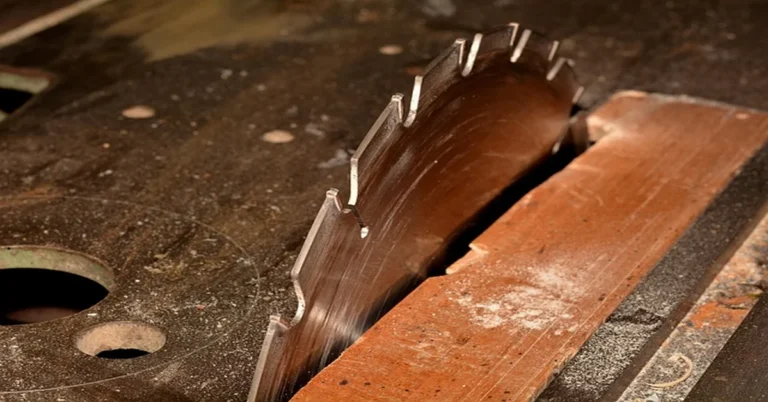
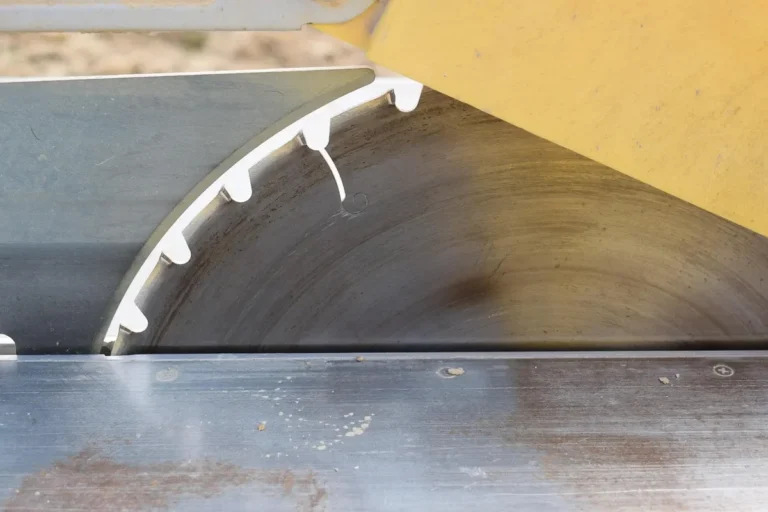
The steel disc itself (the “plate”) is thinner than the slot it cuts. Carbide teeth are brazed onto the plate and ground with “set” — extending slightly past both faces of the plate — so the blade doesn’t bind and overheat inside the cut. A blade with a 0.098″ plate might cut a kerf of 0.126″, not 0.098″. When a spec sheet just says “1/8-inch blade,” it’s almost always describing the plate, not the actual cut width — check the manufacturer’s listed kerf number specifically if a joint or dado depends on the exact cut width.
| Blade Category | Plate Thickness | Typical Kerf | Best For |
|---|---|---|---|
| Full-kerf (standard) | ~0.125″ (1/8″) | ~0.130-0.145″ | Cabinet saws, 3HP+ motors, ripping hardwood |
| Thin-kerf | ~0.091-0.098″ | ~0.098-0.110″ | Contractor/benchtop saws under 2HP, less waste per cut |
| Ultra-thin-kerf | ~0.071″ | ~0.079-0.087″ | Underpowered saws, maximizing yield from expensive stock |
Why Thickness Matters More on a Smaller Saw
A full-kerf blade removes roughly 30-40% more material per pass than a thin-kerf blade, and every bit of that extra material has to be pushed through by the motor. On a benchtop or contractor saw with a motor under 2 horsepower, that extra load shows up as bogging down mid-cut, burning on the wood, or the belt slipping under a hard maple rip. Thin-kerf blades exist specifically to fix this — they let underpowered saws rip hardwood cleanly by cutting a narrower path. Cabinet saws with 3+ horsepower motors rarely notice the difference and can run full-kerf blades all day for the extra stability they provide.
The tradeoff: thin-kerf blades flex more under lateral pressure because there’s simply less steel in the plate. On a long rip cut, that flex can show up as a slightly wavy cut or blade drift, especially on a blade without stiffening features. Better thin-kerf blades add a laser-cut stabilizing vent pattern or an anti-vibration slot to fight this — cheaper ones skip it, so it’s worth checking for on the spec sheet if you’re ripping long boards regularly.
Matching Thickness (and Tooth Count) to the Cut
- Ripping (cutting with the grain): fewer, larger gullets clear waste fast. Thin-kerf is fine here since rip cuts follow the grain and don’t stress the blade laterally as much as crosscuts do.
- Crosscutting (across the grain): more teeth (60-80T) for a clean edge. Full-kerf tends to hold a flatter line here, which matters more on visible joints.
- Plywood/veneered panels: a high tooth-count, thin-kerf blade minimizes tear-out on the face veneer without demanding much motor power.
- Dado stacks: not a thickness question at all — dado sets use multiple blades and chippers stacked to a target width (typically adjustable from 1/4″ to 13/16″), unrelated to a single blade’s kerf spec.
Measuring Thickness Yourself
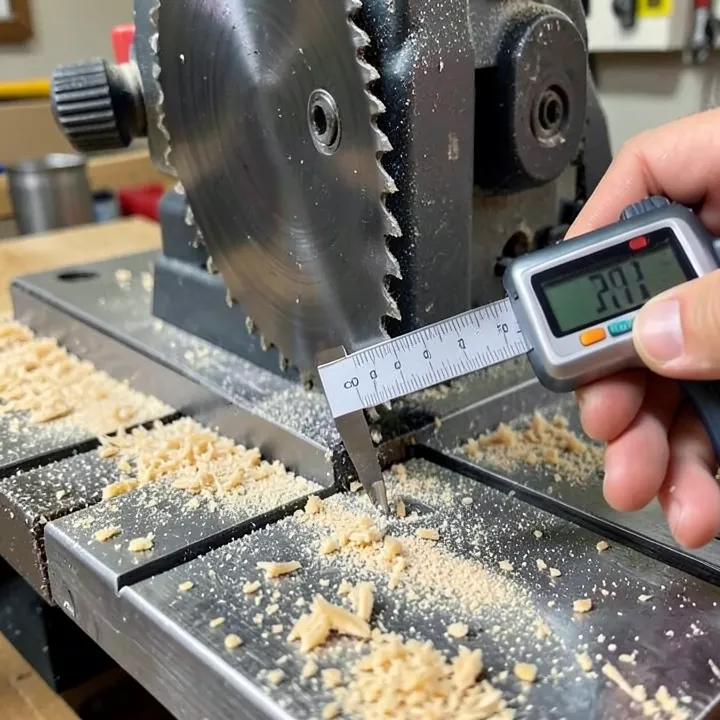
A digital caliper is the only reliable way to check — a ruler can’t resolve thousandths of an inch. With the saw unplugged and the blade removed, measure the plate in two or three spots away from the teeth (the plate itself, not across the carbide tips) and average the readings, since some plates taper slightly toward the center. To get the actual kerf width instead of the plate thickness, measure straight across the widest point of two opposing carbide teeth.
Frequently Asked Questions
Is a thinner table saw blade always the better choice?
No. Thin-kerf is better for underpowered saws and minimizing waste, but full-kerf blades flex less and hold a straighter line on long or repeated cuts on a saw with enough motor power to run them without bogging down.
Does blade thickness affect dado cuts?
Not directly. Dado cuts use a stacked dado set (multiple blades and chippers) adjusted to a target width, which is a separate system from a single blade’s plate thickness or kerf.
What thickness is best for cutting hardwood?
Full-kerf (around 0.125″) on a saw with at least 3 horsepower gives the most stable, flex-free cut in dense hardwood. On a smaller saw, a stiffened thin-kerf blade is the better real-world choice since it won’t bog the motor down mid-cut.
Why does my blade’s kerf seem wider than its listed thickness?
Because the listed number is usually the plate thickness, not the kerf. The carbide teeth are set (ground slightly wider than the plate on each side) so the blade doesn’t bind in the cut, which makes the actual kerf a few thousandths of an inch wider than the plate spec.
Sponsored / affiliate links. As an Amazon Associate I earn from qualifying purchases. I may earn additional commission from eligible campaigns.