Radial Arm Saw Vs Table Saw: Which is Right for Your Workshop?
A table saw is generally the safer default for most home shops, mainly because modern models come standard with a riving knife and blade guard that address its main hazard: kickback during ripping. A radial arm saw’s biggest risk is different – the blade can climb up and pull itself (and the workpiece) toward the operator during a rip cut, which is the specific danger that pushed most woodworkers toward table saws for ripping and miter saws for crosscuts. If a radial arm saw still comes out ahead for your shop, see our guide to 12-inch radial arm saw prices and what to check before buying one used.
Radial Arm Saw Features
Cuts Kickback Risk on Either Saw
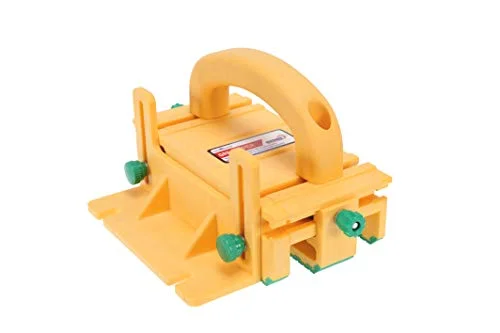 |
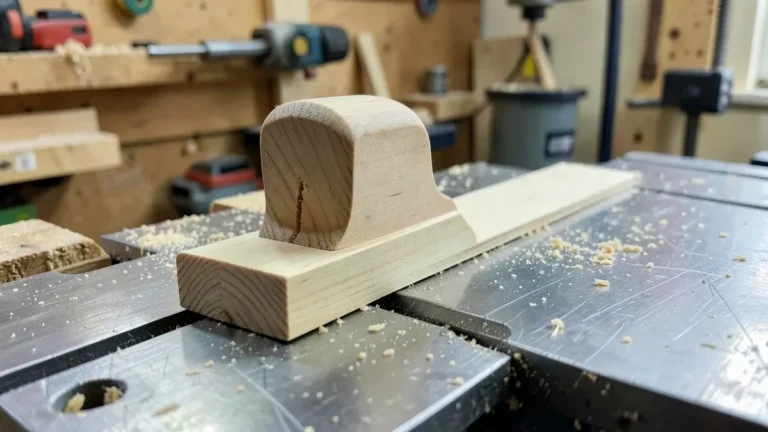
MICROJIG GRR-RIPPER GR-100 3D Push Block Keeps hands well clear of the blade during a rip cut on a table saw, where the real kickback risk lives.
|
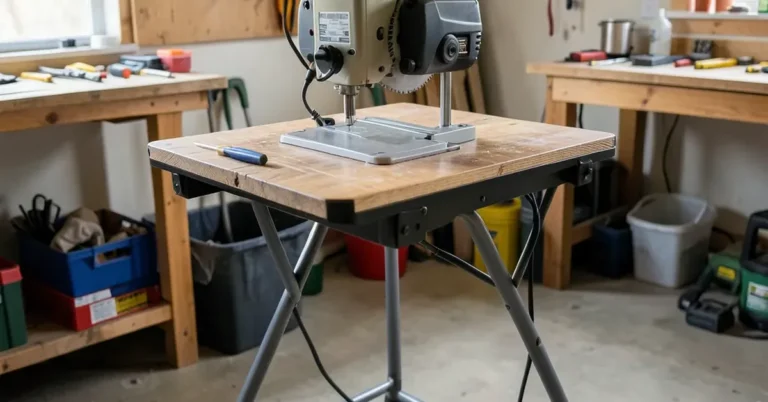
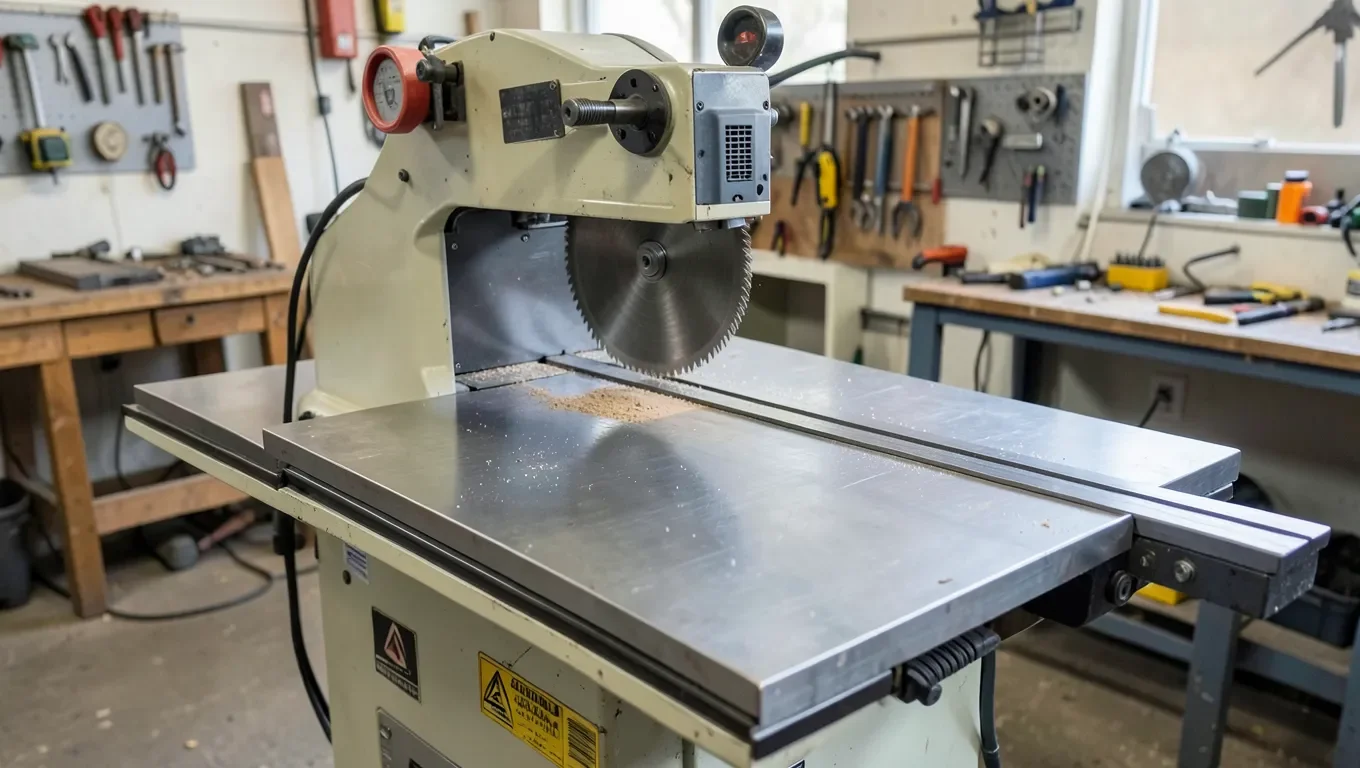
A radial arm saw mounts the blade on a horizontal arm above a flat table; the arm slides forward to pull the blade through the workpiece, and it pivots for angled cuts. This design makes it genuinely excellent at crosscuts – you can see the blade approach the cut line the entire time, which is harder to do on a table saw where the blade rises through the table from below. That visibility is also why many hobbyists who inherited or bought a used radial arm saw keep it around specifically as a dedicated crosscut station even after adding a table saw to the shop. Its main weaknesses are size (the arm needs clear space on both sides) and the ripping hazard mentioned above, which is why most woodworkers who keep a radial arm saw today use it almost exclusively for crosscutting, not ripping.
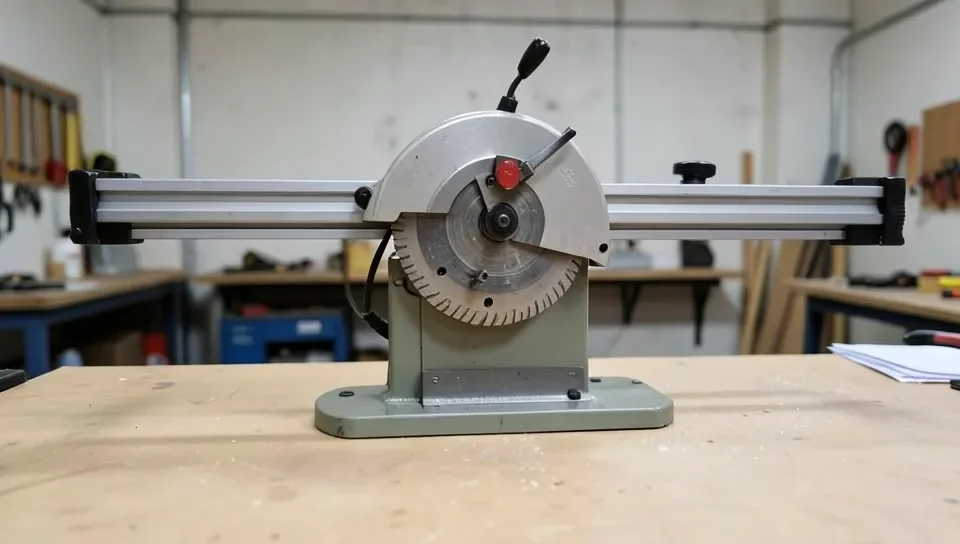
Table Saw Features
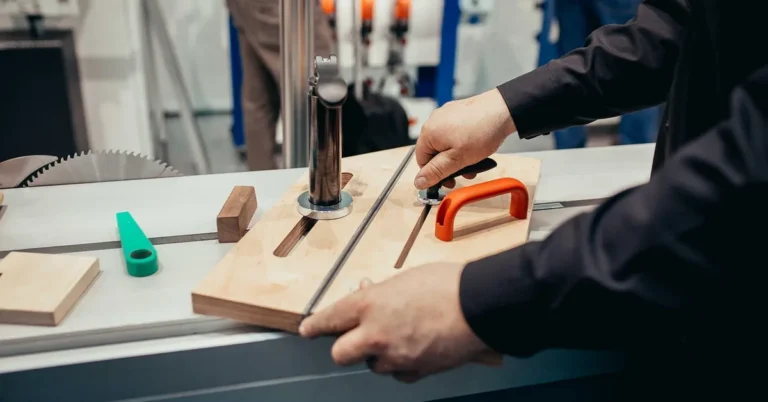
A table saw’s blade rises up through a flat table from below, guided by a fence for straight rip cuts and a miter gauge for angled crosscuts. A riving knife (a curved metal plate right behind the blade) keeps the kerf from pinching closed on the blade, which is the single feature most responsible for table saws’ better rip-cut safety record compared to older tools without one. Table saws excel at ripping long, straight cuts and are the standard choice for furniture and cabinet work, though crosscutting large panels can be more awkward than on a radial arm saw since you’re pushing the workpiece into a blade you can’t see from above. A crosscut sled largely solves this on a table saw by giving the workpiece a stable, guided platform to ride through the cut, but it’s an added accessory rather than something built into the saw itself.
Performance Comparison
| Factor | Radial Arm Saw | Table Saw |
|---|---|---|
| Best cut type | Crosscuts | Rip cuts |
| Main hazard | Blade climb during ripping | Kickback during ripping (mitigated by riving knife) |
| Footprint | Wide (arm needs clearance both sides) | Compact by comparison |
| Blade visibility | Fully visible during cut | Hidden below the table |
| Current market | Mostly used/vintage models | Widely manufactured, all price tiers |
Safety Considerations
Neither saw is inherently “the safe one” – each has a specific failure mode tied to a specific cut. A radial arm saw used for ripping can self-feed and climb toward the operator if the workpiece isn’t held firmly against the fence; this single issue is the main reason radial arm saws fell out of favor and why manufacturers stopped producing new ones. A table saw’s kickback risk during ripping is real but substantially reduced by keeping the riving knife installed and using a push stick or push block (like the one above) instead of your hands anywhere near the blade – removing the riving knife is one of the most common ways people turn a routine rip cut into a dangerous one.
Both saws need the same baseline precautions: safety glasses, hearing protection, no loose clothing or jewelry, hair tied back, and a clean, uncluttered work area. Read your specific saw’s manual before the first cut – safety features and guard designs vary enough between models that generic advice only gets you so far. Ten minutes with the manual before the first cut is a small investment against a real injury risk.
Cost and Maintenance
New radial arm saws are essentially unavailable today; the used and vintage market is your only option, and pricing varies enormously based on condition and brand. New table saws span every price tier, from benchtop models under $300 to cabinet saws well over $1,000, making them the easier saw to shop for new. Table saws also tend to be cheaper to maintain long-term simply because parts, blades, and accessories are still in active production; sourcing parts for an older radial arm saw can mean hunting online forums and used listings. Blade replacement is a good example: a standard 10-inch table saw blade fits nearly any current table saw, while a radial arm saw blade often needs to match that specific model’s arbor size and hook angle.
Space and Portability
A radial arm saw needs clear space on both sides of the table for the arm to travel and for long workpieces to extend past the blade – often more total floor space than a comparable table saw, even though the table saw itself may look larger. Table saws range from lightweight benchtop models genuinely made to be moved between jobsites, to stationary cabinet saws that are meant to stay put once positioned. If space and portability are the deciding factors, a benchtop or jobsite table saw is almost always the more practical pick over any radial arm saw.
Choosing Based on Skill Level and Use
Neither saw is objectively “easier” for a true beginner – both demand real respect and proper technique. What differs is which mistake is easier to make: a new table-saw user is more likely to get too casual about hand placement during a rip cut, while a new radial-arm-saw user is more likely to underestimate how forcefully the blade can self-feed during a rip. For most beginners today, a table saw with its guard and riving knife installed, paired with a real push stick or block, is the more commonly recommended starting tool – not because radial arm saws are unusable, but because current safety accessories and community knowledge are built almost entirely around table saws now. That knowledge gap matters in practice: it’s far easier to find an experienced woodworker or a detailed tutorial covering table saw safety than one specifically addressing radial arm saw technique.
For advanced work, table saws handle a wider range of tasks with the right jigs and accessories – dado stacks, tenoning jigs, and cutting thin or delicate pieces are all more established table saw techniques. A well-tuned radial arm saw remains genuinely excellent at repetitive, accurate crosscuts on long stock, a task some woodworkers still prefer it for even with a miter saw or table saw also in the shop.
Frequently Asked Questions
Which is safer, a table saw or a radial arm saw?
For ripping, a table saw with its riving knife installed is safer than a radial arm saw, which can climb and self-feed toward the operator during a rip cut. For crosscutting, a radial arm saw’s fully visible blade path is arguably safer than a table saw’s hidden below-table blade, provided the workpiece is held firmly.
Why did they stop making radial arm saws?
Manufacturers stopped producing new radial arm saws mainly due to the ripping-related kickback and blade-climb hazard, declining demand as miter saws and table saws covered the same cuts more safely, and rising liability concerns.
Can a radial arm saw rip wood safely?
It can, but with real added risk: the blade can self-feed and climb toward the operator if the workpiece isn’t held firmly against the fence. Many experienced users avoid ripping on a radial arm saw entirely and reserve it for crosscuts.
What advantages does a band saw have over a table saw?
A band saw’s thin blade wastes less material and can cut curves and irregular shapes that a table saw can’t, with a lower kickback risk since the blade moves in one continuous downward direction rather than spinning toward the operator.
Conclusion
The choice usually comes down to what you cut most: a table saw for ripping and general shop versatility, or a radial arm saw for repetitive, precise crosscuts on long stock if you already have one or find a good used example. Whichever you choose, the real safety factor isn’t the tool itself but matching the cut to the saw’s strength and using the right safety accessory for the job. Get that match right and either saw, used correctly, does its job well for decades.
Sponsored / affiliate links. As an Amazon Associate I earn from qualifying purchases. I may earn additional commission from eligible campaigns.