How Thick Is Bowling Alley Wood? Real Lane Specs
Bowling alley lane wood is typically about 2.25 inches thick, built up from narrow strips of hard maple and pine laminated together rather than milled from one solid slab. That number moves around in practice – older wood lanes started closer to 2.5 inches before decades of sanding and refinishing wore them down, and today’s synthetic overlay lanes use a much thinner wear layer over a composite core. The real story is in how those layers are put together, and it’s exactly that laminated, rock-solid construction that makes salvaged lane sections one of the more sought-after materials for a woodworking shop’s workbench top.
Bowling Lane Construction: Maple Ends, Pine Middle
A traditional wood bowling lane isn’t one continuous species of board – it’s assembled from dozens of narrow strips run the full length of the lane and glued edge to edge, historically around 39 individual boards laminated with the grain standing on edge rather than flat. That on-edge lamination is a big part of why old lanes stayed so flat under decades of ball impact and foot traffic.
The wood species changes by section. Hard rock maple covers roughly the first 12 to 15 feet from the foul line – the approach and landing zone, where a bowling ball hits hardest – and returns again at the pin deck on the far end. The remaining 40-plus feet in the middle, where the ball simply rolls on its way to the pins, is usually softer pine, since that section needs to be smooth and consistent rather than impact-resistant. A regulation lane, per USBC specifications, runs 60 feet from the foul line to the head pin and about 41.5 inches wide, with pine down the center and maple bracketing both ends.
TOP PICK FOR RECLAIMED MAPLE TOPS
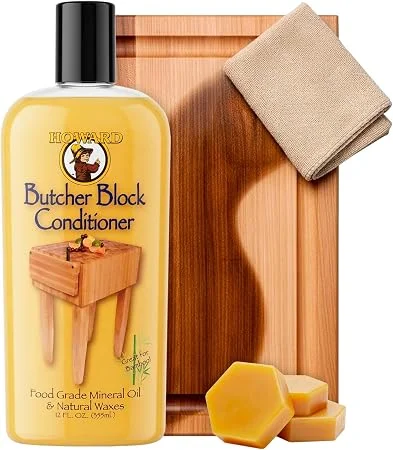 |
Howard Butcher Block Conditioner, 12 oz – $9.18 A food-grade mineral oil and natural wax blend built for maple butcher-block surfaces – the same wood a reclaimed bowling lane top is made from.
|
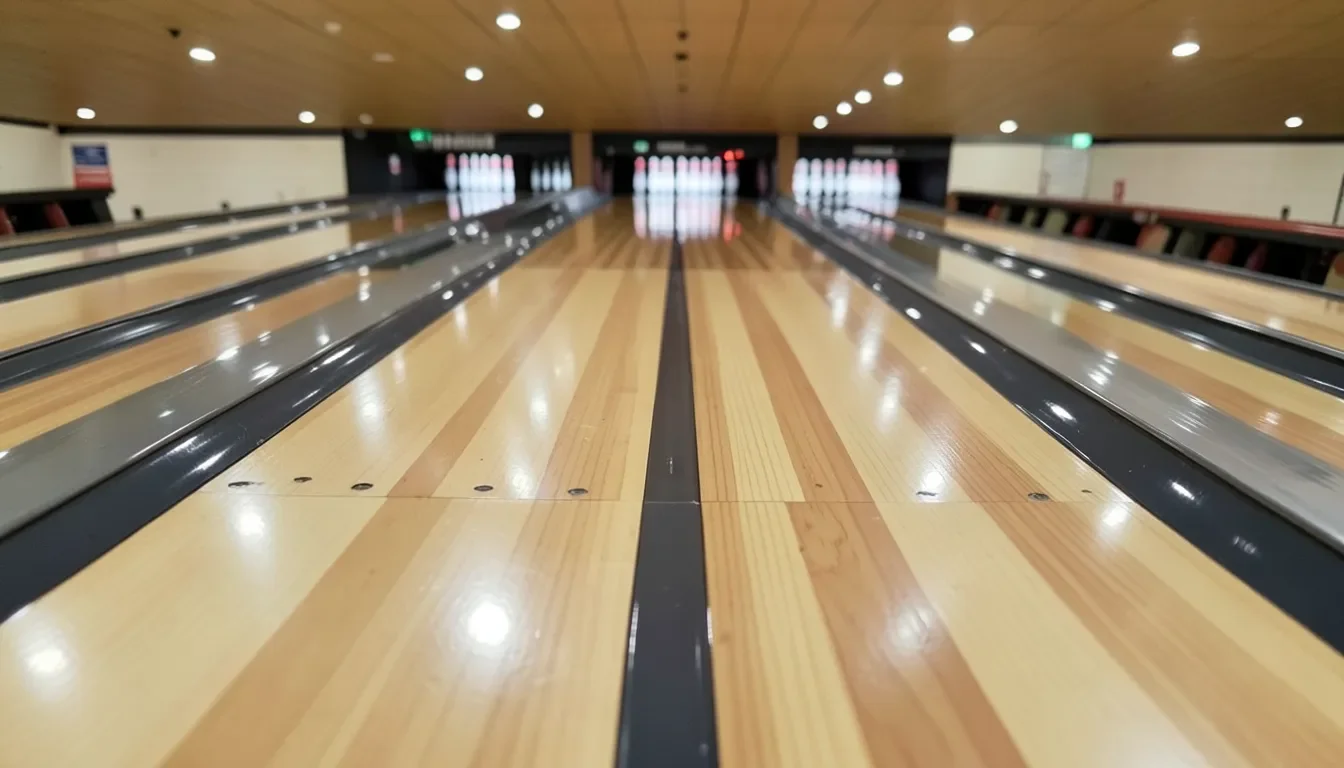
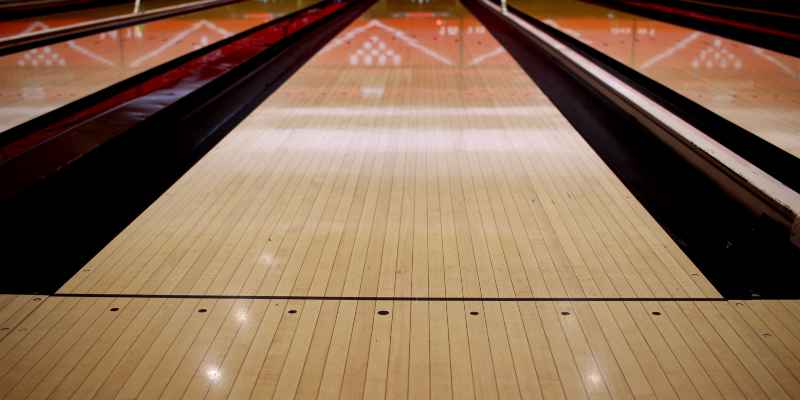
You can see the strip construction clearly on a lit lane – the alternating maple and pine boards read almost like a stripe pattern once the finish reflects overhead lighting.
So How Thick Is the Wood, Really?
Most lane manufacturers and industry sources put finished wood lane thickness at around 2.25 inches. That figure isn’t fixed for the life of the lane, though: a new lane starts a bit thicker – often cited around 2.5 inches – and loses a small amount of material every time it’s professionally sanded and refinished, something most bowling centers do every few years to remove ball-track wear and built-up lane oil. A lane that’s been resurfaced many times over its service life can measure closer to 1.5 to 2 inches by the time a center finally retires it.
Modern synthetic lanes are a different product entirely. Instead of laminated hardwood, most new installations use a thin printed overlay – in some cases under a millimeter – bonded to a particleboard or composite core. That’s nowhere near the mass of a real wood lane, but it resists warping better and costs less to install and maintain. If you’re shopping for reclaimed lane material for a shop project, it’s specifically the older laminated wood lanes you want, not a synthetic overlay panel from a modern conversion.
Why Reclaimed Bowling Alley Wood Is a Favorite for Workbench Tops
Here’s the part most pages answering this question skip entirely: decommissioned lanes are one of the more popular reclaimed materials for shop workbenches and rolling tool tables, and it’s not just nostalgia for the bowling alley aesthetic. A few genuine reasons it holds up as a work surface:
- Thickness without extra lamination work. At 1.5 to 2.5 inches of solid hardwood, a lane section is already thick enough to serve as a bench top on its own – no need to glue up a slab from dimensional lumber the way most workbench builds require.
- Extreme flatness, for free. Decades of ball impact, foot traffic, and repeated professional sanding leave a lane section dead flat over long spans, which is exactly what a workbench top needs and is hard to match with home-shop tools alone.
- Real hard maple where it counts. The impact-zone sections – the ones woodworkers most often salvage – are hard rock maple, one of the more dent-resistant domestic species, so the surface shrugs off mallet strikes and dropped tools better than a pine or fir benchtop.
- It doesn’t need to look precious. A reclaimed lane arrives with decades of gouges, ball-track discoloration, and old finish already on it, so nobody feels bad clamping a vise to it or drilling a fresh row of dog holes.
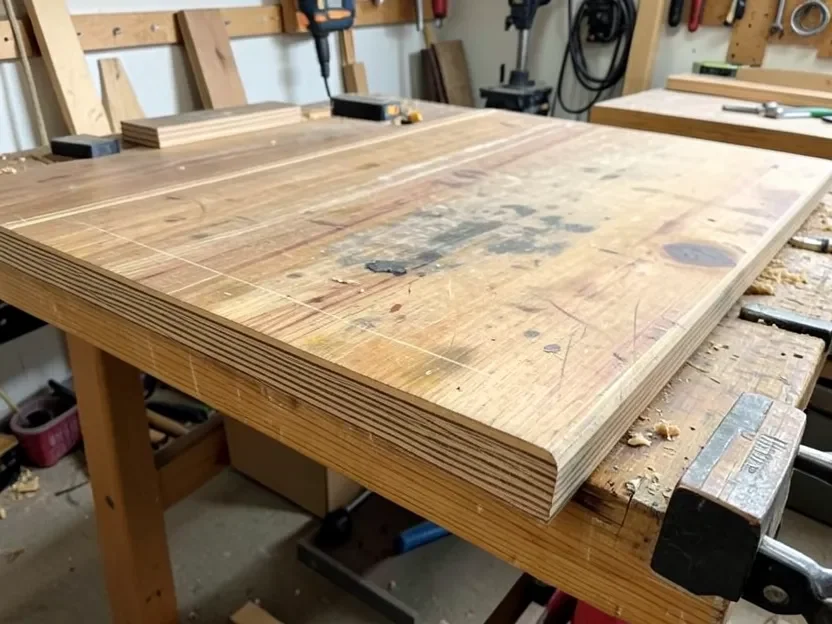
There are real caveats before you build around one, though. Lane sections are tongue-and-groove boards that were glued and often nailed or screwed together, and repaired sections sometimes have replacement boards fastened in with hardware that isn’t where you’d expect. Run a metal detector over the whole section before you cut, drill, or plane it – hitting a buried fastener with a blade or planer knife is a fast way to ruin both the tool and the board.
Buying and Finishing a Reclaimed Section
Reclaimed bowling lane sections show up through salvage yards, reclaimed-lumber dealers, and occasionally bowling centers selling off equipment during a resurfacing or synthetic conversion. A few things worth checking before you buy:
- Check for delamination. Because the boards are edge-glued strips rather than one solid piece, look along the glue lines for gaps or movement, especially near the ends of the section.
- Expect embedded finish and lane oil. Old lanes were maintained with oil and paste wax for decades, and that buildup usually needs to be sanded off before a new finish will bond properly.
- Confirm which section you’re getting. Pin-deck and approach sections are maple and hold up best as a primary work surface; a pure mid-lane section is mostly pine and better suited to an assembly table or outfeed support than a pounding-and-clamping workbench top.
Once a section is sanded flat and leveled, treat it the same way you’d treat any butcher-block-style maple surface: a food-safe mineral oil and wax conditioner – rather than a film finish like polyurethane – keeps the wood from drying out and re-cracking along the old glue seams, without building up a slick surface that skates hand tools around. Reapply every few months, more often if the shop runs dry or heated air.
Pricing varies a lot by region and by how the seller cuts the lane. A raw, uncut section straight out of a bowling center often sells cheaper by the running foot than a piece that’s already been trimmed, sanded, and squared for furniture use – you’re paying for the labor of cleaning up decades of finish and hardware, not just the wood itself. Buying directly from a lane demolition or reclaimed-lumber dealer, rather than a general salvage marketplace, usually gets you a section with a clearer history of which part of the lane it came from, which matters if you specifically want the harder maple ends rather than the pine midsection.
Frequently Asked Questions
How thick is bowling alley wood?
Bowling alley wood is typically around 2.25 inches thick, though it varies. New lanes often start closer to 2.5 inches, and older lanes lose thickness with each professional resurfacing, sometimes measuring closer to 1.5 to 2 inches by the end of their service life.
What kind of wood is used in bowling lanes?
Traditional wood lanes use hard rock maple in the high-impact areas, the approach near the foul line and the pin deck, and softer pine for the long middle section the ball rolls across. The boards run the length of the lane on edge and are glued together as a laminated assembly rather than cut from one solid piece.
Is reclaimed bowling alley wood good for a workbench top?
Yes. Reclaimed lane sections are already thick, laminated, and extremely flat from years of impact and resurfacing, and the maple sections are hard enough to resist dents from normal shop use. The main precaution is checking for embedded nails, screws, or repair hardware before cutting or drilling into a section.
Are modern bowling lanes still made of wood?
Many newer lanes use synthetic overlay panels instead of solid laminated wood, a thin printed wear layer bonded to a composite core. They’re lighter and more resistant to warping than wood, but they don’t have the mass or reclaimed-lumber appeal of older laminated maple-and-pine lanes.
Conclusion
Bowling alley wood runs about 2.25 inches thick in most cases, built from laminated hard maple and pine rather than a single solid board, with the exact number shifting depending on how many times a given lane has been resurfaced. That same laminated, hard-maple-and-pine construction is exactly why reclaimed lane sections have become a favorite workbench material in home shops – just plan on checking for embedded hardware and conditioning the maple before you put it to work.
Sponsored / affiliate links. As an Amazon Associate I earn from qualifying purchases. I may earn additional commission from eligible campaigns.