Stop Squeaky Wood Floors: Fix the Subfloor Gap for Good
Squeaky wood floors almost always come from a gap between the subfloor and the joist below it, not a defect in the boards themselves — seasonal wood shrinkage or a loosened nail lets the subfloor rub against the joist every time you step on it. Left alone, the movement can loosen more fasteners and widen the gap over time. This guide covers finding the source, fixing it from below when you have basement or crawl space access, and quick fixes from above when you don’t.
Why Do Wood Floors Squeak?
Best Squeaky Floor Fix Pick
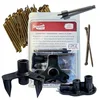
Squeeek No More Complete Squeaky Floor Repair Kit
A driver-and-screw kit that pulls the subfloor tight to the joist and snaps off cleanly below the surface, so the fix is invisible once filled.
- Best for: hardwood and vinyl floors and stairs with squeaks over accessible or known joist lines
- Why we picked it: it bundles the joist-finder bits, tripod fixture, and 50 counter-snap screws in one box so nothing extra needs to be bought separately
- Main drawback: best suited to hardwood, vinyl, and linoleum floors; a separate fixture is included for carpet but adds a step
Compare more squeaky floor repair options
 Option 1 — Full Kit Squeaky Floor Repair Kit, 5 Tools & 50 Screws
|
 Option 2 — Budget JAOAJO Floor Fix Screws Repair Kit, 5 Tools
|
 Option 3 — Non-Mechanical Basic Coatings Squeaky Hardwood Floor Cleaner, 32 oz
|
As an Amazon Associate we earn from qualifying purchases.
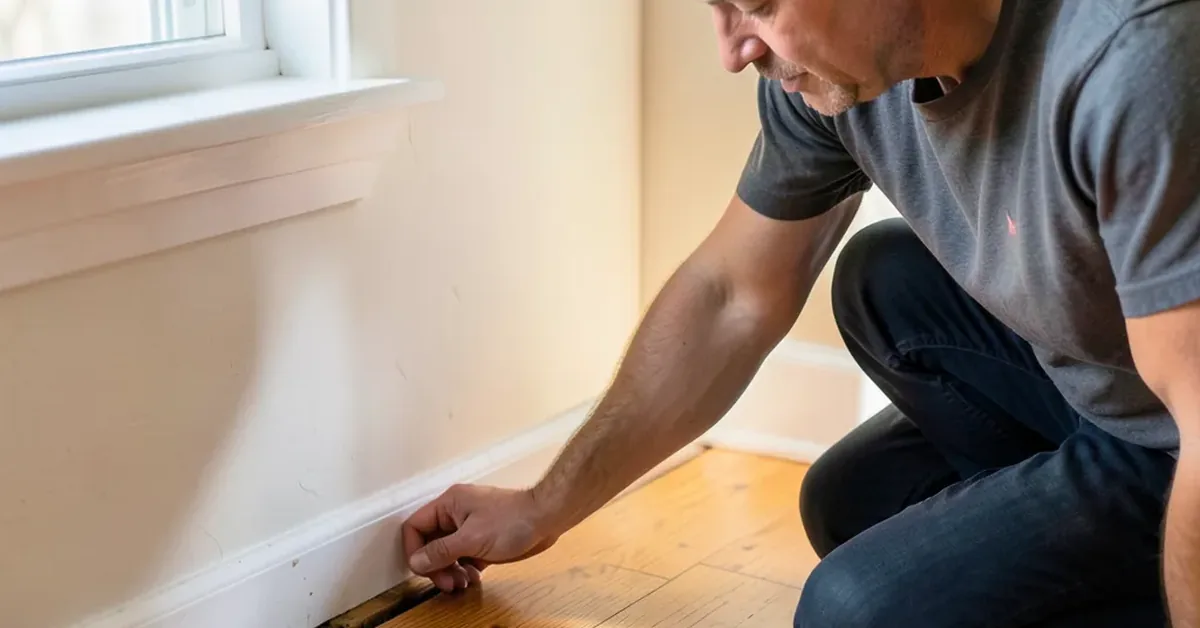
Most squeaks are caused by normal seasonal wood movement: floors shrink slightly in dry winter air and swell back in humid summer air, and that cycle can pull the subfloor away from the joist just enough to create a gap. As a house settles, the nails holding the subfloor to the joists can also loosen, letting the subfloor flex and rub against the joist or against a floorboard’s edge every time weight passes over it.
A squeak that appears suddenly in one spot, rather than gradually across a whole room, more often points to a single loosened fastener or a board that has cupped from a moisture source nearby (a plumbing leak, a humid basement, or a window that leaks during rain).
📊 Keeping indoor relative humidity between 30% and 50% is the single biggest thing you can do to prevent seasonal squeaks — wood flooring manufacturers size expansion gaps around that range, and swings outside it are what pull subfloor fasteners loose or make boards swell tight against each other. — Source: National Wood Flooring Association, Relative Humidity & Wood
Quick Fix From Above: Talc Powder and Wood Wax
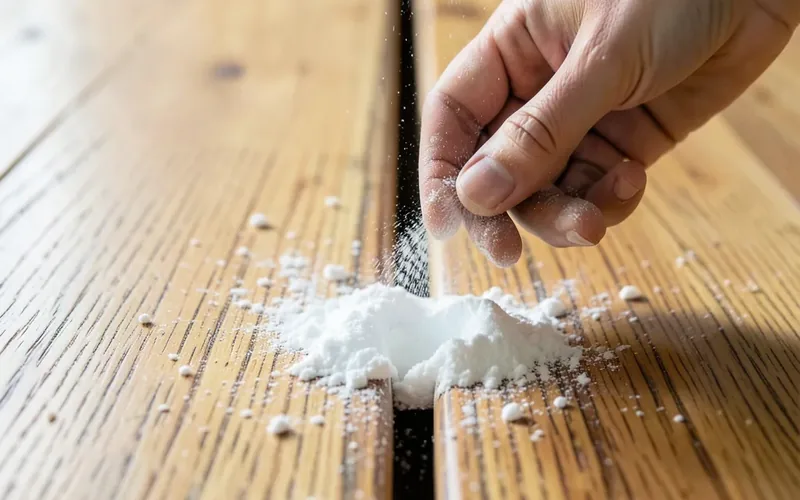
If the squeak is minor and coming from two boards rubbing at their edges rather than a subfloor gap, a lubricant can quiet it in minutes with no tools. Apply talcum powder to the joint between the offending floorboards to reduce friction, working it into the seam with a soft brush or your finger, then wipe away the excess. Wood wax works the same way and adds a bit of surface protection, but it won’t fix a squeak coming from below — it only masks board-to-board friction at the surface.
How to Fix Squeaky Floors From Below (Basement or Crawl Space)
If you have access from a basement or crawl space, this is the most reliable fix because you can see and correct the actual gap between the subfloor and the joist, rather than guessing from above.
- Find the squeak from below: have someone walk across the floor above while you watch the joists and subfloor from below for movement or a visible gap.
- Shim a visible gap: if the subfloor has pulled slightly away from a joist, tap a wood shim into the gap by hand — don’t force it, an overdriven shim can lift the floor and create a new squeak on the other side of the joist.
- Screw it tight where there’s no visible gap: apply a bead of construction adhesive along the top of the joist, then with someone standing on the floor above at the squeak, drive two screws up through a small wood block into (but not through) the subfloor, angled into the side of the joist. This pulls the subfloor tight against the joist without penetrating the finished floor above.
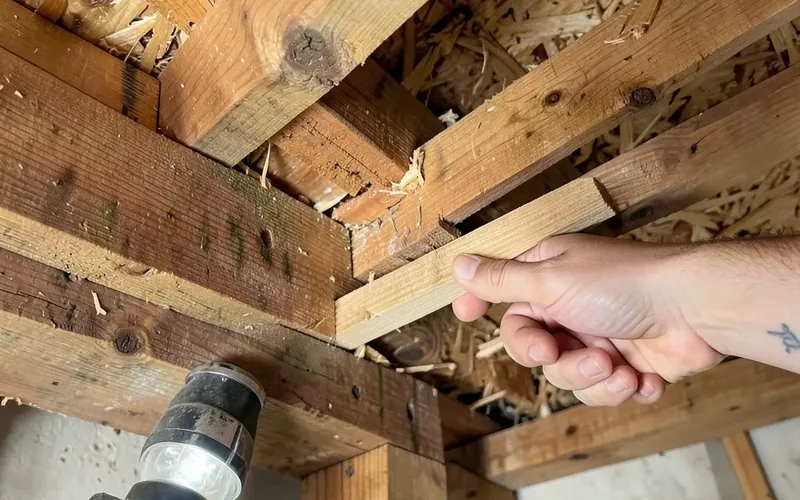
“The squeaking usually comes from the gap between the joist and the subfloor… a common cause of persistent squeaks occurs when the subfloor has pulled away slightly from the floor joists, creating movement when walking on it.”
How to Fix Squeaky Floors From Above (No Basement Access)
Slab-on-grade homes and upper floors without a crawl space need a from-above fix. A specialty squeak-repair kit like the pick above uses a breakaway screw: it drives through the finished floor and subfloor into the joist, then snaps off cleanly below the surface once it’s tight, leaving only a small hole to fill with wood putty or a matching color-fill stick. This is more invasive than the below-joist method but is often the only option when there’s no access underneath.
When to Call a Professional
Call a flooring contractor or structural professional if the squeak is accompanied by visible sagging, a soft or springy feeling underfoot, or squeaks across a wide area rather than one or two spots — those signs point to a subfloor or joist problem beyond a simple fastener fix, and tightening screws into a compromised joist can mask a bigger structural issue rather than solve it.
Frequently Asked Questions For Stop Squeaky Wood Floors
How Can I Prevent Squeaky Wood Floors?
Keep indoor relative humidity between 30% and 50% to limit seasonal wood movement, make sure the subfloor is properly fastened to the joists during installation, and fill gaps between boards promptly instead of letting them widen.
Why Do Wood Floors Squeak?
Wood floors squeak when the subfloor has pulled slightly away from a joist or a fastener has loosened, letting the subfloor or floorboards rub together under weight. Seasonal humidity swings that shrink and swell the wood are the most common underlying cause.
Can Wood Floors Be Repaired To Stop Squeaking?
Yes. Most squeaks are fixed by securing the subfloor to the joist with a shim or screws from below, or with a breakaway screw kit from above when there’s no basement or crawl space access. Surface-level friction squeaks can often be quieted with talcum powder.
Is A Squeaky Wood Floor A Sign Of Underlying Issues?
Usually not — most squeaks are a normal, harmless byproduct of seasonal wood movement or a loose fastener. It’s worth a closer look from a professional if the squeak comes with visible sagging, a springy feel underfoot, or noise spread across a wide area rather than one or two spots.
Does Fixing A Squeak From Below Require Removing Any Flooring?
No. Shimming a gap or screwing a block up into the subfloor from a basement or crawl space is done entirely from underneath and never touches the finished floor above, which is exactly why it’s the preferred method whenever that access exists.
Conclusion
Most squeaky wood floors trace back to one thing: a small gap or loosened fastener between the subfloor and a joist, usually from normal seasonal wood movement. Fix it from below with a shim or screws whenever you have basement or crawl space access — it’s the most reliable method because you’re correcting the actual gap rather than working around it. Without access from below, a breakaway screw kit from above gets the same result. Keep indoor humidity in the 30-50% range and most squeaks won’t come back.
Sponsored / affiliate links. As an Amazon Associate I earn from qualifying purchases. I may earn additional commission from eligible campaigns.