How Thick Should Wood Be for a Bench? 1.5 to 4 Inches by Type
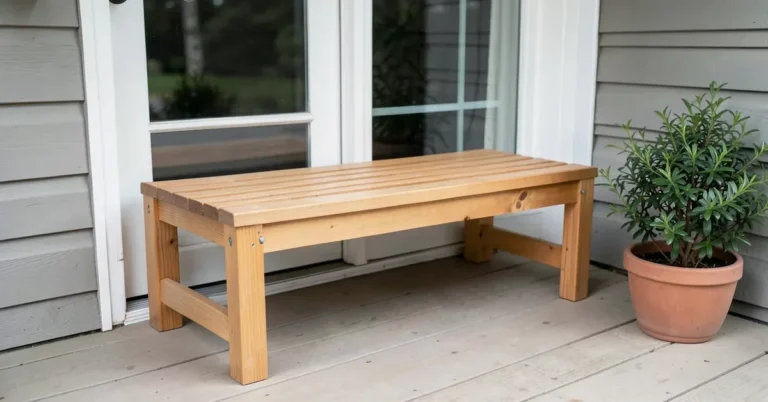
Wood for a seating or garden bench should be 1.5 to 2 inches thick, but a woodworking workbench needs 3 to 4 inches — thinner stock flexes underfoot and cannot grip bench dogs or holdfasts. Undersized wood warps, cracks at the joints, or fails to hold a workpiece steady, forcing an early rebuild. This guide covers thickness by bench type, how oak, cedar, and pine change the number, and what a Roubo-style workbench top actually needs.
Popular options include oak, cedar, and pine, each offering unique benefits. For a deeper look at which of these (plus four more) actually resists rot the longest, see our wood that resists rot the longest comparison.
Wood Thickness by Bench Type: Seating vs. Workbench
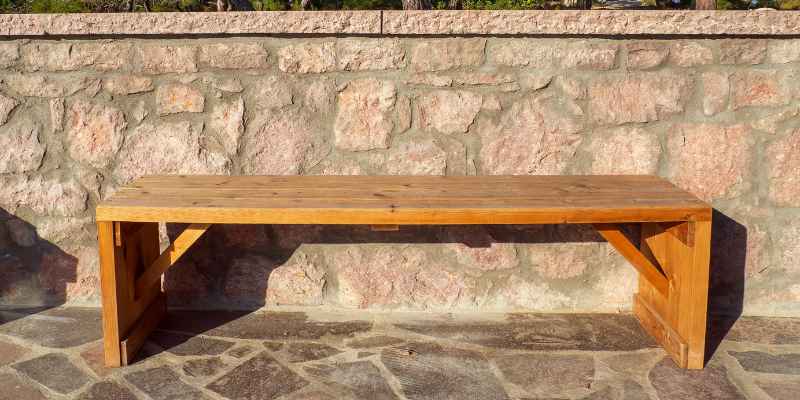
A bench built for sitting and a bench built for planing wood need very different thickness because they carry very different loads. A seating bench only has to support body weight spread across a wide board; a workbench has to resist the sideways push of a hand plane and hold a workpiece rigid under a holdfast or vise.
| Bench Type | Recommended Thickness | Why |
|---|---|---|
| Garden or patio bench | 1.5 – 2 in | Enough stiffness for seating loads without excess weight |
| Heavy-use outdoor/public bench | 2 – 3 in | Resists warping and repeated abuse over years outdoors |
| Power-tool workbench | 2 – 2.5 in | Power tools don’t transmit hand-planing force into the top |
| Hand-tool workbench | 3 – 4 in | Needed to grip holdfasts and house a planing-stop mortise |
Best Workbench Top Upgrade Pick
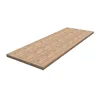 |
Kreg Hardwood Bench Top (24″ x 68″) – $339.00 A 1.5-inch solid hardwood butcher block top that drops onto a shop-built base — a fast way to get a flat, dent-resistant surface without gluing up your own slab, though it’s built for a power-tool and assembly bench rather than heavy hand-tool holdfast work.
|
As an Amazon Associate we earn from qualifying purchases.
Why Workbench Tops Need More Thickness Than Seating Benches
A Roubo workbench is a traditional French-style bench with a thick, mass-heavy top and thick legs designed to resist racking while a hand plane pushes against the work. Its top is typically built 4 inches thick because that is the minimum depth needed to house a mortised planing stop and drill full-depth bench-dog holes without punching through to the underside.
Why Does a Roubo Workbench Need a 4-Inch Top?
A 4-inch top gives the planing stop’s mortise enough wood to stay rigid when a board is jammed against it and planed, and it gives bench-dog holes enough depth to hold a dog level under clamping pressure. A thinner top can still take dog holes, but the holes come out shallow and the stop mortise weakens the board, so the top flexes exactly where you need it stiffest.
Can a 2-Inch Top Work as a Workbench?
Yes, if the bench is mainly used with power tools. A 2-inch top is stiff enough for routing, sanding, and clamping jigs, since power tools push down and sideways forces are small. It becomes a problem only once you add serious hand-tool work — holdfasts need roughly 3 inches of solid wood to grip, and a 2-inch top will rack under sustained hand-planing pressure.
📊 Minimum 3 inches of solid wood is the widely cited threshold for a top to grip holdfasts and bench dogs without excessive racking. — Source: Workbenches: From Design and Theory to Construction and Use, Christopher Schwarz (Popular Woodworking Books) — the standard reference on workbench design; no single gov/edu source publishes this figure, so it is cited by name rather than linked.
Wood Species and Thickness
Choosing the right wood species changes how much thickness you actually need. Hardwoods, like oak and maple, are dense and stiff, so they resist flexing at a given thickness better than softwoods. Softwoods, such as pine and cedar, are lighter and easier to work but need extra thickness to match a hardwood’s stiffness.
Hardwoods cost more but last longer under load. Softwoods are budget-friendly but can dent or bow more easily, especially outdoors. In humid climates, pressure-treated softwood resists rot and decay; in dry climates, dense hardwoods hold up better against cracking from moisture loss. Always factor local weather into the species choice, not just the thickness number.
| Wood Type | Density (lbs/ft³) | Approx. Weight Capacity (2-in-thick board) |
|---|---|---|
| Oak | 47 | 600 lbs |
| Maple | 43 | 500 lbs |
| Pine | 35 | 300 lbs |
Denser woods hold more weight at the same thickness, which is why a 2-inch oak top rated near 600 pounds needs closer to 3 inches in pine to reach similar capacity. Good joinery matters just as much as thickness: mortise-and-tenon and dowel joints (see our mortise and tenon joinery guide for the full breakdown) spread load across more wood fiber than butt joints held only by screws, so a well-joined bench can run thinner stock than a poorly-joined one at the same weight rating.
Common Mistakes When Choosing Bench Wood Thickness
Many builders measure the seat thickness but forget to double-check it against the actual span between supports — a 1.5-inch top that’s fine over 16 inches of unsupported span can sag over 24 inches. Always confirm your support spacing before finalizing thickness, not after.
Another common mistake with glued-up slab tops (butcher-block style) is ignoring wood movement: boards glued edge-to-edge with mismatched grain orientation can cup or crack as humidity changes seasonally, even at a full 3-4 inches thick. Alternate the end-grain direction of each strip when you glue up a slab, and let new lumber acclimate in your shop for at least a week before cutting it to size.
Using untreated wood outdoors is a third common mistake — even a thick 3-inch top will rot at the legs and joints faster than a thinner, properly sealed one. Match the finish to the thickness, not the other way around.
Finishing and Protecting Bench Wood
Use a water-resistant sealer or stain on any bench that lives outdoors, and look for a UV-resistant formula to slow fading. Reapply every 2-3 years, sanding lightly first so the new coat bonds instead of sitting on top of the old, chalky finish.
For a workbench top, skip film-forming finishes like polyurethane on the working surface — they get chipped and gouged by tools and are slippery once scratched. A penetrating oil (boiled linseed oil or a hardwax oil) is easier to spot-refresh on just the damaged area.
DIY Bench Building Tips
Gather these essentials before you start:
- Measuring tape and square
- Saw — see our woodworking saws guide for which blade suits thick stock
- Drill with bits
- Sandpaper or a sander
- Wood glue — our wood glue buying guide covers which type holds up outdoors
- Clamps for securing pieces while glue cures
- Measure and mark: Lay out your cut list against the actual support spacing so the thickness you chose is actually enough to prevent sag.
- Mill to final thickness: Plane or resaw rough stock so every piece meeting a joint is the same thickness — mismatched thickness at a joint is a common source of wobble.
- Cut to length: Cut seat, legs, and stretchers to size, checking each cut against the plan before moving to the next piece.
- Assemble the frame: Join the base with mortise-and-tenon or dowel joints and wood glue, then clamp until fully cured.
- Sand and finish: Sand edges smooth for safety, then apply the sealer or oil that matches how the bench will be used.
Maintaining Your Wooden Bench
Wipe the surface with a soft cloth to remove dust, and use mild soap and water for stubborn stains — harsh chemicals can strip the finish and dry out the wood. Check periodically for scratches or rough spots and sand them lightly with fine-grit paper before they trap moisture.
Refinish every few years once you see fading or discoloration, following the product’s instructions for coat count and dry time between coats.
Frequently Asked Questions
How thick should wood be for a bench?
A seating or garden bench needs 1.5 to 2 inches of solid wood. A workbench needs more — 2 to 2.5 inches if it’s used mainly with power tools, and 3 to 4 inches if it needs to grip holdfasts or hold a planing stop for hand-tool work.
What type of wood is best for benches?
Hardwoods like oak, maple, or teak are excellent choices for benches. They offer durability and resistance to wear. Softwoods like pine can also work but may require more maintenance. Ultimately, the choice depends on your design preferences and the bench’s intended use.
Can I use plywood for a bench?
Yes, plywood can be used for a bench, especially for the seat. However, ensure it’s thick and of high quality to provide adequate support. For longevity, consider sealing the plywood to protect it from moisture and wear. This approach can be cost-effective while still maintaining strength.
How much weight can a wooden bench hold?
A well-constructed wooden bench can typically hold between 400 to 800 pounds. The exact weight capacity depends on the wood type, thickness, and construction quality. Always ensure proper support and reinforcement for heavier loads to avoid structural failure and ensure safety.
Why does a Roubo workbench need a 4-inch top?
A 4-inch top gives a mortised planing stop enough wood to stay rigid and lets bench-dog holes run deep enough to hold a dog level under clamping pressure. Thinner tops can take dog holes too, but they flex right where hand-tool work needs the most rigidity.
How thick should a butcher block workbench top be?
Most ready-made butcher block workbench tops run 1.5 to 1.75 inches thick, which suits assembly tables and power-tool benches. For hand-tool work with holdfasts, add a torsion box or a second layer underneath to reach the 3-inch-plus depth holdfasts need to grip.
Conclusion
Match the thickness to the bench’s job: 1.5 to 2 inches for seating and garden benches, and 3 to 4 inches for a workbench that needs to grip holdfasts and hold a planing stop. Choose a species that fits your climate and budget, join it well, and finish it for how it will actually be used — that combination matters as much as the thickness number itself.
Sponsored / affiliate links. As an Amazon Associate I earn from qualifying purchases. I may earn additional commission from eligible campaigns.