What Wood Is Best for Spoon Carving
For spoon carving, choose straight-grained cherry, green birch, alder, or poplar first; avoid wild grain, knots, and severe runout, because grain direction controls the cut more than softness alone. Bad wood leads to tear-out, split bowls, and handles that fail while you shape or use the spoon. This guide ranks spoon woods by carving behavior, blank sourcing, and finished-spoon durability, so you can pick the right stock fast.
Quick answer for beginners
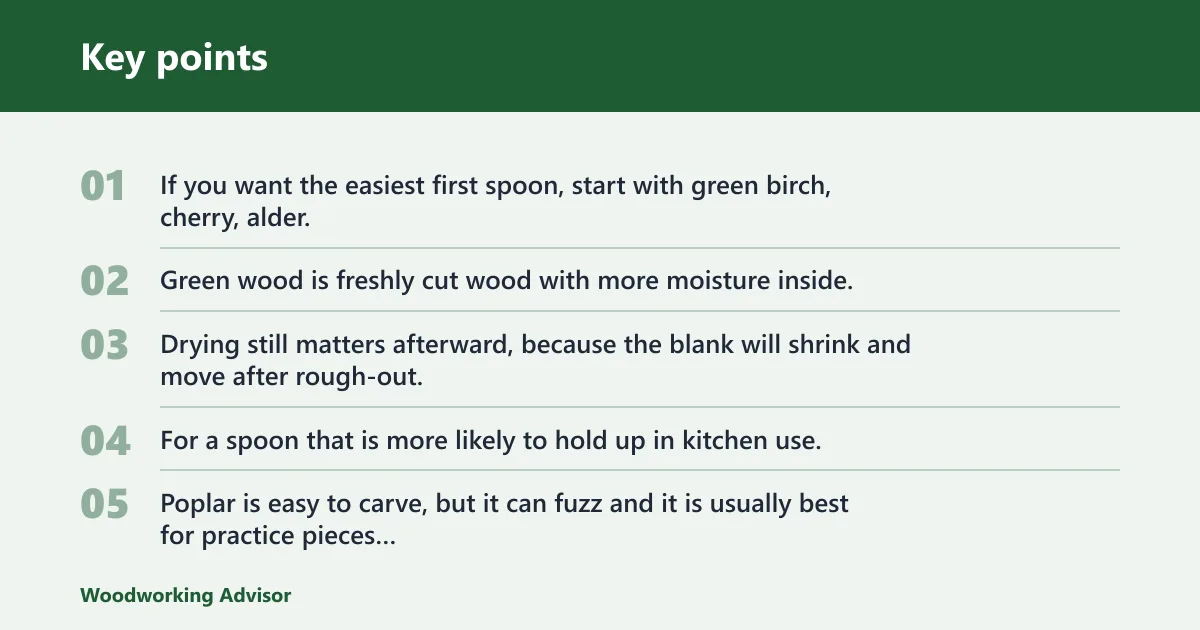


If you want the easiest first spoon, start with green birch, cherry, alder, or poplar from a straight-grained blank. Green wood is freshly cut wood with more moisture inside, so it cuts more easily than dry stock and helps you learn spoon shape with controlled cuts. Drying still matters afterward, because the blank will shrink and move after rough-out.
For a spoon that is more likely to hold up in kitchen use, cherry and walnut are better bets than poplar. Poplar is easy to carve, but it can fuzz and it is usually best for practice pieces rather than a spoon you expect to keep in service. Walnut carves well for experienced learners, with good color and finish.
Choose green wood when you want easier knife travel and lower carving effort. Choose dry wood when you need a blank that is already stable enough for a more predictable finished size, but expect more resistance from the knife. Straight-grained wood is the key in either case.
Best first-choice woods for easy carving
Birch, cherry, alder, and poplar belong near the top for beginners because their grain is usually predictable enough to guide the knife cleanly. They are not equal in finish quality. Poplar is generally among the easiest to cut, cherry and alder often finish a bit better, and birch sits in the middle as a dependable practice wood.
When to choose green wood over dry wood
Pick green wood when your main goal is learning spoon form, bowl transitions, and controlled cuts. The moisture content is higher, so the wood generally carves more easily than seasoned stock. After roughing out, set the spoon aside to dry and expect shrinkage, possible warp, and a small change in fit.
Which woods to save for later practice?
Save oak and many twisted or knotty blanks for later. Walnut can also fit well in this group if grain control is still developing, because it is a medium-hard wood that tends to reward cleaner tool handling. It is a strong choice once you can read grain direction and keep the bowl rim from splintering.
Spoon wood decision table
This table compares 10 common spoon woods by carving behavior, blank sourcing, and finished-spoon durability. The ratings are practical, not absolute. A clean straight-grained blank can move a wood up the list, while knots, runout, or cracks can push any species down.
| Wood | Grain predictability | Carving effort | Splitting risk | Drying movement | Food-contact suitability | Beginner friendliness |
|---|---|---|---|---|---|---|
| Cherry | High | Moderate | Low | Moderate | High | High |
| Birch | High | Moderate | Low | Moderate | High | High |
| Alder | High | Low to moderate | Low | Moderate | High | High |
| Poplar | Moderate | Low | Moderate | Moderate | Moderate | High for practice |
| Apple | High | Moderate | Low | Moderate | High | Moderate to high |
| Maple | High | Moderate to high | Moderate | Moderate | High | Moderate |
| Walnut | Moderate to high | Moderate to high | Moderate | Low to moderate | High | Moderate for experienced learners |
| Willow | Moderate | Low | Moderate | High | High | Moderate |
| Basswood | Moderate | Low | Moderate | Moderate | High | High for carving feel |
| Oak | Moderate to low | High | Moderate to high | Moderate | High | Low |
How the 10 woods are ranked
Grain predictability comes first because it controls knife travel. Carving effort comes next. A wood that feels easy for 10 seconds can still fail at the bowl neck if the grain changes direction. Splitting risk, drying movement, and food-contact suitability matter after that, because the spoon must survive both carving and use.
What each scoring factor means
Grain predictability means the knife can follow a line without diving or skating. Carving effort covers how much force the cut needs and how much fuzz or tear-out appears. Splitting risk is about how likely the blank is to crack at the rim, bowl transition, or thin handle. Drying movement is how much the spoon may warp or open checks after rough-out.
How to read the table for your project
If you want the easiest learning path, pick a high-predictability wood with low carving effort, such as cherry, birch, or alder. If you want a tougher spoon for daily kitchen use, cherry or walnut can make more sense than poplar. If the blank is flawed, the species matters less than the grain pattern.
Why grain matters more than softness
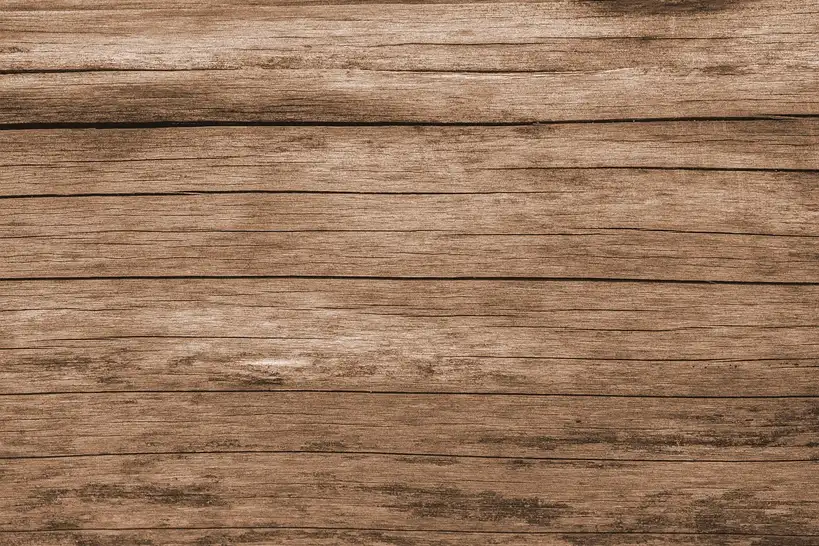
Softer wood is not automatically easier. Straight grain gives you predictable knife travel, and that matters more than a low hardness number when you are carving a bowl, neck, and handle in one piece. A straight-grained hardwood can carve cleaner than a softer blank with twisted grain.
Straight grain and predictable knife travel
Straight-grained hardwoods such as birch, cherry, apple, maple, and alder are useful because they reduce tear-out and keep the edge moving where you expect. That makes them good for bowls, spoons, and utensil handles. The cleaner the grain, the easier it is to control the cut.
Why wild grain causes splits
Wild grain changes direction quickly, and the knife can force a split instead of a cut. That problem shows up most often in the thin neck under the bowl and around the transition from bowl to handle. Riven wood helps because it is split along the grain rather than sawn, so the blank is less likely to hide a sudden grain turn.
Where the bowl transition needs extra attention
The bowl transition is where the wood narrows and the grain can curl. Change cut direction as soon as the grain turns, or the edge can lift chips and start a split. The same rule applies at crotch grain and near any knot. If the grain looks uncertain there, choose another blank.
Suppose you have about a 10-inch cherry blank with a clean handle but a swirl at the bowl neck. The handle may carve fine, yet the spoon can still split when you hollow the bowl if you keep pushing in the wrong direction. The fix is not more force. It is changing the cut direction and, if needed, choosing a straighter piece.
What wood is easiest to carve a spoon?
The easiest spoon woods for most beginners are green birch, alder, cherry, and poplar from straight-grained stock. They give predictable cuts and usually allow clean shaping without fighting the knife. Poplar is the easiest to cut, but cherry and alder usually give a better final surface and a more durable spoon.
Poplar, birch, cherry, and alder compared
Poplar is useful for learning form because it cuts easily, but it can fuzz and look soft at the surface. Birch gives a cleaner practice blank and is a stronger all-around starter choice. Alder and cherry both carve well and usually finish more nicely, so they are better once you want a spoon that can go into regular kitchen use.
When walnut belongs in the shortlist
Walnut belongs in the shortlist once you can keep the grain under control. It has medium hardness, good color, and a finish that many carvers value. A Wood By Wright spoon project used walnut, and that project can be made in a couple hours. That makes walnut a realistic next-step wood, not a first-blank gamble.
What woods should you avoid at first?
Avoid oak first, along with knotty, cracked, twisted, or badly runout blanks. Oak can make a good spoon, but it is a tougher cutting wood with open grain and strong medullary rays, so it asks for more control than many beginners have. A rough blank with defects is a poor first choice no matter the species.
Why oak is harder on beginners
Oak’s open grain and medullary rays can make the cut feel rougher and less predictable. That does not make oak unusable. It does mean the knife may grab or leave a rougher surface, especially at the bowl rim and handle neck. Oak is often better for decorative spoons than for fast practice blanks.
Knots, cracks, and twisted grain
Knots and cracks are failure points. Twisted grain can steer the knife away from the path you want. If you see those defects in a branch or pruning, move on. A spoon blank should be clean enough that the grain lines look calm and continuous through the whole shape.
When a difficult wood still makes sense
Choose a harder or fussier wood when the design matters more than speed, or when you already know how to read grain direction. Walnut and oak both fit that category better than poplar. You gain a more durable or attractive spoon, but only if the blank is sound and the grain is manageable.
How do you source spoon blanks?
The cheapest spoon stock often comes from branches, logs, firewood, and garden prunings. Riven stock is best because splitting the wood along the grain reduces wild grain direction in the blank. Look for clean, straight sections and reject pieces with knots, cracks, or obvious twist.
- Check the grain line. Pick a branch or split section where the grain runs straight through the future bowl and handle. Avoid crook, crotch, and severe runout.
- Choose the cleanest stock. Firewood can work if it is sound and split from a species that suits spoon carving. Garden prunings can work too, but only if the diameter and grain are suitable.
- Cut around defects. Trim away knots, bark inclusions, checks, and cracks before laying out the spoon. If the defect lands in the bowl neck or rim, use a different piece.
Branches, logs, firewood, and garden prunings
Branches are often the easiest free source because they already hint at the spoon shape, but the grain must still be checked. Logs are useful if you can split them into riven blanks. Firewood can work because it is riven stock, a point Wood By Wright has described directly. Garden prunings are fine for small spoons, provided the wood is clean and sound.
How to choose riven stock
Riven stock follows the grain instead of crossing it with saw marks that hide a turn in the fibers. That improves stability and makes the blank more predictable. If you split a section and the fibers run straight from end to end, you have a much better starting point than a sawn blank with hidden runout.
Three checks before you cut
First, look for knots and cracks. Second, follow the grain visually through the bowl neck and handle. Third, decide whether the piece is green or dry enough for your plan. Green wood is easier to carve, but it needs proper drying after rough-out. Dry stock carves harder, yet may move less during finishing.
A common first-timer mistake is to grab a tidy-looking firewood split that has a knot right where the bowl meets the handle. The spoon may look fine on the outside, then split as soon as the knife meets that knot. A cleaner split from the same pile is usually the better blank.
Drying, movement, and food use
Fresh green wood behaves differently from seasoned wood because it still holds more moisture. After roughing out, it dries and shrinks, and that movement can cause cracking, warp, or a handle that no longer feels centered. Food-contact suitability matters too, but only after the blank is stable and the carving is complete.
What happens after roughing out green wood
Rough the spoon to near-final shape, then let it dry before final smoothing and finishing. The blank will lose moisture and usually move a little. That is normal. The goal is to leave enough extra thickness that the final spoon still has the shape you want after shrinkage.
How shrinkage affects shape and fit
Shrinkage can flatten a bowl slightly, narrow a handle, or open a small check at the rim. The effect is bigger in wet wood than in dry wood. That is why green stock is ideal for learning form but not a reason to ignore species choice. A straight-grained green spoon still dries better than a crooked one.
Food-contact considerations for a finished spoon
Use a wood that is commonly accepted for food-contact utensils and keep the surface clean and fully dry before use. Cherry, birch, alder, apple, maple, and walnut are all common spoon woods for that reason. Avoid any blank with rot, mold, or chemical contamination, no matter how easy it carves.
For study material, Robin Wood has been carving for over 20 years, and his spoon carving courses have run since 2005. His course schedule includes 2-5pm on the first day and 9.30-4.30 on the second and third days. Barn the Spoon’s book was released on November 14, 2017, runs 224 pages long, includes 16 unique designs, and organizes spoons into four main categories. Those references show how much spoon form depends on disciplined blank choice, not just a sharp knife.
Frequently asked questions
What wood is good for spoon carving
Good spoon woods are straight-grained, predictable, and free of knots and cracks. For beginners, green birch, cherry, alder, and poplar are practical choices. For a more durable kitchen spoon, cherry and walnut are better than poplar. Grain direction still matters more than softness, so inspect the blank before you cut.
What kind of wood is good for spoon carving
Use wood that lets the knife follow the grain cleanly. Straight-grained hardwoods such as birch, cherry, apple, maple, and alder are reliable options. Green wood is easier to carve than dry stock, but it still needs a sound grain path and proper drying after rough-out to avoid warping or cracking.
What wood to use for spoon carving
If you are starting out, use green birch, alder, cherry, or poplar. If you want a spoon that is more likely to hold up in daily use, cherry or walnut is a stronger choice. Oak is usable, but its grain and cutting feel make it a harder first project than most beginners need.
Where to get wood for spoon carving
Look at branches, logs, firewood, and garden prunings. Riven stock is especially useful because it follows the grain and reduces wild grain direction in the blank. Avoid pieces with knots, cracks, or obvious twist. A clean split from a tree or pruning cut is usually better than a sawn block with hidden runout.
Is poplar good for carving spoons?
Yes, poplar is good for practice spoons because it cuts easily and helps you learn form. It can fuzz, though, and it is usually not the best choice for a premium finished spoon. If you want a spoon that looks and wears better over time, cherry, birch, or walnut is a better step up.
Is oak good for carving spoons?
Oak can be used for spoons, but it is not a friendly first choice. Its open grain and strong medullary rays make the cut feel tougher, and beginners are more likely to fight tear-out or splintering at the bowl neck. It makes more sense for decorative spoons or later practice.
Sponsored / affiliate links. As an Amazon Associate I earn from qualifying purchases. I may earn additional commission from eligible campaigns.