How to Build a Wood Fence Using Metal Posts (Depth and Concrete Guide)
A wood fence on steel posts gives you the look of cedar or pressure-treated boards without the weakest part of a traditional fence, which is the buried wood post. The posts go in concrete, a bracket clamps each 2×4 rail to the steel, and the boards screw to the rails. Most guides stop there. This one adds what they skip: the real bag count of concrete per hole, the corrosion problem where treated lumber meets galvanized hardware, and the 811 utility check before you dig.
Quick Answer
Use 9-foot, 2-3/8 inch round steel posts for a 6-foot fence. Bury one-third (36 inches) in a 10-inch hole on 4 inches of gravel, and plan about 2.3 bags of 80 lb concrete per hole (not the 1 to 1.5 bags many guides say). Space posts 8 feet apart, clamp 2×4 rails on with brackets, and use hot-dip galvanized or stainless fasteners with treated boards.
Choosing Metal Posts and Brackets for a Wood Fence
Best Bracket Pick for 2-3/8 Inch Posts
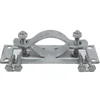 |
SupConn 2-3/8″ Steel to Wood Fence Brackets (24-pack)
|
The post is a round steel tube, and the bracket system you pick decides the post size. Steel-to-wood brackets from makers such as OZCO are built for 2-3/8 inch outside-diameter steel posts, which is also why that size is the default for DIY builds. Check that every post, bracket and gate part uses the same diameter before you buy anything.
Look for brackets with the hardware pre-installed. OZCO describes its WAP-OZ bracket as arriving with carriage bolts pre-set and lag screws included, installed with a single 1/2 inch driver, and with tabs that bend to set 90 degree, 45 degree or custom angles. That makes corners and slopes a bracket adjustment instead of a welding job.
Call 811 and Plan the Layout
Call 811 before any hole is dug. It is free, and in most states you should allow about two full business days for utilities to be marked with paint or flags. Mark colors tell you what is below: red for electric, yellow for gas, orange for communications, blue for water and green for sewer. Rules differ by state, so check with your local one-call center for the exact wait and the safe distance to dig near a mark.
Then stake your line and string it. Mark posts every 8 feet on center, because 2×4 wood rails sag over longer spans. Set corner and gate posts first, measure the actual gate opening plus hinge and latch clearance, and let the rest of the posts fall between them. Our fence board calculator helps you count the boards for the finished run.
How Much Concrete Each Steel Post Hole Really Needs
This is where most guides are wrong. Many tell you one to one-and-a-half bags per hole. The math says otherwise. A 10-inch hole that is 36 inches deep, with 4 inches of gravel at the bottom, leaves 32 inches of concrete around a 2-3/8 inch post. That is about 1.37 cubic feet after subtracting the steel. Quikrete rates an 80 lb bag at roughly 0.60 cubic feet and a 50 lb bag at roughly 0.375 cubic feet, so one bag does not come close.
| Hole size (36 in deep, 4 in gravel) | Concrete volume | 80 lb bags | 50 lb bags |
|---|---|---|---|
| 10 in diameter | 1.37 cu ft | 2.3 (buy 3 for safety) | 3.7 (buy 4) |
| 12 in diameter | 2.01 cu ft | 3.4 (buy 4) | 5.4 (buy 6) |
For a 40-foot straight run you have six posts, so budget roughly 14 bags of 80 lb concrete in 10-inch holes. FenceTrac, a fence-system maker, reaches a similar figure of about 2.25 bags of 80 lb mix for a 2.5 inch post at 36 inches deep. Digging a wider hole than you need costs you bags quickly, since the volume grows with the square of the diameter.
Installing the Steel Posts
Dig to the right depth
Bury one-third of the post: 36 inches for a 9-foot post on a 6-foot fence, and 48 inches for a 12-foot post on an 8-foot fence. A hole about four times the post width (10 inches for 2-3/8 inch tube) is the FenceTrac guideline. In cold regions the bottom of the concrete should sit at least 6 inches below the local frost line, and if that is deeper than one-third of the post, the frost rule wins. Ask your building department for the frost depth and any permit or height limit.
Set, plumb and brace
- Pour and compact 4 inches of gravel in the bottom for drainage.
- Stand the post in the hole and check plumb on two faces with a 4-foot level.
- Brace the post with stakes and scrap lumber so it cannot move.
- Fill with concrete to grade, slope the top away from the post, and recheck plumb before it sets.
- Keep every post in line with the string and at the same height above grade.
Let the concrete cure before you load the posts with rails. Standard mixes need longer than fast-setting mixes, so follow the bag label for your product.
Attaching Rails and Boards
Rails first, boards second
Slide a bracket over the post, set it at rail height and snug the carriage bolts, then position the 2×4 rail and drive the lag screws. Repeat at each rail height. Use three rails (top, middle, bottom) on a 6-foot privacy fence as a typical layout. Keep the bracket centers aligned from post to post so the rails run straight.
Hanging the boards
Fasten each board to every rail with exterior-rated screws and pre-drill near the ends to avoid splitting. If you are deciding between species, our cedar vs pressure-treated comparison covers cost and durability, and the screws or nails guide explains why screws hold better outdoors.
The Corrosion Mistake: Treated Lumber Meets Galvanized Hardware
Modern pressure-treated lumber (ACQ and copper azole) carries a lot of copper. The American Galvanizers Association reports that these treatments are at least twice as corrosive as the old CCA treatment, and the industry recommendation changed from G90 coating to G185 coating (1.85 oz of zinc per square foot) or stainless steel. For your fence this means three things:
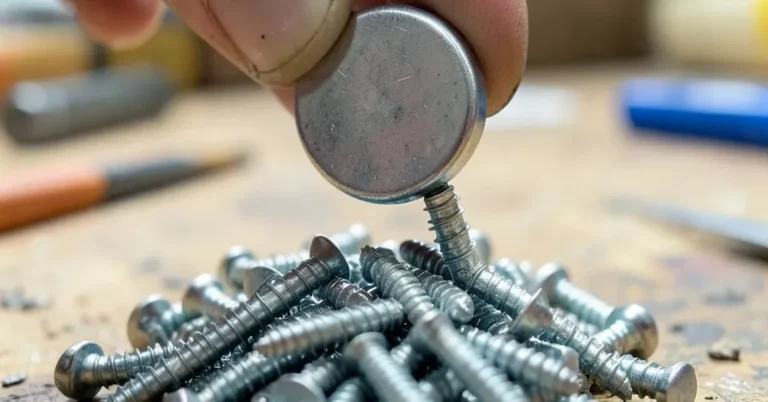
- Buy brackets and bolts that are hot-dip galvanized after fabrication, or stainless steel.
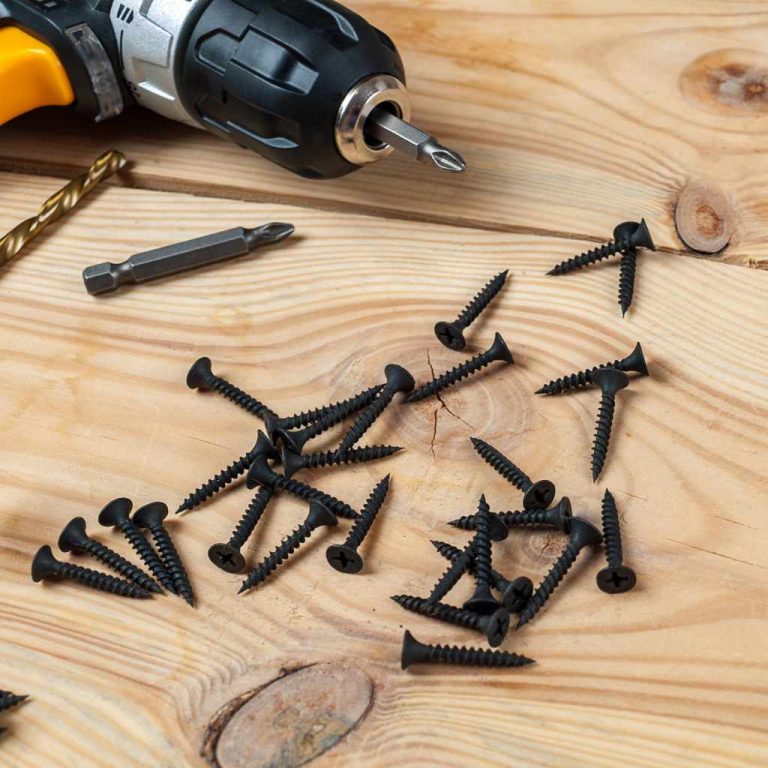
- Do not use plain zinc-plated or black screws on treated boards.
- If you want the longest life, use stainless steel fasteners, which Simpson Strong-Tie also recommends for treated wood.
Cedar boards are less demanding on hardware, but the same galvanized or stainless fasteners are still the right choice outdoors. If you cut treated boards, seal the cut ends, and let new boards dry before applying a finish by following our sealing guide.
Finishing, Gates and Maintenance
Hang gates on the heaviest posts and brace them, because a gate puts constant side load on its post. Once the boards are up, apply a stain or sealer to protect the wood. Each year, check for loose lag screws, chipped galvanizing and leaning posts. If a post does lean, our guide to straightening a fence post covers the basics, though a concrete-set steel post usually needs the footing addressed.
Frequently Asked Questions
What materials do I need for a wood fence with metal posts?
For each 8-foot bay you need one 9-foot 2-3/8 inch OD galvanized steel post (6-foot fence), gravel, concrete, three 2×4 rails, one bracket per rail end, and the fence boards. Fasteners must be hot-dip galvanized or stainless steel, especially against ACQ pressure-treated lumber. A post hole digger, 4-foot level, string line and drill complete the kit.
How do I install metal posts for a wood fence?
Call 811 and wait for the utility marks, dig a hole about four times the post width (10 inches for a 2-3/8 inch post), add 4 inches of compacted gravel, set the post plumb at one-third of its length below grade, and fill with concrete. Let the concrete cure before you bolt on brackets and hang the rails and boards.
Can metal posts resist weather better than wood?
Steel posts do not rot or get eaten by insects, which is the main reason people choose them over buried wood posts. The weak points are the zinc coating and the fasteners: chipped galvanizing can rust, and ACQ-treated lumber is aggressive toward ordinary galvanized hardware, so use hot-dip galvanized or stainless fasteners.
How deep should metal posts be set in the ground?
Bury one-third of the post length, which is 36 inches for a 9-foot post under a 6-foot fence. In freezing climates the bottom of the concrete should sit at least 6 inches below your local frost line, so use whichever number is deeper and confirm the frost depth with your building department.
How do you attach wood boards to metal fence posts?
Do not fasten boards straight to the post. Clamp wood rails (2x4s) to the post with a steel-to-wood bracket, then screw the boards to the rails. Brackets for 2-3/8 inch posts typically use carriage bolts to clamp the post and lag screws to hold the rail, so no drilling of the steel is needed.
What size metal posts should I use for a wood fence?
For a 6-foot privacy fence, 2-3/8 inch OD round steel posts that are 9 feet long are the common choice, because that is the size most steel-to-wood brackets are made for. Taller fences need a longer post so that one-third is still buried, so a 12-foot post is used for an 8-foot fence.
How far apart should metal posts be for a wood fence?
Eight feet on center is the usual spacing, because 2×4 wood rails start to sag over longer spans. Reduce spacing if your fence faces strong wind or your boards are heavy, and set gate posts to the exact gate width plus hardware clearance.
Do metal fence posts rust where they meet wood boards?
They can corrode if the hardware is wrong. ACQ and copper azole treated lumber are at least twice as corrosive as the older CCA treatment, and the galvanizing industry says G185 hot-dip galvanized or stainless steel fasteners and hardware are the recommended choice. Plain zinc-plated screws are the usual failure point.
Sources and Review Note
Depth, hole size and bag figures come from FenceTrac fence-post guidance, Quikrete bag yield data and our own volume math. Bracket features come from OZCO product and installation listings. Corrosion guidance comes from the American Galvanizers Association and Simpson Strong-Tie. This is a general guide, not engineering advice: check your local building code for height, permit and frost-depth rules before you build, and have a professional review any fence that is retaining soil or exceeds local height limits.
Sponsored / affiliate links. As an Amazon Associate I earn from qualifying purchases. I may earn additional commission from eligible campaigns.