How to Care for Butcher Block in Winter
Care for butcher block in winter by keeping indoor humidity around 35% to 55%, wiping up water quickly, oiling dry surfaces before they look thirsty, and keeping it away from heat sources that can pull moisture out of the wood. Skip that, and the top can dry out, split, cup, or open seams that cost more to repair. This guide covers humidity targets, oiling timing, spill control, and small fixes that help butcher block stay stable through heating season and holiday use.
Protect your butcher block during dry winter months
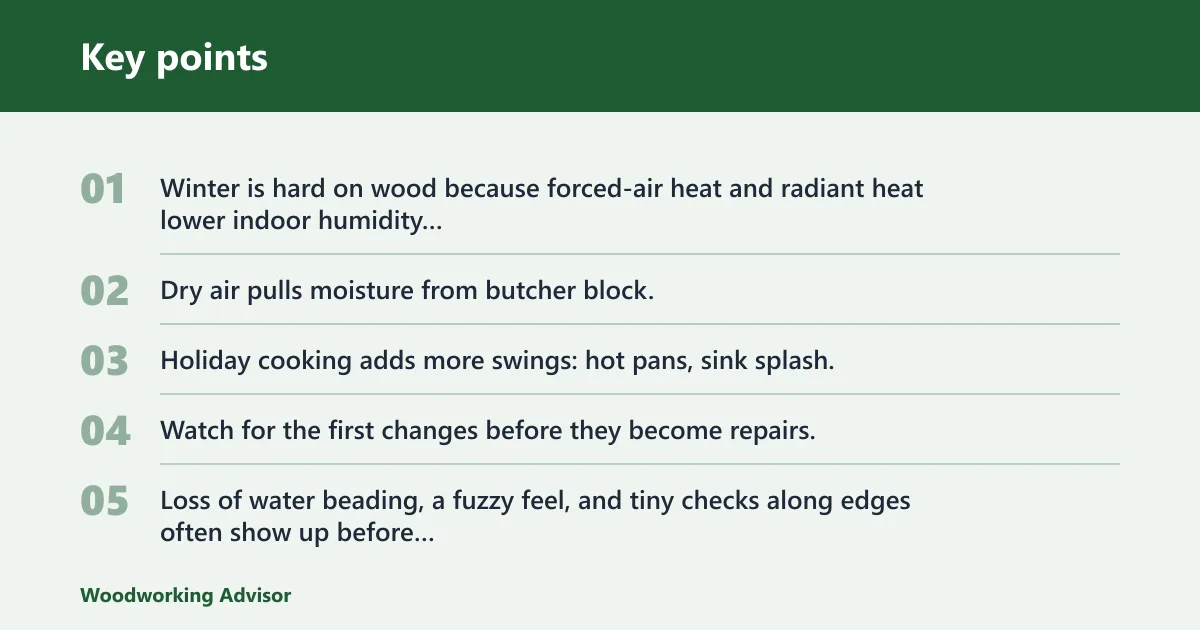


Winter is hard on wood because forced-air heat and radiant heat lower indoor humidity fast. Dry air pulls moisture from butcher block, so the surface may look fine one week and feel rough the next. Holiday cooking adds more swings: hot pans, sink splash, and repeated wipe-downs can speed drying in the same spot.
Watch for the first changes before they become repairs. Loss of water beading, a fuzzy feel, and tiny checks along edges often show up before larger cracks. If the board or countertop starts changing faster than your normal cleaning cycle, move from routine care to closer inspection and reconditioning.
Keep the room from getting too dry, clean with mild soap and warm water, and recondition the surface when it stops beading water. That approach is the fastest way to limit winter drying, especially near heaters, vents, and sinks. If the wood is oil-only, mineral oil is the routine maintenance choice; if you want less upkeep, a fully cured sealer is the lower-maintenance route.
What you’ll need
- Mild dish soap
- Warm water
- Clean towels or lint-free cloths
- Food-safe mineral oil for oil-only surfaces
- Beeswax-mineral oil blend for areas that see more water
- 320-grit sandpaper
- 4/0 steel wool
- A separate cutting board for raw meat
How do you clean butcher block in winter?
Clear crumbs and spills right away, wash with warm water and mild soap, then dry the surface fully before the next use. That routine removes food residue without leaving standing moisture behind. Skip bleach, ammonia, and abrasive cleaners on food-contact wood.
- Clear crumbs with a dry cloth or bench brush.
- Wipe the surface with warm water and a few drops of mild dish soap.
- Rinse the cloth, wipe again, and remove soap film.
- Dry the wood completely, including edges and joints.
If you need a fast sanitation step for food prep, use a cleaner made for food-contact surfaces and follow its label directions. Do not rely on diluted vinegar as a sanitizer.
How often should you oil it?
Do not oil by calendar alone. Check how the surface behaves: if water absorbs within a minute, if the board feels rough, or if an oil-only finish looks dry, it is time to recondition. Mineral oil is the routine choice for oil-only surfaces because it is considered safe for food surfaces and does not go rancid. It does need repeated reapplication.
For sink-adjacent areas or boards that see frequent wiping and splash, a beeswax-mineral oil blend adds more moisture resistance than oil alone. A common food-safe conditioner can be made with one cup mineral oil and one-quarter cup beeswax.
- Place a teaspoon of water on the surface.
- Wait for about one minute, or less if the water soaks in sooner.
- If the water darkens or disappears, oil the surface now.
- Apply more only after the wood stops absorbing the first pass.
- Wipe off any excess after the soak-in period.
Common scheduling guidance starts with daily oiling for the first week after purchase, weekly during the first month, and monthly after that. In winter, a dry room may need more frequent checks than that schedule suggests.
Should you use mineral oil or a sealer?
Use mineral oil if you want a simple maintenance cycle and are prepared to reapply it when the surface dries. That is the usual fit for boards and countertops that will stay in oil-only care. Use a permanent sealer if you want lower routine maintenance and are willing to prep the surface correctly first.
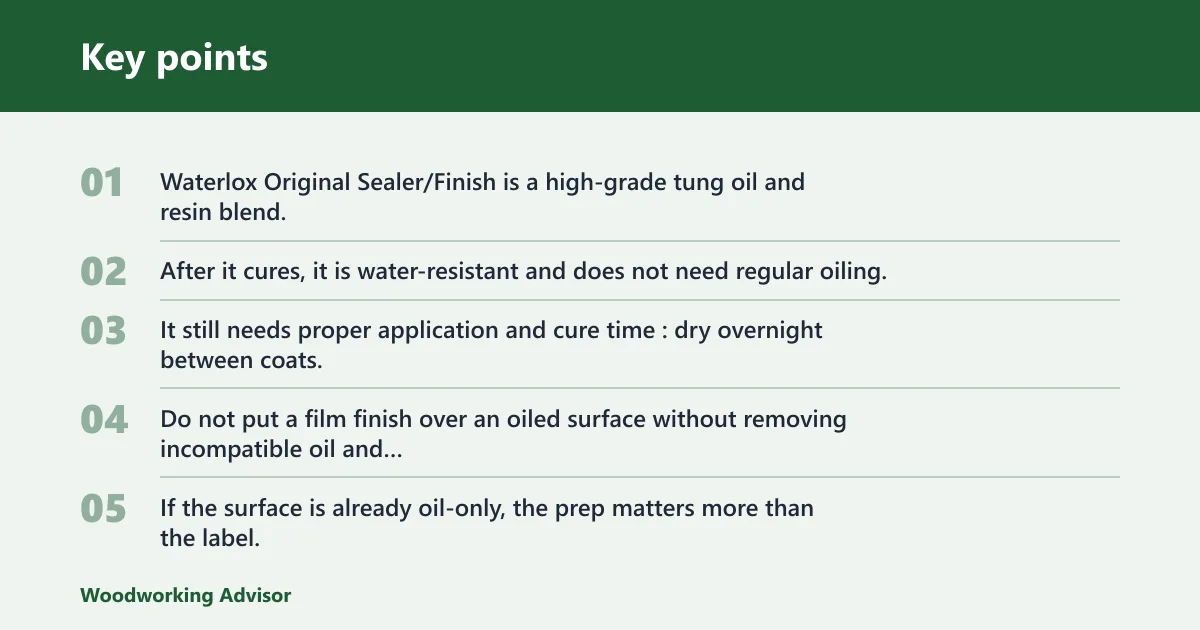
Waterlox Original Sealer/Finish is a high-grade tung oil and resin blend. After it cures, it is water-resistant and does not need regular oiling. It still needs proper application and cure time: dry overnight between coats, cure for at least 72 to 96 hours before use, and wait seven days for full cure before cleaning.
Do not put a film finish over an oiled surface without removing incompatible oil and checking the product directions for adhesion and cure. If the surface is already oil-only, the prep matters more than the label.
When oil-only care makes sense
Choose oil-only care for a cutting board or countertop that you can check often in winter. It is a good fit for hard rock maple and other dense wood surfaces used for general prep. It also makes spot care simple after minor drying.
When a permanent finish lowers winter maintenance
A cured finish fits a countertop that sees steady spill exposure, especially near sinks. It is also useful when you want less seasonal oiling. That said, a finish does not stop wood movement completely, and it will not correct structural cracking from ongoing humidity swings.
For butcher block table
| Condition | Symptom | Action |
|---|---|---|
| Dry indoor air | Surface feels thirsty, lighter in color, or rough after wiping | Check water absorption, then recondition with mineral oil or a beeswax-mineral oil blend |
| Water no longer beads | Water spreads instead of sitting in drops | Oil the surface again if it is oil-only; if it is sealed, inspect for wear and follow the finish maker’s maintenance steps |
| Fuzzy raised grain | Wood feels prickly after cleaning or splash exposure | Lightly smooth with 320-grit sandpaper or 4/0 steel wool, then clean and recondition |
| Small cracks | Hairline checks at seams or near dry edges | Reduce drying stress, recondition the surface, and monitor for movement that widens or repeats |
| Sink-adjacent swelling | Raised edge or soft-looking swelling near water exposure | Dry the area fully, reduce splash exposure, and use a beeswax-mineral oil blend or a proper cured finish if the area stays wet |
How do you fix winter wear?
Start with the smallest fix that matches the damage. Fuzzy grain usually responds to 320-grit sandpaper or 4/0 steel wool used lightly after the surface is dry. If water still absorbs fast afterward, recondition the wood. If the surface is sealed, follow the finish maker’s repair path rather than oiling over it.
Edge grain butcher block is commonly used for countertops and often offers a good balance of cost and durability. End grain is more durable under direct cutting, but it is also more expensive. Face grain has dramatic grain and works better as a visual centerpiece than as a primary cutting surface.
Hard rock maple is a high-density, closed-grain hardwood and a strong choice for direct food prep. Oak is open-grain and is not ideal for direct food preparation unless it is finished properly.
Say your 12-inch board sits near a radiator and the center still beads water, but one edge feels rough. Smooth only the rough edge with 320-grit paper, then recheck the water test on that spot instead of sanding the entire board.
Suppose a sink-side countertop starts swelling at the seam after several wash cycles. Dry it thoroughly, cut down splash exposure, and inspect the joint. A finish can slow water entry, but it will not fix repeated movement if the area keeps staying wet.
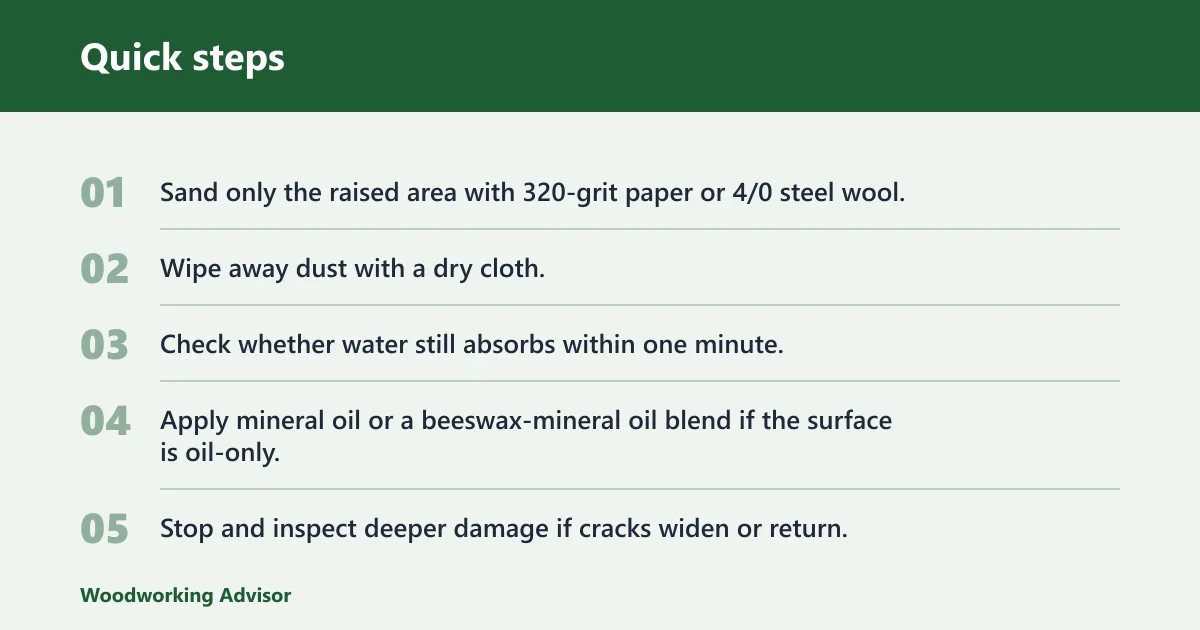
- Sand only the raised area with 320-grit paper or 4/0 steel wool.
- Wipe away dust with a dry cloth.
- Check whether water still absorbs within one minute.
- Apply mineral oil or a beeswax-mineral oil blend if the surface is oil-only.
- Stop and inspect deeper damage if cracks widen or return.
Common mistakes
Do not use bleach, ammonia, or vinegar as a sanitizer for food-contact wood. Do not oil by date alone while ignoring the water test. Do not leave wet towels, sink splash, or holiday prep runoff sitting on the surface. And do not assume a finish stops movement in dry winter air.
Frequently asked questions
How do you care for butcher block in winter?
Keep humidity near 35% to 55%, dry the surface after every wash, and check for loss of water beading before the wood feels dry. Oil-only surfaces need repeated mineral oil maintenance, while a cured finish lowers routine upkeep but still needs clean, dry use habits.
How often should I oil butcher block in winter?
Use the surface, not the calendar, as the trigger. If water absorbs within a minute or the wood feels rough, re-oil. A common schedule starts daily for the first week after purchase, weekly for the first month, then monthly, but dry winter air can shorten that interval.
How do I clean butcher block without drying it out?
Use warm water, a small amount of mild dish soap, and a dry cloth to finish the job. Avoid soaking the wood or leaving standing water on edges and seams. Dry it fully every time, especially after sink-side prep or holiday cooking cleanup.
Can I sanitize butcher block safely?
Yes, if you use a food-surface cleaner made for that purpose and follow the label directions. Do not rely on bleach, ammonia, or diluted vinegar for food-contact sanitizing. After any cleaner, wipe with clean water if the label calls for it, then dry the wood completely.
What is the best treatment for butcher block countertops?
For routine care, food-safe mineral oil is the standard for oil-only countertops because it does not go rancid and is safe for food surfaces. For lower maintenance, Waterlox Original Sealer/Finish is a tung oil and resin blend that cures into a water-resistant surface and does not need regular oiling after full cure.
How do I finish butcher block for less winter maintenance?
Prep the surface first, because a finish will not bond well over incompatible oil. Follow the product directions, let coats dry overnight, then allow at least 72 to 96 hours of cure time before use and seven days before cleaning. That keeps the finish path realistic for winter use.
Sponsored / affiliate links. As an Amazon Associate I earn from qualifying purchases. I may earn additional commission from eligible campaigns.