Winter in a Log Cabin: Upkeep Checklist
Inspect a log cabin about weekly during active winter weather, about monthly if vacant, and after thaw-freeze swings; fix any new water entry, sticking doors or windows, or chimney and heater problems first. Missed checks can turn small leaks, ice damming, and settling into rot, swollen logs, or loss of heat. This guide lays out a winter upkeep checklist with inspection cadence, escalation triggers, and priorities for occupied, vacant, and remote-managed cabins.
How should you prioritize winter upkeep?


Start with access, then heat, then water. If you cannot get in safely, clear paths before trim, decks, or nonurgent caulk touchups. If a cabin is occupied, interior comfort and plumbing stay at the top. If it is vacant, shift weight to freeze protection, security, and storm follow-up.
Cabins often sit unused for long stretches, so small issues can grow quietly. Freeze-thaw cycles stress wood, sealants, roofing edges, crawlspaces, and basements, which is why winter planning has to be different from warm-season maintenance. Treat fall closing, winter monitoring, and spring reopening as separate jobs.
Separate occupied from vacant tasks
An occupied cabin needs heat, humidity control, and fast response to drafts or leaks. A vacant cabin needs lower interior risk: water shutoff, line blowout, secure latches, and a return plan for storm checks. A caretaker or neighbor can handle short visits, but the owner should still set the standard for what gets reported immediately.
Say your cabin stays heated at 55 degrees through January. A door that begins to rub after a cold snap may point to shrink-swell, but a new stain above the frame points more urgently to water entry around the head trim or siding above it. One is a maintenance note; the other is a same-day check.
Set a routine for routine checks and storm checks
Use two rhythms: routine winter checks and event checks. Routine checks cover heat, humidity, doors, windows, and visible roof edges. Event checks happen after snow load, hard wind, temperature drops, or a storm that blocks access or sends water against the structure. Property checks may include scanning for water intrusion after storms or temperature drops.
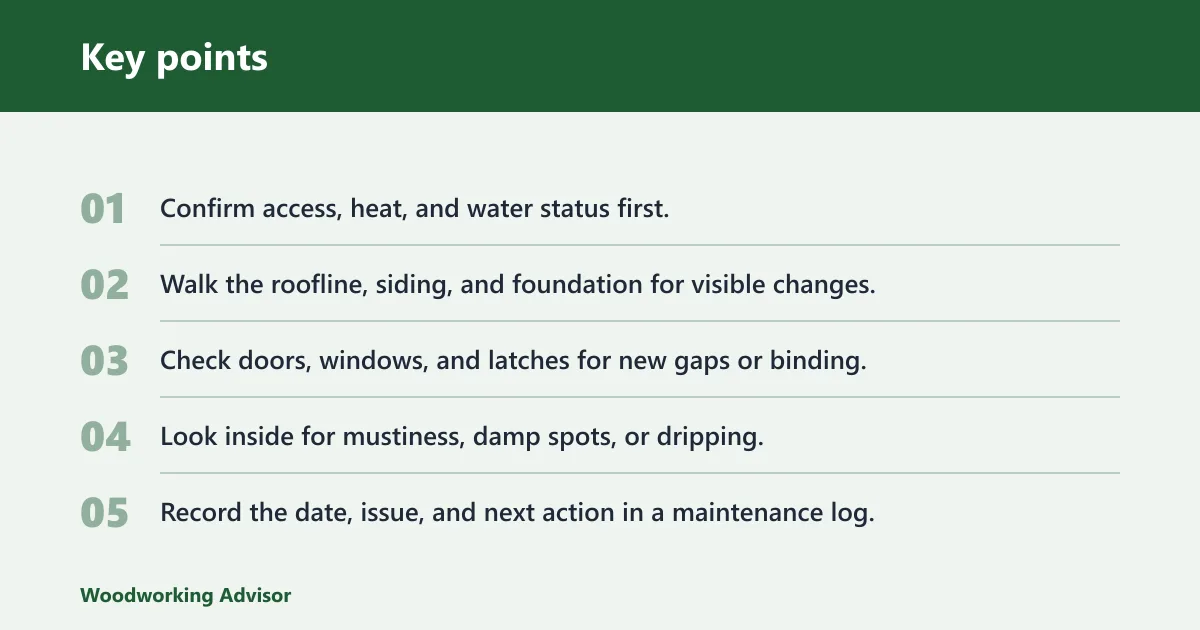
- Confirm access, heat, and water status first.
- Walk the roofline, siding, and foundation for visible changes.
- Check doors, windows, and latches for new gaps or binding.
- Look inside for mustiness, damp spots, or dripping.
- Record the date, issue, and next action in a maintenance log.
Must-have winter checks for a log cabin
The first winter checks are the ones that protect structure, heat, and water systems. Roof load, ice buildup, door and window movement, and plumbing protection come before cosmetic issues. Cabin inspections can also include checking utility status, which matters as much as the wood itself in cold weather.
Roof, snow load, and ice buildup
Winter monitoring can include snow accumulation checks. Watch for uneven buildup, long drifts near roof valleys, and ice at eaves or gutters, because those patterns can trap meltwater and force it back under shingles. Visible failure signs include sagging, new ceiling staining, dripping at soffits, or a ridge that looks bowed.
If snow keeps accumulating after a storm, the roof becomes a priority before anything inside. Snow or ice perched over entries can also make access unsafe. Use roof-safe tools from the ground when possible, and stay off a steep or icy roof unless a qualified pro handles it.
Doors, windows, and air leaks
Log homes move with moisture and temperature, so openings can shift through the season. Check locks, latches, thresholds, and weatherstripping for gaps caused by shrink-swell effects. Check that caulk is still bonded at corners and trim joints, and look for daylight, frost, or a cold streak around the frame.
Doors and windows are security points too. Cabin security checks include confirming doors and windows are secure, and that applies whether the cabin is occupied or vacant. A sticky latch after a cold night may just need adjustment, but a failed strike plate or split trim needs prompt repair.
Plumbing, heat, and freeze protection
Fall closing can include shutting off water and blowing lines before winter. If the cabin will sit empty, protect plumbing before the first deep freeze, then verify the shutoff and drain points are still labeled and accessible. Heat sources should be checked for fuel status, airflow, and any smell, error code, or irregular cycling.
Check utility status whenever you visit. If the cabin runs on electric heat or a furnace with remote monitoring, confirm power, thermostat setpoint, and backup heat. A dead thermostat battery or tripped breaker can turn a small service issue into frozen pipes in a single cold stretch.
What should you check after a storm?
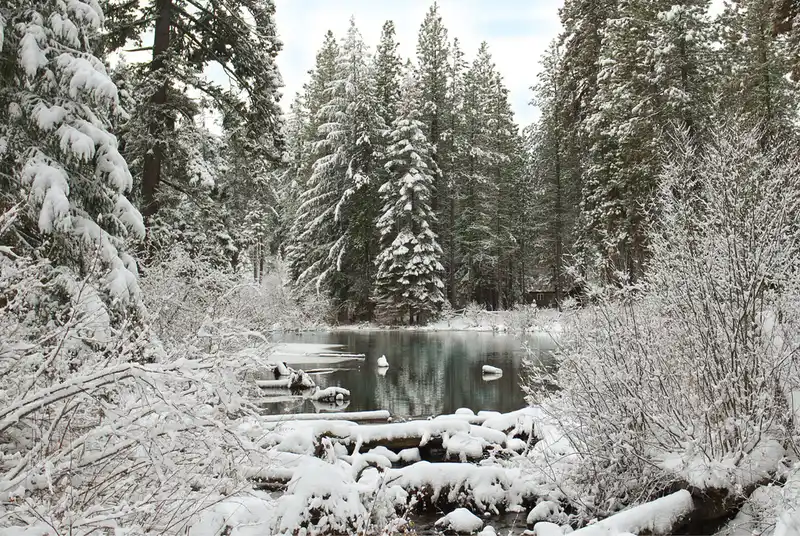
After a storm, look first for changes that threaten structure, access, or water control. Visible roof and siding damage, blocked vents, drifted entries, and new door or window shifts matter more than surface cleanup. If snow or wind changed the cabin’s load path, treat the visit as an inspection, not a quick walkaround.
Visible roof and siding damage
Scan shingles, ridge lines, flashing, and siding for missing pieces, lifted edges, or impact marks from ice or branches. Check log ends and exposed corners for saturation, since those points can take on water faster than protected wall faces. New stains, dents, or hanging trim belong on the short list.
Drifts, blocked vents, and blocked access
Snow can trap moisture and also trap people. Clear doors, steps, and the main route before dark if possible. Check crawlspace vents, utility intakes, and dryer or combustion vents for blockage. If access is blocked by drifted snow or ice, treat that as a safety issue before doing anything else.
Shifts in doors, windows, or latches
Storm movement can change how openings fit. If a window suddenly sticks, a latch misses its catch, or a door no longer seals, inspect the frame, trim, and surrounding logs for movement or water entry. One shifted hinge may be simple. A cluster of new fit problems can point to settling, swelling, or moisture.
A common first-timer mistake is waiting until spring to assess a storm mark on the roof edge. In a cabin with a 12-foot overhang and a cold snap behind the storm, a stain that appears near the ceiling can mean the leak started during the storm and kept feeding ice at the eave afterward.
Consumables and spares
Keep a small winter stock so you can react between visits. The goal is not to buy every spare part in advance. It is to have the items that stop a leak, close a gap, dry a damp room, or keep a visit from turning into a longer shutdown.
 Pair with it
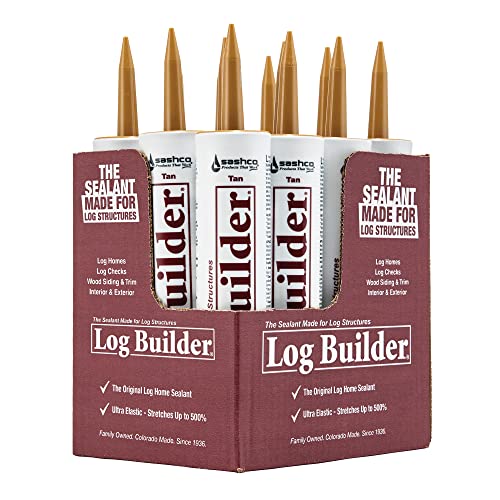
Sashco · Log structure chinking sealant · tan
- Made for log structures
- Moves with your logs
- Paintable and stainable
Drawback: Requires surface prep and application time
$125.28
Price as of 10 Nov 2026
View on Amazon →
As an Amazon Associate we earn from qualifying purchases. Prices and availability are accurate as of the date shown and are subject to change
- Made for log structures
- Moves with your logs
- Paintable and stainable
Sashco Log Builder acrylic latex chinking sealant is a fit for log structures because it is made to move with logs and can be painted or stained. Based on the published product details, that matters where check opening or joint separation appears after a freeze-thaw swing. A drawback: cartridge-based chinking is only useful if the surface is clean, dry, and prepared correctly.
Pair with it
Yuntau · Exterior door weather stripping kit · white
- Complete kit for one exterior door
- Designed to block wind, drafts, and snow
- Predrilled slotted holes for easier installation
Drawback: Only fits one exterior door
$48.99
Price as of 10 Nov 2026
View on Amazon →
As an Amazon Associate we earn from qualifying purchases. Prices and availability are accurate as of the date shown and are subject to change

- Complete kit for one exterior door
- Designed to block wind, drafts, and snow
- Predrilled slotted holes for easier installation
Yuntau screw-on door weather stripping is a practical spare for one exterior door when drafts, snow, or wind start pushing through the frame. It is designed to block wind and snow, and the slotted holes can make installation easier. A drawback: it covers one door, so a cabin with several drafty entries may need more than one kit.
Also great
Leanaco · Telescoping roof rake · 16-inch foam blade
- No-scratch foam head for safer cleaning
- 24-foot telescoping pole helps avoid ladders
- Dual-sided brush for snow, leaves, and moss
Drawback: A long-handled tool can still be awkward to store
$99.99
Price as of 10 Nov 2026
View on Amazon →
As an Amazon Associate we earn from qualifying purchases. Prices and availability are accurate as of the date shown and are subject to change

- No-scratch foam head for safer cleaning
- 24-foot telescoping pole helps avoid ladders
- Dual-sided brush for snow, leaves, and moss
Leanaco’s telescoping roof rake is a winter access tool for snow and debris removal from the ground. The foam blade is intended to be gentler on roofing, and the long pole helps reduce ladder use. A drawback: long reach does not make roof work risk-free, and wet snow can still be heavy enough to strain the user.
Upgrade pick
Midea · 50-pint dehumidifier · with pump
- Removes up to 50 pints per day
- Built-in pump for vertical or horizontal drainage
- Wi-Fi enabled smart control
Drawback: Bulkier than a simple moisture monitor
$278.91
Price as of 10 Nov 2026
View on Amazon →
As an Amazon Associate we earn from qualifying purchases. Prices and availability are accurate as of the date shown and are subject to change

- Removes up to 50 pints per day
- Built-in pump for vertical or horizontal drainage
- Wi-Fi enabled smart control
Midea’s 50-pint dehumidifier with pump fits cabins that stay closed up long enough for humidity and mustiness to build. That is useful when you need controlled drying without emptying a bucket every day. A drawback: it needs power and drainage, so it is not a stand-alone answer for a vacant cabin with heat already shut down.
What should be on a winter upkeep checklist for a log cabin?
A winter checklist should separate interior, exterior, and utility tasks, then rank them by urgency. For a log cabin, the most important items are water control, roof load, entry seals, and secure access. A good checklist also assigns frequency and says what turns a note into an emergency.
| Task | Check frequency | Warning sign | Escalation action |
|---|---|---|---|
| Interior humidity and mustiness | Weekly if occupied; monthly if vacant | Stale odor, condensation, damp corners | Increase ventilation, adjust heat or dehumidification, inspect for leaks |
| Doors, windows, locks, and latches | Every visit | Binding, daylight gaps, broken latch, frost line | Seal gaps, repair hardware, check for shift around the frame |
| Roof snow accumulation | After every major snowfall and weekly during active winter weather | Uneven buildup, sagging, ice at eaves, drips inside | Remove snow safely from the ground or call a pro if load is concerning |
| Plumbing status and freeze protection | Before leaving, then at each return visit | Uninsulated lines, open shutoff, low heat, no water pressure | Shut off water, drain or blow lines, verify heat and alarms |
| Deck, driveway, and gravel access | After storms; monthly otherwise | Ice buildup, buried edges, heaved boards, washouts | Clear safe paths, add traction, schedule grading or repair |
| Drainage and shoreline or slope movement | Monthly and after thaw-freeze swings | Pooling, erosion, water against the foundation | Redirect runoff, clear blocked drains, document any soil movement |
| Security and vacancy status | Every visit; at set intervals between visits | Forced entry sign, animal intrusion, broken window, open vent | Report immediately, secure openings, update owner or caretaker log |
| Occupied versus vacant cabin review | Each season and after any status change | Heat loss, odor, frozen lines, missed check-in | Shift the cabin to the correct winter plan and notify the responsible party |
Budget setups for different cabins
Setups should match how often someone can visit and how much risk the cabin carries. A weekend owner can live with a lighter kit if the cabin stays heated and occupied. A remote cabin needs stronger monitoring, faster reporting, and more spare parts on site.
| Setup | Best for | What to include |
|---|---|---|
| Starter | Owner-only checklist | Paper or digital maintenance log, flashlight, basic weatherstripping, de-icer, labels for shutoffs |
| Mid | Caretaker or neighbor check plan | Hygrometer, moisture meter, spare batteries, roof-safe snow tool, chinking or sealant for quick repairs |
| Serious | Remote-owner update plan | Remote temperature and humidity monitoring, dehumidifier, spare filters, exterior door seal kit, clear storm-report protocol |
This setup works when the owner can visit often enough to catch small changes early. Keep the checklist short and repeatable: access, heat, water, roof edge, doors and windows, then notes. The drawback is obvious. If a storm lands between visits, the cabin can sit with a problem longer than you want.
Caretaker or neighbor check plan
A caretaker plan should spell out what gets looked at, what gets photographed, and what gets reported the same day. Good winter checks include snow depth, obvious leaks, utility status, and security points. A drawback: if the checklist is vague, the report may miss the one item that matters most.
Remote-owner update plan
For a remote cabin, the update plan should say who gets called, what thresholds trigger a call, and how fast follow-up happens. A low interior temperature, a broken latch, or a roof leak should never wait for the next scheduled update. Drawback: remote systems still need someone to walk the property and confirm what the sensors cannot see.
How often should I inspect a cabin during winter?
Inspect weekly during active winter weather, monthly if the cabin is vacant and stable, and immediately after storms or thaw-freeze swings. If the cabin is occupied, check faster when the heat cycles change, the doors start sticking, or the indoor air becomes damp. That is the cadence that catches winter movement before it becomes damage.
Check more often if the cabin sits in a snow belt, on a windy ridge, or near shoreline exposure that drives drifting and runoff. A monthly gap can be too long for a vacant cabin with a borderline roof edge or a history of ice issues. Keep the rhythm steady, not random.
How to maintain a log cabin in winter
Maintain a log cabin in winter by protecting the roof, controlling moisture, keeping entries sealed, and preventing freeze damage in plumbing and drains. Regular cleaning helps you spot issues early, but the key is to keep a seasonal rhythm rather than ad hoc fixes. Winter work should also fit the cabin’s occupancy status.
Balance heat, ventilation, and dehumidification
Occupied cabins usually need steady heat and enough ventilation to keep condensation from collecting on cold surfaces. Vacant cabins need a different balance: enough heat or freeze protection to protect systems, plus controlled humidity so logs, trim, and finishes do not stay damp. Humidity should be checked indoors, not guessed from how the room feels.
Track repairs as they happen
Use a maintenance log to note task dates, repair history, and next-service timing. That record makes it easier to see whether the same corner, door, or roof edge keeps moving each winter. It also helps you plan spring reopening and decide whether a recurring issue needs a contractor instead of another temporary fix.
Are log cabins hard to maintain?
Log cabins are not inherently hard to maintain, but they do demand more seasonal attention than a typical enclosed structure. The winter work is less about constant repairs and more about watching movement, moisture, and access. If you ignore those three, maintenance becomes harder fast.
Logs move, seals age, and snow load changes the pressure on the shell. That means the best winter plan is simple and repetitive: inspect, note, correct, and return on schedule. Cabins that sit unused for long stretches need the most discipline.
Frequently asked questions
What should I shut off before leaving a cabin for winter?
Shut off the water supply, then drain or blow out the lines before the first hard freeze. Turn down or off any systems that cannot be monitored, and verify that utility status is known before you leave. If the cabin will stay vacant, label shutoffs clearly so the next visitor does not guess.
How do I keep a log cabin safe from snow, ice, and freeze damage?
Keep snow off the roof when buildup becomes significant, clear access routes, and watch for ice at eaves and around entries. Protect plumbing with heat and shutoff procedures, then check for water intrusion after storms. The safest cabin is the one that gets inspected before a minor problem turns into a freeze break.
What items should I check after a winter storm?
Check roof edges, siding, doors, windows, vents, and access routes first. Then look inside for stains, drips, cold spots, or a new musty smell. If drifts block the entry or a latch no longer holds, treat that as a security and safety issue, not a routine cleanup item.
What is the best way to track log cabin maintenance through the season?
The best way is a maintenance log that records the date, what was checked, what changed, and what needs follow-up. Keep it tied to the season, not to memory. That record helps you compare winter weeks, identify repeated trouble spots, and schedule spring reopening before small repairs pile up.
Are log cabins hard to maintain: log cabins are manageable?
Log cabins are manageable when you respect the way they move in cold weather. They are hardest to maintain when checks are irregular or when occupied and vacant cabins are treated the same. A clear winter checklist, plus timely storm checks, makes the job far more predictable.
Sponsored / affiliate links. As an Amazon Associate I earn from qualifying purchases. I may earn additional commission from eligible campaigns.