How to Cut Flutes in Wood: Router, Table Saw & Hand Methods
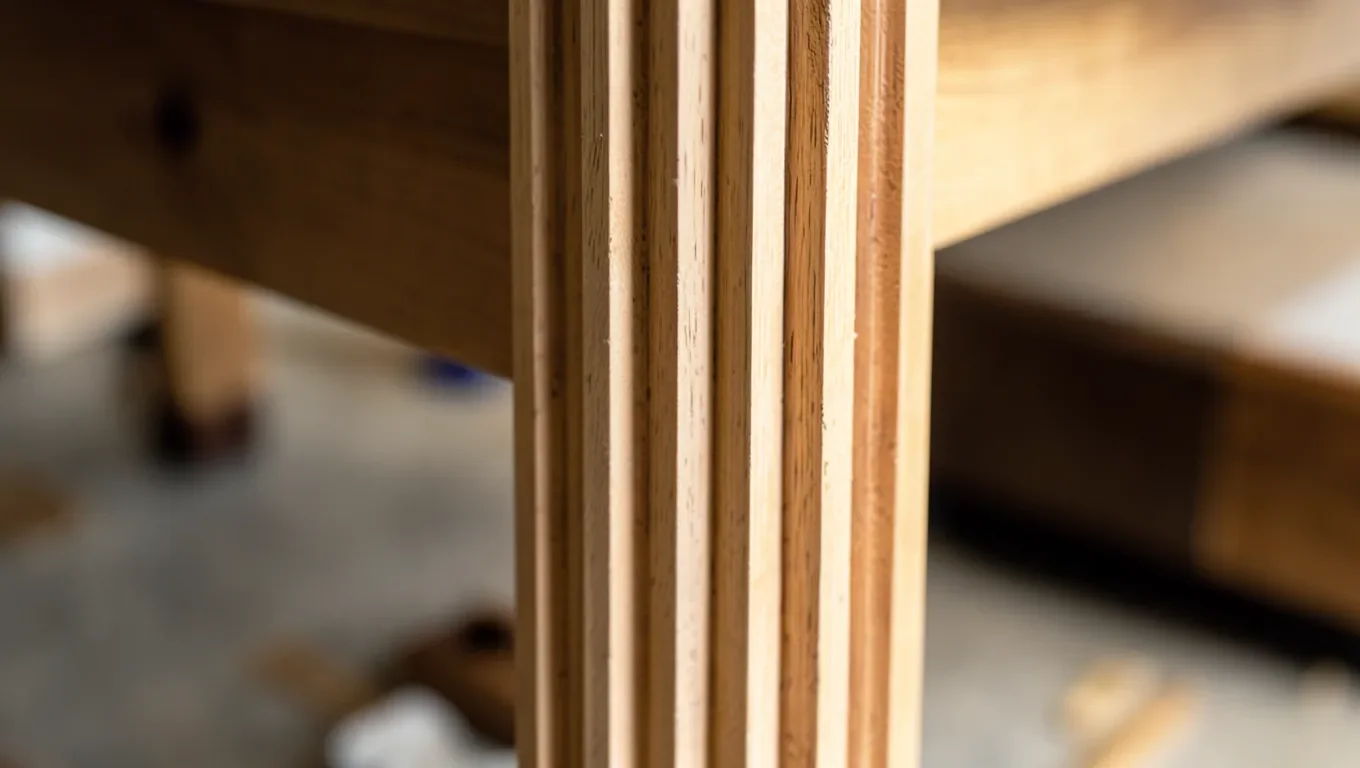
Flutes are the shallow, evenly spaced grooves you see running down columns, table legs, and cabinet stiles – a detail that turns a plain square or round piece of wood into something that looks turned by hand. You don’t need a lathe to cut them, and you don’t need to be a master carver either. Most home woodworkers get clean, consistent flutes with a router and the right setup; a table saw and hand tools can do it too, each with its own tradeoffs. This guide walks through all three methods, including the one detail that separates a professional-looking set of flutes from a lopsided one: how you control spacing.
The Three Real Ways to Cut Flutes in Wood
Best Router Bits for Cutting Flutes
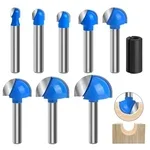 |
Core Box Router Bit Set, 8-Piece – $20.89 A round-nose bit is what actually cuts the curved, half-round profile of a flute – this set covers 1/4″ to 1″ so it matches almost any leg, column, or cabinet stile you’re fluting.
|
Before picking a method, it helps to know what each one is actually good at:
- Router with a core-box or round-nose bit – the most practical option for a home shop. Works in a router table or handheld with a fluting jig, gives a clean semicircular groove, and scales well if you need several matching flutes on one piece.
- Table saw with a wobble or dado blade – less common, but a real technique for straight flutes on flat stock. The blade is tilted or wobbled to a set angle and depth, so it’s better suited to shallow, V-shaped or gently curved flutes than a true half-round profile.
- Hand tools (gouges) – the slowest option, and the most skill-dependent, but it’s the only practical choice for one-off work, curved or tapered legs, or repairing a damaged flute on an antique piece.
Method 1: Router With a Fluting Jig (Most Consistent)
This is where most beginners lose points without realizing it: a router will cut a perfectly clean flute on its own, but nothing about the tool keeps your flutes evenly spaced or perfectly parallel from one to the next. That job belongs to the jig, not the router.
For flat stock – cabinet doors, stiles, flat columns – a router table with a straight fence does the job. You set the fence to position the first flute, rout the full length, then move the fence over by a fixed increment and rout the next one, using a stop block so every flute starts and stops at the same point. The increment has to be exact and repeated the same way every time, because the eye catches even a 1/16″ drift in spacing immediately once flutes sit side by side.
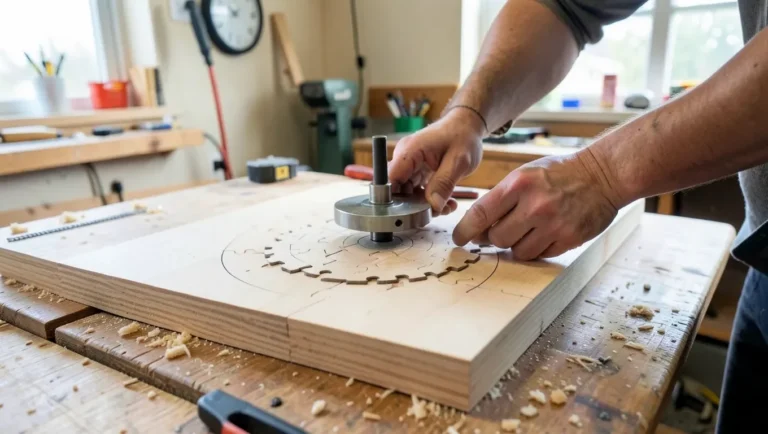
For round or turned stock – table legs and columns – you need a dedicated fluting jig, sometimes called an indexing jig. It clamps the leg between centers like a lathe, but instead of spinning the wood, it locks it at fixed rotational positions using a marked index plate (commonly divided into 4, 6, 8, or 12 stops). The router rides a fixed rail over the top, so the cutting depth and travel distance are the same for every flute – you rotate the leg to the next locked position, rout, rotate again, and repeat. That locking mechanism is the entire reason a fluting jig exists: freehand rotation by eye is exactly what causes the crooked, unevenly spaced flutes that show up in a lot of first attempts.
- Mark your flute layout on the workpiece first – number of flutes, start point, and stop point – before you touch the router.
- Mount the workpiece in the router table fence setup or the fluting jig, whichever matches your stock shape.
- Install the round-nose or core-box bit and set the depth for a test pass – start shallow (around 1/8″) and take a second pass to reach final depth rather than cutting full depth in one go.
- Rout a test flute on scrap of the same species and thickness. Check the width, depth, and edges before committing to the real workpiece.
- Cut the first flute on the actual piece, then index or move the fence to the next position and repeat, keeping feed speed and pressure consistent flute to flute.
- Vacuum or blow out dust between passes so you can see your layout lines and stop points clearly.
Method 2: Table Saw With a Wobble or Angled Dado Blade
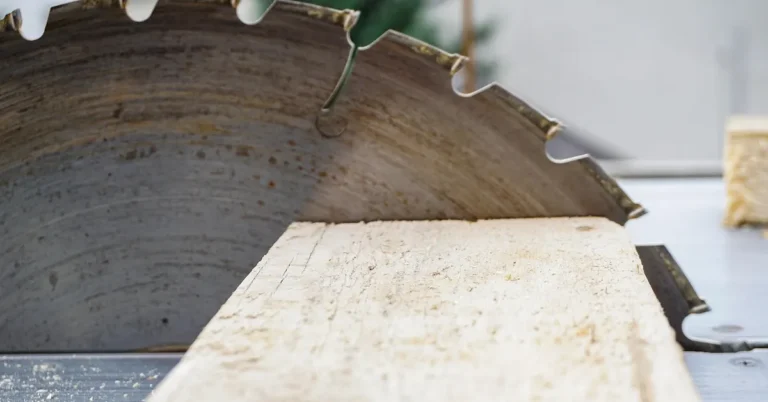
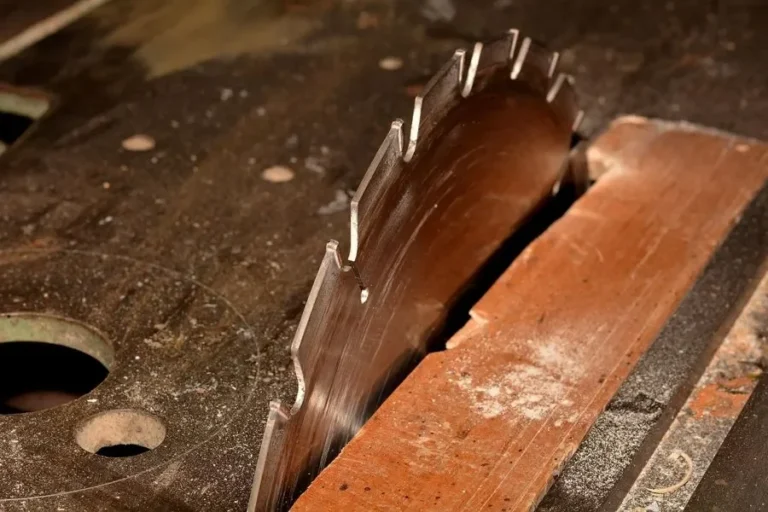
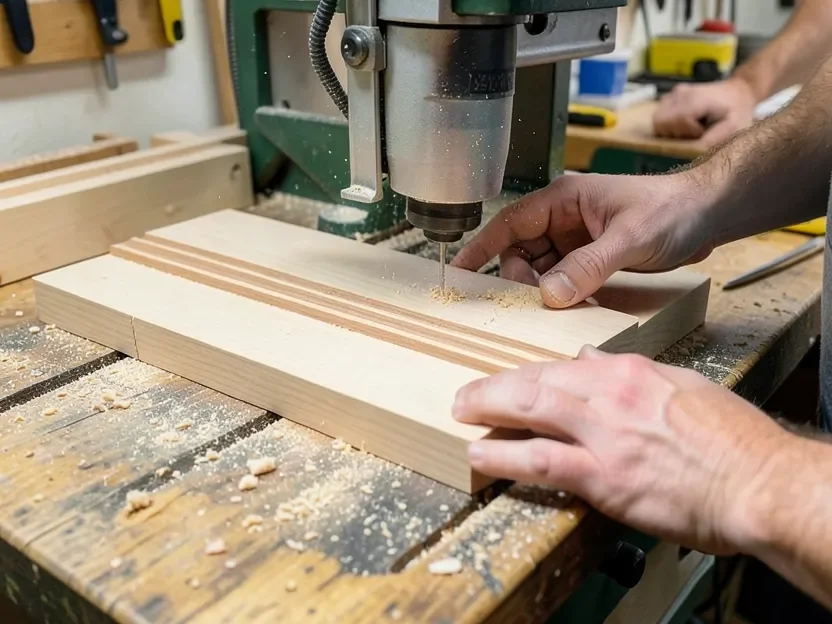
A table saw isn’t the first tool most people think of for fluting, but it’s a legitimate method for straight flutes on flat, rectangular stock. A wobble dado blade – a single blade mounted on an arbor washer that tilts it slightly off-axis as it spins – cuts a wider kerf than a standard blade, and adjusting the wobble angle changes the width and shape of the groove. Alternatively, some woodworkers use a standard blade tilted to a fixed angle with an auxiliary angled fence, making two overlapping passes to form a shallow V or rounded-looking channel.
This method is faster than routing for long, straight runs, but it has real limits: it’s much harder to get a clean true half-round profile than with a round-nose router bit, and it only works on flat stock run past a fence – you can’t flute a round turned leg on a table saw. Use a stop block clamped to the fence for consistent flute length, and always make a test cut on scrap to check the profile before running your actual workpiece.
Method 3: Hand Tools (Gouges)
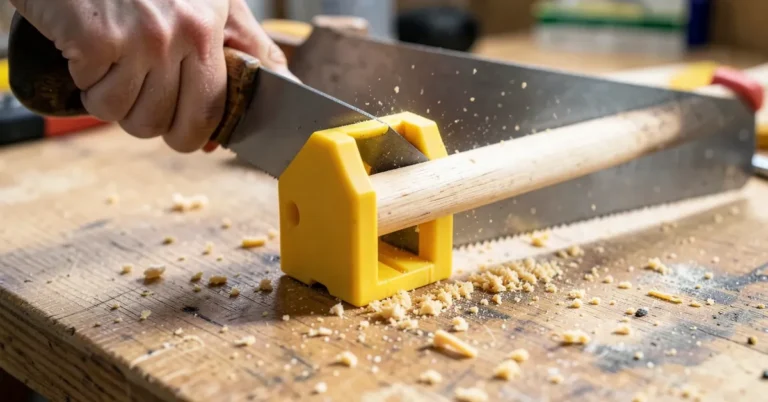
Cutting flutes with a fluting gouge is the oldest method and still the right call for curved or tapered legs, one-off decorative work, or matching an existing antique’s fluting during a repair. Mark the flute’s centerline and width with a marking gauge, then work the gouge in short, controlled strokes from each end toward the middle to avoid tearing out the far edge. This method has no jig to lean on, so consistency depends entirely on a steady hand, a sharp gouge, and frequent stepping back to compare flutes against each other – expect it to take several times longer than routing, and expect the first few attempts to look rougher than a jig-cut flute until you build the muscle memory.
Choosing the Right Wood for Fluting
Straight, tight, even grain matters more for fluting than for most other cuts, because the router bit or gouge is removing wood along the entire length of a narrow channel – any grain that runs off at an angle will tear rather than cut cleanly. Softwoods like pine and cedar cut easily and are forgiving for practice pieces, but they’re also more prone to fuzzing and tear-out on the flute edges. Close-grained hardwoods like maple hold a crisp, sharp-edged flute profile better and are the more common choice for furniture-grade fluted legs and columns, though they’re slower to cut and harder on router bits. Oak’s open, pronounced grain can look striking in a flute but is also more likely to tear along the grain lines, so it rewards a sharp bit, a slow feed rate, and light passes more than any other wood on this list.
Common Fluting Mistakes and How to Avoid Them
- Uneven spacing between flutes – almost always caused by measuring or indexing by eye instead of using a locked jig position or a fence stop for every single flute. Set the increment once and don’t adjust it mid-project.
- Tear-out at the edges – usually a dull bit or too fast a feed rate. Slow down, take a lighter final pass, and rout with the grain direction where possible.
- Router wandering off the line – the jig or fence isn’t clamped securely enough. Check that every clamp is tight before each pass, not just at the start of the session.
- Flutes stopping at different depths – the depth stop on the router or router table wasn’t reset between flutes, or the workpiece isn’t seated flush against the jig each time.
These same clamping and layout principles carry over from other precision joinery work – the setup discipline used in mortise and tenon joinery (marking every reference line before cutting, and testing on scrap first) applies just as directly to fluting.
Finishing Fluted Wood
Sand fluted surfaces by hand with a folded piece of sandpaper or a foam sanding block that can flex into the curved groove – a flat random-orbit sander will only touch the raised ridges between flutes and leave the grooves themselves untouched. Work through fine grits (220 and up) with the grain, and vacuum dust out of the grooves before finishing since it collects there more than on flat surfaces. An oil-based finish, such as Danish oil or tung oil, tends to look best on fluted work because it settles into the curve of the groove and highlights the shadow line without pooling the way a thicker film finish can. Whatever finish you choose, apply thin coats and wipe back excess from inside the flutes – pooled finish in a groove dries visibly darker than the surrounding wood.
Frequently Asked Questions
What tool cuts flutes in wood most consistently?
A router fitted with a core-box or round-nose bit, guided by a router table fence (for flat stock) or a fluting jig with a locking index plate (for round legs and columns), gives the most consistent results. The jig or fence controls spacing and depth mechanically, which is what keeps every flute matching – freehand routing is the main cause of uneven, crooked flutes.
Can I cut flutes without a router?
Yes. A table saw with a wobble or angled dado setup can cut straight flutes on flat stock, and fluting gouges can hand-cut flutes on any shape, including curved or tapered legs. Both are real, usable methods – they’re simply slower or more limited than routing, not lesser techniques.
Why do my flutes come out unevenly spaced?
Uneven spacing almost always comes from indexing or measuring by eye between cuts. A fluting jig’s locking index plate or a router table fence with a fixed stop removes that guesswork by repeating the exact same position for every flute, which is why jig-based setups look noticeably more professional than freehand attempts.
What wood works best for fluting?
Close-grained hardwoods like maple hold a crisp flute profile well and are common for furniture-grade legs and columns. Softwoods like pine and cedar are easier and cheaper to practice on but tear out more easily at the flute edges. Oak looks striking when fluted but its open grain is more prone to tearing, so it needs a sharp bit and a slower feed rate.
Cutting flutes comes down to picking the method that matches your stock shape and controlling spacing mechanically rather than by eye. Start with a test flute on scrap, keep your jig or fence setting locked for the whole piece, and the difference between a hobby-grade result and a furniture-grade one comes down almost entirely to that consistency.
Sponsored / affiliate links. As an Amazon Associate I earn from qualifying purchases. I may earn additional commission from eligible campaigns.