Why Wood Slices Crack (and How to Stop It From the Start)
Wood slices crack because they shrink unevenly as they dry — roughly twice as much around the growth rings as across them — not simply because they “dry out.” That mismatched shrinkage puts the outer rings under tension until the slice splits from the center, usually within the first few weeks after cutting. This guide covers why slices crack more than boards, which species resist it best, and the stabilizing treatment that actually slows the process.
Why Wood Slices Crack More Than Boards
Best Wood Slice Stabilizer Pick
 |
Pentacryl Green Wood Stabilizer (32oz) – $34.95 Sealant alone only slows moisture loss at the surface — this stabilizer replaces water inside the wood cells so they hold their size as the slice dries, which is what actually stops the ring-splitting cracks this guide explains below.
|
As an Amazon Associate we earn from qualifying purchases.
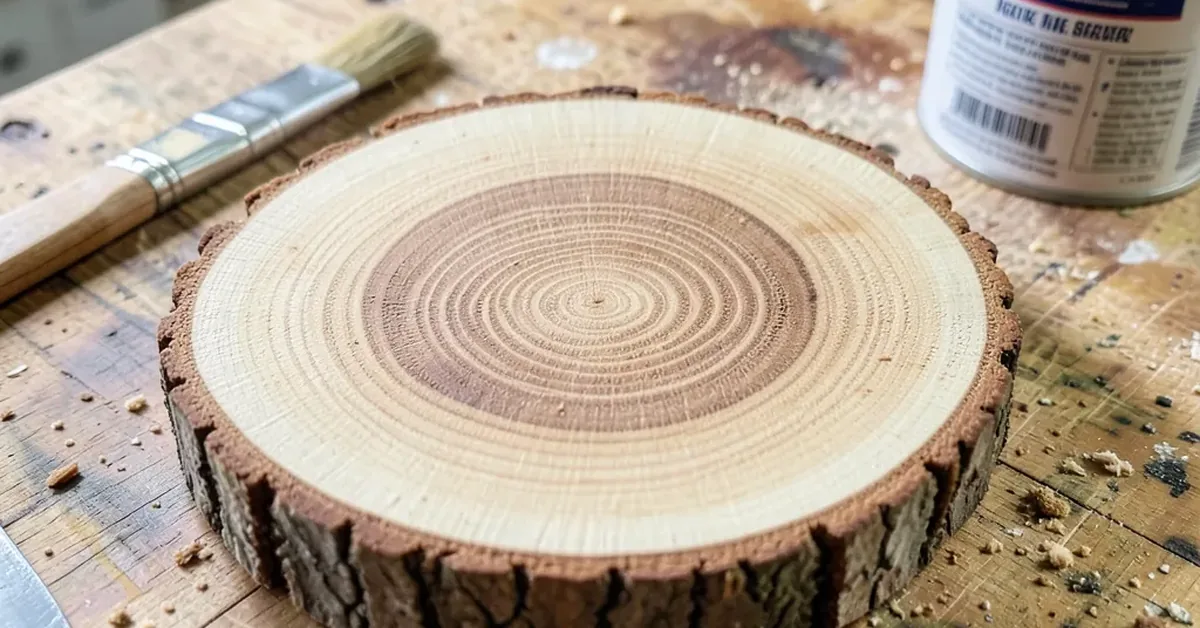
A wood slice (or “cookie”) is a round cross-section cut perpendicular to the trunk or branch, which means almost its entire flat face is exposed end grain — wood’s most porous, fastest-drying surface. A board ripped lengthwise from the same log exposes mostly long grain on its faces and only end grain at the two ends, so it dries and shrinks far more evenly.
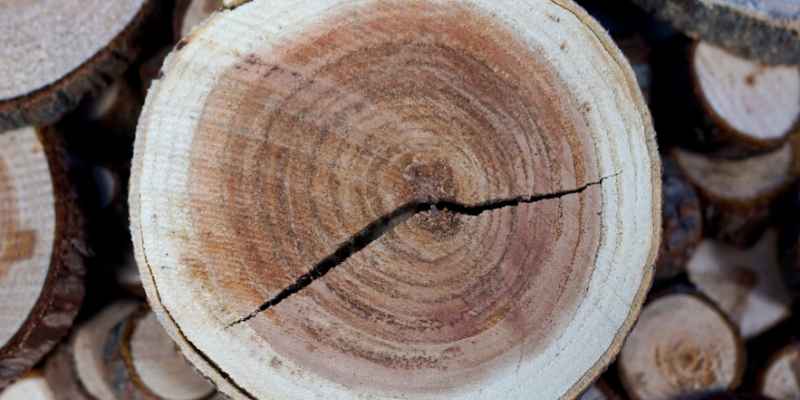
📊 Wood shrinks roughly twice as much in the tangential direction (parallel to the growth rings) as in the radial direction (across the rings) as it dries. On a round slice, that mismatch puts the outer rings in tension they can’t accommodate, and the wood splits to relieve the stress — this is why cracks radiate outward from the center or pith. Source: WOODWEB, wood drying technical knowledge base
Choosing Wood That Resists Cracking
Species matters, but so does the individual log — a slice cut through the pith (the very center) will almost always crack more than one cut further out, regardless of species.
| Wood | Cracking Tendency |
|---|---|
| Maple | Dense and relatively stable; still needs slow drying on thick slices. |
| Cherry | Attractive grain, moderate stability. |
| Oak | Strong but prone to checking if dried too fast due to large pores. |
| Pine/softwoods | Cracks easily if rushed; forgiving if dried slowly. |
Cutting and Treating the Slice Immediately
Use a sharp, fine-tooth blade — a bandsaw or chainsaw with a sharp chain both work, but a dull blade tears fibers and creates stress points that crack first. Cut slightly thicker than the finished size you want, since the outer edge often needs to be trimmed back once drying reveals surface checks.
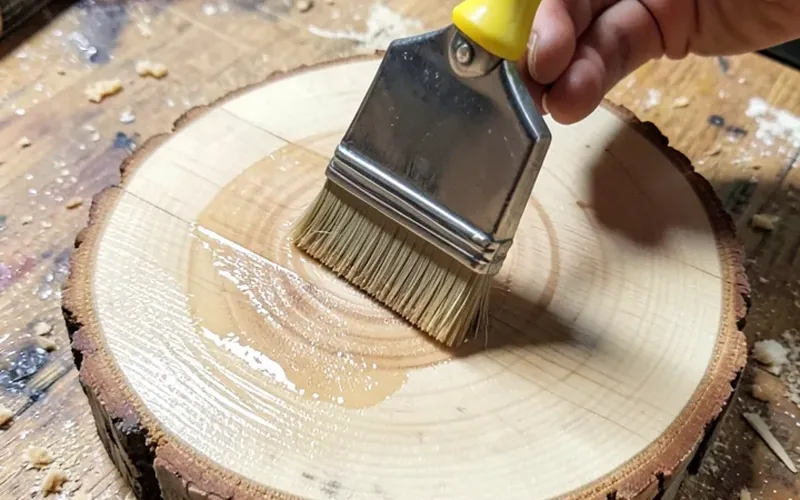
Treat the slice within a day or two of cutting, before any surface drying starts — waiting even a week noticeably reduces how well a sealant or stabilizer can penetrate. Coat or saturate both flat faces and the bark edge, not just the ends.
Drying Slowly Without Cracking
Slow, even drying beats every other single factor. Stack slices with spacers between them in a shaded, well-ventilated spot — a garage or covered porch works better than an attic or anywhere that swings hot and cold. Skip the oven or microwave shortcuts some tutorials suggest; they dry the surface far faster than the core, which guarantees cracking on anything thicker than a coaster.
- Keep slices out of direct sun and away from heat vents.
- Check with a moisture meter periodically rather than guessing by feel.
- Expect months, not days — a 1-inch slice needs roughly the same patience as a much thicker board.
- Rotate slices occasionally so both faces dry at a similar rate.
“The slices that cracked on us were always the ones we got impatient with — set near a heat vent or rushed with a fan to speed things up. The ones we forgot about in a cool corner for six months came out clean almost every time.”
Storage and Early Warning Signs
Loosely cover drying slices with plastic sheeting or a cotton cloth to slow moisture loss without trapping it — airtight wrapping can encourage mold instead. Check weekly for hairline surface checks; catching one early lets you apply more sealant to that spot before it travels deeper into the slice. Small existing cracks can be stabilized with thin cyanoacrylate (CA) glue or filled with tinted epoxy once the wood has finished drying. For mold prevention alongside cracking, see our companion guide on preserving wood slices for crafts.
Frequently Asked Questions
How can I stop wood slices from cracking?
Seal or saturate the slice with a green wood stabilizer within a day or two of cutting, then dry it as slowly as possible in a stable, moderate-humidity space out of direct sun. Speed is the enemy — a 1-inch-thick slice needs months, not weeks, and thicker rounds can take over a year.
What actually causes wood slices to crack?
Wood shrinks roughly twice as much in the tangential direction (parallel to the growth rings) as it does in the radial direction (across the rings) as it dries. That uneven shrinkage puts the outer rings under tension they can’t stretch to match, and the slice splits from the center outward to relieve the stress.
Does sealing both faces of a wood slice prevent cracking?
Sealing both flat faces slows moisture loss at the surface but doesn’t stop the internal shrinkage that causes cracking — a slice is almost all end grain across its flat faces, so it loses moisture (and shrinks) far faster than a board cut from the same log. A stabilizer that penetrates the wood works better than a surface sealer alone for slices over about 3/4 inch thick.
How long does it take to dry a wood slice without cracking?
Plan on at least several months for a 1-inch-thick slice, and a year or more for anything thicker, dried slowly in a stable space away from heat and direct sun. Rushing the process with heat, a dehumidifier set too aggressively, or direct sun is the single most common cause of a slice cracking after it looked fine for weeks.
Conclusion
Preventing a wood slice from cracking comes down to treating it fast and drying it slow — a stabilizer applied within a day or two of cutting, followed by months of patient air drying away from heat and sun, prevents far more cracks than any sealant applied after the fact. Once a slice is fully dry and stable, small existing cracks can still be filled with epoxy for a usable, attractive piece.
Sponsored / affiliate links. As an Amazon Associate I earn from qualifying purchases. I may earn additional commission from eligible campaigns.