How to Cut Popsicle Sticks Without Splitting Them
Popsicle sticks (also called craft sticks) are thin basswood, usually about 4.5mm thick, which is exactly why one hard cut so often splits them instead of slicing them. The fix depends on how many sticks you’re cutting: score-and-snap with a sharp craft knife against a metal straightedge for one or two precise cuts, use a fine-tooth hobby saw when you need to cut a whole stack at once, or plain scissors for a fast, rough cut on very thin sticks where the edge won’t show.
All three methods work on real basswood craft sticks, not just the softer paper-thin versions sold for kids’ crafts. The difference between a clean cut and a splintered, cracked stick almost always comes down to two things: how sharp the tool is, and whether you cut with the grain or across it in one aggressive pass. Below are the actual techniques, why sticks split in the first place, and which method to reach for depending on your project.
Why Basswood Popsicle Sticks Split So Easily
Best For Cutting A Whole Stack At Once
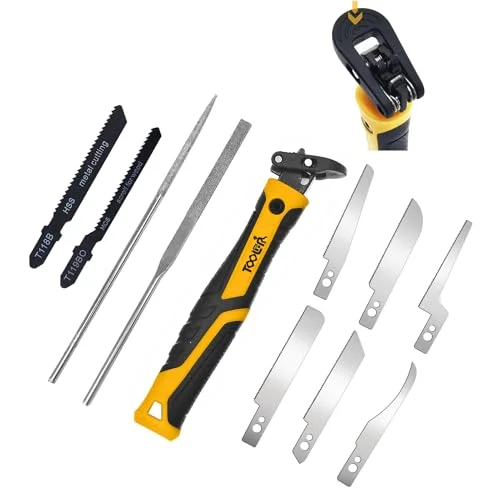 |
TOOLAN 10-in-1 Craft Saw & File Set – $15.98 The fine-tooth blade is what lets you clamp several popsicle sticks together and cut them all in one pass, instead of scoring each stick one at a time.
|
Basswood is popular for popsicle and craft sticks because it’s cheap, light-colored, and doesn’t have much visible grain pattern – but that same low density is what makes it split. At roughly 4.5mm thick, there isn’t much wood fiber holding the two halves together once a crack starts, and a single hard downward cut (with a knife, a box cutter, or dull scissors) tends to drive a crack ahead of the blade faster than the blade itself is cutting. That crack usually runs with the grain, which is why a “clean” cut that looks fine on top can leave a long hairline split underneath that only shows up once you try to glue or paint the piece.
Two other things make splitting worse: a dull blade (it crushes and tears fibers instead of severing them) and cutting a stick that’s still slightly damp from packaging or humidity, which softens the fibers and makes them tear rather than shear. Dry, sharp, and multiple light passes beats one hard push every time.
What You’ll Need
Depending on the method, gather a sharp craft/utility knife, a metal ruler or straightedge (a plastic ruler will get chewed up), a small fine-tooth saw (a razor saw, hobby saw, or the mini saw above), sharp household scissors, a cutting mat or scrap wood to protect your work surface, and fine-grit sandpaper (220-grit or higher) to knock down any rough edge after the cut.
Method 1: Score-and-Snap With a Craft Knife (Best for Precise Single Cuts)
This is the method to use when you need one or two sticks cut to an exact length and you want a clean, straight edge with no chipping. It works because you’re not trying to cut through the full 4.5mm thickness in one pass – you’re creating a controlled weak point and letting the wood separate along it.
- Mark your cut line, then line up a metal straightedge exactly on the mark and clamp or hold it firmly in place.
- Using a sharp craft knife, draw the blade along the straightedge in 3-4 light passes rather than one deep cut – each pass should deepen the score, not gouge it. You’re aiming for a groove roughly a third of the way through the stick.
- Once the score line is visible and continuous, hold the stick on either side of the line and apply steady, even downward pressure. It should snap cleanly along the score, the same way glass or tile breaks along a scored line.
- If the snapped edge has a small burr or fuzz, knock it down with a few strokes of 220-grit sandpaper.
The most common mistake here is trying to cut all the way through in one pass with a lot of downward force. That’s what drives a crack ahead of the blade and splits the stick at an angle instead of square. Let the multiple light scores do the work.
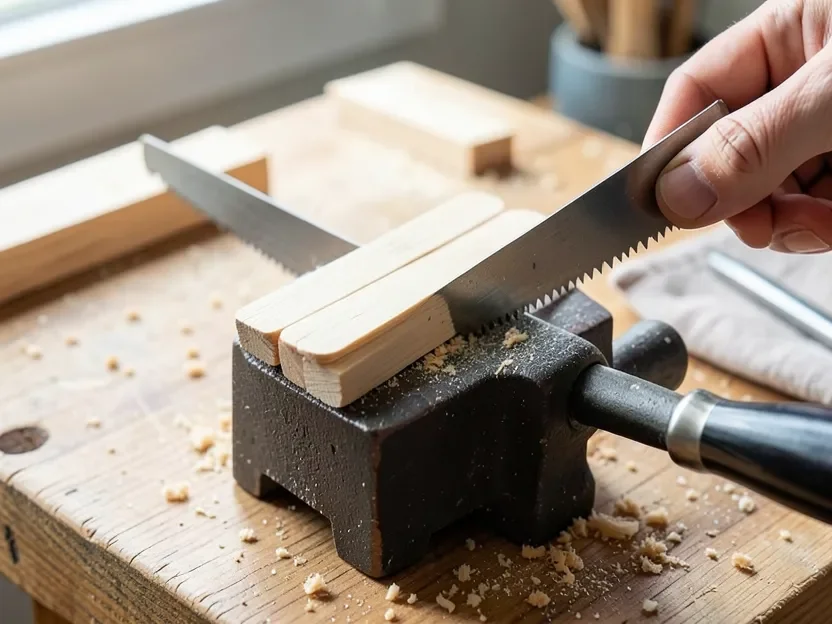
Clamping the sticks together before cutting keeps every piece the same length, and it’s the fastest way to handle a whole batch.
Method 2: Fine-Tooth Saw (Best for Cutting a Whole Stack at Once)
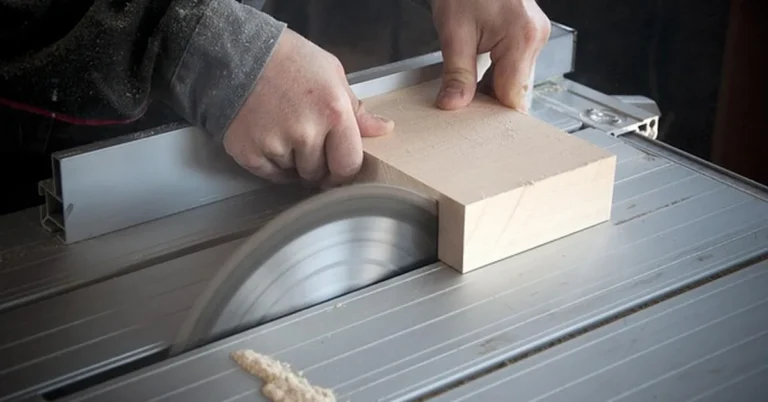
If you’ve ever searched for how to cut a stack of popsicle sticks in one go instead of scoring each one individually, this is the answer. Stack the sticks you need cut to the same length, square up the ends, and clamp the whole stack together (a small bar clamp, spring clamp, or even a vise works). Clamping matters more than the saw itself – sticks that can shift or vibrate against each other are what causes ragged, splintered cuts.
With the stack held firmly, use a fine-tooth saw (12+ teeth per inch is a good target – a coarser wood saw will tear the thin stock) and let the teeth do the cutting. Use light pressure and a full-length stroke rather than short, forced pushes. A stack of 4-6 sticks usually cuts in under 10 seconds this way, and every piece comes out the same length, which score-and-snap can’t guarantee across multiple sticks.
This method is also the one to use for angled cuts (for a roof line on a popsicle-stick birdhouse, for example) since a saw can follow an angled guide line in a way a knife-and-snap can’t.
Method 3: Scissors (Fastest, But Only for Thin Sticks)
Sharp household or craft scissors will get through a popsicle stick in one squeeze, and for kids’ projects or anywhere the cut edge is going to be covered with glue, paint, or another piece, that’s often good enough. The tradeoff is that scissors compress the wood fibers as they close rather than slicing them cleanly, so the cut edge tends to look slightly crushed or fuzzy rather than crisp – fine for a hidden joint, not ideal for a visible edge on a display piece.
If you do use scissors, dull blades make this worse, not better, since a dull edge crushes more wood before it finally shears through. Keep a dedicated pair for craft use rather than reaching for scissors that have been used to cut anything abrasive.
Common Mistakes That Crack or Splinter the Sticks
- One hard cut instead of multiple light passes: forces a crack ahead of the blade instead of a clean shear.
- Cutting across the grain at an angle: basswood is more likely to tear out when the blade meets the grain diagonally – square cuts are more forgiving.
- Using a dull blade or old scissors: dull edges crush fibers instead of cutting them, which is the single biggest cause of splintering.
- Cutting damp sticks: sticks stored somewhere humid, or fresh from a sealed craft pack in a damp garage, cut rougher than fully dry ones. Let them sit out for a day if they feel at all soft.
- No support under the cut line: cutting a stick unsupported (hanging off the edge of a table) flexes it and increases the chance of a snap in the wrong spot. Always back it with a cutting mat or scrap wood.
What to Do With the Cut Pieces
Once your sticks are cut to length, a light sanding pass and a coat of wood glue at any joint will hold up far better than craft glue alone for anything structural, like a popsicle sticks. For inspiration on what to build next, our roundup of popsicle stick craft ideas covers everything from ornaments to catapults using the exact cut pieces this guide walks through.
Frequently Asked Questions
What’s the best tool to cut a lot of popsicle sticks at once?
A fine-tooth hobby saw. Stack the sticks, clamp them together so they can’t shift, and cut through the whole stack in one pass with light, even pressure. Scoring each stick individually with a knife works fine for one or two sticks, but it’s slow for a batch.
Why do my popsicle sticks keep splitting when I cut them?
Almost always one of three things: a dull blade crushing the fibers instead of slicing them, one hard cut instead of several light scoring passes, or cutting damp wood. Switch to a sharp knife with multiple light passes (or a fine-tooth saw for a stack), and make sure the sticks are fully dry first.
Can you cut popsicle sticks with regular scissors?
Yes, sharp scissors will cut through a popsicle stick easily. The edge will look slightly crushed rather than crisp, since scissors compress the wood as they close rather than shearing it cleanly, so it’s best for cuts that will be hidden by glue or another piece rather than a visible edge.
How do you cut popsicle sticks at an angle?
Use a fine-tooth saw rather than a knife. Mark the angle, clamp the stick (or stack) firmly, and follow the marked line with light, even saw strokes. A knife can score a straight line reliably, but it’s much harder to control on an angled cut.
Conclusion
For a single precise cut, score a basswood popsicle stick with a sharp craft knife against a straightedge in several light passes and snap it along the line. For a whole stack, clamp the sticks together and cut through all of them at once with a fine-tooth saw. Scissors are the fastest option but leave a slightly crushed edge, so save them for cuts that won’t show. Whichever method you use, a sharp tool and dry wood matter more than the tool itself – that’s what actually prevents the split.
Sponsored / affiliate links. As an Amazon Associate I earn from qualifying purchases. I may earn additional commission from eligible campaigns.