John Boos Cutting Board Review: Is It Worth It?
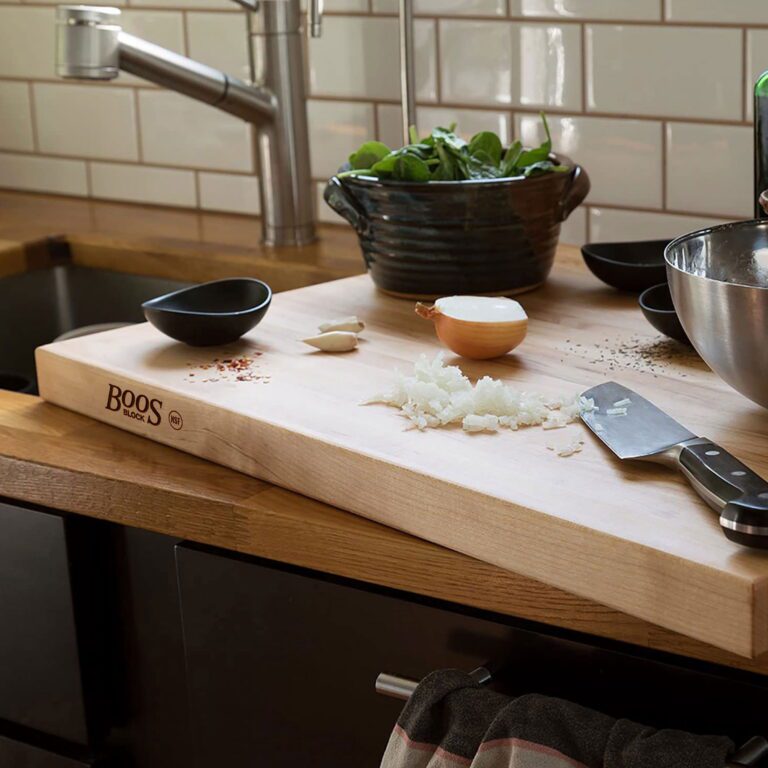
John Boos cutting boards are a solid buy if you want a maple hardwood board that can serve for years, but only if you accept regular oiling and careful drying. Choose them for prep stability, not for zero-maintenance convenience. Skip that upkeep and you invite warping, checking, knife marks that hang on, and a board that costs more over time than a simpler option. This guide compares John Boos edge-grain and end-grain boards, explains care requirements, and helps you match each option to your budget and cooking habits.
Verdict: are John Boos cutting boards worth it?


Yes, for the right buyer. John Boos boards make the most sense if you want a dense maple work surface, plan to hand-wash and oil it, and value a board that stays steady during chopping. They are a poor fit if you want the lowest-maintenance board possible or expect dishwasher convenience.
Who it’s for
Choose John Boos if you cook often, cut on the board daily, and want a heavier surface that stays put during prep. The boards also fit buyers who like one board for both prep and serving. Skip them if you want a light board, a dishwasher-safe board, or a setup that needs little care.
Where the price makes sense
The price is easier to justify when you spread it across years of use and compare it with the cost of replacing thinner boards that slide around or wear unevenly. The value improves if you keep up with oiling and drying, because the board is more likely to stay flat and usable.
Where it does not
If the board will sit wet, live in a cramped sink area, or get stored carelessly, the ownership cost rises fast. A neglected hardwood board can cup, dry out, or crack, which turns a premium purchase into an expensive reminder that maintenance was skipped.
Pros and cons
Pros
- Dense maple surface feels steady for chopping and slicing.
- Reversible designs give you two usable faces.
- Edge-grain construction is built for everyday prep use.
- Some models work as both prep boards and serving boards.
Cons
- Hand-wash only care adds routine work.
- Regular oiling and conditioning are not optional.
- Heavier models are awkward in small sinks or tight cabinets.
- The upfront price can outrun simpler boards if care is inconsistent.
Who should skip it?
Skip John Boos if you want a board for occasional use with almost no upkeep, or if you prefer a light board you can move with one hand. A cheaper plastic or composite board may fit better in a busy rental kitchen, dorm setup, or dishwasher-first household.
Which John Boos board fits your kitchen?
The best John Boos board depends on how much counter space you have, how often you prep, and whether you mind handling weight. For most everyday cooks, a medium board with reversible surfaces is the best balance. Smaller kitchens benefit from compact boards, while heavy prep calls for thicker, heavier options.
Everyday prep choice
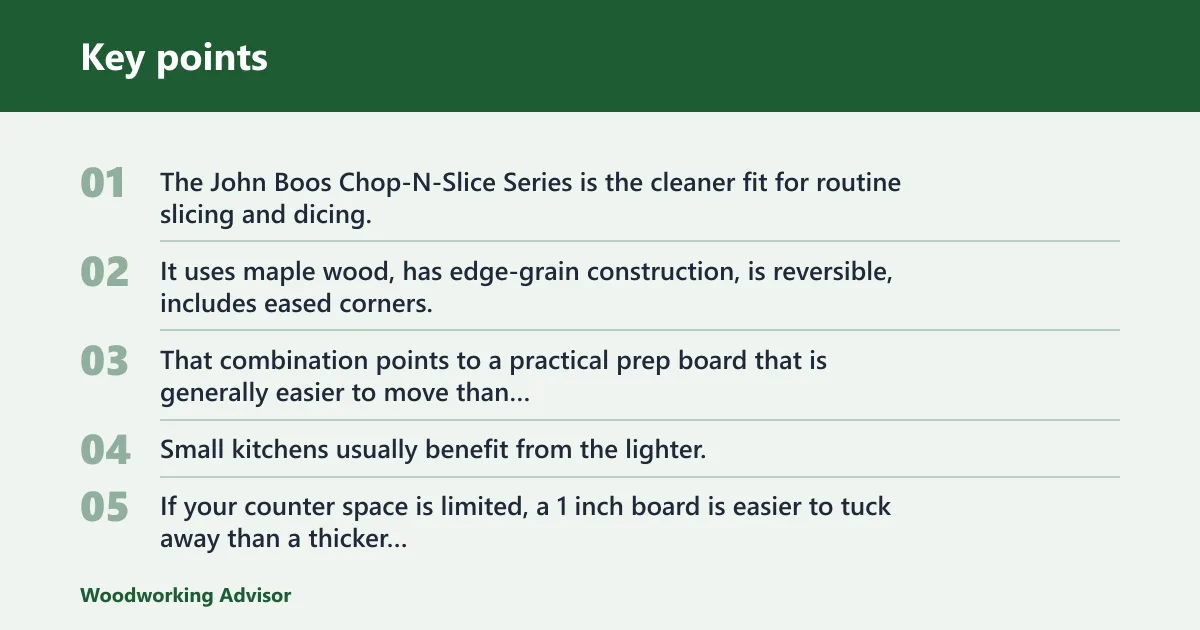
The John Boos Chop-N-Slice Series is the cleaner fit for routine slicing and dicing. It uses maple wood, has edge-grain construction, is reversible, includes eased corners, and is 1 inch thick. That combination points to a practical prep board that is generally easier to move than the heavier R-Board.
Best pick for smaller kitchens
Small kitchens usually benefit from the lighter, thinner Chop-N-Slice style board because it is simpler to lift, store, and wash. If your counter space is limited, a 1 inch board is easier to tuck away than a thicker block, and reversible use helps stretch the board’s working life.
Best pick for heavier-duty prep
The R-Board Series Rectangular Wooden Maple Cutting Board is the stronger fit for cooks who want more mass and a larger work area. It measures 18 by 12 inches, is 1.5 inches thick, weighs 10 pounds, has recessed finger grips, and is reversible. That extra mass helps it stay put.
Picture a home cook who chops onions, herbs, and carrots three nights a week. A 1 inch board is easier to lift to the sink and dry properly. Now picture a holiday prep session with multiple ingredients and a crowded counter. The 10 pound R-Board is harder to move, but more stable under pressure.
John Boos board ownership matrix
This matrix separates purchase price from ownership burden. The cost estimates below are simple 3-year totals based on board price plus oil and cream maintenance. Because sellers change pricing, treat the board price as a market placeholder and the care cost as a recurring ownership layer, not a fixed quote.
| Model | Construction | Handling weight | Maintenance burden | Best use | Who should skip it | 3-year cost estimate |
|---|---|---|---|---|---|---|
| Chop-N-Slice Series | Maple, edge-grain, reversible, 1 inch thick | Moderate; easier to lift than a 10 pound block | Medium; wash, dry, oil, then cream | Daily slicing and dicing | Buyers wanting a thick serving block or minimal care | Board price + about $24 to $36 in oil and cream |
| R-Board Series Rectangular Wooden Maple Cutting Board | Maple, reversible, 18 by 12 inches, 1.5 inches thick | Heavy; 10 pounds with recessed finger grips | Medium to high; same care, more handling effort | Heavy prep, stable all-purpose board, serving | Small kitchens, users with limited grip strength, frequent sink movers | Board price + about $24 to $36 in oil and cream |
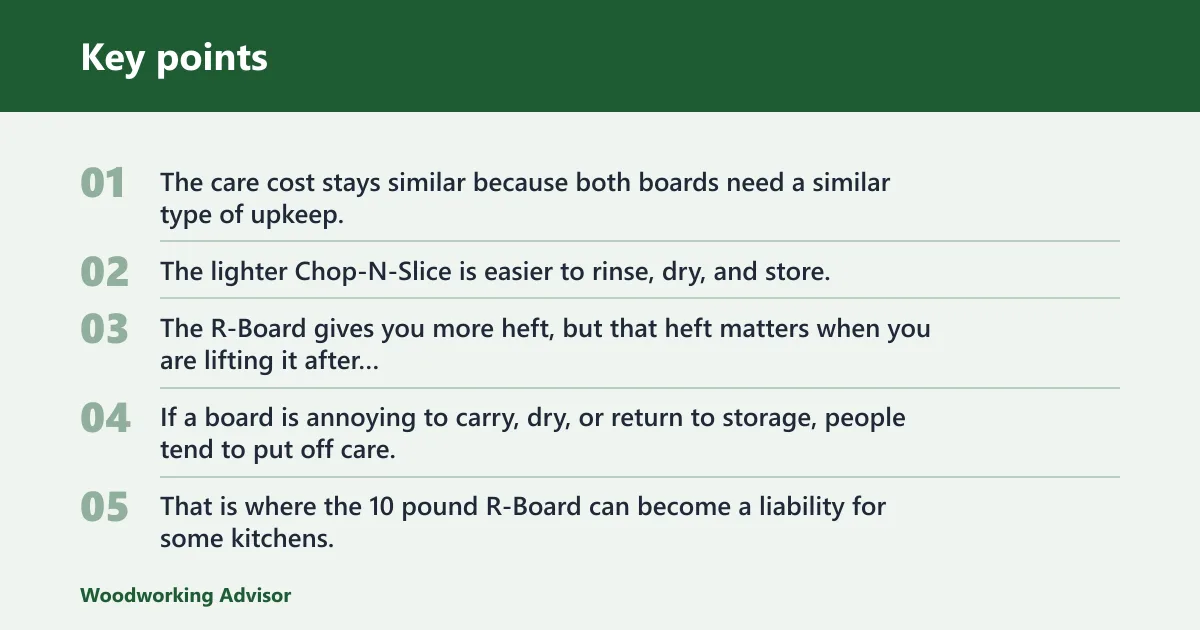
The care cost stays similar because both boards need a similar type of upkeep. The real difference is handling. The lighter Chop-N-Slice is easier to rinse, dry, and store. The R-Board gives you more heft, but that heft matters when you are lifting it after washing.
Maintenance burden and handling weight
Weight changes how often a board gets used. If a board is annoying to carry, dry, or return to storage, people tend to put off care. That is where the 10 pound R-Board can become a liability for some kitchens, even though the finger grips help.
3-year ownership cost estimate
A practical way to estimate 3-year ownership is simple: board price plus recurring oil and cream purchases. Boos Block Mystery Oil and Board Cream are sold separately, and most owners will need both. If you buy one bottle of each during the period, expect about $24 to $36 in care products total, depending on bottle size and how often you refresh the board.
Suppose a buyer chooses the R-Board and leaves it damp in the sink overnight after a tomato prep session. The next week, the same board may show a rougher surface and start to dry unevenly at the edges. That problem is not from slicing; it is from skipped drying and skipped oiling.
Maple and edge grain explained
Maple is the common John Boos material because it is a dense hardwood with a surface that works well for repeated cutting. Edge-grain construction matters because it improves stability compared with a flimsy flat board and gives a smoother feel under the knife. Thickness then determines how planted the board feels.
Why maple is the common material
Maple gives John Boos boards the hard, consistent surface buyers expect from a serious prep board. It is firm enough for repeated knife work without feeling soft or spongy, and it fits the brand’s focus on kitchen boards that can move between prep and serving with proper care.
What edge grain changes in use
Edge-grain construction places the board’s wood fibers in a way that supports durability and helps resist warping when the board is kept dry and oiled. It also tends to feel smoother under the knife than rougher, more open surfaces. That does not remove maintenance; it reduces avoidable wear.
How thickness affects feel and stability
A 1 inch board is easier to handle and store. A 1.5 inch board feels more planted and less likely to skate around. The tradeoff is simple: more thickness usually means more weight and more effort at the sink. Choose thickness based on your counter space and lifting tolerance.
How do John Boos boards clean up?
They clean up well if you treat them like wood, not plastic. John Boos boards are hand-wash only, so you should wash with warm water and mild soap, then dry immediately. That routine keeps moisture from soaking in and reduces the conditions that lead to cupping, checking, and lingering stains.
Hand-wash only care
Do not put the board in the dishwasher. Heat, prolonged soaking, and aggressive detergent exposure are bad fits for hardwood. A quick wash, followed by towel drying and air drying on edge, is the safer routine for both maple and edge-grain construction.
Drying and storage
Dry both faces and the edges, then store the board where air can reach it. Flat storage is acceptable only after the board is fully dry; otherwise, moisture can trap under one side. Leaning it briefly helps air circulate and reduces the risk of uneven drying.
What regular oiling prevents
Regular oiling helps slow moisture loss from the wood. Skipping it can leave the board dry, rough, and more likely to show knife marks that hold food residue. If dryness continues, the board may start to move out of flat, especially along edges and corners.
Use John Boos Block Mystery Oil for regular oiling, then follow with Board Cream for conditioning. The two products are sold separately for a reason: oil feeds the wood, while cream helps condition the surface after oiling. Together they support a smoother-feeling board and a better moisture barrier.
Mystery Oil use
Apply Mystery Oil when the board looks dry, feels rough, or starts to absorb water too quickly. A practical schedule is monthly for frequent cooks and less often for light use. Wipe on a thin coat, let it soak in, then remove any excess before the board sits overnight.
Board Cream use after oiling
Board Cream comes after the oil step. Use it to condition the surface and support the finish after the wood has absorbed oil. That combination is more useful than oil alone because the cream adds a finishing layer that helps the board feel more sealed and easier to wipe down.
Suggested care schedule
- Wash by hand after use.
- Dry both sides and the edges immediately.
- Check for dryness every few weeks.
- Apply Mystery Oil when water stops beading on the surface.
- Follow with Board Cream after the oil has soaked in.
- Repeat more often in dry climates or with heavy use.
Signs maintenance is overdue
If the surface looks pale, feels rough, or drinks in water right away, the board wants attention. If the ends begin to lift slightly or the board develops a dry gray cast, the care gap is already showing. At that point, act before the surface degrades further.
Pros and cons of John Boos boards
John Boos boards are strong contenders for cooks who want a dependable maple board and are willing to maintain it. The main benefit is a steady prep surface with reversible use. The main drawback is that the care routine is real, and it never disappears.
Pros
- Maple gives a hard, work-ready cutting surface.
- Reversible designs extend usable area.
- Edge-grain construction supports everyday prep.
- The boards can also work for serving.
Cons
- Hand-wash only care rules out the dishwasher.
- Oil and cream are separate purchases.
- Heavier models can be awkward to handle.
- Neglected boards can dry out and move out of flat.
Frequently asked questions
Are boos cutting boards good?
Yes, if you want a maple hardwood board for regular prep and you are willing to maintain it. They are most appealing for cooks who value a stable cutting surface and do not mind hand washing, drying, and routine oiling. They are less attractive if convenience matters most.
Are boos cutting boards worth it?
They are worth it for buyers who will use the board often enough to justify the care. If you cook several times a week, the cost can make sense over time. If the board will sit unused or be washed carelessly, a simpler board is a better buy.
What is the best John Boos cutting board for everyday use?
The Chop-N-Slice Series is the clearest everyday choice because it is maple, reversible, edge-grain, eased at the corners, and 1 inch thick. It gives you a practical prep surface without the extra weight of the 10 pound R-Board. That makes it easier to wash, dry, and store.
Is a John Boos maple cutting board better than end grain?
For many buyers, maple edge-grain is the better fit because it balances prep performance, stability, and care demands. End grain can feel different under the knife, but the right answer depends on how much maintenance you want to accept. John Boos maple boards fit buyers who want simpler upkeep.
Do John Boos cutting boards need mineral oil?
They need regular oiling, and John Boos sells Mystery Oil as a separate maintenance product. The point is to keep the wood from drying out. After oiling, Board Cream is used for conditioning. Skipping that routine makes the board more vulnerable to roughness and moisture loss.
How do I maintain a John Boos cutting board?
Hand-wash it, dry it immediately, then oil it when the surface starts to look dry or absorb water too fast. Follow the oil with Board Cream. That simple sequence is the core routine. If the board is used often, check it monthly and adjust sooner in dry conditions.
Which John Boos board size is right for my kitchen?
Choose the Chop-N-Slice if you want a lighter, easier-to-handle board for smaller counters or quick cleanup. Choose the R-Board if you want more weight, a larger working surface, and recessed finger grips for lifting. If storage is tight, lighter and thinner is usually the safer choice.
Are John Boos cutting boards easy to clean?
They are easy to clean in the sense that the surface wipes down well after hand washing, but they are not easy in the dishwasher sense because they require manual care. If you are willing to wash, dry, and oil them properly, cleanup is straightforward and predictable.
Why do John Boos cutting boards need regular oiling?
Wood loses moisture over time, especially with repeated washing and drying. Regular oiling slows that loss and helps the board stay smoother and less prone to drying damage. Without it, the board can become rough, absorb moisture unevenly, and show wear sooner than it should.
Sponsored / affiliate links. As an Amazon Associate I earn from qualifying purchases. I may earn additional commission from eligible campaigns.