Is It Safe to Clean Hardwood Floors With Vinegar? (pH Guide)
Vinegar is too acidic for regular hardwood floor cleaning — at roughly pH 2.5, it starts etching cured polyurethane finish once surface pH drops below 4.0, per National Wood Flooring Association guidelines. Repeated exposure dulls the sheen, can void a finish warranty, and may force an early refinish costing $3–$8 per square foot. This guide covers which floor finishes tolerate diluted vinegar, the exact safe ratio, and the pH-neutral cleaners flooring manufacturers recommend instead.
Why Vinegar Can Damage Hardwood Floor Finish
Best pH-Neutral Hardwood Cleaner Pick
Bona Hardwood Floor Cleaner Spray, 32 fl oz – $24.27
Water-based, pH-neutral, and labeled safe for the unwaxed, unoiled, polyurethane-finished floors this guide’s comparison table flags as vinegar’s biggest risk zone.
- Best for: routine cleaning of sealed polyurethane hardwood floors
- Why we picked it: pH-neutral formula matches NWFA cleaning guidance instead of risking the etching this guide explains
- Main drawback: not formulated for waxed or oil-finished floors
Compare more hardwood floor cleaner options
 Option 1 Murphy Oil Soap Original, 32 oz – $12.05
|
 Option 2 Rejuvenate Shine Refresher, 32 oz – $27.98
|
 Option 3 Rejuvenate All Floors Kit – $28.27
|
As an Amazon Associate we earn from qualifying purchases.
Plain white vinegar is acetic acid diluted in water, with an undiluted pH near 2.5 — far more acidic than the near-neutral water your floor’s finish was designed for. Cured polyurethane and other film-forming wood finishes begin to etch and haze once repeated exposure pushes surface pH below about 4.0. That etching shows up first as a dull, cloudy patch in high-traffic paths, then as faster water spotting and wear as the protective film breaks down across your hardwood or engineered floor.
Standing water compounds the problem: mopping with too much liquid, vinegar or not, lets moisture seep between boards and into seams, which can cause warping, cupping, or gray staining that no amount of polish will fix. The acid and the water are two separate risks, and vinegar solutions often deliver both at once.
📊 Microscopic etching of cured, film-forming wood finishes begins once surface pH drops below 4.0, with prolonged exposure causing hazing, loss of sheen, and accelerated wear at traffic points. — Source: National Wood Flooring Association Technical Guidelines
Best pH-Neutral Alternatives to Vinegar for Hardwood Floors
Skip vinegar altogether and use a cleaner formulated for your floor’s specific finish — the National Wood Flooring Association recommends a pH-neutral product over anything acidic or alkaline. Non-toxic hardwood cleaners like Bona’s spray formula are water-based, biodegradable, and labeled safe for unwaxed, unoiled, polyurethane-finished floors — the exact finish type vinegar puts at risk. Murphy Oil Soap’s original formula has cleaned wood floors for generations and works well between deeper cleans, though heavy buildup can leave its own dull film if it isn’t fully wiped up.
If years of vinegar, wax buildup, or foot traffic have already dulled your floor, a dedicated polish like Bona’s hardwood floor polish restores sheen and fills micro-scratches without stripping the existing finish first.
Which Hardwood Floor Finishes Can Tolerate Vinegar?
Not every wood floor reacts to vinegar the same way — the finish, not the wood species, determines the real risk. Engineered wood floors with a factory-applied water-resistant top coat tolerate brief, light exposure better than solid hardwood, but the table below breaks down every common finish type.
| Finish Type | Vinegar Safe? | Why |
|---|---|---|
| Polyurethane / urethane-sealed | Occasional, heavily diluted only | pH ~2.5 vinegar can etch the film below pH 4.0 with repeated use |
| Wax-finished | Never | Vinegar strips the wax layer, leaving dull, blotchy patches |
| Oil-finished (tung, Danish oil) | Never | Acid breaks down the oil layer and can discolor the wood unevenly |
| Unfinished / raw wood | Never | No protective layer — vinegar soaks in directly and can gray the wood |
| Engineered (water-resistant top layer) | Yes, lightly diluted, dried immediately | Factory sealant tolerates brief contact better than solid hardwood |
How to Safely Clean Hardwood Floors With Vinegar (If You Choose To)
If your floor is polyurethane-sealed and you still want to spot-clean with vinegar, dilute it heavily, use it sparingly, and dry every pass immediately. For general mopping frequency and technique beyond spot-cleaning, see our full breakdown on mopping hardwood floors with vinegar.
- Confirm your floor’s finish: Wipe a hidden corner with a drop of mineral spirits on a cloth — if the finish doesn’t soften or transfer, it’s a cured polyurethane seal and a reasonable candidate for diluted vinegar.
- Mix the solution: Combine 1/2 cup distilled white vinegar with 1 gallon of warm water — diluting raises the pH from about 2.5 toward 4.5-5, above the etching threshold.
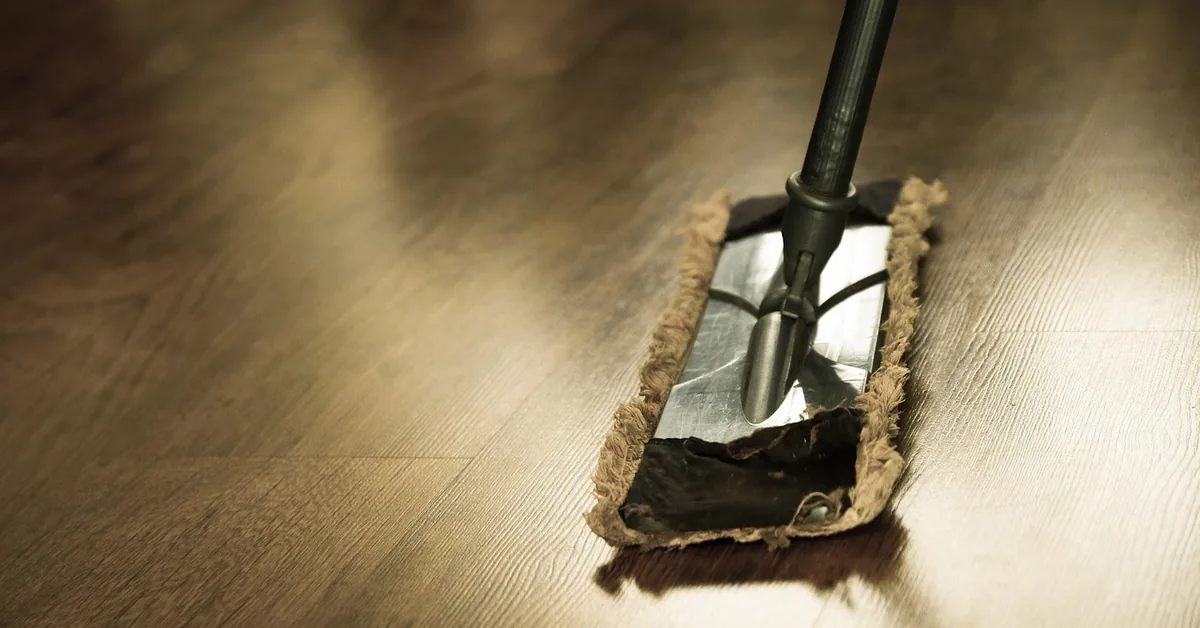
- Use a well-wrung mop: Dip a microfiber mop and wring it until it is just damp, not wet — standing liquid is the bigger risk to the wood than the vinegar itself.
- Work in small sections and dry immediately: Mop one section, then follow behind with a dry microfiber cloth so no moisture sits on seams or edges.
- Limit frequency: Use this method no more than once a month, and switch to a pH-neutral cleaner for routine cleaning in between.
How to Deep Clean and Maintain Hardwood Floors Without Vinegar
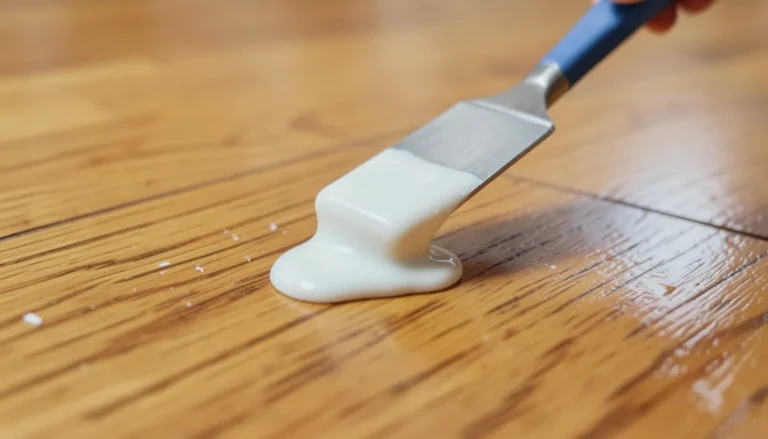
For regular maintenance, skip liquid cleaners when you can. Deep-clean hardwood floors by gently scraping dried grime with a plastic putty knife, never metal, which can scratch the finish, then spot-clean tough stains with a pH-neutral cleaner on a soft cloth before mopping the rest of the floor.
Doormats at every entrance cut down on the grit that causes most of the fine scratching visible in raking light, and sweeping or vacuuming with a hard-floor attachment several times a week keeps debris from grinding into the finish between deep cleans. Buff with a dry microfiber pad monthly to bring back shine without adding any liquid at all.
Frequently Asked Questions
Is It Safe to Use Vinegar to Clean Hardwood Floors?
Only in limited cases. Distilled white vinegar diluted to about 1/2 cup per gallon of water is generally safe for spot-cleaning polyurethane-sealed floors, used no more than once a month. It is not safe on waxed, oiled, or unfinished wood, and undiluted vinegar can etch even a sealed finish over repeated use.
Can You Use Vinegar on Waxed Hardwood Floors?
No. Vinegar’s acidity breaks down and strips wax finishes, leaving dull, blotchy patches that usually require re-waxing the entire floor to fix evenly. Use a wax-specific cleaner instead.
How Often Can You Clean Hardwood Floors With Vinegar?
No more than once a month on a polyurethane-sealed floor, and only as a diluted spot-treatment. More frequent use is one of the most common causes of the dulling and hazing homeowners blame on a bad floor finish.
Do You Have to Rinse Floors After Mopping With Vinegar?
You don’t need a separate rinse if the mop is wrung nearly dry, but going over the floor with a dry microfiber cloth immediately after mopping removes any residue and prevents standing moisture from sitting in seams.
What Is the Best pH-Neutral Cleaner for Hardwood Floors?
Look for a cleaner labeled specifically for your floor’s finish and marked pH-neutral — Bona’s hardwood floor cleaner spray and Murphy Oil Soap’s original formula are both widely used water-based options that will not etch a polyurethane seal the way straight vinegar can.
Conclusion
Vinegar isn’t a hardwood floor’s friend, but it isn’t automatically off-limits either — the deciding factor is your floor’s finish, not a flat yes-or-no answer. Stick to a heavily diluted mix on polyurethane-sealed floors only, dry every pass immediately, cap it at once a month, and lean on a pH-neutral cleaner like Bona or Murphy Oil Soap for everything in between. That’s the difference between a floor that keeps its shine for another decade and one that needs an early refinish.
Sponsored / affiliate links. As an Amazon Associate I earn from qualifying purchases. I may earn additional commission from eligible campaigns.