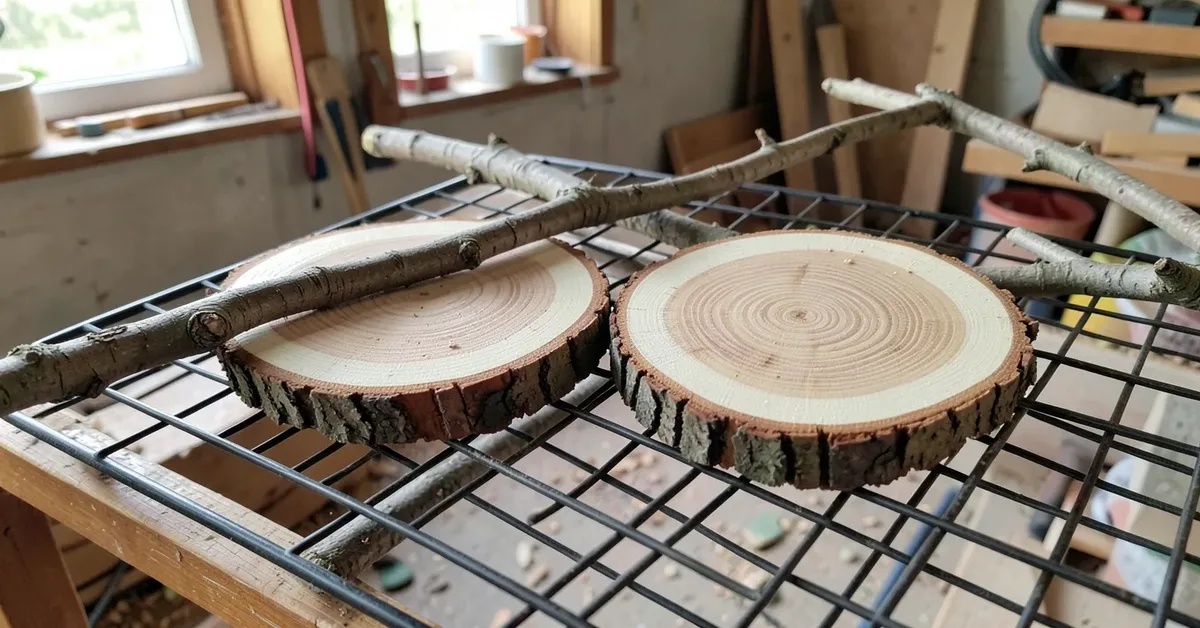
How to Dry Wood for Coasters Without Cracking It
Thin, pre-cut coaster blanks (roughly 1/4 to 1/2 inch thick) can be force-dried in an oven at 200°F in a couple of hours, but a full round cut from a fresh branch or log – the kind with visible bark and growth rings that most people actually want for coasters – needs to air dry for 6 to 12 months per inch of thickness, or it will crack straight through the center as it loses moisture unevenly. That distinction is the single biggest thing the quick “dry it in an hour” tips online get wrong, and it’s why so many DIY log-slice coasters end up split down the middle within a few weeks.
Why Log-Slice Coasters Crack (and Cut Boards Usually Don’t)
Best Moisture Meter for Coaster Blanks
 |
General Tools MMD4E Moisture Meter for Wood – $38.83 Confirms a coaster blank has actually hit the 6-8% target before you finish it, instead of guessing by feel or by calendar days.
|
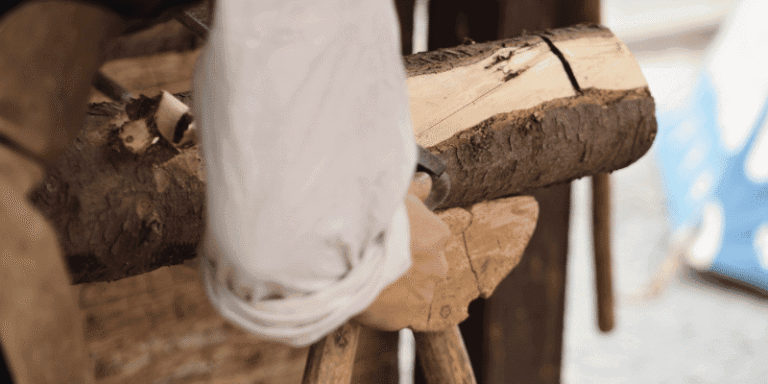
Wood loses moisture much faster through its end grain (the exposed rings you see on a cross-cut slice) than through its face grain. A coaster cut straight across a branch or log is almost all end grain, so the outside dries and shrinks while the center is still wet and swollen – that mismatch in shrinkage is exactly what splits the slice radially from the pith outward. A coaster cut from a flat board (like most oak, maple, or cherry stock from a lumber yard) doesn’t have this problem nearly as badly, because it’s mostly face grain and dries far more evenly. If you’re using dimensional lumber rather than log rounds, you can mostly skip straight to the oven-drying section below.
Air Drying Log-Slice Coasters the Right Way
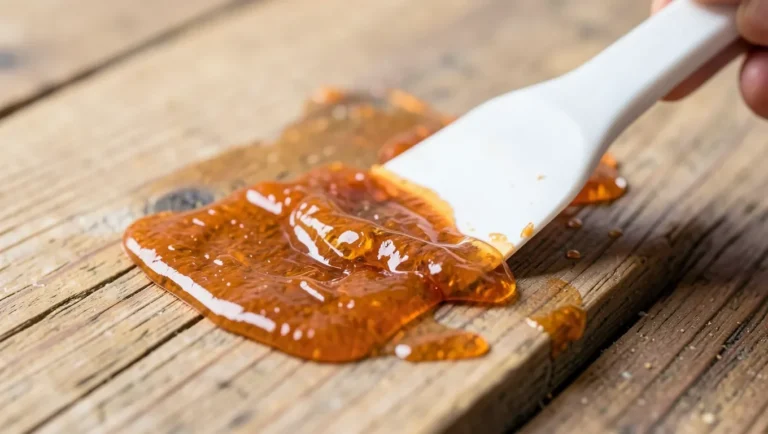
- Seal the end grain immediately after cutting. Coat both faces of the slice with a wood sealer, wax, or even plain white glue within a few hours of cutting. This slows moisture loss at the ends enough for the rest of the slice to catch up, which is the single most effective anti-cracking step there is.
- Stack with airflow, not in a sealed container. Lay slices flat with small spacers between them (stickers, in woodworking terms) so air can circulate on both faces. Stacking them flush against each other traps moisture and invites mold.
- Keep them out of direct sun and away from heating vents. Fast, uneven drying is what causes cracking – you want slow and even, not fast.
- Expect 6 to 12 months for a 1-inch-thick slice, longer for thicker rounds. This is the step most tutorials skip past, and it’s the real reason so many log-slice coaster projects end up cracked.
Force-Drying Thin, Pre-Cut Coaster Blanks
If you’re working with thin blanks already cut to roughly 1/4 to 1/2 inch (either bought pre-cut or resawn from dry lumber), an oven works well because there’s much less mass and much less end-grain-to-center distance for moisture to fight through:
- Preheat the oven to 200°F (93°C) – no higher, since excess heat cooks the wood’s surface and causes the exact cracking you’re trying to avoid.
- Arrange the blanks on a baking sheet with space between each piece so air can move around them.
- Bake for 1 to 2 hours, checking every 30 minutes and rotating the pieces for even exposure.
- Let them cool completely at room temperature before sanding or finishing – wood is more brittle and more prone to chip-out while still warm.

Checking Moisture Content With a Meter
A moisture meter takes the guesswork out of “is this actually dry yet.” Aim for 6 to 8% moisture content for hardwoods like oak and maple, and 8 to 10% for softer woods like pine or birch – roughly matching typical indoor humidity equilibrium, which is what keeps a finished coaster from continuing to shrink or swell once it’s in daily use. Test in a few different spots, including near the center of a log slice, since the outside will read dry well before the core actually is.
Skip the “Chemical Drying Agents” Advice You’ll See Elsewhere
Some older wood-drying guides suggest wiping green wood down with acetone, denatured alcohol, or even ethylene glycol to “speed up drying.” Don’t do this. Ethylene glycol is the toxic ingredient in automotive antifreeze and has no place on an item that will sit under drinks and get handled daily, and neither acetone nor denatured alcohol actually removes bound moisture from inside wood cells – they evaporate off the surface and do nothing for the slow internal drying that prevents cracking. If you want a real chemical method for stabilizing green, crack-prone wood, the legitimate woodturning technique is a soak in a PEG (polyethylene glycol) wood stabilizer solution, which is a completely different, non-toxic compound that displaces water inside the cell walls and locks the wood at a stable size. It’s mostly used for larger bowl blanks rather than thin coasters, takes a soak of several weeks, and is worth it only if you’re working with especially prone-to-crack wood and want to skip the long air-dry wait – for most coaster projects, sealing the end grain and being patient is simpler and just as effective.
Finishing Your Coasters Once They’re Dry
Confirm the moisture reading is stable (not still dropping) before you finish – sealing wood that’s still drying traps moisture and undoes all the patience that got you this far. Sand through progressively finer grits, then choose a food-safe finish since coasters handle drinkware directly: a wipe-on oil like mineral oil or a food-safe walnut oil is common, a water-based polyurethane gives more moisture resistance for anyone who tends to leave condensation-heavy glasses sitting, and either works fine once the wood itself is genuinely dry.
Frequently Asked Questions
How long does it take to dry wood for coasters?
Thin, pre-cut blanks can be oven-dried in 1 to 2 hours. A full log slice with bark and visible growth rings needs 6 to 12 months of air drying per inch of thickness, since it dries almost entirely through end grain and cracks if rushed.
What is the best way to dry wood quickly?
For thin, already-cut blanks, a 200°F oven for 1 to 2 hours is the fastest reliable method. For thicker log slices, there is no truly fast safe method – forcing the drying causes exactly the radial cracking you’re trying to avoid.
Can I use air drying for wood coasters?
Yes, and for full log-slice coasters it’s the safer method. Seal the end grain right after cutting, stack the pieces with spacers for airflow, and keep them out of direct sun while they dry slowly over several months to a year.
Should I seal wood before drying for coasters?
Seal the end grain specifically (with wax, a dedicated end-grain sealer, or even white glue) right after cutting to slow moisture loss and prevent cracking – but don’t apply a full finish, like a topcoat or sealant coat over the whole piece, until the wood has actually finished drying and the moisture reading is stable.
Bottom Line
Match the drying method to the wood you’re actually using: thin cut blanks handle an oven fine, while full log slices need patience and a sealed end grain far more than they need speed. Skip any advice involving antifreeze-adjacent chemicals, check moisture with a real meter instead of guessing, and you’ll end up with coasters that don’t crack in your first month of using them.
Sponsored / affiliate links. As an Amazon Associate I earn from qualifying purchases. I may earn additional commission from eligible campaigns.