How to Winterize a Cabin: Step-by-Step Checklist
Winterize a cabin by choosing one of three paths: full shutdown, heat-and-monitor, or buyer inspection. If pipes can freeze, drain and protect them before the first hard freeze. Poor winterization can burst pipes, ruin fixtures, invite mold, and leave costly repairs or a bad closing. This guide walks through each workflow, from water shutoff and antifreeze to thermostats, wells, appliances, and final checks.
What you’ll need
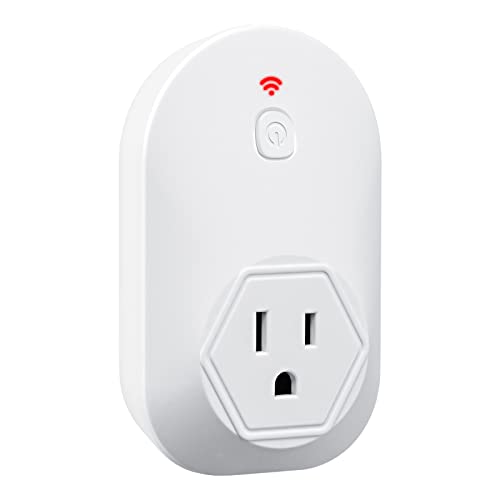

Pick tools that match your water source and heating setup. If you are unsure about any plumbing or fuel step, follow the manufacturer’s manual for that equipment and local code.
- Adjustable wrench and pliers for shutoff valves and hose fittings
- Flashlight or headlamp for crawl spaces, basements, and utility closets
- Bucket and towels for residual water
- RV/marine antifreeze for traps and toilet bowls
- Shop vacuum or wet-dry vacuum for leftover fixture water, if needed
- Air compressor only if your plumbing manual allows blowout and lists a safe pressure limit
- Pipe insulation and electric heat tape for exposed runs in cold areas
- Fresh batteries for smoke and carbon monoxide detectors
- Caulk, foam, or sealant for small gaps around penetrations
- Notepad or printed checklist for the final walk-through
Winterization decision matrix
This matrix helps you choose the right shutdown path before you touch a valve. Match the cabin type, water source, and risk level to the steps below.
| Cabin setup | Risk level | Exact shutdown steps | Tools and materials | Common failure points |
|---|---|---|---|---|
| Seasonal cabin, no heat | High freeze risk | Close the main water shutoff valve, open the highest faucet first, then open all faucets until water stops. Drain the water heater, empty toilet tank and bowl, and add RV/marine antifreeze to traps and bowls. | Wrench, towels, RV/marine antifreeze, bucket | Low-point drains missed, outdoor spigots left full, toilet trap water left behind |
| Cabin with partial heat and remote monitoring | Moderate freeze risk | Keep heat low enough to prevent freezing, often around 40 to 50 degrees for unattended use, and monitor the thermostat remotely if possible. Still drain vulnerable exterior lines, disconnect hoses, and protect fixtures that can freeze first. | Thermostat app or monitor, pipe insulation, heat tape, detector batteries | Thermostat setback too low, heat tape unplugged, crawl space air leaks |
| Cabin with municipal water | Varies by exposure | Shut off the main water supply, open faucets to drain, then protect toilets, traps, and the water heater. Focus on hose bibs, exterior walls, and crawl spaces where pipes cool fastest. | Wrench, RV/marine antifreeze, insulation, sealant | Forgetting exterior faucets or a fixture farther from the main line |
| Cabin with a well | High if pump or pressure tank stays wet | Shut down the well system safely, handle the pressure tank, and clear branch lines that will not drain by gravity. Follow the pump and pressure-switch manual for any blowout step. | Manual for pump system, wrench, bucket, approved blowout setup if listed by the manufacturer | Pressure left in the tank, short branches holding water, drain-back valves ignored |
| Buyer inspection after a winterized sale | Inspection risk | Ask exactly how winterization was done, then inspect under sinks, at fixtures, around the water heater, and at exterior walls for signs of prior freeze damage. | Flashlight, checklist, camera or phone | Seller notes that do not match the actual valve position or appliance condition |
How do you winterize a cabin?

Start by shutting off water, then drain lines, water heater, toilets, traps, and any exposed branch lines before freezing weather arrives. After that, set the heat plan, protect pipes in crawl spaces and exterior walls, and finish with a leak, access, and pest check.
Shut off water and open faucets
- Close the main water shutoff valve.
- Open the highest-elevation faucet first to break the vacuum.
- Open all faucets until water stops flowing, including hot and cold sides where present.
- Open low-point drains if the plumbing system has them.
That sequence lets water leave the system instead of sitting in low sections. Water that freezes expands and can split pipes left full.
Drain the water heater and low points
- Turn off power to an electric water heater or shut off gas to a gas unit.
- Let the tank cool before draining.
- Close the cold-water inlet and open the hot-water outlet if the manufacturer’s drain procedure calls for it.
- Drain the tank completely.
Do not assume a cabin water heater drains like a space heater. The plumbing tank needs its own shutoff, cool-down, and drain steps.
Protect toilets, traps, and drains
- Drain the toilet tank and bowl.
- Pour RV/marine antifreeze into each toilet bowl and into sink, tub, and shower traps.
- Add only the amount needed to cover the trap water, then stop.
A common rule of thumb is about 1 to 2 cups per trap and enough antifreeze to cover the bottom of the bowl. RV/marine antifreeze is non-toxic and different from automotive antifreeze.
Set heat, insulation, and monitoring
- Choose full shutdown or partial heat based on occupancy and freeze risk.
- If you keep heat on, set the thermostat low enough to prevent freezing, often 40 to 50 degrees for unattended cabins.
- Use remote monitoring if the cabin has smart controls and a reliable signal.
- Insulate crawl spaces, attic penetrations, and exposed plumbing routes.
Some cabins need a low hold temperature because a total shutdown would leave plumbing exposed to deep cold. In a warmer, closely monitored cabin, a higher setting may be used, but it should still match the building’s weakest pipes and the owner’s ability to check the space.
Do a final leak and access check
- Disconnect and drain outdoor hoses, hose bibs, and outdoor faucets.
- Check crawl spaces, attic hatches, and utility rooms for gaps bigger than a dime.
- Replace smoke and carbon monoxide detector batteries.
- Clean gutters before snow and ice buildup.
Picture a 900-square-foot seasonal cabin with a sink line on an exterior wall. If the thermostat is set low but the hose remains connected outside, that one connection can still split and leak into the wall.
How do you winterize a cabin with a well?
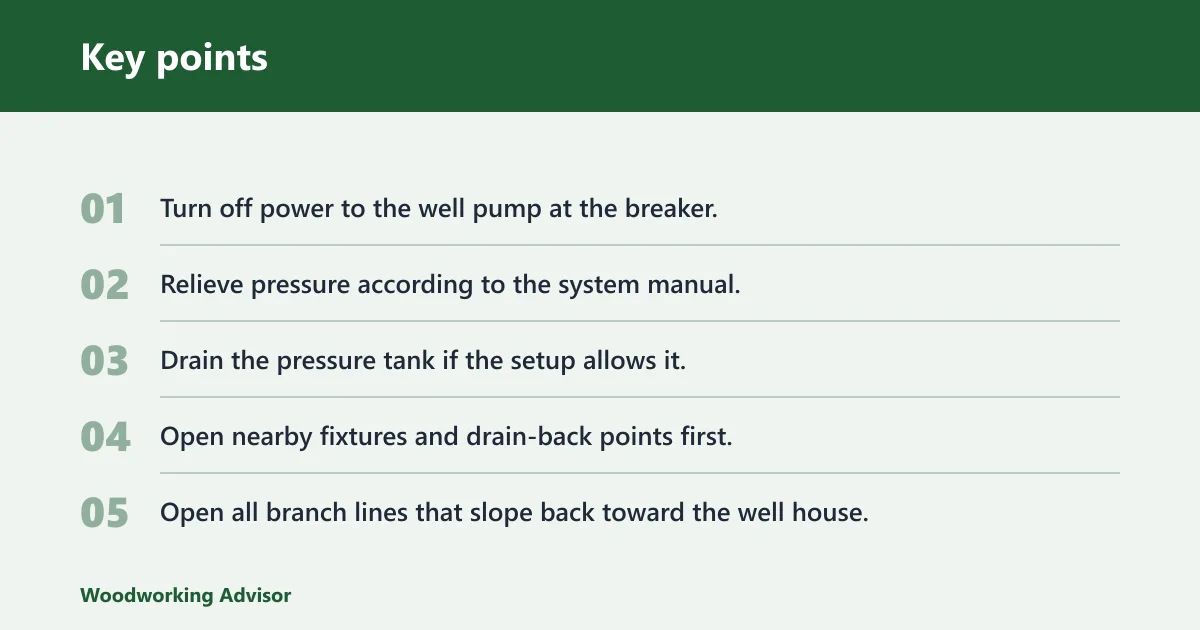
A well system needs separate handling because the pump, pressure tank, and branch lines can hold water even after the main cabin lines are opened. Shut it down safely, then clear what gravity will not empty and follow the pump manufacturer’s instructions for any blowout step.
Shut down the well system safely
- Turn off power to the well pump at the breaker.
- Relieve pressure according to the system manual.
- Drain the pressure tank if the setup allows it.
Do not force air into a well line without pressure guidance. Excess pressure can damage fittings, valves, or the tank.
Handle the pressure tank and branch lines
- Open nearby fixtures and drain-back points first.
- Open all branch lines that slope back toward the well house.
- Use a compressor only if the manufacturer allows it and gives a safe pressure limit.
A common failure point is a short branch that does not drain by gravity. Those sections can still freeze and crack even when the rest of the cabin is empty.
- Inspect the pressure switch, tank, and unions for leaks after shutdown.
- Look for frost-prone runs through unheated spaces.
- Insulate or heat-tape exposed pipe only where the product is rated for that use.
Suppose a well-fed cabin has a pressure tank in an unheated shed. Even if indoor fixtures are drained, that tank area remains at risk unless it is drained, insulated, or otherwise protected by the system design.
How do you winterize a cabin toilet?
Drain both the tank and bowl, then add RV/marine antifreeze to the bowl and nearby traps. That keeps standing water from freezing in the toilet base, trap, or connected drain line. Protect the supply valve and any short exposed line at the fixture too.
Drain the tank and bowl
- Shut off the toilet supply valve.
- Flush until the tank is mostly empty.
- Remove remaining water from the tank and bowl with a sponge or wet-dry vacuum.
The toilet is a freeze point because water can stay trapped in the tank, bowl, and trap even after the main lines are drained.
Add RV/marine antifreeze to the bowl and traps
- Pour about 1 quart into the toilet bowl.
- Add a similar amount to nearby sink and tub traps as needed to cover the trap water.
- Do not use automotive antifreeze.
RV/marine antifreeze is made for residential water systems and drains. It is the right type for toilets, P-traps, and fixture drains.
Protect supply valves and nearby lines
- Leave the toilet supply valve closed after draining.
- Insulate any exposed pipe feeding the bathroom.
- Check for drips before leaving the cabin.
What should be drained before leaving a seasonal cabin? Anything that can hold standing water: toilet tank and bowl, water heater, fixtures, traps, hose lines, and any branch that does not empty on its own.
Common mistakes
Most winter damage comes from a few missed steps. Catching them early is cheaper than thaw repairs.
- Leaving hoses attached to outdoor spigots
- Missing a low-point drain or a fixture on an outside wall
- Skipping the water heater, especially the inlet and outlet handling
- Forgetting a rarely used sink, shower, or laundry trap
- Using the wrong antifreeze or pouring it where the label does not allow it
- Ignoring crawl space air leaks, attic openings, and pest entry points
- Leaving detector batteries old or dead before a long vacancy
How much does it cost to winterize a cabin?
DIY costs are often modest if you already have basic tools and a simple plumbing layout. The total usually depends on cabin size, plumbing complexity, and water source, while contractor pricing rises with wells, multiple fixtures, and hard-to-reach lines.
DIY cost factors
Expect to spend on RV/marine antifreeze, pipe insulation, detector batteries, and possibly heat tape or sealant. A small cabin with one bath and simple municipal water usually costs less than a larger cabin with a well, pressure tank, and exposed piping.
When to call a pro
Call a plumber for complex drain-back problems, a well contractor for pump or pressure-tank issues, and a septic contractor if the tank may need pumping before winter. Pumping means removing sludge and liquid buildup so the system is less likely to freeze or back up.
What changes the price most
Water source matters most. Municipal systems are usually simpler to drain. Wells, septic systems, and cabins with multiple exterior runs take more time and may need specialized service. If a cabin uses a septic system, pumping before winter can be cheaper than repairing a frozen or backed-up line.
Frequently asked questions
How do I winterize a cabin for the winter?
Shut off the main water, open the highest faucet first, drain the water heater, empty toilet tank and bowl, and add RV/marine antifreeze to traps. Then set the heat plan, disconnect hoses, and check for gaps, pests, and detector batteries before leaving.
How do I winterize a cabin with running water?
Close the main water shutoff valve, open faucets until water stops, and drain every fixture that can trap water. If the cabin will stay partly heated, keep an eye on exterior walls, crawl spaces, and hose bibs because those spots freeze first.
Should I keep the heat on in a cabin over winter?
Use partial heat if a full shutdown would leave pipes exposed to freezing and the cabin can be monitored. Many owners choose a low hold setting, often 40 to 50 degrees, rather than letting the building drop to outdoor temperature.
Sponsored / affiliate links. As an Amazon Associate I earn from qualifying purchases. I may earn additional commission from eligible campaigns.