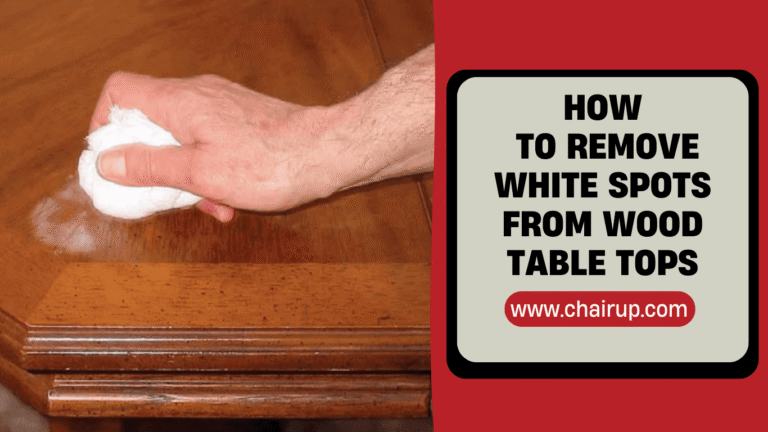
How to Maintain Decking: Seasonal Maintenance Checklist
Maintain decking with seasonal checks in spring, summer, autumn, and winter; recoat timber when water no longer beads on the surface, repair any loose board or railing promptly, and replace boards with rot, deep splits, or noticeable structural movement. Let small wear sit, and it can turn into slippery boards, trapped moisture, and expensive framing repairs. This covers timber, composite, and winter-specific care with clear decision rules for clean, recoat, repair, or replace.
Deck maintenance decision checklist


Use this checklist to decide whether a deck needs cleaning, a maintenance coat, a repair, or a full replacement board. Keep surface care separate from structural safety. A deck can look tidy and still have a soft ledger, loose fasteners, or water-trapping damage underneath.
| Decking material | Current symptom | Recommended action |
|---|---|---|
| Pressure-treated lumber | Dull surface, greying, dirt, algae, no soft spots | Clean now. Recoat if the finish no longer beads water; annual cleaning is a common rule of thumb for exposed decks. |
| Pressure-treated lumber | Cupping, splitting, popped screws, loose board edges | Repair fasteners and board fixing first. Replace any board with deep splits or structural movement. |
| Cedar or redwood | Surface dulling, weathering, light mould, finish wear | Clean, then oil or stain if appearance retention matters. Cedar decks are often cleaned twice per year in published guidance. |
| Cedar or redwood | Soft probe result near posts, joists, or ledger | Call a pro for hidden decay or frame checks. Replace damaged boards only after the source of moisture is addressed. |
| Composite decking | Dust, leaf stains, pollen, soap film | Routine cleaning only. Do not apply wood stain or sealer unless the brand instructions specifically say otherwise. |
| Composite decking | Deep gouges, warping at boards, loose fixings | Inspect the fixing system and subframe. Replace damaged boards and check the frame if movement is present. |
| Any deck | Standing water, blocked drainage, ice, or snow load | Clear it at once. Winter checks should focus on drainage, hidden moisture, and safe access. |
| Any deck | Soft wood at ledger, joist ends, or posts | Use a screwdriver or awl probe. Easy penetration beyond a quarter inch suggests decay and calls for repair assessment. |
What should you check first?
Start with debris, standing water, and the underside of the deck. Then look for loose boards, popped screws, corrosion, and soft spots at the ledger, joist ends, and posts. Surface cleaning helps, but a hidden structural problem matters more than a clean finish.
Surface debris and drainage
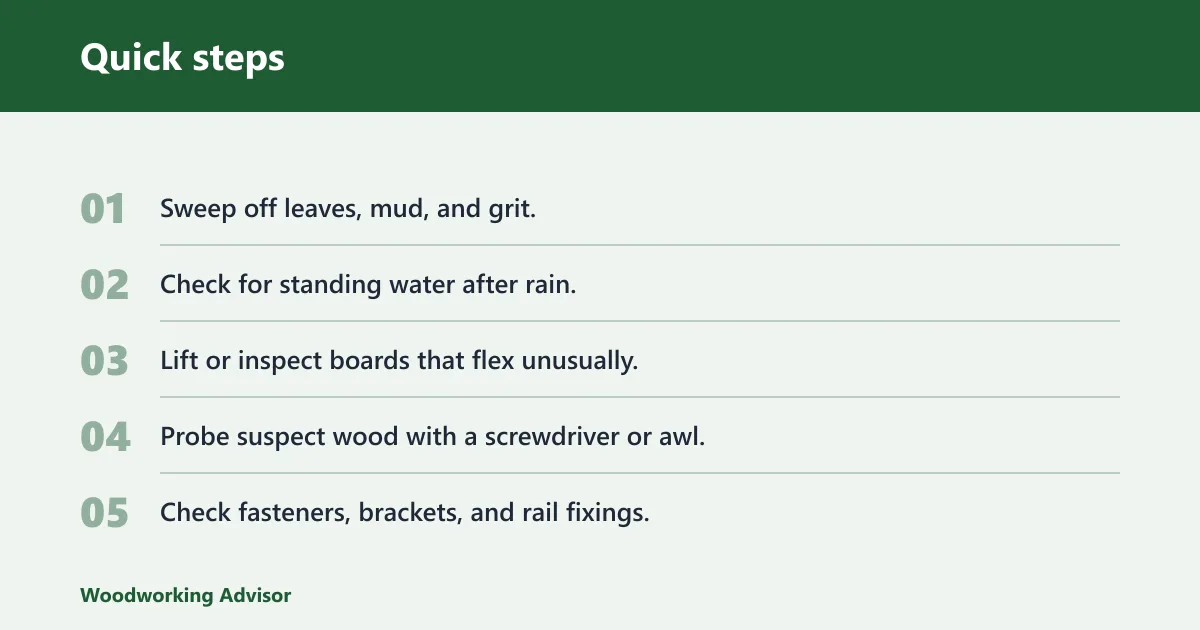
Sweep off leaves, mud, and grit before they trap moisture on the deck surface. Check that water runs away from the house and does not pool around stairs, posts, or board joints. Standing moisture can speed wear and encourage rot at hidden edges.
Fasteners and hardware
Look for loose boards, popped screws, rust staining, bent brackets, and corroded hardware. Bolts or structural screws are preferred for structural connections; nails that rise or work loose are warning signs. If the deck shifts underfoot, or rails move when pushed, stop and inspect the frame.
Hidden wood and the rot test
Use a screwdriver or awl on suspect wood. Easy penetration beyond a quarter inch suggests decay. Check ledger boards, joist ends, post bases, stair stringers, and any area that stays damp. An under-deck inspection is often needed because surface boards can hide frame damage.
- Sweep off leaves, mud, and grit.
- Check for standing water after rain.
- Lift or inspect boards that flex unusually.
- Probe suspect wood with a screwdriver or awl.
- Check fasteners, brackets, and rail fixings.
- Inspect under-deck areas for leaks, staining, and decay.
Picture a 4 m by 3 m deck with a few raised screw heads and one board that rocks slightly near the steps. Cleaning alone is not enough. Tighten or replace the fixings first, then inspect the board ends and the joist below before you decide whether the board can stay.
How do you maintain wood decking?
Wood decking needs more frequent attention than composite. Pressure-treated lumber is commonly reported to need annual cleaning and may need more frequent care if it is exposed to shade, trees, or frequent driving rain. Cedar and redwood are more stable than treated pine, but they still need cleaning and periodic oiling or staining if you want the colour to last.
Pressure-treated lumber
Pressure-treated boards move more than hardwoods, so check for cupping, splitting, and loose fasteners every season. Clean the deck about once a year, or more often if the deck sits under trees or in damp shade. Recoat when the finish no longer repels water or looks patchy.
Cedar and redwood decking
Cedar and redwood resist rot better than many softwoods, but they still grey in the weather. Clean twice per year if the deck is exposed, and oil or stain only if you want to keep colour and reduce surface weathering. Hardwood decks may need oiling once per year if desired.
Refinishing and repair signs
When a finish wears through, use the water-bead test. If water soaks in instead of beading, the surface is ready for a maintenance coat. If the board is soft, badly split, or moving at the fastener, repair or replacement is the better answer. Finish care cannot fix rot.
Suppose a cedar terrace plank on a small rear patio has surface greying, but the screwdriver barely marks it and the boards stay firm underfoot. Cleaning and a light oil coat are enough. If the same board shows softness at the end grain near a post, replacement is the safer call.
How do you care for composite decking?
Composite decking needs routine cleaning, not wood refinishing. Brands such as Trex generally call for washing and stain removal, not stain or sealer application. Check the product instructions for your exact board, because surface texture, capstock, and permitted cleaners vary by brand.
Routine cleaning only
Use mild soap, water, and a soft-bristle brush for routine cleaning. Remove pollen, leaf stains, and grime before they sit through a wet spell. Do not assume a composite deck needs a wood finish, because most composite products are made to be left bare.
Stains and mould
Treat spills quickly. Food grease, rust marks, and mildew usually respond better to prompt cleaning than to harsh chemicals later. Avoid chlorine bleach as a default cleaner for wood, and be careful with any cleaner on composite because some products can dull the finish or void the warranty.
What to avoid
Do not sand, stain, or seal composite boards unless the manufacturer allows it. If a board is warped, loose, or cracked, inspect the fastening system and subframe. A surface stain is a cleaning job; movement, bounce, or a broken edge is a repair job.
When should you clean, recoat, or replace?
Use condition, not the calendar alone. Clean when dirt, algae, or surface film starts to hold moisture. Recoat when the water-bead test fails and the weather is warm enough for curing. Replace a board when rot, deep splitting, or structural movement makes the board unsafe or unstable.
Maintenance coat versus full strip-and-refinish
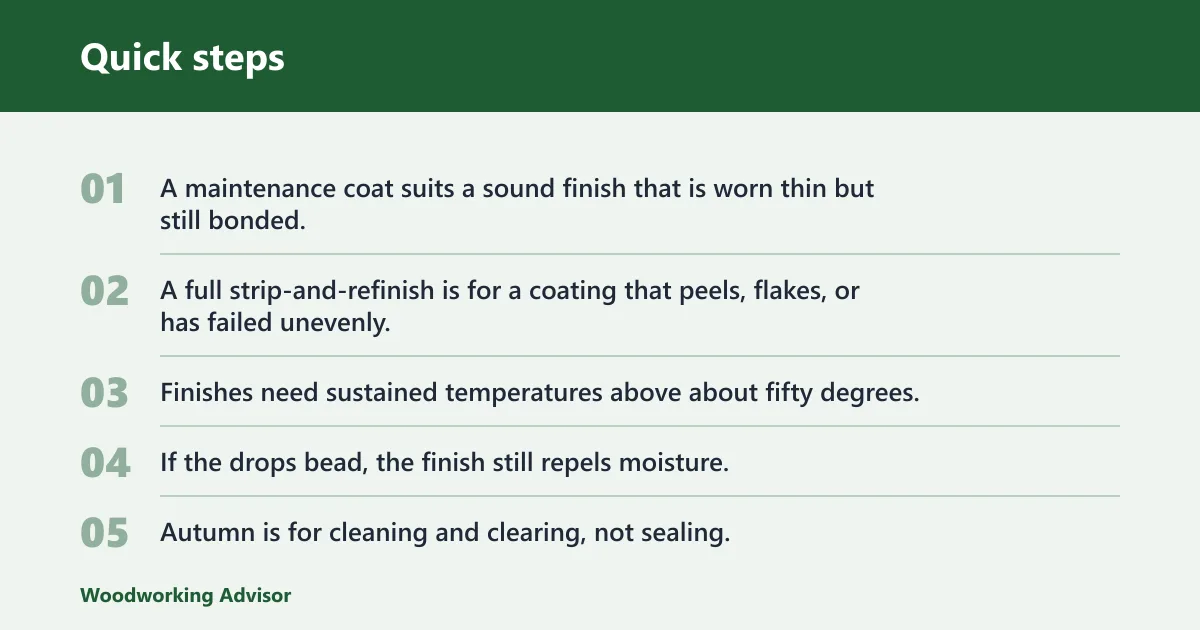
A maintenance coat suits a sound finish that is worn thin but still bonded. A full strip-and-refinish is for a coating that peels, flakes, or has failed unevenly. Finishes need sustained temperatures above about fifty degrees, so plan recoating for a stretch of suitable weather rather than a cold, damp spell.
Water-bead test and timing
Sprinkle a few drops of water on the board. If the drops bead, the finish still repels moisture. If they soak in, reseal or recoat. Autumn is for cleaning and clearing, not sealing, because cooler weather and damp air make drying and curing less reliable.
When to call a pro
Call a pro if the ledger is soft, the deck bounces, railings move, or several boards have structural damage at once. Also call if rot appears near house attachments, if under-deck inspection is unsafe, or if the frame shows corrosion and decay together. Hidden failure can be more serious than a damaged surface.
| Season | Main task | Decision point |
|---|---|---|
| Spring | Annual safety check, washing, probe test, hardware check | If you find softness or movement, repair before summer use. |
| Summer | Spot-clean spills, inspect after storms, monitor boards in full sun | If finish fails water-beading, schedule recoat in warm weather. |
| Autumn | Clear leaves, sweep drainage points, tighten visible fixings | Do not seal in cold, damp conditions; clean and prepare instead. |
| Winter | Remove snow, break up ice carefully, keep drainage open | If boards stay wet or freeze-thaw causes movement, inspect sooner. |
Which cleaners and methods are safest?
For wood, oxygen bleach is the safer cleaner. Pressure washing can damage more decks than it cleans if the pressure is too high or the nozzle is held too close. Use TSP only where suitable, and use stripper and brightener products in the right order if you are removing an old finish.
Oxygen bleach versus chlorine bleach
Oxygen bleach is the safer cleaner for wood decks. It lifts organic grime and mildew without the same risk profile as chlorine bleach. Chlorine bleach can lighten wood unevenly and may harm nearby plants or metal hardware. Rinse thoroughly and keep runoff away from lawns and gardens.
TSP, stripper, and brightener workflow
If you are removing a failing finish, follow the product label. A common sequence is cleaner, stripper, then brightener, with thorough rinsing between steps. TSP can be used in some cleaning systems, but not on every deck or finish. Test a small area first, especially on cedar, redwood, or old coatings.
Pressure washer limits
Use a pressure washer with caution, if at all. Keep the nozzle moving, use about the widest practical fan setting, and avoid soft wood edges. Pressure washing is described as damaging more decks than it cleans, so hand washing is the safer default for most homeowners.
How should you handle winter deck care?
Winter care is about removing load, moisture, and slip risk. Clear snow before it compacts, avoid metal tools that gouge boards, and keep drainage open so meltwater can leave the deck. Freeze-thaw cycles can lift fasteners, widen checks, and trap water in small cracks.
Snow and ice removal
Use a plastic shovel or a broom, not a sharp metal edge. Remove snow regularly so it does not freeze into a heavy layer. If ice forms, use a deck-safe de-icer that will not stain or corrode hardware, and avoid piling snow against rail posts or door thresholds.
What to store or avoid leaving on the deck
Do not leave planters, mats, grills, or outdoor furniture in one wet spot for long stretches. These items trap moisture and can mark the finish. Keep drainage paths open, and move anything that sits over a hidden seam, post base, or soft area until you can inspect it.
Freeze-thaw and standing moisture
Water that sits in board gaps or around fasteners can freeze, expand, and open checks. That is why winter drainage matters. If a board stays damp under a mat or container, lift it and dry the area. Hidden moisture is more likely to cause trouble than cold alone.
Frequently asked questions
How to maintain decking uk
In the UK, damp weather and freeze-thaw cycles make drainage and timing more important than calendar dates alone. Aim for spring inspection, summer spot cleaning, autumn clearing, and winter drainage checks. Timber may need more frequent cleaning in shaded, wet locations, while composite still needs routine washing.
Sponsored / affiliate links. As an Amazon Associate I earn from qualifying purchases. I may earn additional commission from eligible campaigns.