How to Install Hanger Bolts in Wood: Sizing, Driving & Depth Guide
To install a hanger bolt in wood, drill a pilot hole sized to the wood-screw-thread end (not the machine-thread end), jam two nuts together on the machine end so a wrench can grip and drive the bolt, and stop once the wood-thread portion is fully seated and only the machine threads are exposed.
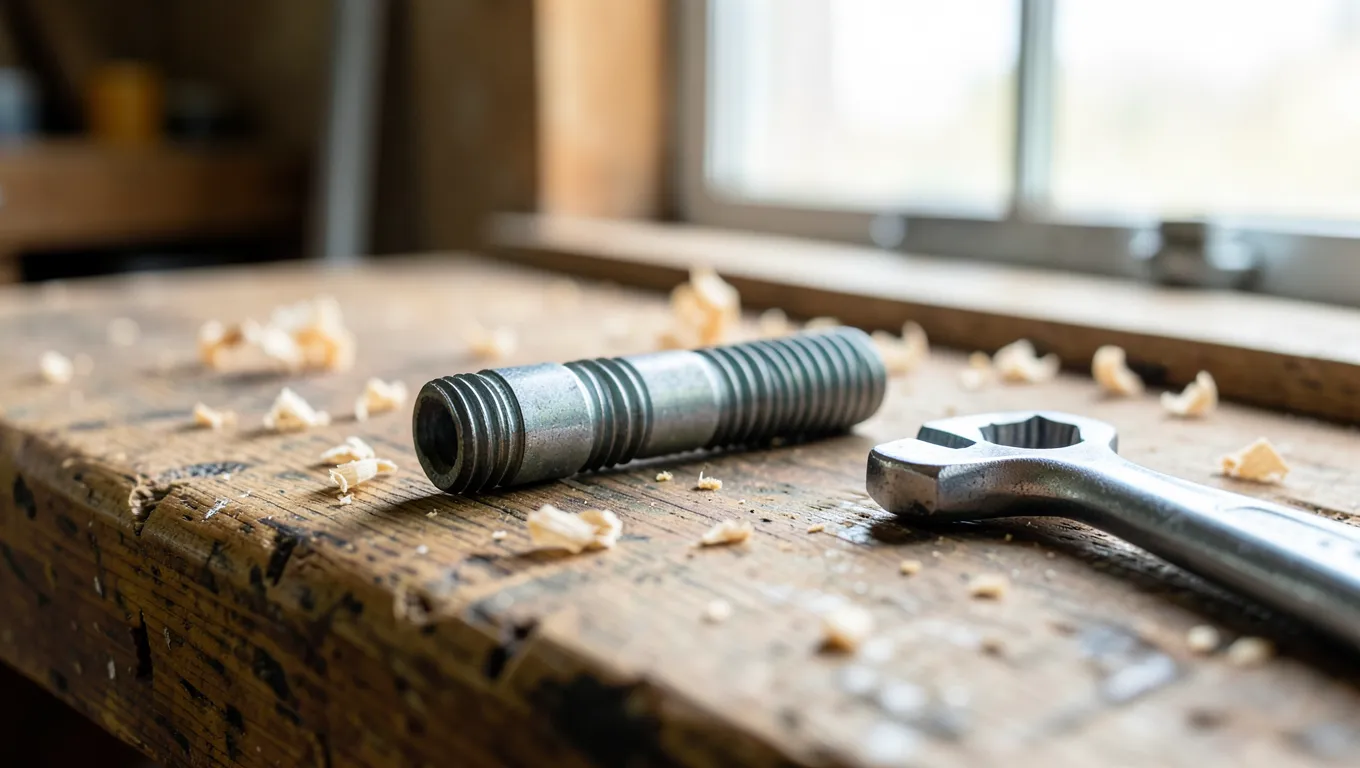
Hanger bolts look like an ordinary steel rod until you look closely: one end has coarse wood-screw threads meant to bite into a pilot hole, and the other end has fine machine threads meant to accept a nut, a threaded insert, or a piece of hardware. That dual-thread design is exactly what makes them useful for joining wood to hardware in a way that can be taken apart later — removable table legs, workbench components, bed frames, and anything else that needs to disassemble for moving or storage.
The part most guides skip is that you can’t drive a hanger bolt the way you’d drive a regular screw — there’s no head to grip with a screwdriver or drill bit. Below is the pilot hole sizing you actually need, the double-nut trick that lets you drive it with a wrench without stripping the machine threads, and how deep to stop so the exposed end works with whatever it’s connecting to.
What a Hanger Bolt Actually Is (and Why It’s Not a Regular Screw)
A hanger bolt is a fastener with two different thread types on the same shaft. The wood-screw end is coarse and sharply pointed, designed to self-tap into a pre-drilled pilot hole in wood. The machine-thread end is finer and blunt, designed to thread into a nut, a threaded insert, or a matching machine-threaded hole in metal hardware. Because neither end has a bolt head or a screw slot, you can’t drive it with a screwdriver, and a standard socket won’t grip the shaft either — that’s the whole reason the double-nut trick below exists.
Furniture makers use hanger bolts most often to create removable legs: the bolt’s wood-thread end goes permanently into the leg, and the exposed machine-thread end screws into a threaded insert mounted in the underside of the tabletop or apron. That combination lets you unscrew the whole leg by hand for flat-pack shipping or storage, without ever touching a screwdriver.
Best Hanger Bolt Multi-Pack
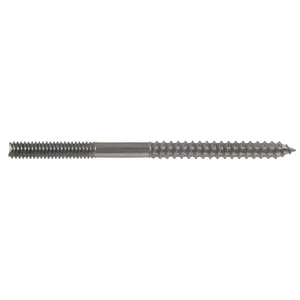 |
Hillman 43425 1/4-20 x 5″ Hanger Bolt, 10-Pack – $9.76 A standard 1/4-20 size that matches the most common threaded inserts, in a 10-pack so a mis-drilled pilot hole doesn’t end your project.
|
Tools You’ll Need
- Drill and pilot-hole bit — sized to the chart below, not guessed
- Two hex nuts that fit the hanger bolt’s machine-thread size
- An adjustable or combination wrench to turn the jammed nuts
- Painter’s tape to mark drilling depth on the bit
- A small block of scrap from the same wood to test-fit before committing
- Paraffin wax or a bit of soap rubbed on the threads — cuts driving friction in hardwood
Pilot Hole Sizing by Bolt Diameter and Wood Hardness
The pilot hole has to match the wood-screw end, not the machine-thread end — those two ends are different diameters, and sizing the hole off the wrong one is the single most common reason hanger bolts split wood or refuse to seat. As a rule of thumb, aim for roughly 65–70% of the wood-thread diameter in softwoods (pine, cedar, fir) and closer to 80–85% in dense hardwoods (oak, maple, hickory), since hardwood grips hard enough at a smaller hole that going too tight risks splitting or snapping the bolt mid-drive. Use this as a starting point and always test in a scrap offcut of your actual wood before drilling the real workpiece:
| Hanger Bolt Size | Softwood Pilot Bit | Hardwood Pilot Bit |
|---|---|---|
| 1/4″-20 | 3/16″ (0.1875″) | 13/64″ (0.203″) |
| 5/16″-18 | 1/4″ (0.25″) | 17/64″ (0.266″) |
| 3/8″-16 | 5/16″ (0.3125″) | 21/64″ (0.328″) |
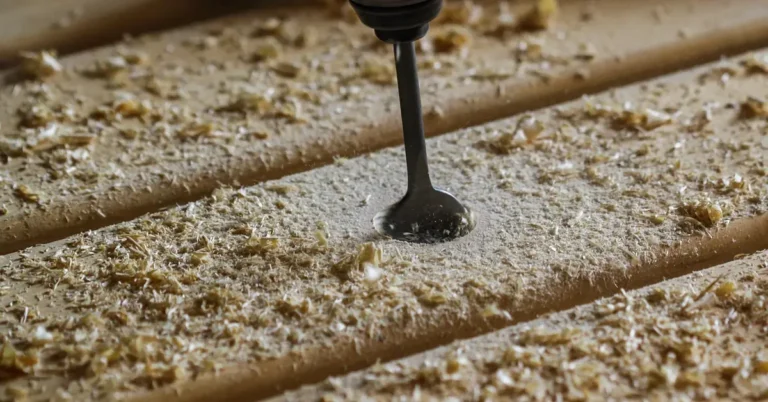
Drill straight and only as deep as the wood-thread portion needs to go — wrap a piece of painter’s tape around the bit at that depth so you stop by feel instead of guessing. A hole that’s too shallow bottoms out and stalls the bolt before it seats; too deep and you lose the tight grip the threads need in the last few turns.
Driving It In: The Double-Nut Trick
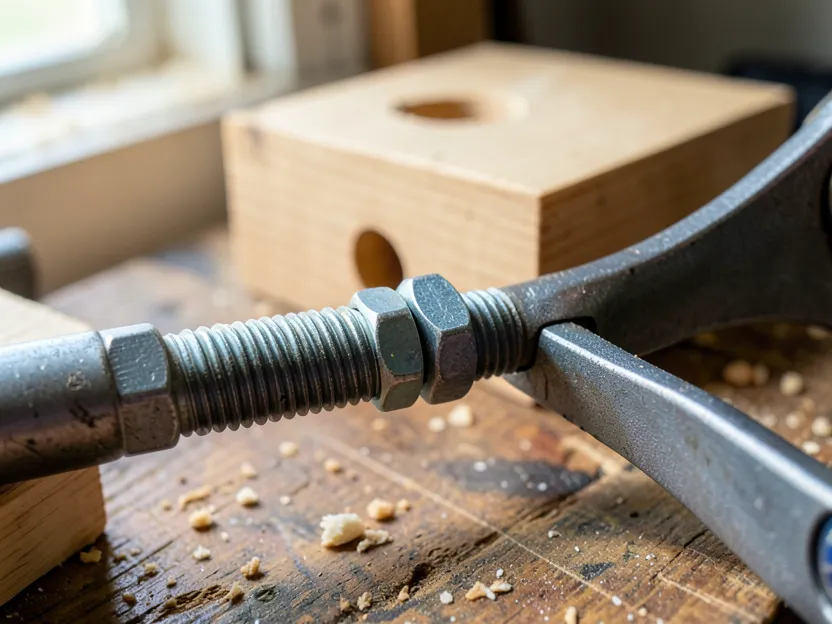
Since neither end of a hanger bolt has a head, there’s nothing for a wrench or driver to grip directly. Woodworkers get around this by threading two hex nuts onto the machine-thread end and tightening them against each other (a “jam nut” setup). Locked together, the two nuts act like a makeshift bolt head — a wrench on the outer nut turns the whole assembly without spinning loose or chewing up the machine threads.
- Thread the first nut onto the machine end and run it down a few turns.
- Thread the second nut on behind it, then hold the first nut still with one wrench while you tighten the second nut against it with another. They should feel locked — neither one should spin independently.
- Start the wood-thread tip into your pilot hole by hand until it bites.
- Fit a wrench onto the outer (top) nut and turn clockwise, keeping steady downward pressure so the bolt tracks straight into the hole.
- Once the wood-thread section is fully seated, hold the bolt steady with a second wrench on the shaft (or a pair of locking pliers) and back the two jammed nuts off in the opposite direction to remove them.
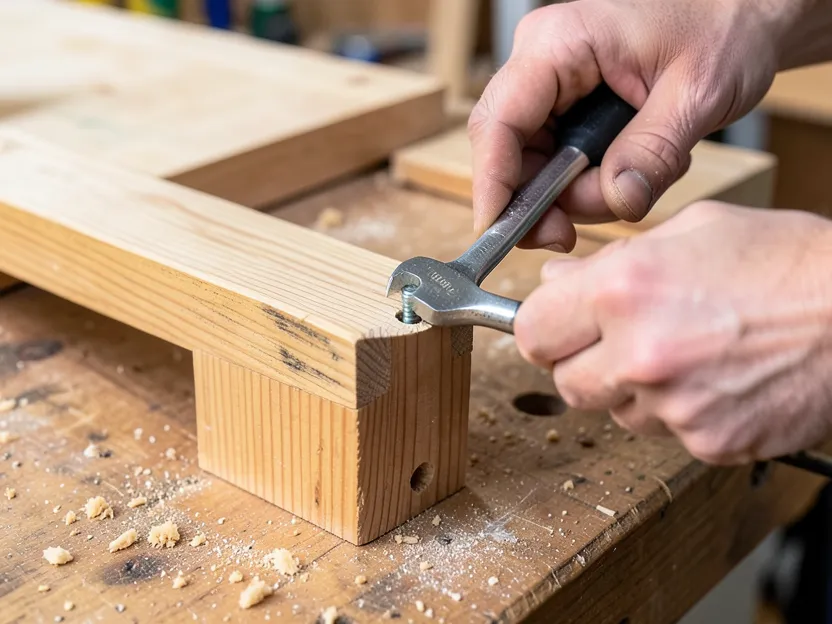
An impact driver with a hex-nut driver bit works too, and it’s faster for a full batch of legs — just keep the speed low. Impact tools deliver enough torque to snap a 1/4″ hanger bolt clean in half if you push through resistance instead of backing off and checking the pilot hole.
How Deep to Drive It: The Exposure Rule
Stop driving once the entire wood-thread section is buried and flush with the wood’s surface — you should see only clean machine threads standing proud. Driving past that point spins the machine threads into the wood itself, which strips them and ruins the connection they’re supposed to make. For table-leg hardware specifically, that usually leaves about 1.5″ to 2″ of exposed machine thread, which is enough to fully engage a standard threaded insert without bottoming out. If your project pairs a hanger bolt with a threaded insert, check the insert’s depth before you drive the bolt so the two lengths actually match.
Common Mistakes and How to Fix Them
The bolt snapped off mid-drive. This is almost always a pilot hole that’s too small for the wood hardness, or too much torque applied too fast. If it breaks flush or below the surface, grip the exposed stub with locking pliers if any remains; if it’s fully buried, drill a slightly larger hole around the broken shaft with a left-hand drill bit — the reverse rotation will often back the broken piece out on its own. Re-drill the hole one size larger before installing a replacement bolt.
The wood split near the hole. Usually the pilot hole was too small, too close to an edge, or the bolt was driven at an angle. Keep pilot holes at least 1″ from any edge, and back the bolt out immediately at the first sign of a crack forming rather than driving through it.
The bolt went in crooked. Back it out while the wood-threads are still shallow (a few turns in) and restart in the same hole — going more than halfway in crooked usually means starting over with a new hole nearby, since the original one won’t self-correct.
The bolt spins freely and won’t grip. The pilot hole is oversized for that wood density. Back the bolt out, add a few drops of wood glue or a thin dowel of matching wood shaved to fit into the hole, let it cure, then re-drill true to the correct size and re-drive.
Where Hanger Bolts Are Actually Used
The most common use by far is removable table and desk legs — the hanger bolt lives permanently in the leg, and a threaded insert in the apron or tabletop lets the whole leg unscrew for flat-pack shipping or storage. Farmhouse table builders use the same setup for benches and trestle legs. Beyond furniture, hanger bolts show up wherever something needs to attach to wood and then be removable later: shelving brackets, wall-mounted hooks and coat racks, and light fixtures or ceiling hardware anchored into a wood joist.
Frequently Asked Questions
What size pilot hole do I drill for a hanger bolt?
Size the pilot hole to the wood-screw-thread end, not the machine-thread end. As a starting point, use roughly 65–70% of that thread diameter in softwoods and 80–85% in hardwoods — for a common 1/4″-20 hanger bolt, that’s about 3/16″ in softwood and 13/64″ in hardwood. Always test in a scrap piece of the same wood first.
What is the double-nut trick for installing hanger bolts?
Thread two hex nuts onto the machine-thread end and tighten them against each other so they lock in place. A wrench on the outer nut can then turn the whole assembly and drive the bolt into the wood without slipping or damaging the machine threads. Once the bolt is seated, hold the shaft steady and back the two nuts off to remove them.
How deep should a hanger bolt be installed?
Drive it until the entire wood-thread section is buried flush with the surface, leaving only clean machine threads exposed. Driving further spins the machine threads into the wood and strips them. For table legs paired with a standard threaded insert, that typically leaves 1.5″ to 2″ of exposed machine thread.
Can I use hanger bolts in both softwood and hardwood?
Yes, but the pilot hole needs to change with the wood. Hardwoods like oak and maple need a larger pilot hole (closer to 80–85% of the wood-thread diameter) than softwoods like pine, or the added density can split the wood or snap the bolt during driving. Rubbing a little wax on the threads also reduces driving friction in dense hardwoods.
What do I do if a hanger bolt breaks or won’t back out?
If it snaps with a stub still exposed, grip it with locking pliers. If it breaks flush or below the surface, drill around the broken shaft with a left-hand drill bit — the reverse rotation will often walk the broken piece out on its own — then re-drill the hole one size larger before installing a fresh bolt.
Conclusion
Most hanger bolt problems trace back to one of two things: a pilot hole sized off the wrong end of the bolt, or trying to drive it without the double-nut trick and forcing it crooked instead. Get the pilot hole right for your wood’s hardness, jam two nuts on the machine end before you drive it, and stop the moment the wood threads are flush — and the connection will hold as solidly as any permanent joint, while still coming apart by hand whenever you need it to.
Sponsored / affiliate links. As an Amazon Associate I earn from qualifying purchases. I may earn additional commission from eligible campaigns.