Wooden Railing Maintenance Tips
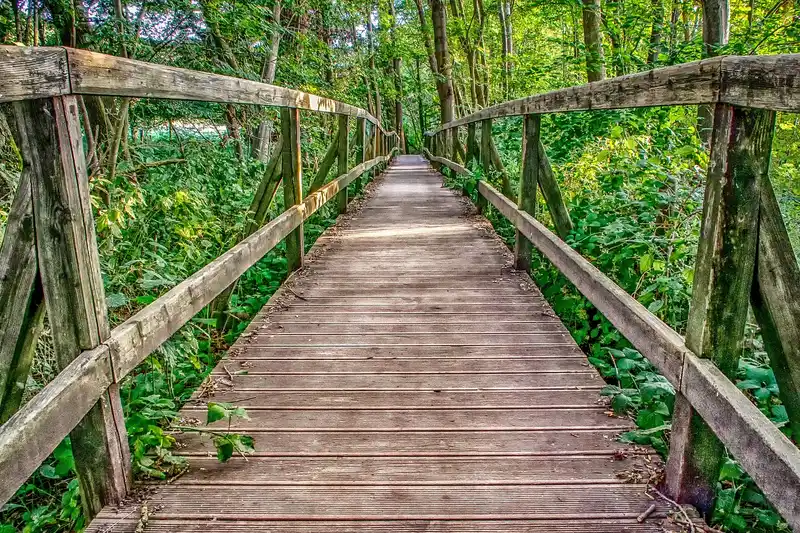
Fix active moisture damage first; refinish only after the wood is dry, solid, and free of rot, loose fasteners, or split sections. Ignoring winter damage can leave handrails weak, slippery, and unsafe, and small checks often become expensive repairs. This guide shows how to inspect for water intrusion, decide between repair and refinishing, and winter-proof indoor or outdoor railings before cold weather worsens them.
What you’ll need


- Soft cloths or lint-free cloths
- Mild detergent or dish soap
- Warm water in a small bucket
- Fine-grit sandpaper
- Varnish, polyurethane, or oil
- Basic screwdriver or wrench for loose fasteners
- Gloves for handling dirty hardware and finish
Wood railing inspection checklist
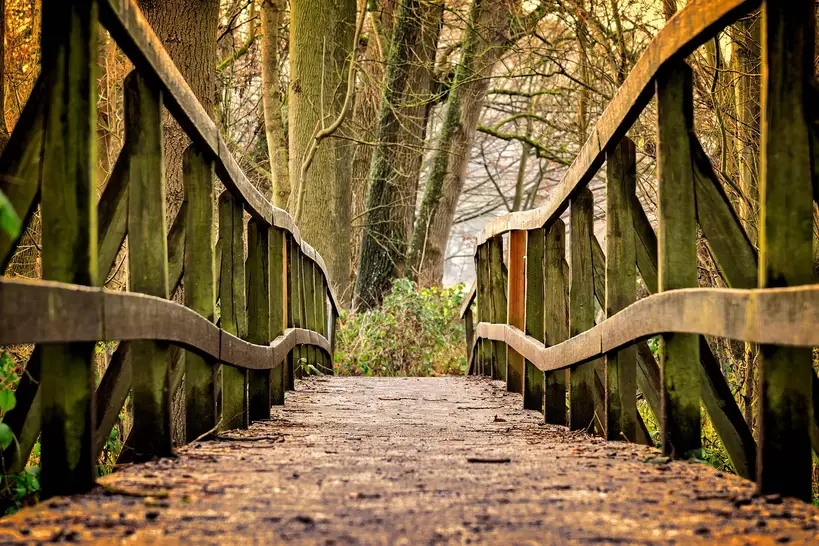
Check wooden railings at least twice a year, and add a winter inspection after thaw or repeated wet weather. Clean railings 1–3 times annually to keep them shiny and clean, but inspect sooner if you see discoloration, mildew, loose joints, or a handrail that flexes under pressure.
Inspect these parts in order
- Look for discoloration, mildew, cracks, splinters, warping, and deep scratches on the rail surface.
- Press the handrail and newel post to test for movement at the wall, floor, or stair attachment.
- Grip each baluster near the top and bottom; it should not twist or move.
- Check screws, bolts, brackets, and wall mounts for looseness, corrosion, or pulled-out wood.
- Look under horizontal surfaces and at end grain for moisture traps, finish cracks, and dark staining.
Winter-specific warning signs
Winter often shows up first as finish cracking, moisture trapping at posts, and freeze-thaw stress around joints. A porch handrail may feel firm in dry weather, then show a dark ring at the bottom of a post after snow melt. That points to moisture trouble before it turns structural.
| Symptom | Likely cause | Immediate action | DIY repair threshold | Replace-now threshold |
|---|---|---|---|---|
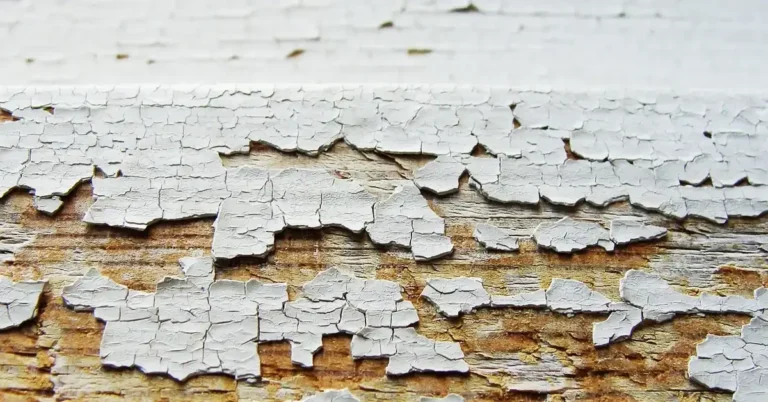
| Dull, gray, or discolored surface | Finish wear, dirt, or weathering | Clean with mild detergent and dry fully | Light sanding and a fresh topcoat | Wood is soft, split, or spongy |
| White haze or mildew | Moisture trapped on the surface | Wipe clean and improve drying | Can be cleaned if wood stays firm | Repeated return after drying, or rot is present |
| Handrail moves at wall or posts | Loose fasteners or failing support | Tighten screws, bolts, or brackets | Only if the support is still sound | Movement returns after tightening |
| Baluster twists or shifts | Loose top or bottom fixing | Check both fixings and tighten hardware | Minor hardware repair with solid wood | Cracked rail, post, or damaged mounting block |
| Crack at post base or joint | Freeze-thaw stress or water intrusion | Stop using the rail for support if it feels unstable | Superficial finish crack only | Deep split, rot, or unstable mounting |
How do you clean a wooden railing?
Use a soft cloth, mild detergent or dish soap, and warm water to lift dirt without soaking the wood. Dry the railing fully after cleaning, especially at joints, end grain, and the bottom of posts, because standing moisture speeds mildew, finish failure, and winter checking.
Cleaning steps
- Dust or wipe the surface first to remove grit that can scratch finish.
- Mix a small amount of mild detergent with warm water.
- Dampen a soft cloth, then wipe the wood in the direction of the grain.
- Wipe again with a clean damp cloth if residue remains.
- Dry every surface with a lint-free cloth.
- Leave the railing open to air until seams, corners, and underside areas are dry.
What to avoid
Avoid excessive water on wood, especially at seams and end grain. Do not use chlorine-based cleaning products, bleach, or silver polish on the railing. If a metal fastener or nearby iron part needs cleaning, use new cloths rather than ones already used on rust or grease.
How do you decide between repair and refinish?
Choose refinishing when the wood is sound but the surface looks worn, dry, or lightly scratched. Choose repair first when loose fasteners, twisting balusters, or movement at the newel post point to a support problem. Replace parts when the wood is soft, split, or unstable.
Refinish when the damage is mostly at the surface
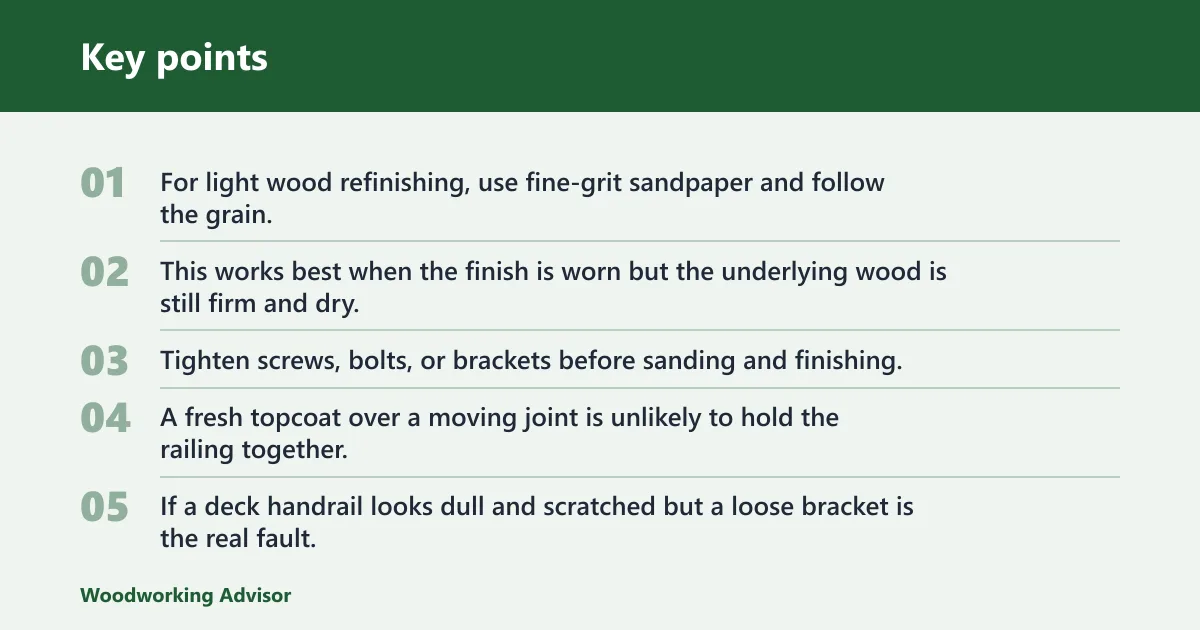
For light wood refinishing, use fine-grit sandpaper and follow the grain, then apply a fresh coat of varnish, polyurethane, or oil. This works best when the finish is worn but the underlying wood is still firm and dry.
Repair before recoating when hardware is loose
Tighten screws, bolts, or brackets before sanding and finishing. A fresh topcoat over a moving joint is unlikely to hold the railing together. If a deck handrail looks dull and scratched but a loose bracket is the real fault, tighten the bracket first.
Replace when moisture has gone deeper
Stop and replace damaged parts when the wood is soft, split, or unstable, or when movement returns after tightening. If a post base stays damp after drying, or a handrail flexes after hardware is snug, the problem is no longer just cosmetic.
How do you fix a loose handrail?
Tighten loose fasteners first, but do not overtighten them. A handrail, especially on stairs or at a wall mount, should feel solid under firm pressure. If the newel post or wall attachment still moves after tightening, treat it as a support issue, not a finish issue.
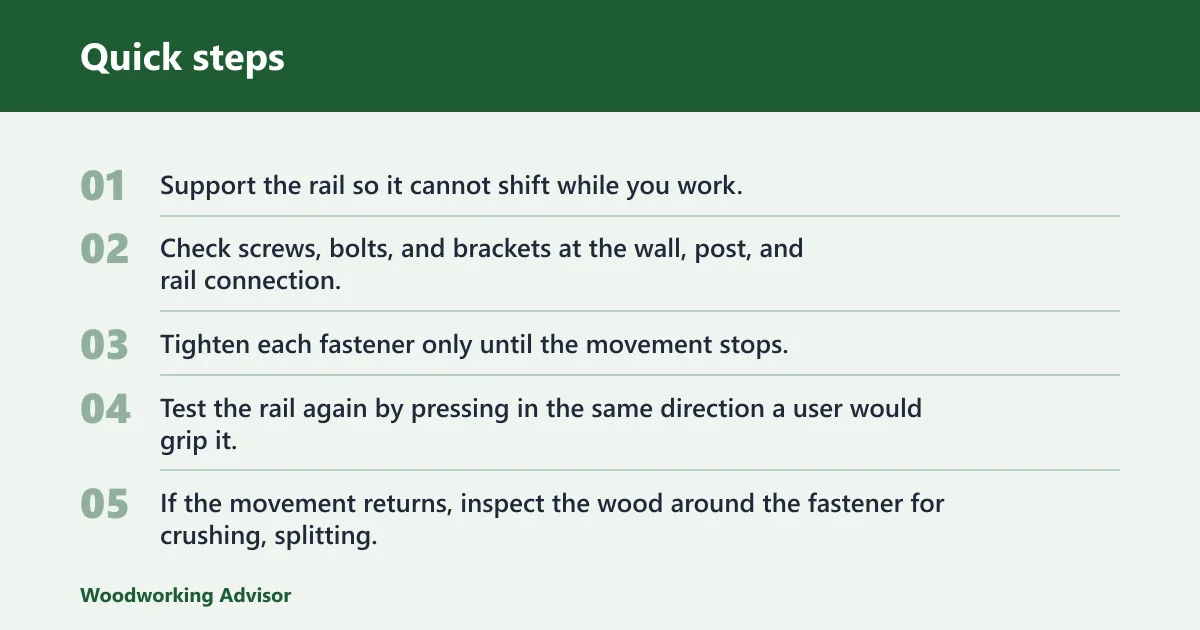
Fix loose hardware in this order
- Support the rail so it cannot shift while you work.
- Check screws, bolts, and brackets at the wall, post, and rail connection.
- Tighten each fastener only until the movement stops.
- Test the rail again by pressing in the same direction a user would grip it.
- If the movement returns, inspect the wood around the fastener for crushing, splitting, or enlarged holes.
When a loose railing is not a simple repair
A loose outdoor railing can need more than a screwdriver or wrench if the posts have shifted, the mounting wood is damaged, or the base has been weakened by repeated wetting. A common first-timer mistake is tightening one screw while ignoring the cracked wood around it; that only delays failure.
What maintenance does a wooden railing need in winter?
Winter maintenance is mostly about moisture control. Clean away dirt and salt residue, dry the railing fully, check for finish cracks after freeze-thaw cycles, and look closely at the bases of posts and the underside of rails where water lingers. Indoor railings still need inspection near humid entryways and unheated stairwells.
Winter workflow by location
- Porch railings: clear snowmelt residue, check post bases, and look for dark staining after rain or thaw.
- Deck railings: inspect end grain, bottom rails, and post caps where water can sit.
- Stair railings: test the handrail for movement at the wall, newel post, and transition points.
- Indoor railings: check for dry cracking, loose brackets, and damage near entry doors where wet boots add moisture.
Prevention
Keep the finish intact before winter starts. A sound topcoat helps slow water entry, but only if the railing is already clean and dry. If the coating is breaking down at a joint or post top, repair that area before the season turns wet and cold.
Common mistakes
Most winter railing failures get worse because the first warning signs are treated as cosmetic. Fix the cause first, then the finish.
- Using too much water and leaving seams damp.
- Skipping drying time before sanding or recoating.
- Applying new finish over dirty, mildewed, or loose wood.
- Ignoring loose fasteners, twisted balusters, or a moving newel post.
- Waiting until a split becomes a structural failure.
Frequently asked questions
How do I clean a wood railing?
Wipe the railing with a soft cloth dampened with warm water and mild detergent or dish soap. Follow with a clean dry cloth so moisture does not sit in joints or end grain. For greasy fingerprints, soapy water is the right first step; dry the wood right after wiping.
How do I refinish wood railings?
Start with clean, dry wood, then sand lightly with fine-grit sandpaper in the direction of the grain. Apply a fresh coat of varnish, polyurethane, or oil after dust removal. If the finish wears through repeatedly at the same joint, check for movement before recoating.
How often should I inspect a railing?
Inspect railings at least twice a year, and add a winter check after heavy wet weather, thaw, or ice. Also inspect sooner if you notice wobble, discoloration, mildew, or a crack near a post. That frequency catches moisture damage before it reaches the support structure.
How do I fix a loose outdoor railing?
Tighten the screws, bolts, or brackets first, then retest the rail under hand pressure. If the newel post, wall mount, or base still moves, stop and inspect for cracked wood, enlarged holes, or rot. A rail that moves again after tightening needs a structural repair.
What tools do I need to repair a wooden handrail?
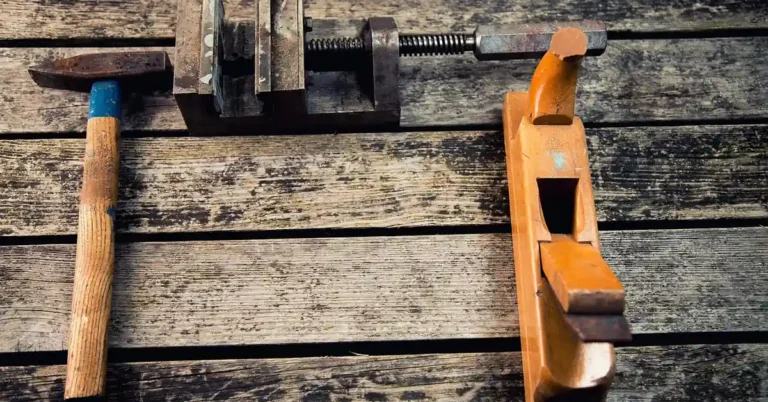
At minimum, keep a soft cloth or lint-free cloth, mild detergent, fine-grit sandpaper, and a screwdriver or wrench for hardware. For refinishing, add varnish, polyurethane, or oil. If nearby metal parts need care, use separate cleaning tools so residue does not transfer.
When do I need to replace a railing instead of repair it?
Replace the railing when wood is soft, split, rotted, or unstable, or when the support keeps moving after hardware is tightened. Also replace damaged sections if the newel post or baluster connection has failed. A railing that no longer feels solid is a safety issue, not just wear.
Sponsored / affiliate links. As an Amazon Associate I earn from qualifying purchases. I may earn additional commission from eligible campaigns.