How to Make a Wooden Level That’s Actually Accurate
To make a wooden level, you rout a channel dead-parallel to one true edge of a straight hardwood beam, glue in a liquid-filled bubble vial, and then check the reading against a known-accurate level before you trust it. Skip that last step and you’ve built a decoration, not a tool.
A shop-made level is one of the oldest DIY projects in woodworking — cabinetmakers were building their own levels out of mahogany and rosewood long before mass-produced aluminum ones showed up in hardware stores. It’s still a satisfying weekend project, and a well-built one will outlast the plastic torpedo level rattling around in most toolboxes. The catch that most guides skip over: a level is only as good as the alignment between its vial and its reference edge. Build the wood part perfectly and mount the vial a degree off, and you’ve made a tool that confidently tells you lies. This guide covers the build, the part that actually determines accuracy (vial alignment), and a real calibration test you can run with nothing but a pencil and paper.
Materials and Tools You’ll Need
Best Reference Level for Calibration Checks
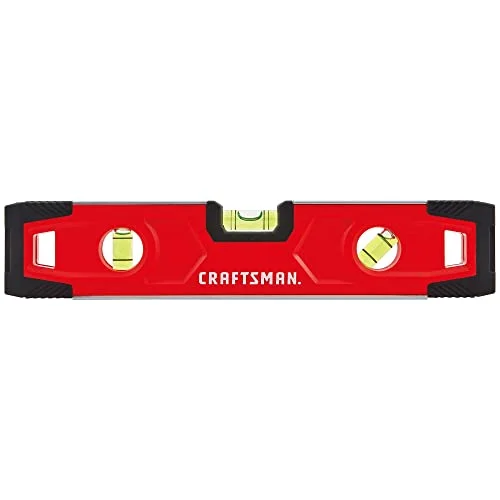 |
CRAFTSMAN 9″ Magnetic Torpedo Level – $9.98 A factory-calibrated level like this is what you check your homemade one against during the flip test in the calibration section below.
|
Start with a straight-grained hardwood — maple, oak, or ash all work well because they resist warping better than pine once the wood settles to shop humidity (aim for stock that’s been acclimating indoors, ideally under 8-10% moisture content). You’ll also need:
- A table saw or a well-tuned hand plane, for milling one true reference edge
- A router (or a chisel, if you’re doing it by hand) to cut the vial channel
- A replacement bubble vial — either a tube vial (round, reads one plane) or a block/barrel vial (reads two planes at 90 degrees)
- Wood glue and a clamp
- 220-grit and 320-grit sandpaper
- A can of wipe-on polyurethane or oil finish
- A known-accurate level or straightedge, for calibration later (see the pick above — a small magnetic torpedo level is inexpensive and doubles as a permanent reference tool in the shop)
Skip pine and pre-primed “furring strip” lumber if you can — both move more with humidity than a level’s tolerances can absorb, and a level that reads true in July and false in January isn’t a level. If you want more beginner-friendly build ideas that use the same core skills (measuring, marking, and squaring stock), our simple woodworking projects guide is a good next stop after this one.
How a Spirit Level Vial Actually Works
Every traditional level — wood, aluminum, or otherwise — uses the same mechanism: a sealed glass or acrylic vial, almost completely filled with a low-viscosity liquid (usually a colored alcohol or mineral-spirit blend, chosen because it stays fluid and doesn’t freeze at normal shop temperatures), leaving one air bubble. Because the bubble is lighter than the liquid, it always rises to the highest point of the curved vial. When that curve’s centerline sits exactly parallel to the reference surface below it, the bubble centers itself only when that surface is truly level.
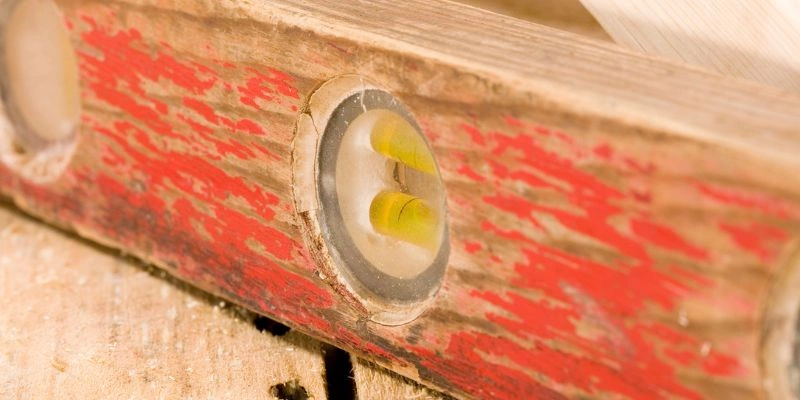
That last part is the whole game. A good vial is manufactured to a stated sensitivity — typically somewhere around 0.5 to 1.0 mm of rise per meter of length, which translates to roughly 2 to 6 arc-minutes. That’s a real, measurable precision spec. But the vial’s own accuracy only matters if it’s mounted correctly. Glue it in a hair off-parallel to your reference edge, and the tool will read “level” when the surface is actually tilted by whatever angle you introduced — and it’ll do it consistently, which is worse than an obviously broken tool, because you’ll trust it.
Cutting and Squaring the Wood
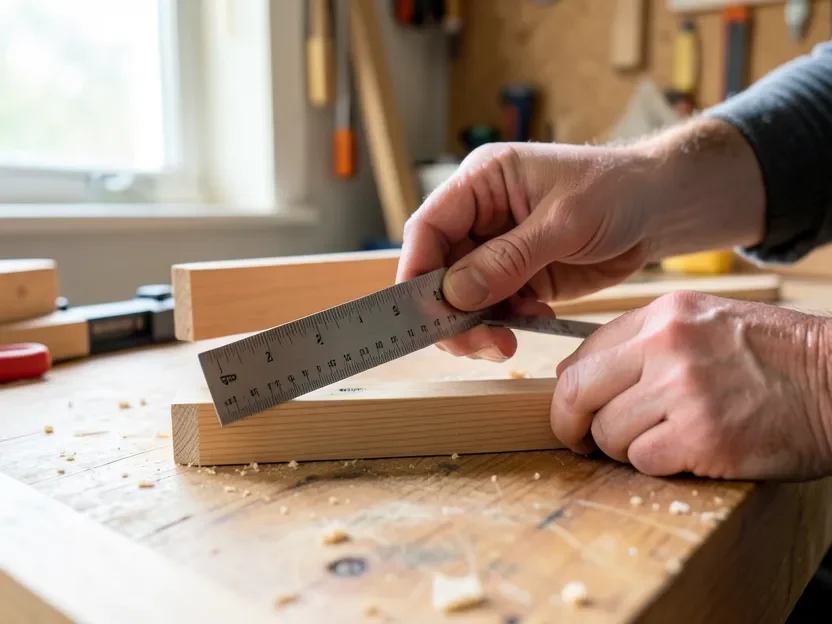
Mill your beam so one long edge is dead straight — this is the edge everything else references, so don’t rush it. Check it against a machinist’s square or a known-flat surface, not just by eye. Crosscut the beam to length (16 to 24 inches is a practical size for a shop level), then square the ends.
If you’re adding a second vial for plumb (vertical) readings, cut a matching notch or through-mortise near one end, oriented 90 degrees to the horizontal vial pocket. Dry-fit everything before you touch glue.
Routing the Vial Channel and Setting the Vial
This is the step that decides whether the finished tool actually works. Set your router (or mark your chisel cuts) so the vial channel’s centerline runs exactly parallel to the reference edge you milled in the previous step — not “close,” exactly. A simple way to check this without expensive gauges: clamp a straightedge along your reference edge, then measure from that straightedge to your channel layout lines at both ends of the beam. If the two measurements don’t match within a hair, adjust the layout before you cut.
Rout or chisel the pocket to just barely oversize the vial — a snug fit lets you make tiny adjustments before the glue sets. Dry-fit the vial and sight down the reference edge to confirm the bubble looks centered on a surface you already know is flat (a saw table or jointer bed works). Only then run a thin bead of glue around the vial’s edges (not across its face) and clamp lightly. Let it cure fully — rushing this step is how the vial shifts half a degree between clamping and calibration.
Calibrating and Testing Your Homemade Level
Once the glue has cured, run the same flip test pros use to check any level, homemade or store-bought:
- Set the level on the flattest surface you have (a cast-iron saw table or a granite inspection plate is ideal, but a smooth countertop works).
- Note exactly where the bubble sits, and mark the level’s position on the surface with a pencil.
- Rotate the level 180 degrees and set it back down on the same marked spot.
- Compare the bubble position to the first reading. If it centers the same way both times, your vial is truly aligned. If the bubble shifts between the two readings, the vial is off by half the difference you see — and you’ll need to reset it.
For a second check, compare your new level directly against a known-accurate reference level (this is the real reason to keep a small factory-calibrated torpedo level in the shop, rather than trusting a second homemade one to check the first). Set both side by side on the same surface; the bubbles should agree. If your shop-made level and the reference level disagree, trust the reference and re-seat the vial.
Don’t skip this step because the wood “looks straight.” A beam can be visibly true and still hold a vial that’s off by a degree — the wood being flat and the vial being aligned are two separate things, and only the flip test actually proves the second one.
Finishing and Protecting the Wood
Sand through 220 and then 320 grit, working with the grain, and ease the edges slightly so the level is comfortable to hold. Wipe on two coats of polyurethane or a hardwax oil finish, letting each coat cure fully — an unfinished level will absorb humidity unevenly and can warp just enough to throw off a reading that was accurate the day you built it. Avoid film finishes so thick they build up unevenly near the vial pocket, which can look fine but subtly change how the tool sits on a surface.
Keeping It Accurate Over Time
A wooden level needs more upkeep than a metal one, mainly because wood moves. Re-run the flip test every few months, and always after the level takes a hard knock or a drop — a jolt is the single most common way a properly-mounted vial goes out of alignment. Store it flat rather than hanging by one end, keep it out of direct sun and away from a shop heater, and refinish the wood if you notice the surface getting rough or absorbing moisture. Treat calibration as routine maintenance, not a one-time step you did during the build. For general guidance on keeping shop-made wood tools and furniture from warping or drying out, see our wood care and maintenance guide.
Frequently Asked Questions
How do I choose wood for a level?
Pick a straight-grained hardwood like maple, oak, or ash — they hold their shape far better than pine once humidity changes. Let the stock acclimate to your shop for at least a week before milling, and mill your reference edge dead straight, since every other measurement on the tool depends on it.
What tools do I need to make a wooden level?
A table saw or hand plane to mill a true reference edge, a router or chisel to cut the vial channel, a replacement bubble vial, wood glue, clamps, sandpaper, and a finish. You’ll also want a known-accurate level or straightedge on hand to calibrate the finished tool.
How do I calibrate a homemade wooden level?
Set it on a flat surface, mark its position, and note where the bubble sits. Flip the level 180 degrees on the same mark and check the bubble again — if the reading matches, the vial is aligned. If it doesn’t, the vial needs to be reset. Cross-checking against a known-accurate reference level confirms the result.
Why does my homemade level give inconsistent readings?
Almost always it’s the vial, not the wood — if the vial’s centerline isn’t glued exactly parallel to the reference edge, the tool will read “level” on a surface that’s actually tilted. Humidity-driven warping in unfinished or softwood bodies is the second most common cause.
Conclusion
A shop-made wooden level is a genuinely useful, centuries-old project — but the woodworking part (a straight beam, a clean joint, a nice finish) is only half of it. The part that makes it an actual tool instead of a nice-looking stick is getting the vial mounted exactly parallel to a true reference edge, and then proving that with a real flip test rather than eyeballing it. Do both, and you’ll have a level worth keeping on the wall for years.
Sponsored / affiliate links. As an Amazon Associate I earn from qualifying purchases. I may earn additional commission from eligible campaigns.