How to Make a Wooden Recorder: What It Really Takes
You can make a playable wooden recorder, but it is a lathe, reamer and voicing project, not a drill-a-tube-and-add-holes project. The difficult parts are a tapered bore, a precisely cut windway and labium, and tuning each finger hole by hand.
This guide covers what actually goes into building one: the parts you have to make, how professional makers work, which woods are used and how hard they really are, a realistic build order, and a much cheaper PVC-and-dowel practice project if you want to learn the windway first. Every fact below comes from recorder makers or reference sources listed at the end, and I have not built a recorder myself, so nothing here is a claim of personal testing.
What a Recorder Needs That a Drilled Tube Does Not
Best Reference Recorder Pick
 |
Eastar ERS-31BM Maple Soprano Recorder, $26.99 Before you cut any wood, put a working soprano next to your plans. Measuring a real, in-tune instrument teaches more than any sketch.
|
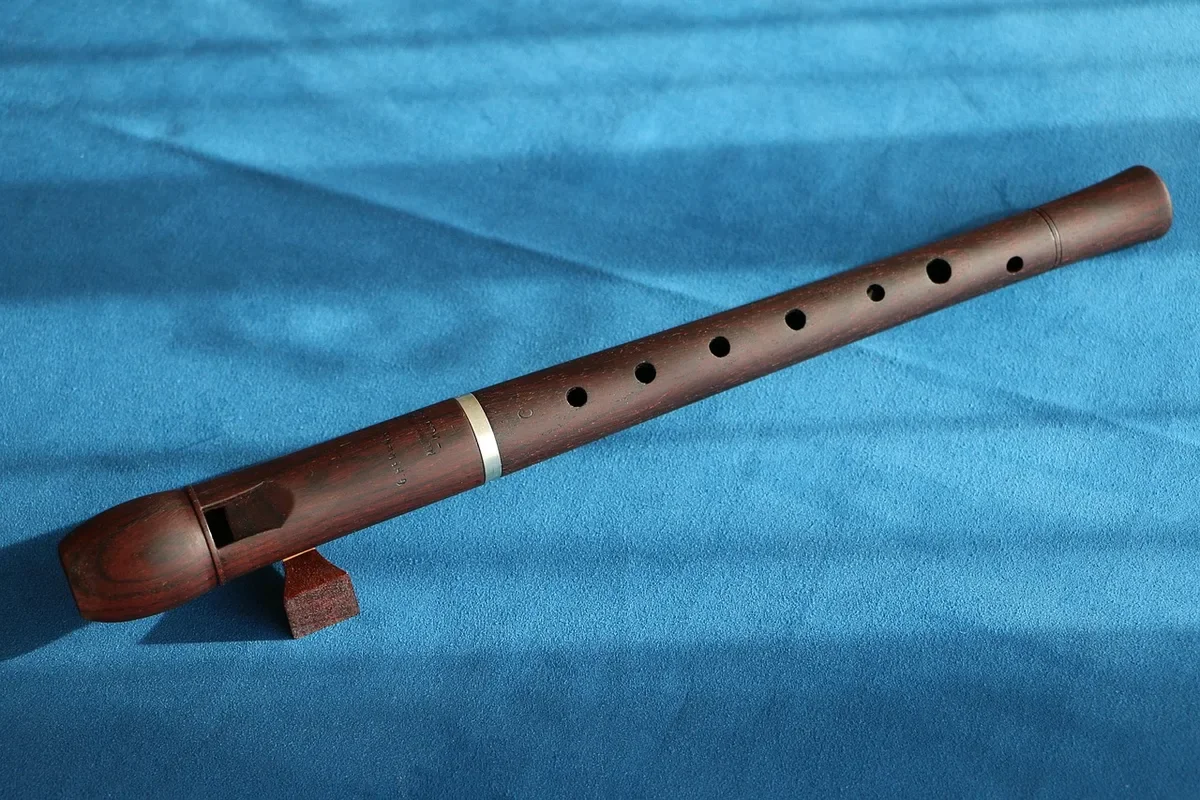
A recorder is a fipple flute. Air goes through a narrow windway in the head joint, across a gap, and onto a sharp edge called the labium, which starts the note. A block, usually cedar or juniper, sits in the head and forms the floor of that windway. Everything else on the instrument is there to make that one edge sing reliably.
The body is normally split into head, middle and foot joints. A standard recorder has a thumb hole plus seven finger holes, three for the upper hand and four for the lower, so eight holes in all. A soprano (descant) recorder is roughly 300 mm (12 in) long and its lowest note is C5.
The Parts You Have to Build
- Head joint: holds the block, windway, window and labium. This is the hardest part to get right.
- Block (fipple): a separate piece, traditionally juniper or cedar, carved and fitted by hand so it seals against the bore.
- Middle joint: carries the thumb hole and most of the finger holes.
- Foot joint: the widest end, with the last holes; on many modern instruments it can be adjusted.
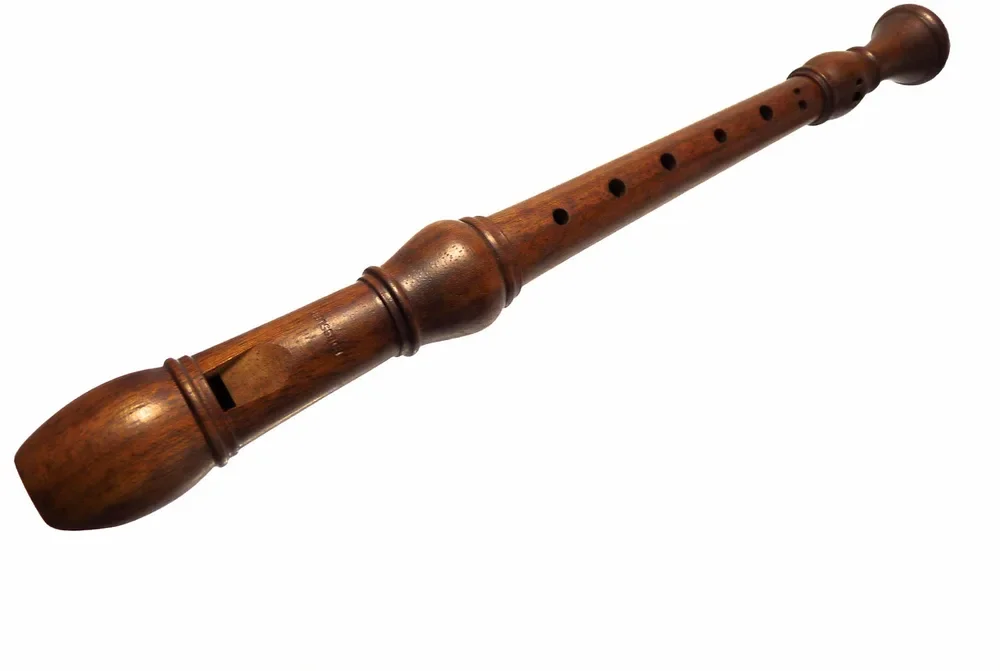
- Bore: the inside channel, generally reverse conical (narrowing toward the foot) to cylindrical.
The Myth: Drill Straight Holes at Measured Spots
Most quick guides, including the previous version of this one, imply that you drill a straight hole down a stick, mark out finger holes and you are done. Makers describe a different process. Philippe Bolton, who builds recorders professionally, explains that the bore is finished with a reamer, which has a cutting blade along its whole length and produces a conical hole with a good surface, whereas an ordinary drill can only make a cylindrical one. The finger holes are then deliberately drilled undersized, and each one is enlarged and undercut by hand until every note is in tune.
That last point is the information most DIY guides miss: hole sizes are not a number you look up, they are the result of iterative tuning against a tuner. If you are hoping to follow a fixed table of hole diameters and positions, expect a first attempt that needs adjustment, and do not trust any plan that promises otherwise. If you want a starting reference, borrow or buy a real instrument and measure it.
Related reading on this site: drill bit vs reamer explains why a reamer cuts a different hole than a drill, and how to ream out a hole in wood covers the basic technique.
Best Wood for a Recorder
Recorder makers mainly use maple, boxwood, rosewood, ebony, grenadilla and cherry. The numbers below are from the Wood Database and show how far apart these woods are. A general rule of thumb among makers is that relatively soft woods such as maple and pear give a warm tone with less volume than denser woods, but hardness is only one factor, and stability and fine grain matter as much for a bore that has to hold its shape.
| Wood | Janka hardness | Density / specific gravity | Note |
|---|---|---|---|
| Black cherry | 950 lbf | 0.56 at 12% MC (35 lb/ft3 dried) | Soft and easy to machine; a friendly practice wood |
| Hard maple | 1,450 lbf | 0.71 at 12% MC (44 lb/ft3 dried) | Common affordable recorder wood |
| Pear | 1,660 lbf | 0.69 at 12% MC (43 lb/ft3 dried) | Listed as often used for recorders and a step up tonewise from maple |
| European boxwood | 2,940 lbf | 0.80 to 0.96 (60 lb/ft3 dried) | Traditional; very fine, even texture, but small trees and high cost |
| African blackwood (grenadilla) | 3,670 lbf | 1.08 to 1.27 (79 lb/ft3 dried) | Clarinet and oboe wood; dust is an irritant; CITES Appendix II |
Two practical takeaways. First, boxwood for professional recorders is seasoned for 15 to 20 years or more before it is worked, and then dried further, which is why you cannot substitute green or kiln-fresh stock and expect a stable bore. Second, denser is not automatically better for a first build: maple or pear give you a workable, affordable wood with a long track record. If you are choosing between maple grades, see how hard maple wood is.
Tools and Setup
| Job | Tool | Why it matters |
|---|---|---|
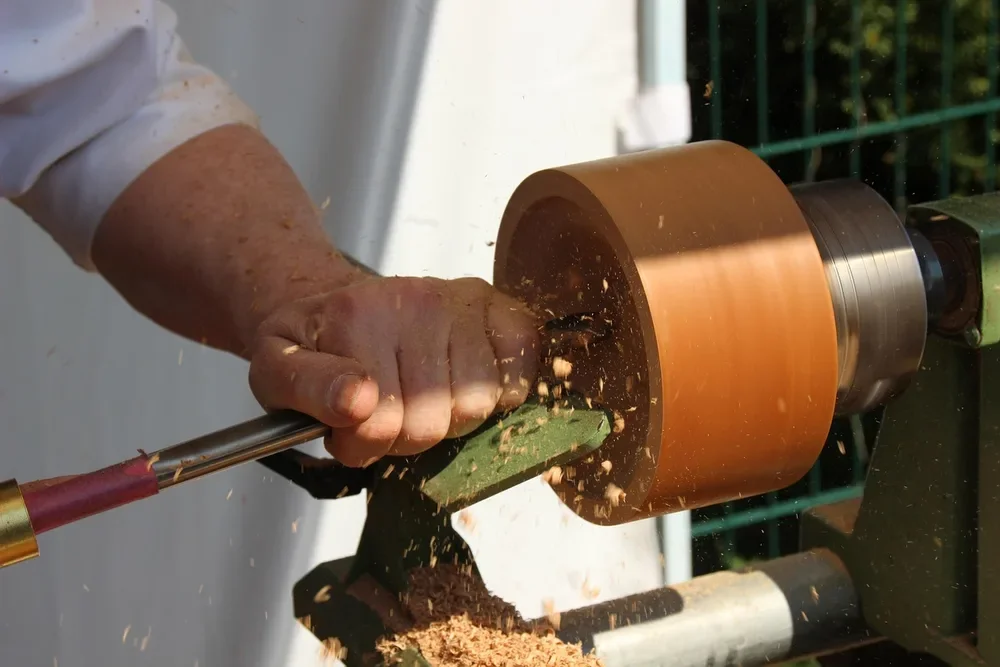
| Turning joints to size | Wood lathe and sharp gouge | Round, concentric joints; tenons must fit |
| Roughing out the bore | Long drill bit | Removes most of the material before reaming |
| Finishing the bore | Tapered reamer sized for each joint | Cuts the conical profile with a clean surface |
| Window and labium | Small chisels and files | The labium edge sets how the tone starts |
| Finger holes | Small drills, round files, undercutting tool | Holes start undersized and are enlarged |
| Tuning | Electronic tuner | Guides how much each hole is enlarged |
A woodturning lathe is the one non-negotiable machine. If you do not own one, a wooden recorder is a poor first project, and the PVC route below is the better choice.
Step-by-Step Build Order
- Choose and dry the stock. Use fully seasoned, straight-grained wood, split or sawn to square blanks.
- Turn each joint on the lathe to a cylinder, then shape the outside profile and the tenons.
- Bore each joint. Drill out most of the waste, then finish with a reamer to the conical profile.
- Cut the windway and window, then shape the labium edge with a chisel.
- Carve and fit the block from cedar or juniper so the windway is airtight.
- Drill the finger holes undersized at the marked positions.
- Voice the head. Adjust the windway and block surfaces until the instrument sounds cleanly.
- Tune. Enlarge and undercut each hole by hand, checking against a tuner until every note is in tune.
- Finish and test. Play the instrument for an extended period to check that it stays stable.
Bolton notes that the voicing and tuning stages are where the extended refinement happens, so budget most of your time there. I am not giving a build-time figure because none of the maker sources publish one and it depends heavily on your machine skills.
A Cheaper First Project: PVC and Dowel
If your goal is to understand a windway rather than build a recorder for concerts, hobbyist PVC recorder plans exist that need only a saw, drill and file. A common design uses 3/4 inch PVC pipe, a short length of dowel as the block, a small rectangle cut from the pipe for the window, and a slit ring of pipe placed over it to set the gap. The air gap is critical, and smoother surfaces give better airflow. You will not get a wooden recorder tone, but you will learn how the block, gap and edge interact. For another wood-based whistle project with a similar principle, see how to make a whistle out of wood, and if you are curious how woodwinds compare more broadly, read are all woodwind instruments made of wood.
Safety and Finishing
Wood dust from some instrument woods is a real hazard. The Wood Database reports that African blackwood can cause eye, skin and respiratory irritation, and recorder-making literature documents skin reactions to cocobolo in players. Wear a dust mask, use dust collection, and keep lathe tool rests and guards set correctly.
For finishing, sand progressively and use a finish that suits an instrument that goes in your mouth. Check the manufacturer label for suitability for mouth contact, and keep finish out of the windway and off the labium, because the windway is a precisely cut surface that thick finish can alter. Between playing sessions, swab out moisture and store the instrument away from direct sunlight and heat.
Frequently Asked Questions
Can I make a playable recorder from a straight drilled hole?
You can get a sound from a straight bore, but a well-tuned recorder is normally reverse conical, narrowing toward the foot. Makers cut that shape with a reamer, drill the finger holes undersized, then enlarge and undercut each one by hand until the notes are in tune. A simple drilled tube usually plays out of tune or refuses to sound the high notes.
What wood is best for making a recorder?
Boxwood, grenadilla (African blackwood) and rosewood are the traditional professional choices, while maple and pear are the common affordable woods. For a first attempt, a stable, dry, fine-grained wood such as maple or pear is a sensible starting point because it machines cleanly and is cheaper to ruin than boxwood.
What tools do I need to make a wooden recorder?
A lathe for turning the joints, a drill for roughing out the bore, a tapered reamer for finishing it, fine files and a small chisel for the window and labium, small drills for the finger holes, and a tuner. The block is usually a separate piece of cedar or juniper fitted by hand.
Is it easier to make a recorder from PVC?
Yes. Hobbyist PVC recorder plans use 3/4 inch pipe, a short dowel as the block and a cut-out window, and need only a saw, drill and file. The sound quality and tuning are more limited than a reamed wooden bore, but it is a much lower-risk way to learn how a windway works.
Is it safe to make a recorder from any wood?
No. Some tropical woods are irritants when cut. African blackwood dust can irritate the eyes, skin and lungs, and cocobolo has documented skin reactions in recorder players. Wear a dust mask and use dust collection, and pick a wood you can work safely for a mouth-contact instrument.
Conclusion
A wooden recorder is achievable for a woodworker with a lathe, patience and a tuner, but the craft is in the reamed bore, the windway and the hand tuning, not in drilling holes. Start with a PVC practice build or a reference instrument, choose a stable wood such as maple or pear, and expect to spend most of your time voicing and tuning.
Sources
Sources used: Philippe Bolton, Recorder Maker (how a recorder is made); Wikipedia, Recorder (musical instrument); Wood Database entries for hard maple, black cherry, pear, boxwood and African blackwood; Recorder Homepage construction bibliography; Instructables PVC recorder plans.
Sponsored / affiliate links. As an Amazon Associate I earn from qualifying purchases. I may earn additional commission from eligible campaigns.