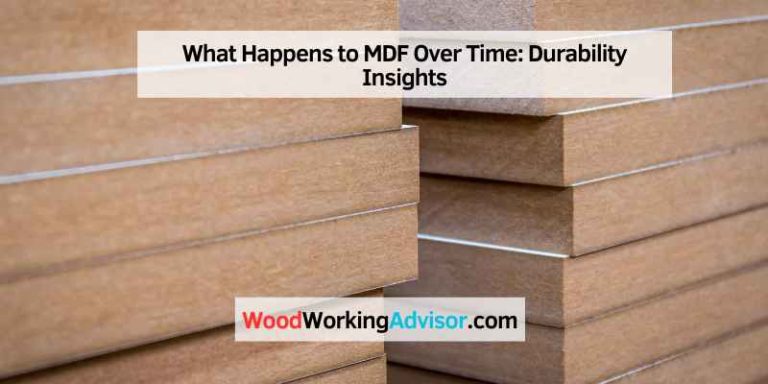
Can You Make MDF at Home? The Honest Answer
You can’t actually make real MDF at home, and it’s worth being upfront about why: factory MDF is made by steam-heating wood chips and mechanically breaking them down into true wood fiber, then pressing that fiber under roughly 400-800 PSI at 180-200°C (350-390°F) with a bonded resin. A blender, a bucket of glue, and a stack of weights can’t come close to that pressure or temperature, and the result won’t have MDF’s actual density (around 45-55 lb/ft³) or strength — you’ll get a soft, crumbly, sawdust-and-glue slab instead.
There’s also a real safety reason not to try recreating the resin: the urea-formaldehyde binder real MDF uses is cured in sealed industrial presses under controlled conditions specifically to limit formaldehyde exposure. Mixing and handling that resin yourself, without that equipment, is a genuine health risk — not a corner worth cutting for a DIY project. Here’s what’s actually true about MDF, and what to do instead if you want an MDF-like material or result at home.
Why Home Equipment Can’t Replicate MDF
Best For Finishing Real MDF Edges Cleanly
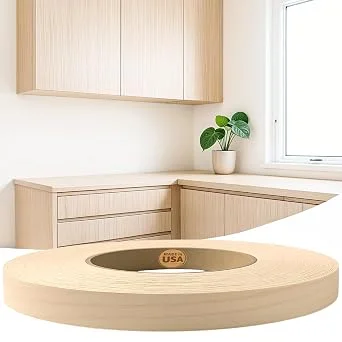 |
Edge Supply Iron-On Veneer Banding – $15.99 Since buying real MDF sheets is the actual path forward, this is what covers the raw, absorbent cut edges for a clean, furniture-grade look.
|
Two things a home shop genuinely can’t reproduce: real wood fiber, and industrial pressing force. What a blender or grinder produces is chopped wood particles — still recognizable wood chunks at a microscopic level — not the fibrous pulp that comes from steam-softening wood and mechanically defibrating it, which is what actually lets MDF bond into a uniform, grain-free board. And the “press machine or heavy weight” a home DIY guide suggests applies nowhere near the several hundred PSI a real MDF press uses; without that pressure and heat working together, the resin never fully cures into a hard, dense matrix, no matter how long you wait.
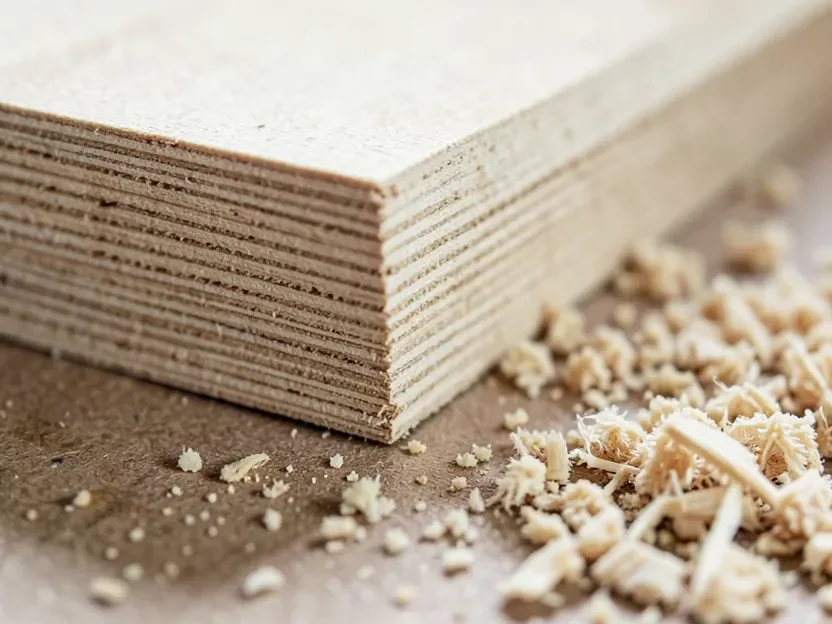
What Real MDF Is Actually Made Of
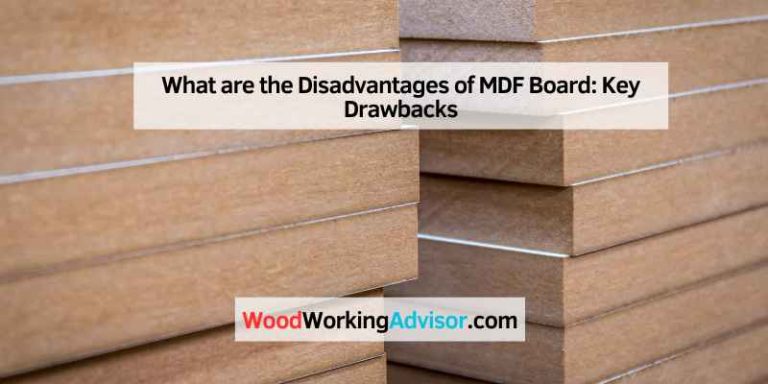
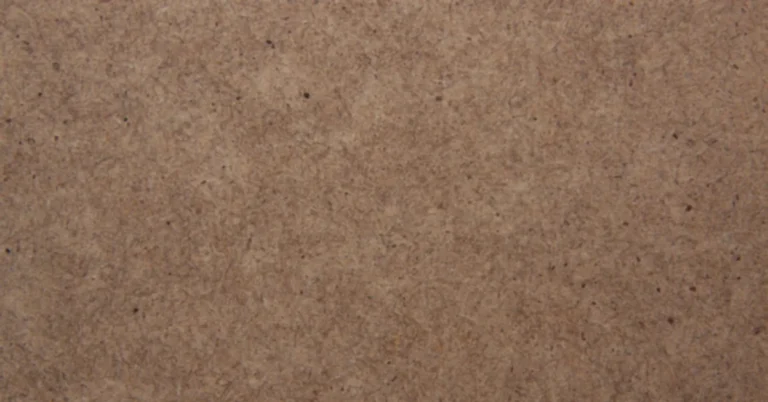
Factory MDF starts as hardwood or softwood chips, steamed and mechanically refined into fine wood fiber. That fiber is blended with wax (for moisture resistance) and a resin binder — typically urea-formaldehyde — then formed into a mat and pressed under high heat and pressure into a dense, uniform panel with no visible grain. That density and uniformity, not just the ingredient list, is what makes MDF cut, rout, and paint the way it does.
What to Do Instead
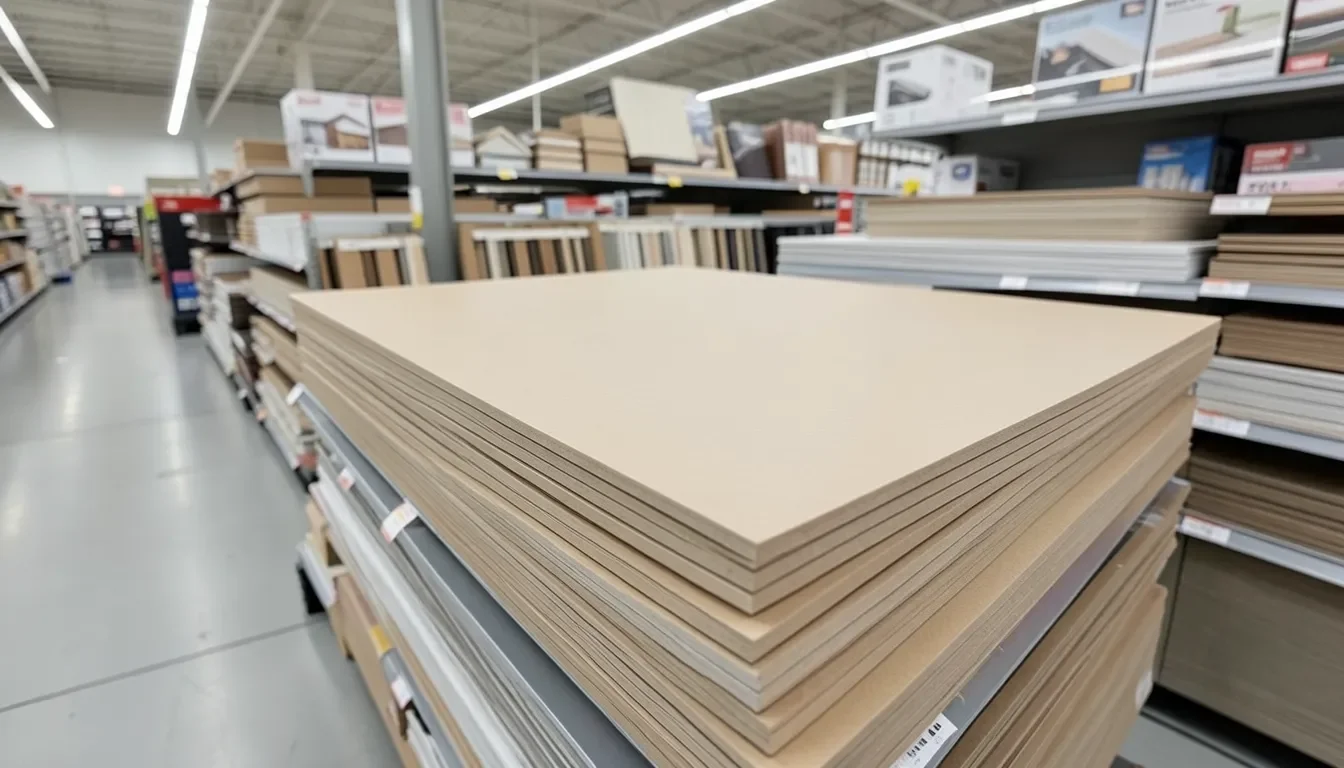
- Just buy real MDF. A standard 4×8 ft sheet typically runs $25-$50 depending on thickness, which is far cheaper and more reliable than any home attempt to replicate the material.
- If you want a genuinely home-makeable craft material for something like a lightweight decorative panel (not structural use), a papier-mâché-style mix of shredded paper or sawdust with wood glue, pressed and dried under a heavy flat weight, is an honest DIY composite — just don’t expect it to perform like real MDF, and don’t call it MDF.
- For load-bearing or structural projects, plywood or dimensional lumber are better choices than either real MDF or a homemade substitute, since MDF itself isn’t a structural material even at full factory density.
Working With Real MDF Safely and Well
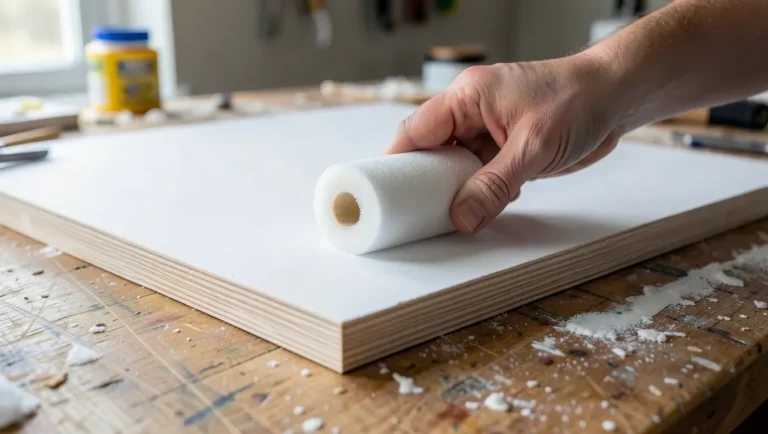
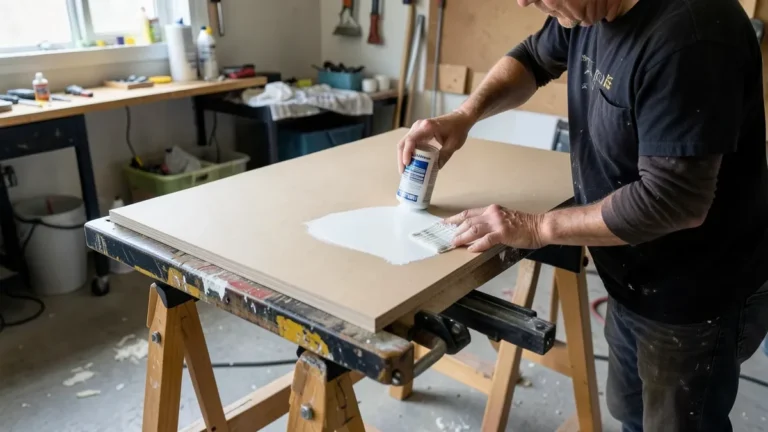
Once you have actual MDF, the practical skills worth knowing are cutting, sealing, and finishing it, not making it. Wear a dust mask when cutting or sanding — MDF dust is fine and can carry trace formaldehyde, so cutting outdoors or with good ventilation matters. Prime cut edges before painting, since raw MDF edges absorb paint unevenly and look rough without it. Seal any edge that might see moisture, since MDF swells when wet and doesn’t recover the way solid wood can.
Frequently Asked Questions
Can You Actually Make Real MDF at Home?
No. Real MDF requires industrially processed wood fiber and hundreds of PSI of pressure combined with high heat to bond properly — equipment no home shop has. A homemade attempt with a blender, glue, and a weight produces a soft, weak slab, not actual MDF.
What Is the Biggest Drawback of Using MDF?
Its vulnerability to moisture. MDF swells and can permanently lose strength when it gets wet, unlike solid wood, which can often be dried and refinished. It’s also not a structural material and can chip at edges and corners under impact.
What Are the Ingredients in Real MDF?
Wood fiber (from hardwood or softwood), wax for moisture resistance, and a resin binder, typically urea-formaldehyde, bonded together under industrial heat and pressure. The exact ratios and resin type vary somewhat by manufacturer and intended use.
Is MDF Tougher Than Plywood?
Generally no. Plywood’s layered, cross-grained construction gives it better impact resistance and structural strength. MDF is denser and machines more smoothly for painted surfaces, but it chips and cracks more easily than plywood under stress.
Conclusion
Real MDF isn’t a viable home DIY project — the wood-fiber processing and industrial pressing it requires just aren’t replicable with home tools, and attempting the resin chemistry yourself carries real health risk. Buying a sheet is cheap, reliable, and honestly the better use of a weekend than trying to manufacture a worse substitute from scratch.
Sponsored / affiliate links. As an Amazon Associate I earn from qualifying purchases. I may earn additional commission from eligible campaigns.