How Long Does MDF Last? 10-30 Years by Density Grade
Standard MDF lasts 10 to 15 years indoors with normal use, but that range swings hard on two things: density grade and edge sealing. Unsealed MDF left near a sink or a window sill can swell and crumble in under two years. This guide breaks down realistic lifespans by grade, what actually shortens MDF’s life, and how to get 20+ years out of a board that some guides claim “won’t last.”
Quick Answer
Standard indoor MDF (42-52 lb/ft3) lasts 10-15 years with normal handling. Moisture-resistant (MR) and high-density MDF/HDF (50-65+ lb/ft3) can reach 20-30 years when all faces and edges are sealed. Unsealed edges near moisture cut that lifespan to 1-3 years, regardless of grade.
What Determines How Long MDF Lasts?
Best MDF Sealer Pick
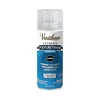
Varathane Water-Based Ultimate Satin Polyurethane Spray
A water-based satin polyurethane that seals MDF faces and edges against moisture without yellowing painted or bare surfaces.
- Best for: Sealing cut edges and faces before or after painting
- Why we picked it: Water-based formula dries fast between coats and won’t discolor light/white paint
- Main drawback: Needs 2-3 thin coats for real edge protection, not one heavy pass
Compare more MDF-protection options
 Option 1 BEVTEE Melamine Edge Banding Iron-On Tape
|
 Option 2 Gorilla All Purpose Wood Filler
|
 Option 3 Minwax Fast-Drying Polyurethane Spray
|
As an Amazon Associate we earn from qualifying purchases.
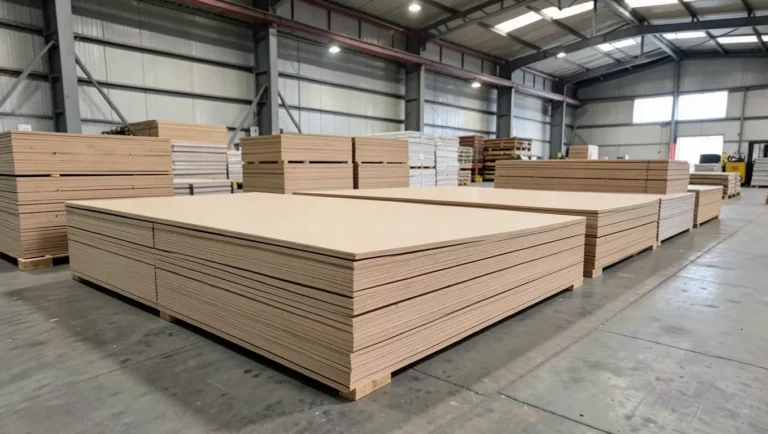
MDF (medium-density fiberboard) is made by pressing wood fibers with wax and resin under high heat and pressure into a dense, uniform panel. Unlike plywood or solid wood, MDF has no grain direction and no internal layers — which is why it cuts and paints cleanly, but also why it has no natural resistance to swelling once water reaches the exposed fibers. For the full rundown of how it’s manufactured and where it fits among engineered woods, see our MDF basics hub.
Three things decide how long a specific piece of MDF actually lasts: density (how tightly the fibers are pressed, measured in lb/ft³), sealing (whether every face and cut edge is coated), and load and environment (how much weight it carries and how much humidity it sees). Get all three right and MDF outlasts what most buyers expect from a “cheap” material.
MDF Lifespan by Density Grade
Most “how long does MDF last” articles quote a single number. That’s misleading — density grade changes the answer by a factor of three. Here’s how the common grades compare:
| Grade | Density | Typical indoor lifespan (sealed) | Best use |
|---|---|---|---|
| Low-density MDF | ~30-42 lb/ft³ | 5-8 years | Light shelving, decorative trim |
| Standard MDF | ~42-52 lb/ft³ | 10-15 years | Cabinet boxes, furniture panels |
| Moisture-resistant (MR) MDF | ~45-52 lb/ft³, wax-treated core | 15-20 years | Bathrooms, kitchens, high-humidity rooms |
| High-density fiberboard (HDF) | ~50-65+ lb/ft³ | 20-30 years | Flooring underlayment, heavy-wear cabinetry |
📊 MDF density ranges from roughly 30 to 65+ lb/ft³ (480-1,040 kg/m³), while general-purpose plywood typically runs 30-45 lb/ft³. — Source: composite panel industry density data, compositepanel.org
The gap between low-density and HDF-grade board is the single biggest reason two people can have completely different experiences with “the same” material. If a big-box store’s cheapest MDF fell apart in a couple of years, that’s a low-density-grade problem — not proof that MDF itself is short-lived. Check the grade before blaming the material; our HDF vs MDF comparison breaks down how to tell the grades apart when buying.
What Shortens MDF’s Lifespan
- Standing water and humidity: MDF’s wood fibers absorb moisture through any unsealed surface. Swelling starts within hours of direct contact and is not reversible — the fibers don’t shrink back once dry.
- Unsealed cut edges: Factory faces usually come primed or laminated, but a cut edge is raw fiber. It’s the fastest path for moisture into the board, which is why edge banding and edge sealer matter more than face finish.
- Heavy sustained load: MDF has lower shear and screw-holding strength than plywood. Long unsupported spans under constant weight (a wide shelf loaded with books) will sag over years even without any moisture exposure.
- Direct sunlight: UV exposure fades color and can dry out surface coatings faster than the fiber core itself, leading to surface checking on painted MDF left near south-facing windows.
- Repeated impact or point loads: MDF dents rather than flexes. Corners and edges are the weak points; repeated knocks compress and eventually crumble the fiber structure there first.
MDF vs Plywood vs Solid Wood: Which Lasts Longer?
| Material | Moisture resistance | Typical lifespan (indoor) | Best for |
|---|---|---|---|
| MDF | Poor unless sealed | 10-15 yrs (up to 25-30 sealed/MR-grade) | Painted furniture, cabinet doors |
| Plywood | Moderate (layered, moisture-resistant glue lines) | 20-30 yrs | Structural panels, kitchen cabinets |
| Solid wood | Good, but moves with humidity | 30+ yrs, often decades longer | Furniture meant to be refinished, heirloom pieces |
MDF isn’t trying to out-survive solid wood — it’s trading long-term durability for a dead-flat, grain-free surface that paints like glass. For anything staying indoors and getting a proper coat of primer and paint, that trade is usually worth it. For anything that will ever sit outside or near standing water, it isn’t; see our breakdown of whether MDF can hold up outside for that specific case.
Signs Your MDF Is Failing
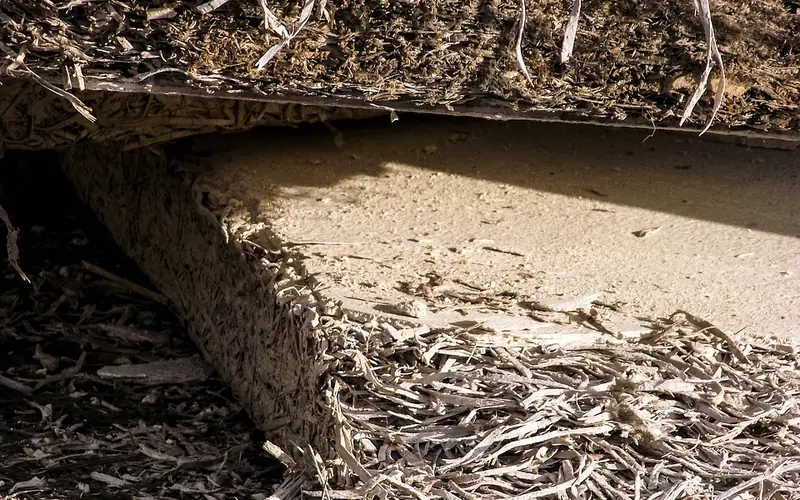
- Edge swelling or a “puffy” ridge along a cut edge — the earliest and most common failure sign, usually from moisture entering unsealed fiber.
- Soft or spongy spots when pressed with a fingertip — the fiber bond has broken down internally, usually beyond repair in that spot.
- Sagging shelves with a visible dip in the middle of an unsupported span.
- Crumbling at screw holes — MDF doesn’t hold screws as well as plywood, and repeated removal/reinsertion widens the hole until it strips.
- Fine white or gray mold spotting on the surface in humid rooms, a sign moisture has been sitting against the board longer than a few days.
How to Extend MDF’s Lifespan
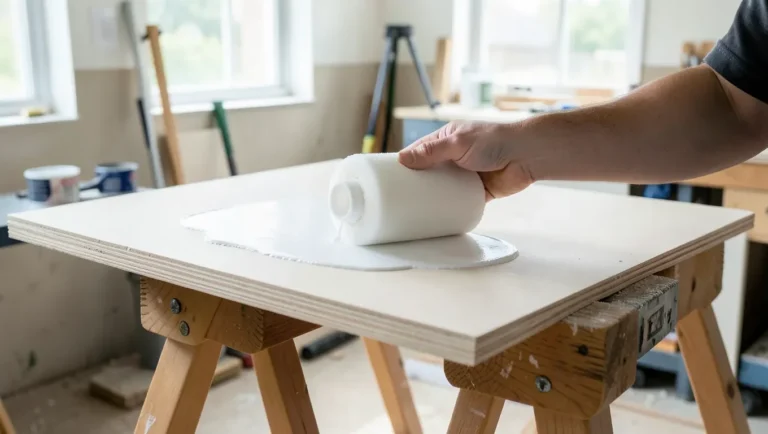
- Seal every cut edge, not just the face: Apply edge banding or a coat of sanding sealer to any edge you cut, even on pre-finished board. This single step prevents most of the swelling failures listed above — see our full guide to waterproofing MDF for the complete sealing process.
- Prime and paint (or laminate) all six sides: An unfinished back panel is still a moisture entry point even if it’s hidden inside a cabinet.
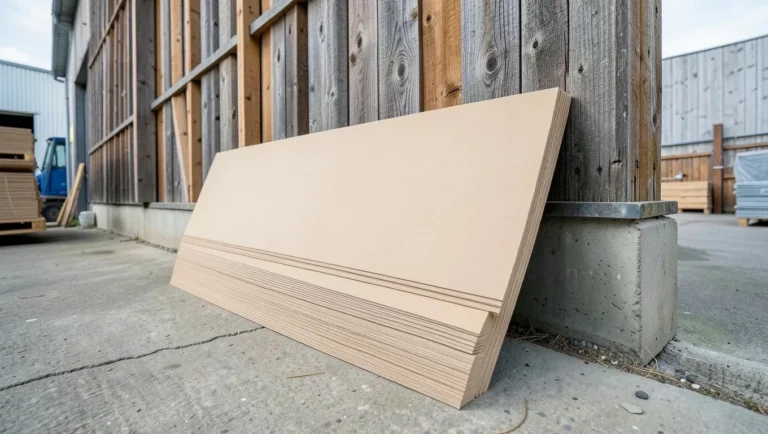
- Keep it 2+ inches off concrete or damp floors: Slab moisture wicks upward. Use feet, a plinth, or a moisture barrier under any MDF piece sitting directly on a concrete floor.
- Support long spans every 24-32 inches: Add a center support or cleat on shelves wider than about 30 inches to prevent long-term sag under load.
- Wipe spills immediately: MDF that’s sealed can still swell if water sits on a seam or edge for hours. Treat it like a hardwood floor, not a laminate countertop.
Real-World Lifespan by Application
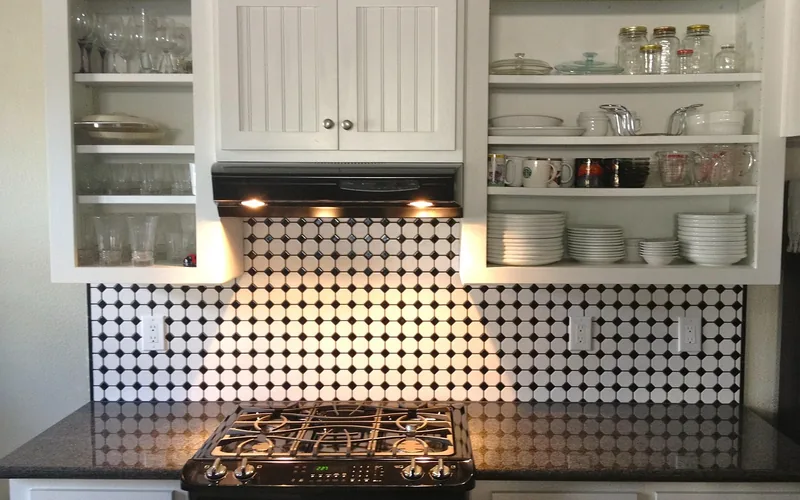
How long MDF lasts also depends heavily on what you build with it. Kitchen and bathroom cabinet boxes made from standard MDF and properly primed/painted commonly run 15+ years in service, since the paint film does most of the sealing work. Baseboard and trim, sealed on all cut ends, regularly outlasts that. Furniture that gets moved, bumped, and reassembled — especially flat-pack pieces — wears at the screw holes first, which is a different failure mode than the board itself aging; see our dedicated MDF furniture durability breakdown for load-bearing joints, hardware wear, and moving-day damage specific to assembled furniture.
MDF used outdoors is a different story entirely — even MR-grade board isn’t rated for direct weather exposure, and lifespan there is measured in months, not years, unless it’s fully enclosed and re-sealed regularly.
“The MDF pieces that fail early in my shop almost always have one thing in common: a cut edge that never got sealed. I’ve got a painted MDF bookcase in my own house going on nine years now with zero swelling — the only difference from the ones that fail is that every edge got two coats of sanding sealer before assembly.”
Frequently Asked Questions
What are 3 disadvantages of MDF?
MDF swells and weakens when exposed to water or high humidity, it holds screws less securely than plywood or solid wood, and it’s heavier per board than an equivalent-thickness sheet of plywood, which matters for large panels and hardware placement.
Does MDF last as long as wood?
No. Solid wood generally lasts 30+ years and can be refinished repeatedly, while MDF typically lasts 10-15 years standard grade or up to 20-30 years for moisture-resistant/HDF grade when fully sealed. MDF trades longevity for a flatter, cheaper, paint-ready surface.
What is the life expectancy of MDF board?
Standard MDF (42-52 lb/ft³) typically lasts 10-15 years indoors with proper sealing. Moisture-resistant and high-density (HDF) grades, sealed on all faces and edges, commonly reach 20-30 years. Unsealed edges near moisture can fail in 1-3 years regardless of grade.
Does MDF deteriorate over time?
Yes, but mainly at points of moisture exposure and load, not evenly across the whole board. A sealed, indoor MDF panel away from water shows very little change over a decade or more; the deterioration people usually mean is edge swelling, screw-hole crumbling, or sagging — all preventable with sealing and adequate support.
Does higher-density MDF last longer than standard MDF?
Yes. Higher-density grades (50-65+ lb/ft³, including HDF and moisture-resistant MDF) have more tightly bound fibers, which resist swelling, denting, and screw pull-out better than standard 42-52 lb/ft³ MDF. That’s why HDF-grade board is the standard choice for flooring underlayment and heavy-use cabinetry.
How long does MDF furniture last compared to solid wood furniture?
Well-built MDF furniture typically lasts 10-15 years, versus 20-30+ years (often decades) for solid wood furniture that’s cared for and occasionally refinished. Furniture-specific wear — hardware, joints, and moving damage — often outpaces the MDF material itself; see our full MDF furniture longevity guide for details on that.
Conclusion
There’s no single answer to how long MDF lasts — the honest range is 5 to 30 years, and density grade plus edge sealing decide where in that range a specific board ends up. Buy the right grade for the job, seal every cut edge (not just the face), keep it off wet floors, and standard MDF will comfortably outlast the decade most people expect from it. For a fuller picture of where MDF makes sense versus where it doesn’t, see our MDF pros and cons guide.
Sponsored / affiliate links. As an Amazon Associate I earn from qualifying purchases. I may earn additional commission from eligible campaigns.