How to Measure 45 Degree Miter Cuts: Long Point vs Short Point
To measure a 45-degree miter cut, mark your finished length to the long point of the angle (the longer edge of the cut), not the short point – that single mix-up causes more bad miters than a slightly-off saw ever does.
Most guides to 45-degree miters spend all their time on getting the angle right and almost none on how to measure the piece before you cut it. In practice, the angle is rarely the problem – a miter saw’s stops are usually accurate out of the box. What actually ruins picture frames, baseboard corners, and box joints is measuring to the wrong point on the cut, or not accounting for how four small errors compound around a frame. Here’s how to get both right.
Long Point Vs. Short Point: The Measurement That Actually Matters
Best Speed Square For Marking Miters
 |
Swanson 7-Inch Speed Square – $9.98 The fastest way to mark an accurate 45-degree line by hand, whether you’re double-checking a saw setting or cutting with a handsaw and miter box.
|
A 45-degree miter cut has two ends: a long point (the outer corner, where the cut is furthest along the board) and a short point (the inner corner, closest to you). When you measure a piece of molding or frame stock for length, you almost always measure to the long point – the outside corner is what shows on the finished piece, and it’s the consistent reference both people at a lumberyard or job site will use if you have to describe a cut to someone else.
Mark your length at the long point with a small V or arrow pointing to exactly where the point should land, then set that mark against your saw’s cut line rather than eyeballing “close enough.” Measuring to the short point instead – a common beginner mistake – makes every piece end up shorter than it should be once both ends are mitered.
Why Small Angle Errors Compound On A Frame
A picture frame or a box has four corners, and each corner is made from two 45-degree cuts that need to add up to a true 90. If your saw is off by even half a degree, that error shows up at all four corners – and because opposite sides of a frame need to be mirror images of each other, a saw that drifts in one direction will open a visible gap on two corners while closing it tight on the other two. That’s why a miter joint that looks fine on a test cut can still leave a frame with two bad corners once it’s assembled.
Set your saw to 45 degrees using its built-in stop, then cut two scrap pieces and hold them together at the corner. If they sit flush with no gap, you’re good. If there’s a visible gap, split the difference: adjust the saw angle by roughly half the gap you see, then recut both test pieces and check again. This trial-cut approach catches a miscalibrated stop faster than trusting the saw’s angle markings alone.
Marking A 45-Degree Cut Without A Miter Saw
A speed square makes this simple: hook the square’s lip against the edge of your board, pivot it so the diagonal edge lines up where you want the cut, and trace along it with a pencil. A combination square set to its 45-degree face works the same way and gives you a longer reference edge on wider stock. Either way, mark the long point clearly before you cut, and follow the line with a hand saw and miter box, or a circular saw guided carefully along the mark.

Setting Up And Cutting On A Miter Saw
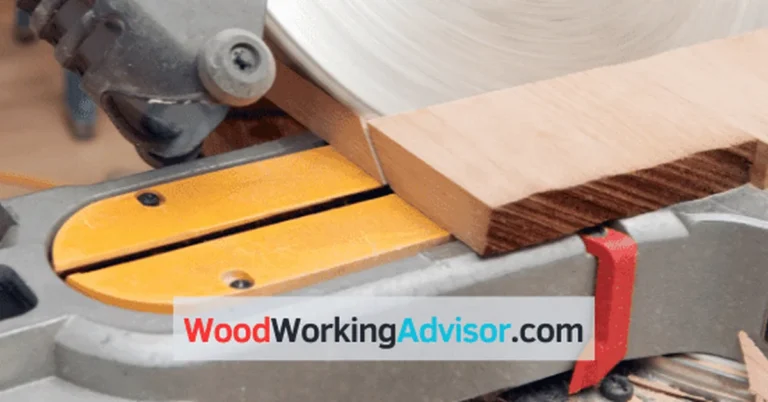
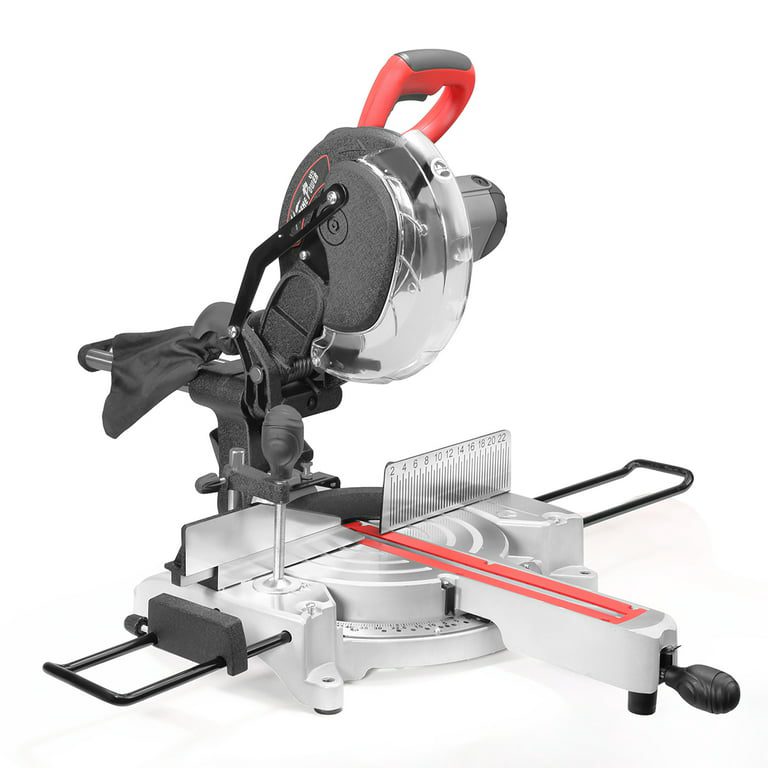
Lock the saw’s angle at 45 degrees using the detent (most saws have a positive stop there), then confirm the reading against the scale rather than trusting the stop blindly – stops drift with wear. Place the workpiece flat against the fence, line up your long-point mark with the blade’s kerf (not the blade’s edge – the kerf, or the exact line the blade will remove), and clamp the piece if the cut is small enough to bring your hand close to the blade.
Let the blade reach full speed before it contacts the wood, and feed it through at a steady pace – forcing the cut is what tears the wood fibers and leaves a rough edge, not blade sharpness alone. Always keep hands well clear of the blade path and wear eye protection; a kickback on a miter saw is far less common than on a table saw, but a dull or misaligned blade can still bind and jump.
Checking The Joint For Precision
Fit the two mitered pieces together and press them flat against a known-square surface, like the edge of a table saw or workbench. Hold a combination square or speed square against the outside corner – if the joint is a true 90 degrees, the square sits flush with no light showing underneath either leg. A small gap can often be closed with a few strokes of sandpaper on the high side; a gap wider than about 1/32 inch usually means the cut needs to be redone rather than sanded, since sanding that much will visibly shorten the piece.
When Coping Beats Mitering (Inside Corners)
For inside corners on baseboard or crown molding, professional trim carpenters often skip the inside miter entirely and use a coped joint instead: one piece runs full length into the corner, and the other is cut square, then the profile is traced and cut away with a coping saw so the second piece nests against the first piece’s face. A coped inside corner stays tight even as the walls and wood move slightly with the seasons, while an inside miter on the same joint tends to open a visible gap within a year or two. Outside corners still use a standard 45-degree miter – coping only helps on the inside.
Crown Molding: A Compound Angle, Not Just 45 Degrees
Crown molding sits at an angle against the wall and ceiling, so a corner cut on crown is a compound cut – both a miter angle and a bevel angle together, not a simple 45-degree miter like flat baseboard or a picture frame. Many compound miter saws have crown stops or a dedicated crown-molding setting that lets you lay the molding flat against the saw table (upside-down and backwards from how it will hang) and cut using standard miter angles alone, without tilting the blade. If your saw doesn’t have that feature, look up the exact miter and bevel angle pair for your molding’s specific spring angle before cutting, since guessing at compound angles wastes molding fast.
Frequently Asked Questions
How Do You Measure A 45-Degree Miter Cut?
Measure and mark your length to the long point of the angle – the outside corner of the cut – not the short point, since that’s the reference both the cut and any matching piece will use. Set the saw or square to 45 degrees, align the blade’s kerf with your long-point mark, and cut. Measuring to the short point by mistake is the most common reason a mitered piece ends up shorter than planned.
What Tools Are Needed For 45-Degree Miter Cuts?
A miter saw is the fastest option, but a speed square or combination square, a pencil, and a hand saw with a miter box will cut an accurate 45-degree angle without power tools. A tape measure and a small square for checking the finished joint round out the list.
Can I Use A Hand Saw For 45-Degree Miter Cuts?
Yes. Set a miter box to 45 degrees, seat the workpiece firmly against its back fence, and let the box’s slots guide the saw so the blade can’t wander off the angle. A fine-toothed hand saw designed for miter boxes gives a cleaner cut than a general-purpose hand saw.
How To Ensure Accurate 45-Degree Miter Cuts?
Cut two scrap test pieces first and hold them together at the corner before cutting your real material. If a gap shows up, adjust the saw angle by about half the size of the gap and test again – this catches a miscalibrated stop that the saw’s angle markings alone won’t reveal. Always measure and mark to the long point, and check finished joints against a square before moving on.
Conclusion
Getting a clean 45-degree miter comes down to two habits more than any tool: measuring to the long point every time, and test-cutting scrap before committing your real material. Add coping for inside trim corners and a real compound-angle chart for crown molding, and most of the classic miter-cut headaches – short pieces, gapped corners, and reopened joints – go away for good.
Sponsored / affiliate links. As an Amazon Associate I earn from qualifying purchases. I may earn additional commission from eligible campaigns.