How to Operate a Circular Saw (Without Getting Kickback)
To operate a circular saw safely, set the blade depth so it extends about 1/4 inch below the material, let the blade reach full speed before it touches the wood, and support both sides of the cut so the falling offcut can’t pinch the blade. Skipping that last part is the single biggest cause of kickback — not a dull blade, as most guides claim. This guide covers the real mechanism behind kickback, the setup steps in order, and what to check before every cut.
Why Kickback Actually Happens (Most Guides Skip This)
Best Circular Saw Guide Pick
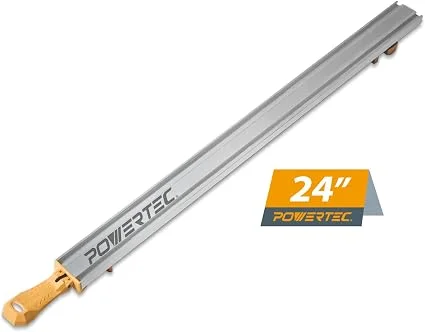 |
POWERTEC 24-Inch Circular Saw Straight Edge Guide – $35.99 Clamps to the material to keep the saw tracking the marked line — the exact setup step this guide covers for avoiding drift-caused binding.
|
Kickback happens when the blade binds inside the cut and the saw’s own rotation throws it backward toward you. It’s not random — it’s almost always caused by one of two things: the offcut piece sagging and pinching the blade as it separates, or the saw drifting off the marked line so the blade’s back edge rubs against uncut material. A sharp blade helps, but supporting both sides of the cut so neither piece droops is what actually stops the pinch from happening in the first place.
Setting Up Before the First Cut
- Pick the right blade: Carbide-tipped blades hold an edge through hardwoods and composites; a standard steel blade is fine for the occasional softwood cut but dulls fast.
- Set the blade depth: Adjust the depth lever so the blade extends roughly 1/4 inch below the bottom of the material. Deeper than that increases binding risk and exposes more blade than the cut needs; shallower makes the saw work harder and can stall.
- Mark the cut line: Use a pencil or chalk line, and a speed square to keep it perpendicular to the edge.
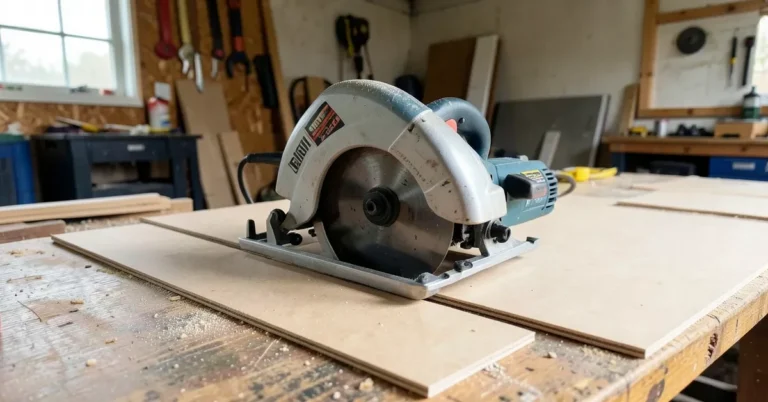
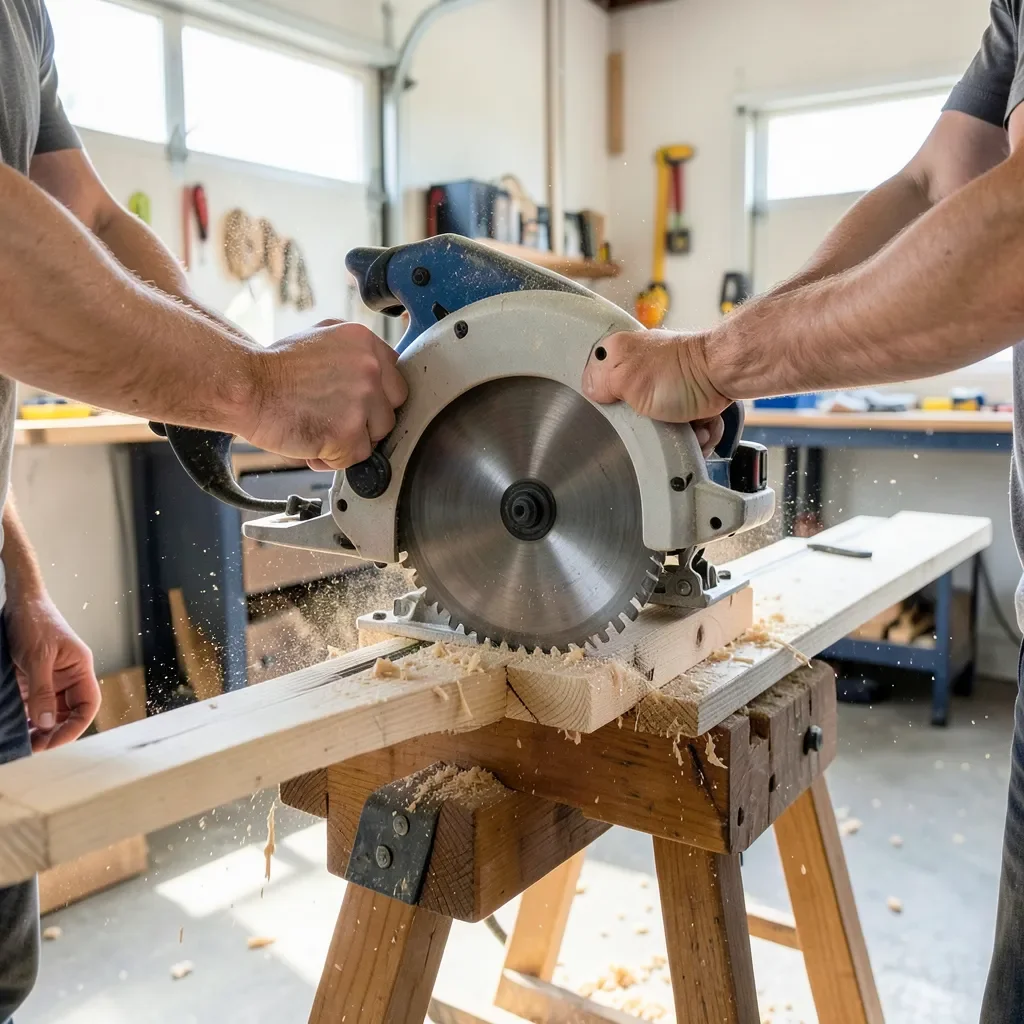
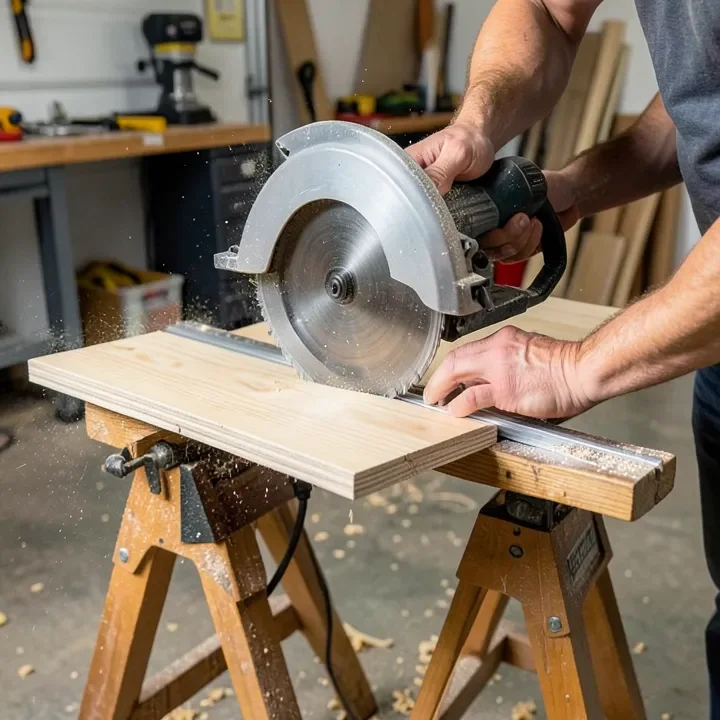
- Support both sides of the cut: Set the material on sawhorses or foam supports so both the keep piece and the offcut are held level. If only one side is supported, the other sags as you finish the cut and pinches the blade — the exact mechanism behind most kickback.
- Clamp it down: Even with good support, clamp the material so it can’t shift sideways mid-cut.
Pre-Cut Safety Checklist
Run through this before every cut, not just the first one of the day:
- Safety glasses and hearing protection on — a circular saw runs loud enough to cause hearing damage over repeated use.
- Blade inspected for cracks, missing teeth, or heavy pitch buildup that slows cutting and increases binding.
- Blade guard moves freely and springs back on its own when released — a sticking guard is a common cause of exposed-blade injuries.
- Power cord checked for nicks or fraying, and routed so it won’t cross your cutting path.
- Cutting area clear of clutter you could trip over while holding a running saw.
Making the Cut, Step by Step
- Position the saw: Rest the base plate flat on the material with the blade aligned just to the waste side of your cut line, blade not yet touching the wood.
- Start the saw and let it reach full speed: Squeeze the trigger before the blade contacts the material. Feeding a saw into wood before it’s at full RPM is what causes stalling, rough cuts, and the initial bind that starts kickback.
- Feed steadily: Push forward at a consistent pace, letting the blade do the cutting. Forcing it faster than it wants to go is what causes the motor to bog down and the blade to bind.
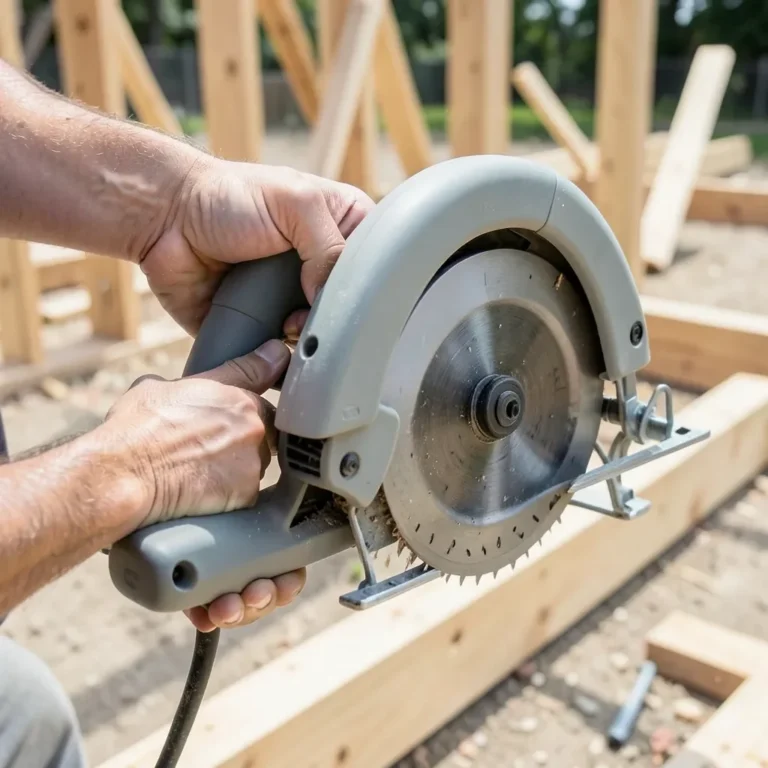
- Keep both hands on the saw: Front hand on the front knob or shoe, rear hand on the trigger grip. Never place either hand behind the blade’s line of travel — that’s exactly where a kicked-back saw goes.
- If it binds, stop immediately: Release the trigger and hold the saw motionless in the cut until the blade fully stops before backing it out. Pulling a still-spinning blade backward out of a bind is its own kickback risk.
Cutting Bevels and Angles
Cutting angles and bevels just adds one step to the setup above: set the bevel angle on the saw’s tilt scale before you start, and re-check your blade depth afterward — tilting the saw changes how much blade is actually below the material even if the depth setting number hasn’t moved. A clamped straightedge guide keeps the cut accurate since it’s harder to eyeball an angled line by feel alone.
Circular Saw Maintenance
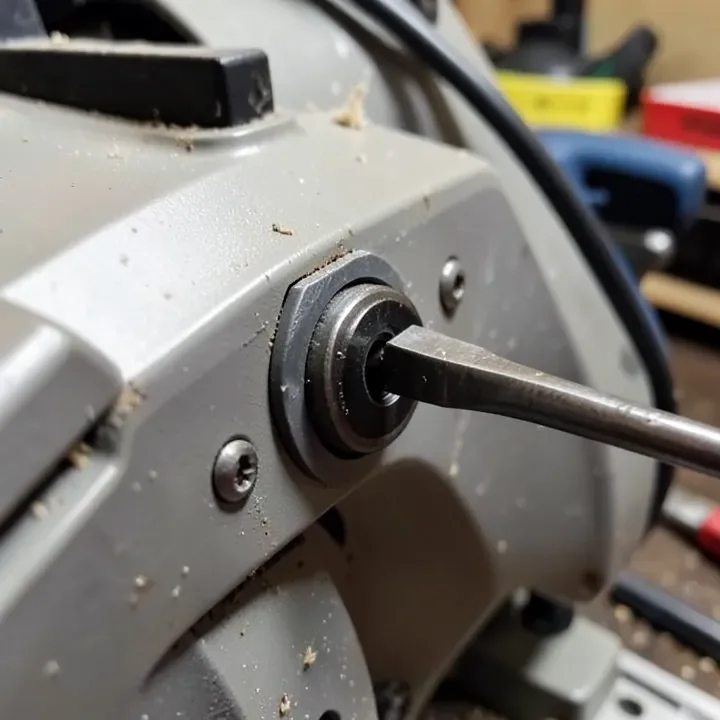
Brush sawdust out of the ventilation slots and blade guard after every session — buildup here is the most common reason a guard starts sticking. Wipe pitch and sap off the blade with a dedicated blade cleaner or mineral spirits; a gummed-up circular saw blade cuts slower and burns wood. Replace the blade once teeth are visibly chipped or rounded — a dull blade needs more feed pressure to cut, and that extra pressure is itself a kickback risk.
📊 A saw blade with even one chipped or missing carbide tooth cuts measurably less efficiently and increases binding risk — inspecting the blade before each use is one of OSHA’s standard recommended checks for portable circular saws. Source: OSHA construction hand and power tools guidance.
Troubleshooting Common Problems
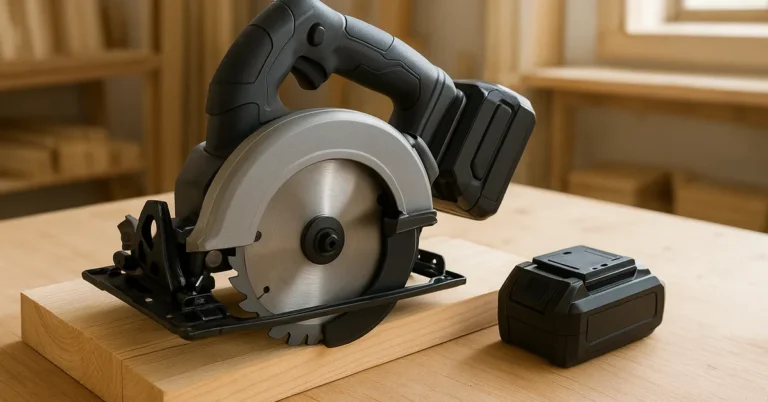
Saw won’t start: Check the outlet with another device first, then inspect the cord and switch for damage. On a cordless model, confirm the battery is seated fully and actually charged — a battery that reads full on the charger can still fail under a saw’s higher current draw.
Cuts wander or the saw binds mid-cut: This is almost always one of three things — a dull or gummed-up blade, an unsupported offcut sagging into the blade, or the saw drifting off the marked line because it’s being pushed faster than the blade can clear sawdust. Slow down, check that both sides of the cut are still supported, and re-square the saw to the line rather than trying to steer back into it mid-cut.
In our experience, most binding complaints trace back to the offcut side sagging rather than the blade itself — propping a spare block under a long offcut before finishing the cut solves it faster than swapping blades.
Frequently Asked Questions
What are the steps to operate a circular saw?
Pick the right blade, set the depth about 1/4 inch below the material, mark your line, and support both sides of the cut. Then position the saw with the blade off the material, let it reach full speed, and feed steadily along the line with both hands on the saw.
What actually causes circular saw kickback?
Kickback happens when the blade binds in the cut and the saw’s rotation throws it backward. The most common cause is an unsupported offcut sagging and pinching the blade as it separates — not just a dull blade, though a dull one makes binding more likely too.
How deep should you set a circular saw blade?
About 1/4 inch of blade should extend below the bottom of the material. Deeper exposes more blade than the cut needs and increases binding risk; shallower makes the motor work harder and can stall mid-cut.
Should the blade be at full speed before it touches the wood?
Yes. Feeding the blade into the material before it reaches full RPM causes stalling, rough cuts, and the initial binding that leads to kickback. Always start the saw with the blade clear of the material first.
Sponsored / affiliate links. As an Amazon Associate I earn from qualifying purchases. I may earn additional commission from eligible campaigns.