How to Remove Ink from a Hardwood Floor (Without Damaging the Finish)
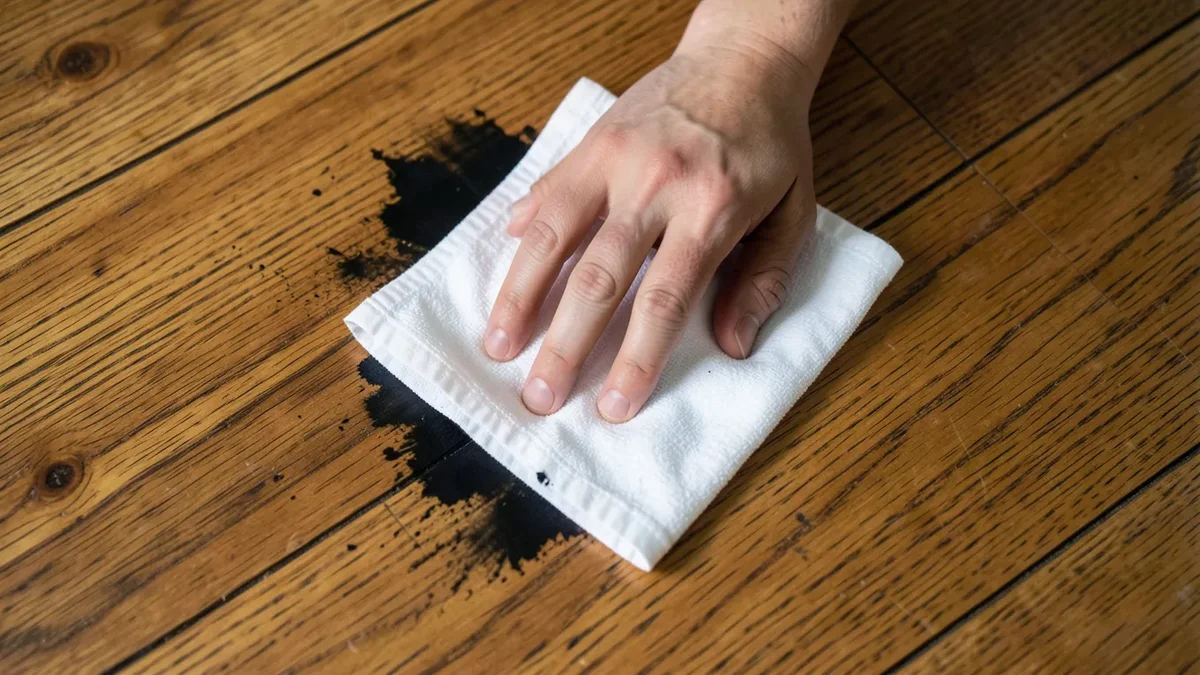
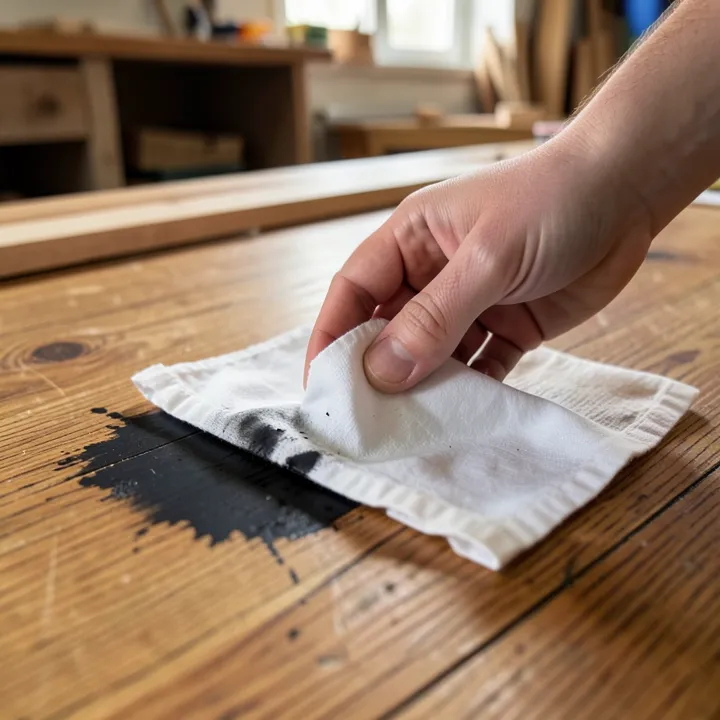
Blot fresh ink immediately with a dry cloth, working from the outside of the stain inward, before reaching for any cleaner. Hardwood is porous, and finished wood can still let ink wick into the grain through hairline gaps in the finish, so speed matters more than which product you use first. From there, the right removal method depends on how fresh the stain is and whether it’s sitting on top of the finish or has soaked into the wood itself.
Act Fast: What to Do in the First Minute
For The Final Cleanup Pass
 |
Bona Hardwood Floor Cleaner Refill, 128 fl oz – $19.97 After you’ve lifted the ink, whatever you used to treat the spot (alcohol, vinegar, baking soda residue) needs to come off the finish without leaving its own film behind.
|
Grab a clean, dry cloth or paper towel and press straight down on the stain rather than rubbing. Rubbing spreads ink sideways across the finish and can push it deeper into any pores or seams in the wood. Keep blotting with a fresh section of cloth until no more ink transfers, then move on to an actual removal method. Skip water or cleaners at this stage; on fresh ink, they can carry the pigment further into the wood before you’ve had a chance to lift it.
Why Ink Stains Hardwood in the First Place
A finished floor’s protective layer (polyurethane, wax, or oil) is what normally keeps liquids from soaking in, but that layer wears thin with foot traffic and cleaning over the years, and even a fresh finish has microscopic pores. Once ink gets past the finish into the wood fibers underneath, it behaves like a dye rather than a surface spill, which is why an ink stain that’s been sitting for days is much harder to fully lift than one caught in the first few minutes.
Home Remedies, From Gentlest to Strongest
Start with the gentlest option and only move to a stronger one if it doesn’t work—every method below carries some risk to the finish, so testing on a hidden spot first (inside a closet, under a rug) isn’t optional.
Baking Soda Paste
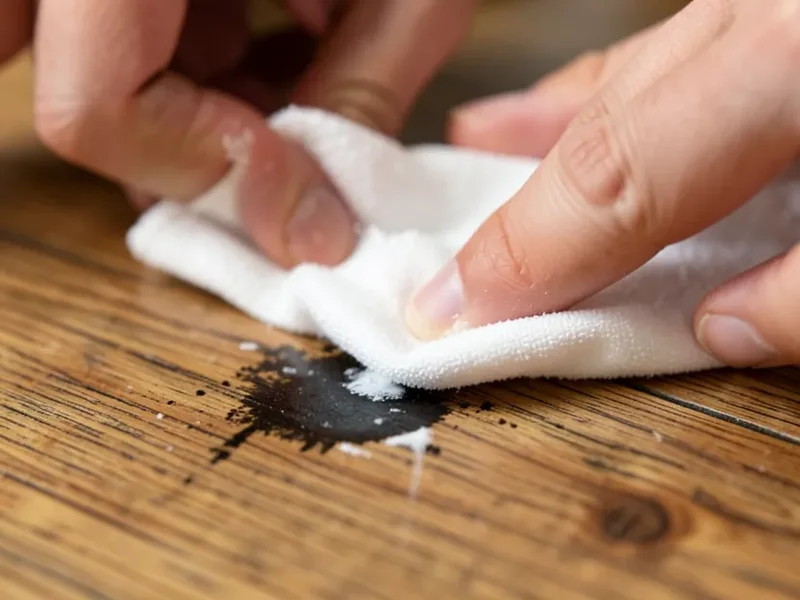
Mix baking soda with a small amount of water into a thick paste, apply it over the stain, and let it sit 5-10 minutes. Gently work it with a soft cloth, then wipe clean with a barely damp cloth and dry the spot immediately. This is the mildest option and the right place to start on light or surface-level stains.
Vinegar and Dish Soap
Mix one tablespoon of white vinegar and one teaspoon of dish soap into a cup of warm water. Dip a cloth in the solution and blot, rather than scrub, the stain. Rinse with a barely damp cloth and dry the area right away—standing moisture is its own risk to a hardwood finish.
Rubbing Alcohol
Dampen a cloth or cotton ball with rubbing alcohol and dab the stain without soaking the surrounding wood. Alcohol dissolves many ink formulations faster than baking soda or vinegar, but it can also soften some finishes, so test it on a hidden area first. Wipe with a clean, barely damp cloth afterward and dry thoroughly.
Magic Eraser (Melamine Foam)
A melamine foam eraser works like an extremely fine abrasive and can lift ink that’s sitting close to the surface. Use light strokes only—pressing hard can dull the finish—and test on a hidden spot first, since melamine foam is genuinely abrasive even though it feels soft.
Commercial Stain Removers
If home remedies don’t fully lift the stain, a cleaner formulated specifically for hardwood floors is the next step rather than jumping straight to sanding. Look for a product labeled safe for finished wood, not a general all-purpose or tile cleaner, and read the label for whether it’s meant for wax, oil, or polyurethane finishes specifically—using the wrong type can dull or discolor the finish. Apply to a soft cloth (not directly on the floor), work it into the stain in small circles, let it sit briefly, then wipe clean and dry completely. Test on a hidden area first, same as with any home remedy.
When the Stain Won’t Come Out
If the ink has soaked into the wood grain and cleaning alone won’t shift it, light sanding is the next option, not a last resort to be afraid of. Use fine-grit sandpaper (220-grit or finer), sand gently in the direction of the grain, and stop as soon as the stain lightens rather than trying to erase it completely in one pass—you can always sand a little more, but you can’t put wood back once it’s gone. Wipe away the dust, then match and reapply a finish or sealant to the sanded spot so it doesn’t stand out as a dull patch. For a stain that’s large, very deep, or on a floor you don’t want to risk damaging yourself, a flooring professional can sand and refinish the area to blend it into the surrounding boards.
Preventing the Next Stain
- Keep ink off the floor in the first place. Use trays or mats under pens, markers, and ink cartridges, and keep caps closed when not in use.
- Maintain the finish. A worn-through finish is what lets ink (and everything else) soak into the wood in the first place; recoating with polyurethane or the appropriate finish every few years keeps that barrier intact.
- Clean spills of any kind immediately, not just ink—the habit matters more than the specific liquid.
- Teach kids where ink and markers are allowed, especially over rugs or mats rather than bare floor, if art supplies are a recurring source of spills.
Frequently Asked Questions
How Can I Safely Remove Ink From Hardwood Floors?
Start with the gentlest method that might work: blot fresh ink dry first, then try a baking soda paste or a vinegar-and-dish-soap solution before moving to rubbing alcohol or a commercial cleaner. Test any product on a hidden spot first, and always dry the area completely after cleaning.
What Household Items Remove Ink Stains on Hardwood?
Baking soda, white vinegar with dish soap, and rubbing alcohol are the most common household options, roughly in order from gentlest to strongest. A melamine foam eraser also works on surface-level stains but is genuinely abrasive despite feeling soft, so use light pressure.
Is It Safe to Use Acetone on Hardwood Floors?
Acetone can dissolve some ink, but it’s also strong enough to soften or strip many wood finishes, so it’s a higher-risk option than alcohol or vinegar. If you try it, use it sparingly, test an inconspicuous spot first, and avoid it on waxed or oil finishes entirely.
How Quickly Should I Treat Ink Stains on Wood Floors?
Immediately. Fresh ink is still mostly sitting on or near the surface; the longer it sits, the further it wicks into the grain and the more likely you’ll need sanding instead of a surface cleaner to fully remove it.
Bottom Line
Blot first, then work through home remedies from gentlest to strongest, testing each on a hidden spot before applying it to the stain. Most fresh ink stains lift with baking soda, vinegar, or alcohol; a stain that’s soaked in deep enough to resist all of them usually needs light sanding and a finish touch-up rather than a stronger chemical.
Sponsored / affiliate links. As an Amazon Associate I earn from qualifying purchases. I may earn additional commission from eligible campaigns.