Remove Stain from Hardwood Floor: What Actually Works (By Stain Type)
Not every hardwood floor stain needs the same fix. Surface stains that sit in the finish (most food, grease, and light pet stains) usually come out with mineral spirits or a dedicated hardwood cleaner without touching the wood itself. Stains that have soaked past the finish into the wood fibers, like dark water rings or old pet urine spots, need sanding down to bare wood and treating with oxalic acid wood bleach. Mixing up which category you’re dealing with is the number one reason DIY stain removal fails.
Hey there, fellow DIYers, Md Meraj here. The finish on your floor (polyurethane, wax, or oil) is what actually gets stained most of the time, not the wood underneath it. That’s good news, because it means most spots come off without ever needing to sand or refinish anything. This guide breaks stains down by what’s actually causing them, so you spend five minutes with the right cleaner instead of an afternoon making a surface stain worse with the wrong one.
Common Hardwood Floor Stains and What’s Really Causing Them
BEST FOR DARK / TANNIN WATER STAINS
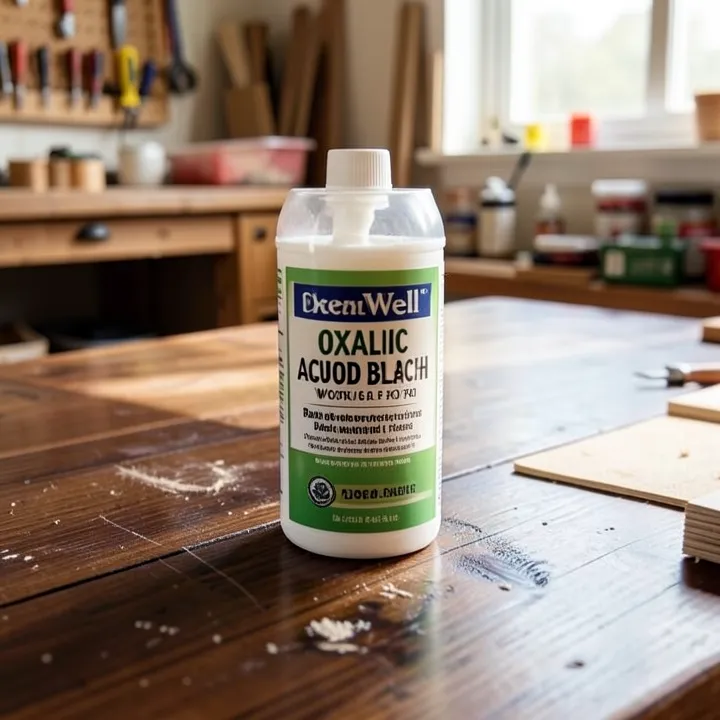 |
Chemwell Oxalic Acid Wood Bleach (2 lb) – $17.99 The product actually made to neutralize tannin reactions once a water or pet stain has soaked past the finish into bare wood.
|
Water Stains (White Rings vs. Dark/Black Stains)
These are actually two different problems. A cloudy white ring means moisture got trapped in the finish itself, not the wood, usually from a wet glass or a damp mat. A dark gray or black stain means moisture reached the bare wood and reacted with natural tannins, which only happens once the finish has already failed in that spot.
Pet Stains
Fresh accidents are a surface cleanup job. Old, dried pet urine has usually soaked through the finish and darkened the wood underneath, plus it often carries a smell that a surface wipe won’t touch since the source is inside the wood fibers.
Ink, Marker, Grease, and Food Stains
These almost always sit in the finish layer, which is why they typically respond well to solvent-based spot cleaning instead of sanding. Grease and oil are the exception if they’re left to soak for weeks. They can work into finish that’s already worn thin.
What You’ll Need
- Soft microfiber cloths (never abrasive scrubbers on a finished floor)
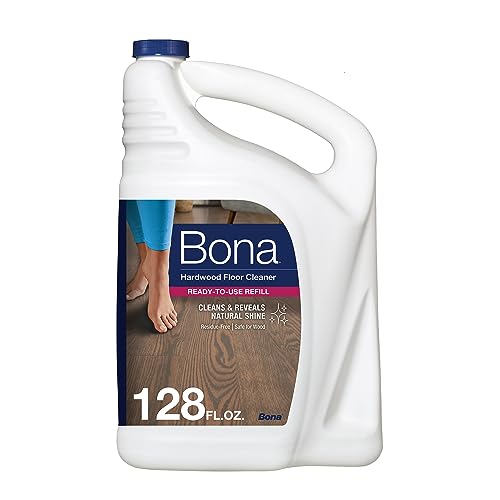
- A pH-neutral hardwood floor cleaner for routine stains
- Mineral spirits for grease, ink, marker, and wax-based marks that sit in the finish
- Fine (0000) steel wool for buffing out a stain without cutting through the finish
- Oxalic acid wood bleach, sandpaper, and matching finish, reserved only for stains that have reached bare wood
Removing Water Stains
White rings: These live in the finish, so the fix is to gently rub the ring with 0000 steel wool and a small amount of mineral spirits, following the wood grain, then wipe clean and apply a matching finish touch-up if the sheen looks dull afterward. A hair dryer on low heat held a few inches away can sometimes pull a fresh white ring out on its own by evaporating the trapped moisture, worth trying before you reach for steel wool.
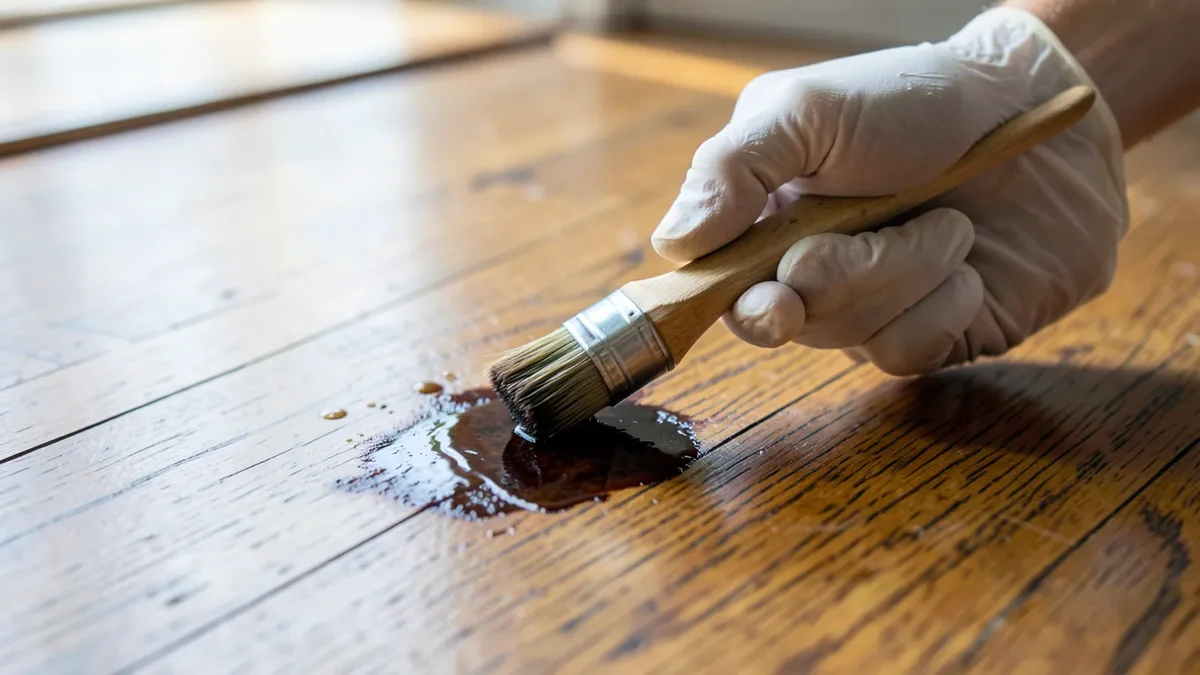
Dark or black stains: This means the tannins in the wood itself have reacted with moisture, so surface cleaning won’t touch it. You’ll need to sand the spot down to bare wood, apply oxalic acid wood bleach per the product’s instructions (it neutralizes the tannin reaction and lightens the discoloration), let it dry fully, then re-stain and refinish that section to match. This is also a good moment to check whether the moisture source (a leaky appliance, a window sill drip, a planter) has actually been fixed, or the stain just comes back.
Eliminating Pet Stains
Blot fresh accidents immediately, don’t rub, then clean with a pH-neutral floor cleaner. For stains that have already dried and darkened the wood, an enzyme-based pet cleaner made for hardwood can lift some surface odor, but a stain that’s visibly darkened the wood grain itself has already gone past the finish and needs the same sand-and-bleach treatment as a dark water stain. Enzyme cleaners address odor-causing bacteria; they don’t remove tannin discoloration in the wood.
Tackling Ink, Marker, Grease, and Food Stains
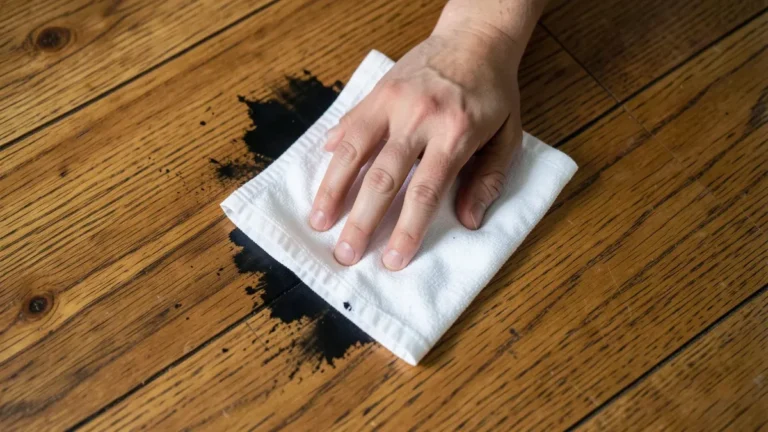
For ink and marker, dab (don’t scrub) with rubbing alcohol on a cloth, working from the outside of the mark inward so it doesn’t spread. See our full ink-stain removal guide for the vinegar-and-baking-soda backup method and commercial remover options. For grease and oil, first blot up as much as possible, then sprinkle cornstarch or baking soda over the spot to absorb what’s left before wiping with a mild degreasing dish soap solution. For food and drink spills, immediate wiping is genuinely the best prevention here. Almost none of these become permanent problems if you get to them within the first hour. Always test any solvent on a hidden corner of the floor first. Some older wax finishes react poorly to rubbing alcohol.
Preventing Future Stains
- Use felt pads under furniture and washable mats at entry points and under pet food bowls
- Wipe spills within minutes, not hours, especially anything acidic (citrus, wine, vinegar-based cleaners)
- Skip harsh chemicals, ammonia, and vinegar-based DIY cleaners for routine mopping. They slowly dull and thin polyurethane finish, which is exactly what lets stains reach bare wood in the first place
- Recoat the finish (not a full refinish, just a maintenance coat) every few years in high-traffic areas before the existing finish wears through
When to Call a Professional
Call in a flooring pro for stains covering a large area, stains that have caused the wood to cup or warp (not just discolor), or when oxalic acid treatment lightens the stain but leaves a visible color mismatch with the surrounding floor that DIY staining can’t blend. A full sand-and-refinish typically costs several dollars per square foot and takes the room out of use for a few days, so it’s worth getting a quote before deciding a DIY spot treatment isn’t working.
Frequently Asked Questions
How do I remove water stains from hardwood floors?
White rings buff out with fine steel wool and mineral spirits since they sit in the finish. Dark or black water stains have reached the bare wood and need sanding plus oxalic acid wood bleach.
What household items remove stains on hardwood floors?
Mineral spirits, rubbing alcohol, baking soda, and cornstarch handle most surface stains in the finish. They won’t lift a stain that has soaked into bare wood.
Can I use bleach to clean hardwood floor stains?
Household chlorine bleach can discolor wood and damage finish. Oxalic acid wood bleach is a different product made specifically for wood and is what’s actually used to lift tannin-based dark stains after sanding.
How do I prevent stains on hardwood floors?
Use furniture pads and entry mats, wipe spills immediately, avoid harsh or acidic cleaners on the finish, and recoat the finish before it wears through in high-traffic areas.
Sponsored / affiliate links. As an Amazon Associate I earn from qualifying purchases. I may earn additional commission from eligible campaigns.