How to Seal Driftwood: A Genius, Essential Method
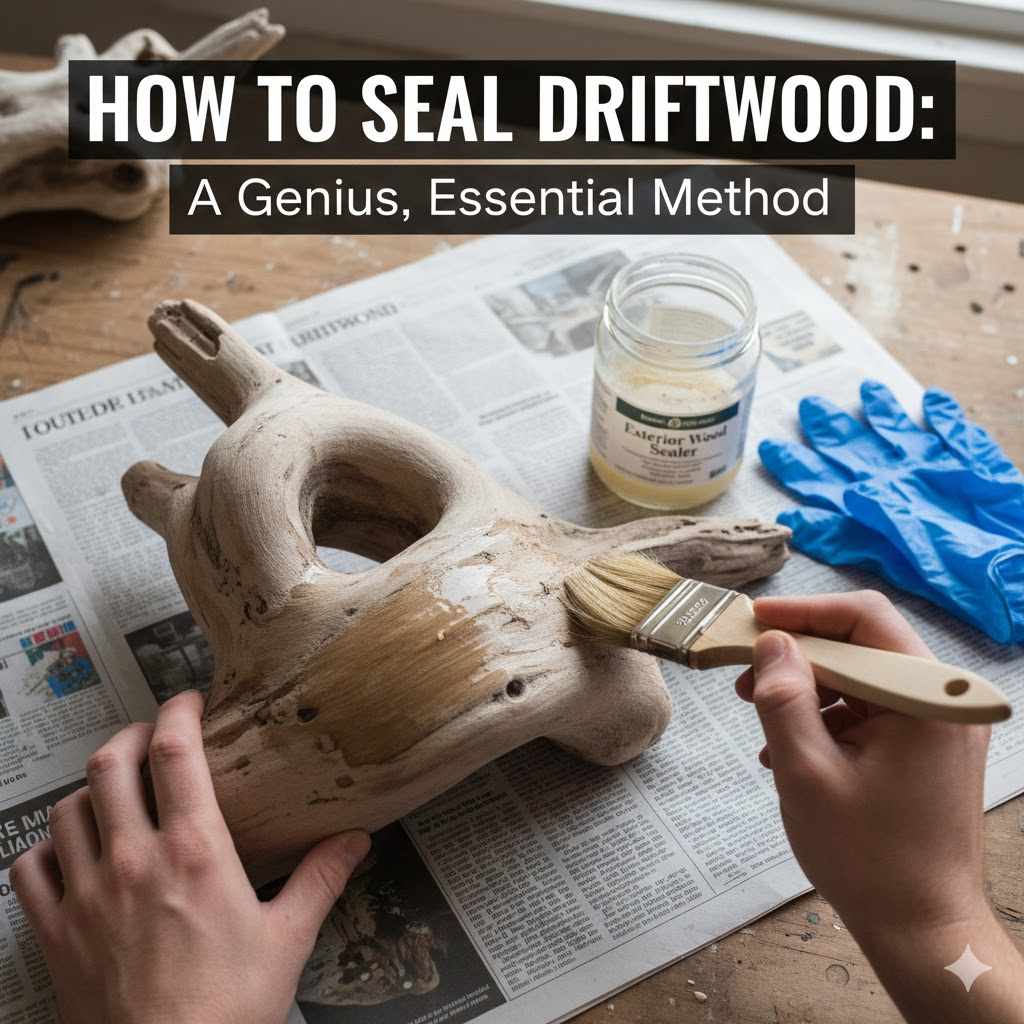
To seal driftwood, first clean and dry it completely. Sand it smooth, then apply thin, even coats of a water-based sealant like polyurethane using a brush. Allow each coat to dry fully, lightly sanding between applications for a durable, professional finish. This protects the wood and enhances its natural beauty.
Hello there! It’s Md Meraj, your friend in the workshop. Have you ever found a perfect piece of driftwood on the beach? It has beautiful curves and a wonderful, weathered look. You bring it home, place it on a shelf, and it looks fantastic. But after a while, you might notice it getting brittle, dusty, or even starting to crumble. It’s a frustrating problem that many of us face. That gorgeous piece of nature deserves to last a lifetime.
Well, don’t you worry. Preserving your driftwood treasure is much easier than you think. There’s a simple, straightforward method to protect it, and I’m here to walk you through every single step. We are going to seal that driftwood so it stays strong and beautiful for years to come. Let’s get started and turn that natural find into a lasting piece of art for your home.
Why Should You Seal Driftwood?
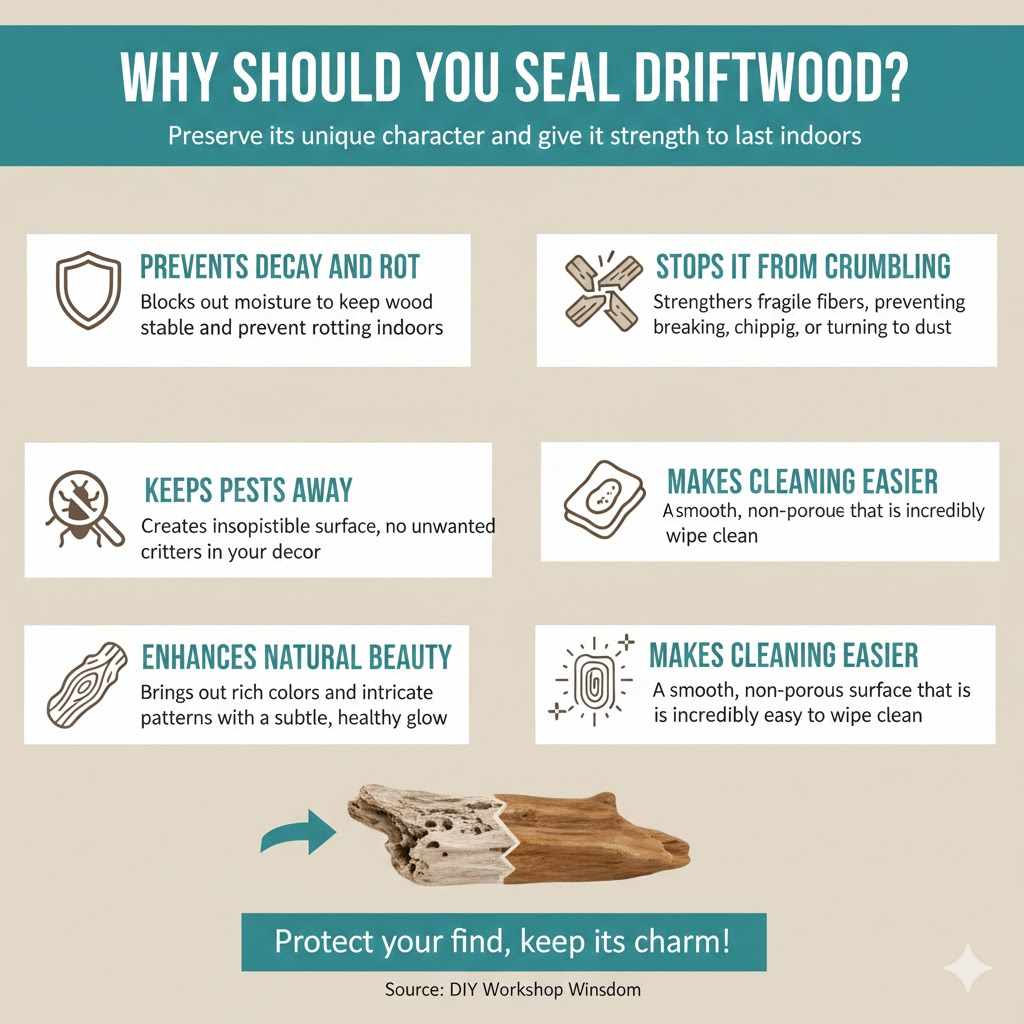
You might be wondering, “Why bother sealing it? Isn’t it supposed to look natural?” That’s a great question. Sealing driftwood isn’t about making it look fake or glossy. It’s about preserving its unique character while giving it the strength to last indoors. Think of it as a clear shield that protects your find without changing its rustic charm.
Here are the main reasons why taking the time to seal your driftwood is a brilliant idea:
- Prevents Decay and Rot: Driftwood has been through a lot—tossed by waves and baked by the sun. But inside your home, changes in humidity can cause it to rot or decay. A sealant blocks out moisture and keeps the wood stable.
- Stops it From Crumbling: Older, more delicate pieces of driftwood can be very fragile. Sealing the wood strengthens its fibers, preventing it from breaking, chipping, or turning to dust over time.
- Keeps Pests Away: Sometimes, tiny insects or their eggs can hide in the cracks and crevices of driftwood. Cleaning and sealing the wood creates an inhospitable surface, ensuring no unwanted critters make a home in your decor.
- Makes Cleaning Easier: An unsealed piece of driftwood has a rough, porous surface that traps dust and dirt like a magnet. A sealed surface is smooth and non-porous, making it incredibly easy to wipe clean with a soft cloth.
- Enhances Natural Beauty: A good sealant can bring out the rich colors and intricate grain patterns in the wood. It can give the driftwood a subtle, healthy glow (or “sheen”) that makes it look even more stunning, all without making it look unnatural.
Choosing the Right Sealant: Your Key to Success
Walking into a hardware store can feel overwhelming with all the choices for wood finishes. But don’t let that stop you! For driftwood, the choices are actually quite simple. The most important thing is to choose a sealant that matches your project’s needs. Are you making a centerpiece for your dining table, or are you preparing wood for a fish tank? These require very different approaches.
IMPORTANT NOTE: Sealants for home decor are generally NOT safe for aquariums. If you are preparing driftwood for a fish tank, you must use a sealant specifically labeled “aquarium-safe” or “food-safe” once cured, or better yet, avoid sealants altogether and use proper cleaning and boiling methods instead. For this guide, we are focusing on driftwood for decorative purposes.
Here’s a simple table to help you pick the perfect sealant for your decorative driftwood project.
| Sealant Type | Best For | Pros | Cons |
|---|---|---|---|
| Water-Based Polyurethane | Beginners and most decor projects. |
|
|
| Oil-Based Polyurethane | Projects needing maximum durability. |
|
|
| Clear Matte or Satin Spray Sealant | Intricate pieces with lots of nooks and crannies. |
|
|
| Tung Oil or Linseed Oil | Achieving a very natural, hand-rubbed look. |
|
|
For beginners, I almost always recommend a water-based polyurethane in a satin or matte finish. It gives you professional-level protection, keeps the natural color of the driftwood, and is incredibly forgiving to work with.
Tools and Materials You’ll Need
The best part about this project is that you don’t need a fancy workshop or expensive tools. Let’s gather a few simple things before we begin. Having everything ready makes the whole process smooth and enjoyable.
For Cleaning and Prep:
- A stiff-bristled brush (a vegetable brush works great)
- A bucket or tub large enough to soak the wood
- Plain tap water
- Optional: White vinegar for extra cleaning power
- Sandpaper (medium 120-grit and fine 220-grit)
For Sealing:
- Your chosen sealant (e.g., water-based polyurethane)
- A good quality paintbrush (a 1-2 inch synthetic bristle brush is perfect)
- Clean, lint-free cloths or rags
- Gloves to protect your hands
- A drop cloth or old newspapers to protect your workspace
The Step-by-Step Guide to Perfectly Sealed Driftwood
Alright, are you ready? Let’s get to the fun part. We’re going to follow a simple, step-by-step process. Take your time with each step, and you’ll be amazed at the results. This is the “genius method”—it’s not one secret trick, but a series of simple, patient steps that guarantee a perfect finish every time.
Step 1: Clean the Driftwood Thoroughly
Your driftwood has been on a long journey, and it’s collected salt, sand, dirt, and maybe some algae along the way. We need to get all of that off.
- Initial Scrub: Take your driftwood outside and use your stiff-bristled brush to knock off all the loose sand, dirt, and flaky bark.
- Soak and Scrub Again: Fill your bucket with warm water. If the wood is extra dirty or has a “fishy” smell, add one part white vinegar to four parts water. Submerge the driftwood completely and let it soak for at least 24 hours. This helps pull out deep-seated salt and grime.
- Final Rinse: After soaking, give the wood another good scrub with your brush under clean, running water. You want the water running off it to be clear.
Step 2: Dry the Driftwood Completely (The Most Important Step!)
I cannot stress this enough: your driftwood must be bone dry before you even think about sealing it. If there is any moisture trapped inside, the sealant will bubble, peel, or turn milky, and the wood could rot from the inside out. Patience is your best tool here.
Place your clean driftwood in a warm, dry, and well-ventilated spot. This could be a sunny porch, a dry garage, or a utility room. Let it sit for at least one to two weeks, depending on its size and thickness. To check if it’s dry, pick it up. It should feel surprisingly light. If it feels heavy for its size, it’s still holding water.
For more information on the principles of drying wood properly, you can check out resources like this guide on wood drying from UMass Amherst. Their insights on air circulation and moisture content are helpful for any wood project.
Step 3: Sand for a Silky-Smooth Finish
This optional step can take your project from “good” to “great.” Sanding knocks down any splinters or rough patches and helps the sealant absorb evenly.
- Start with your medium-grit sandpaper (around 120-grit). Gently sand the entire surface of the driftwood, following the direction of the grain. Your goal is to smooth it out, not to change its shape.
- Wipe away all the sanding dust with a clean, dry, lint-free cloth. A slightly damp cloth works too, just be sure to let the wood dry again completely.
Step 4: Set Up Your Workspace
Safety and cleanliness are key! Find a well-ventilated area to work in. A garage with the door open or even a shady spot outdoors on a calm day is perfect. Working with any kind of finish means you need good airflow. For guidance on ensuring good air quality while working indoors, the Environmental Protection Agency (EPA) offers excellent advice.
Lay down your drop cloth or newspapers to protect your floors or table from drips.
Step 5: Apply the First Coat of Sealant
Here we go! Stir your sealant gently but thoroughly. Don’t shake it! Shaking creates air bubbles that will get trapped in your finish.
Dip your brush into the sealant, getting a small amount on the bristles. Apply a thin, even coat to the driftwood. Follow the natural grain of the wood. A thin coat is always better than a thick one. A thick coat can run, drip, and take forever to dry properly. Cover the entire piece, including the bottom and any little nooks.
Step 6: Let It Dry and Lightly Sand Again
Let the first coat dry completely according to the directions on the can (usually 2-4 hours for water-based polyurethane). Once it’s dry to the touch, you might notice the surface feels slightly rough. This is called “raised grain” and it’s perfectly normal.
Take your fine-grit sandpaper (220-grit) and give the entire surface a very light sanding. You are just trying to knock down that roughness, not remove the sealant you just applied. After sanding, wipe away all the dust with your clean, dry cloth.
Step 7: Apply Additional Coats
Now, apply your second coat of sealant, just like you did the first one—thin and even. For most decorative projects, two or three coats are perfect. Repeat the process of drying completely and lightly sanding between each coat.
Your last coat should be the final one—don’t sand it!
Step 8: Give It Time to Cure
This is the final test of patience. Even after the sealant is dry to the touch, it is not yet “cured.” Curing is the process where the sealant hardens completely and reaches its maximum durability. This can take anywhere from a few days to a few weeks, depending on the product and your local humidity.
Place your finished driftwood in a safe spot where it won’t be disturbed. Check the instructions on the can for the full cure time. Once it’s fully cured, your beautiful, protected driftwood is ready to be displayed!
Troubleshooting Common Issues
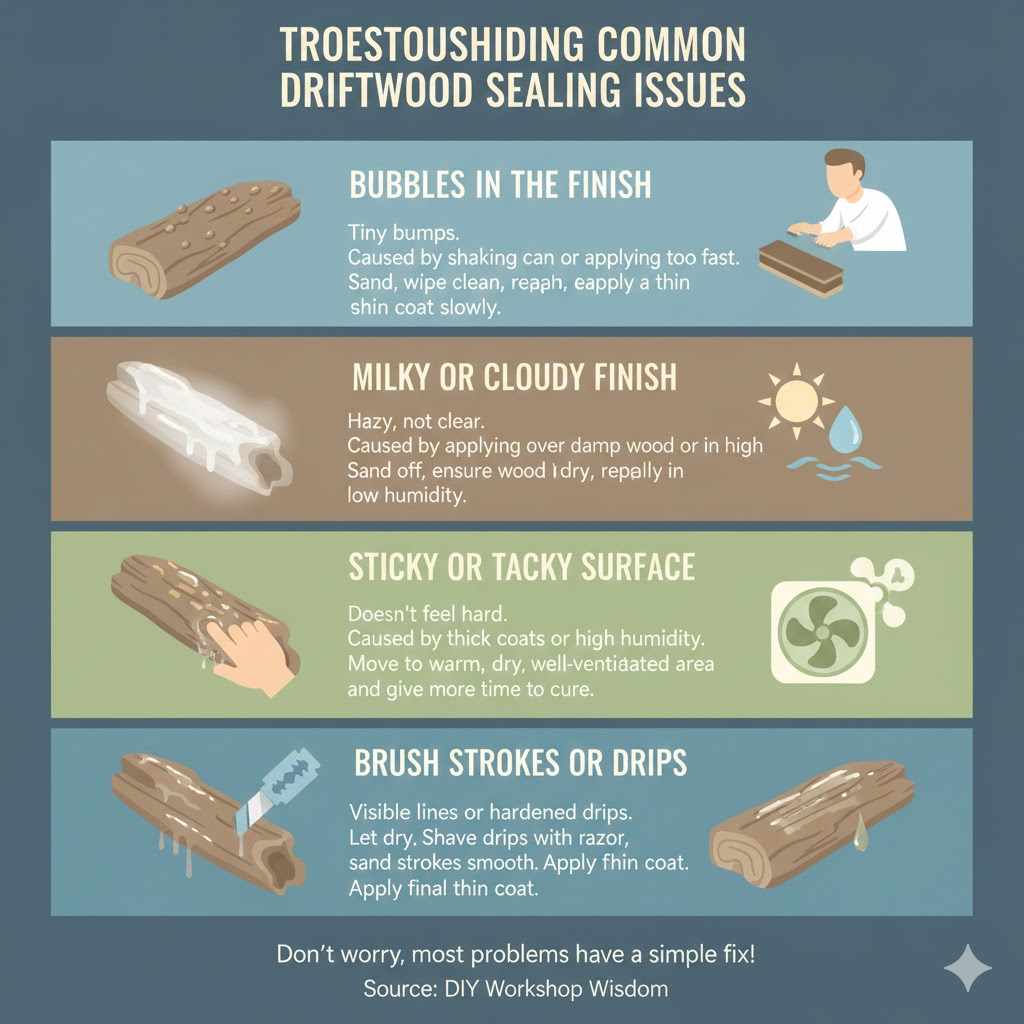
Sometimes things don’t go exactly as planned. Don’t worry! Most problems have a simple fix. Here are some common issues and how to solve them.
| Problem | What It Looks Like | How to Fix It |
|---|---|---|
| Bubbles in the Finish | Tiny bumps or bubbles on the surface. | This is usually caused by shaking the can or applying the sealant too quickly. Let the coat dry completely, sand the bubbles out with fine-grit sandpaper, wipe clean, and apply another thin coat slowly. |
| Milky or Cloudy Finish | The finish is not clear and has a hazy look. | This often happens when sealant is applied over damp wood or in very high humidity. The only real fix is to sand the finish off completely, ensure the wood is 100% dry, and reapply in a less humid environment. |
| Sticky or Tacky Surface | The finish doesn’t feel hard after the recommended dry time. | This can be caused by applying the coats too thickly or by high humidity. Move the piece to a warmer, drier area with good air circulation and give it more time to cure. |
| Brush Strokes or Drips | Visible lines or hardened drips in the finish. | Let the coat dry fully. For drips, carefully shave them off with a razor blade. For brush strokes, sand the area smooth with fine-grit sandpaper. Then, apply a final thin coat to even everything out. |
Frequently Asked Questions (FAQ)
Is it always necessary to seal driftwood?
No, not always. If you love the completely natural, ever-changing look of raw driftwood and don’t mind it being fragile or collecting dust, you can leave it unsealed. However, if you want it to be durable, easy to clean, and protected for years, then sealing is the best way to go.
What is the best beginner-friendly sealant for driftwood decor?
A water-based polyurethane in a satin or matte finish is the top choice for beginners. It has low odor, dries clear without yellowing, and cleans up easily with just soap and water. It offers excellent protection while preserving the wood’s natural look.
How do you seal driftwood for an aquarium?
This is a critical question. Most common sealants, like polyurethane, are toxic to fish and aquatic life. To use driftwood in an aquarium, you should avoid sealants entirely. Instead, boil the wood for 1-2 hours to sterilize it and help it sink, then soak it in clean water for a week or two, changing the water daily to remove tannins. If you absolutely must use a sealant, you must find one that is specifically rated as 100% aquarium-safe after curing, but the safest route is no sealant at all.
Can I use a spray sealant instead of a brush-on one?
Absolutely! A spray sealant is a great choice for driftwood with lots of complex shapes, twists, and holes where a brush can’t easily reach. It provides a nice, even coat. Just be sure to work in a well-ventilated area and apply several thin coats rather than one heavy one to avoid drips.
How long will sealed driftwood last?
When properly sealed and kept indoors, your driftwood can last a lifetime. The sealant protects it from moisture, decay, and physical damage. It will become a lasting piece of decor that you can enjoy for many, many years.
Why did my driftwood turn dark after sealing?
This is called the “wet look,” and it’s completely normal. Any finish will deepen the color of the wood and make the grain pop, similar to how the wood looks when it’s wet. Oil-based finishes will add an amber or yellowish tint, while water-based finishes will give you a much clearer look that is truer to the wood’s natural color.
How do I know when the driftwood is dry enough to seal?
The best test is time and touch. After letting it dry in a warm, ventilated area for at least a week (or more for thick pieces), it should feel very light for its size. The surface should not feel cool or damp to the touch. If you have any doubt, it’s always better to wait a few more days. Patience now will save you from problems later!
Conclusion: Your Beautiful, Lasting Creation
And there you have it! You’ve taken a raw piece of nature and turned it into a permanent piece of art. By following these simple steps—thorough cleaning, complete drying, and patient sealing—you’ve protected your driftwood and highlighted its incredible, natural beauty. It’s no longer a fragile find that might crumble over time, but a durable, easy-to-clean decoration that tells a story of the sun, sand, and sea.
I hope this guide has shown you just how achievable a professional-looking result can be. Don’t ever be afraid to try something new in your DIY journey. With a little guidance and a bit of patience, you can accomplish amazing things. Now go ahead and find a special place to display your beautifully sealed driftwood. You earned it!