How to Store Furniture Without a Climate-Controlled Unit
Store solid wood, metal, and plastic furniture in a non-climate unit only if it is clean, fully dry, wrapped off the floor, and kept off concrete; move veneered, upholstered, leather, and particleboard pieces to climate control. Without that prep, winter moisture swings cause rust, mold, swollen joints, veneer lift, and broken glue lines. This guide covers prep steps, material-by-material risk, and the signs that climate control is the safer choice.
What you need before storage
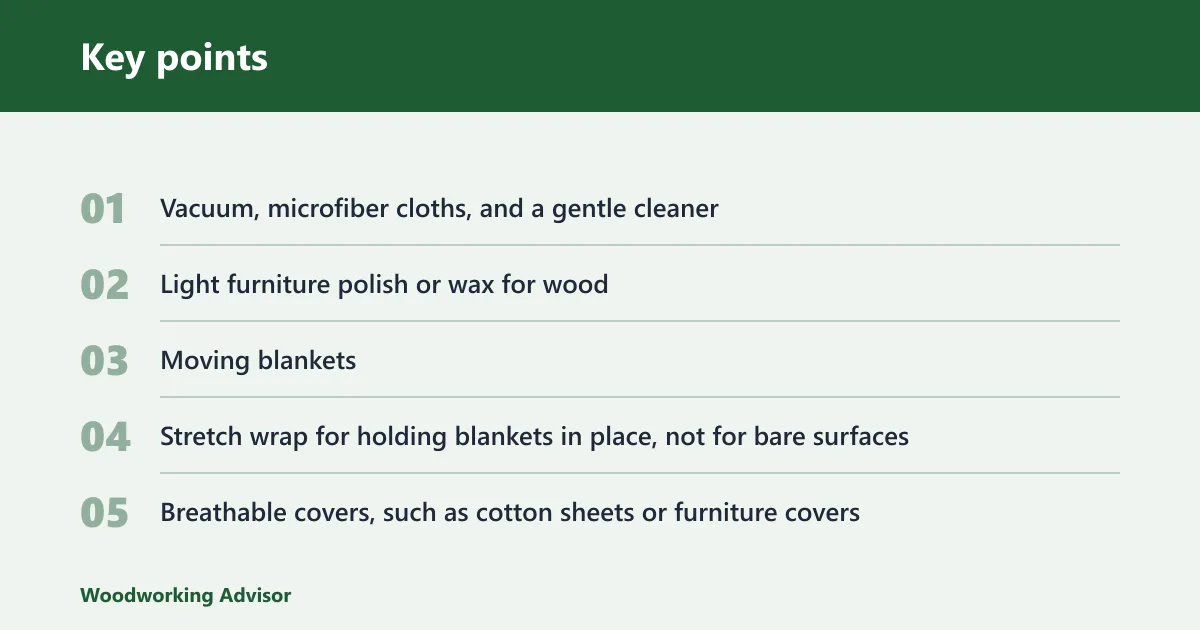
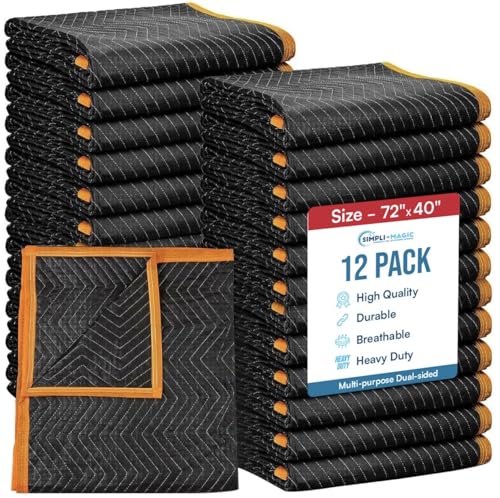


You need cleaning supplies, breathable padding, floor barriers, and labels before anything goes into the unit. A standard unit is “not temperature controlled,” so the goal is to keep moisture off surfaces and keep air moving around the load.
- Vacuum, microfiber cloths, and a gentle cleaner
- Light furniture polish or wax for wood
- Moving blankets
- Stretch wrap for holding blankets in place, not for bare surfaces
- Breathable covers, such as cotton sheets or furniture covers
- Pallets, wood boards, or clean cardboard to lift items off the floor
- Moisture absorbers, such as desiccant packs or DampRid-style products
- Hardware bags and tape for labels
Protective materials matter because winter storage failure usually starts with trapped moisture, cold concrete, or direct contact between a finish and plastic. The patent-backed furniture storage base also calls for cleaning before storage, keeping items off the floor, and leaving a small gap for airflow.
Can this furniture go in a standard unit?
Some furniture can handle a standard unit for a short period, but only with prep. Solid wood and metal are the safest candidates. Veneer, leather, upholstery, antiques, and mixed-material pieces need more caution, and some should move to climate control instead.
Wood and veneer
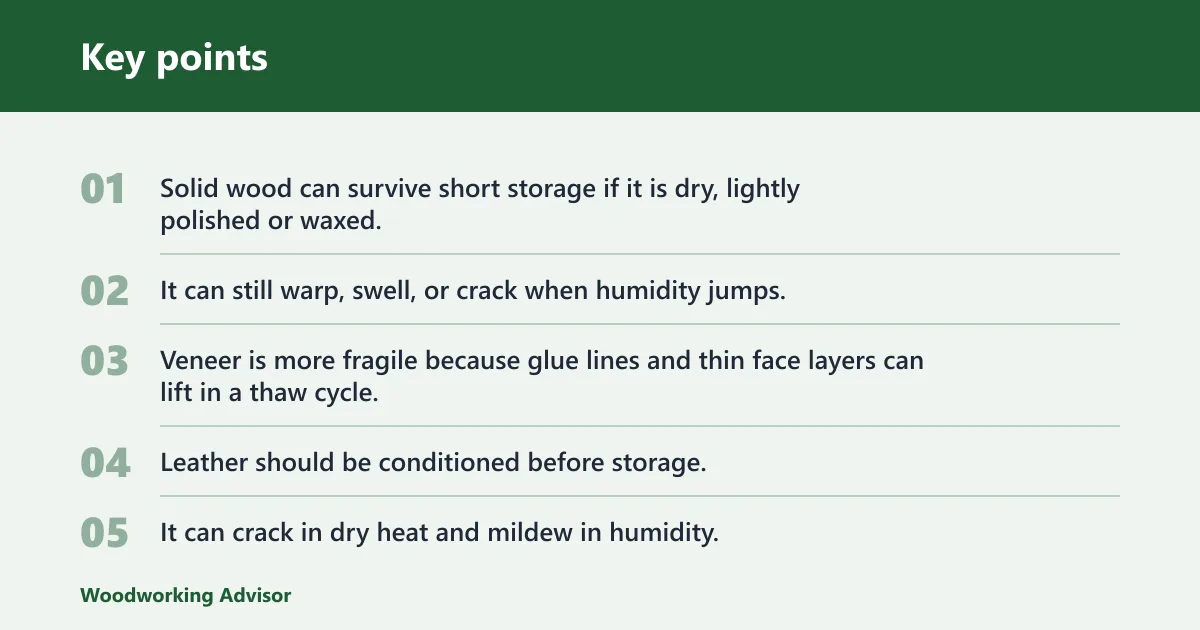
Solid wood can survive short storage if it is dry, lightly polished or waxed, wrapped in moving blankets, and kept off concrete. It can still warp, swell, or crack when humidity jumps. Veneer is more fragile because glue lines and thin face layers can lift in a thaw cycle.
Leather
Leather should be conditioned before storage. It can crack in dry heat and mildew in humidity, and it should never have plastic directly against it. Use a breathable cover and keep airflow around cushions, seams, and arms.
Upholstered furniture
Upholstered furniture needs vacuuming and full drying before storage. Use breathable covers, not airtight plastic, because plastic can trap moisture and create mildew. If the fabric or foam already smells damp, move it to climate control.
Metal
Metal furniture is usually the easiest to store in a standard unit, but it still needs a dry surface and floor separation. Rust often starts at joints, fasteners, or chipped finishes, especially after condensation forms on cold nights and warms again the next day.
Mattresses
Mattresses belong in a breathable mattress cover and should stay flat if the manufacturer allows it. A damp mattress can hold odor and mildew quickly. If the cover cannot keep it clean and dry, climate control is the better choice.
Antiques and mixed-material pieces
Antiques, glued-veneer pieces, pianos, art, and electronics are poor fits for a standard winter unit unless a conservator or manufacturer says otherwise. Mixed-material furniture is only as safe as its weakest part, so one swollen panel or leather panel can ruin the whole piece.
Furniture storage decision matrix
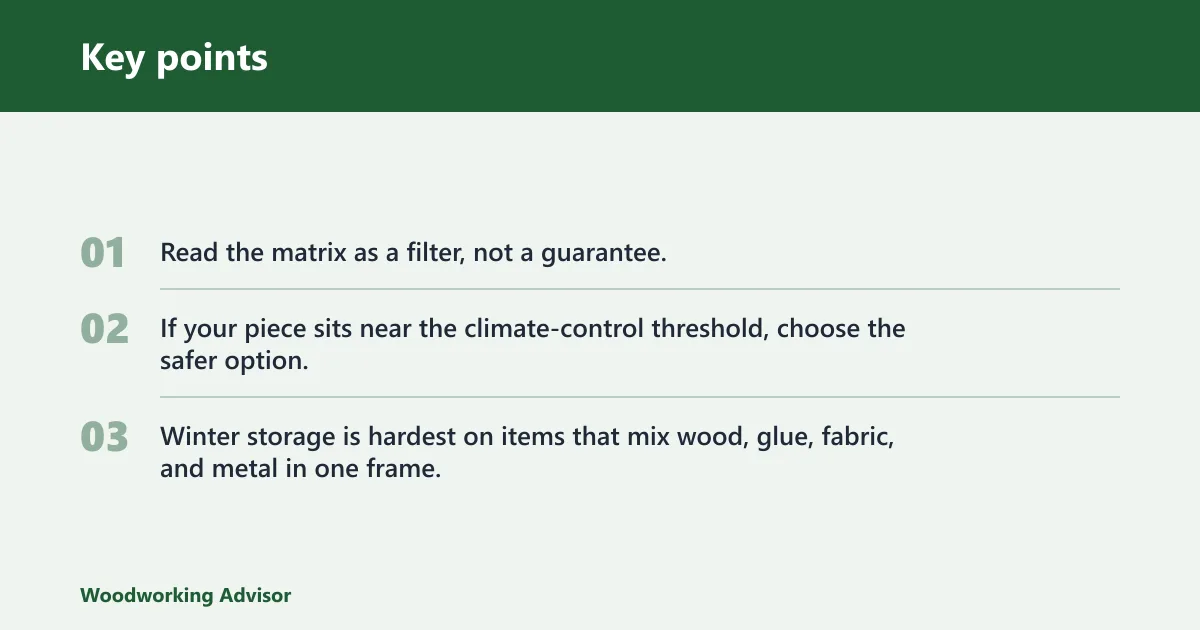
Read the matrix as a filter, not a guarantee. If your piece sits near the climate-control threshold, choose the safer option. Winter storage is hardest on items that mix wood, glue, fabric, and metal in one frame.
| Furniture type | Maximum recommended storage duration | Required prep | Highest-risk damage | Climate-control threshold |
|---|---|---|---|---|
| Wood | Short-term, about 1-3 months | Clean, dry, light polish or wax, moving blankets, off-floor support | Warping, swelling, cracking | Long storage, visible finish checking, loose joints, or repeated thaw cycles |
| Veneer | Short-term only | Clean, dry, blanket wrap, no direct plastic, off-floor support | Veneer lift, glue failure, edge chipping | Any long-term storage or already lifting veneer |
| Leather | Short-term, about 1-2 months | Condition, breathable cover, no plastic contact, keep dry | Cracking, mildew, finish dulling | High humidity, low indoor heat, or storage beyond a season |
| Upholstery | Short-term, about 1-2 months | Vacuum, fully dry, breathable cover, floor lift | Mildew, odor, fabric spotting | Any dampness, odor, or long-term storage |
| Metal | Several months if dry | Clean, dry, blanket wrap if painted, off-floor support | Rust, finish pitting | Rust already present or high condensation risk |
| Mattresses | Short-term only | Dry fully, mattress cover, flat support if allowed | Mildew, odor retention, edge sag | Any moisture history or long-term storage |
| Antiques | Move to climate control | Conservator-level packing if stored at all | Finish damage, joint failure, value loss | Standard unit is usually the wrong choice |
| Mixed-material pieces | Short-term only if the most sensitive material is protected | Follow the most fragile material’s prep steps | Different materials expand at different rates | If wood, leather, foam, or veneer is part of the piece |
How do you keep furniture from molding in storage?
Keep mold away by starting with dry furniture, breathable covers, floor separation, and active moisture control. Mold usually appears where air cannot move, where fabric stays damp, or where condensation settles on a cold surface after a temperature swing.
Use breathable covers such as cotton sheets or furniture covers. Place moisture absorbers in open space near the center of the unit, not sealed under plastic or buried against a sofa back. Replace them during long storage; they are not a one-and-done fix.
Picture a sectional stored next to a concrete wall in February. If the cushions are wrapped in airtight plastic, moisture can condense inside the wrap and stay there. If the same sectional uses a breathable cover, sits on boards, and has a desiccant nearby, the risk drops sharply.
Where to place moisture absorbers
Set absorbers on a stable surface above the floor, near furniture that is most sensitive to humidity. For a larger unit, use more than one and spread them out. Check and replace them on a regular schedule if storage lasts beyond a few weeks, especially during winter thaw cycles.
Should you use climate control instead?
Climate control is the better choice when storage is long, the furniture is delicate, or the unit will face repeated freeze-thaw swings. A standard unit is best for short-term storage of sturdy items, not for pieces that react badly to humidity, glue movement, or condensation.
Short-term versus long-term storage
Short-term storage can work for solid wood, metal, and some plastic pieces if they are dry, raised, and covered correctly. Long-term storage increases the odds that moisture absorbers need replacement, covers get disturbed, and materials slowly react to repeated humidity changes.
Cold-weather and thaw-cycle risk
Winter is hard on storage because cold furniture can collect condensation when air warms suddenly. That moisture settles on metal, finishes, seams, and the bottoms of frames. If the unit is on a concrete slab, the floor can stay colder and wetter than the rest of the space.
When delicate pieces need a better unit
Choose climate control for antiques, pianos, art, electronics, glued-veneer furniture, and anything already showing loose joints, peeling veneer, or softening cushions. Humidity matters more than cold for many items, so a slightly warmer but unstable unit may still be the wrong choice.
Common mistakes
Most winter storage damage comes from packing errors, not the unit itself. Avoid the mistakes below and you lower the chance of mildew, rust, and finish failure.
- Wrapping upholstery or leather in airtight plastic for months
- Letting plastic touch wood or leather directly
- Skipping pallets, boards, or another floor barrier
- Using tape on finished surfaces instead of on blankets or labels
- Storing damp furniture, even if it feels only slightly cool or moist
- Forgetting to label hardware bags and tape them to the matching piece
- Leaving no airflow gap around the load
Common first-timer mistake: a dresser gets wrapped tightly in plastic, then sealed in a corner on a concrete floor for six weeks. The result is usually trapped moisture, finish marks, and swollen drawer parts. Breathable covers and floor lift prevent that chain.
What to do instead
Use moving blankets as the primary padding, then secure the blanket with stretch wrap around the blanket only. Put furniture on pallets or boards. Keep moisture absorbers in the unit, not buried inside a wrapped piece, and replace them if storage runs long.
Frequently asked questions
How do you store furniture in a non-climate-controlled storage unit?
Clean and dry every piece, take apart what you can, wrap it in moving blankets, and set it on pallets or boards instead of bare concrete. Use breathable covers, add moisture absorbers, and leave a small gap so air can move around the load.
What furniture can be stored in a non-climate-controlled unit?
Solid wood, metal, and some plastic furniture can usually go in a standard unit for short periods if they are clean and dry. Veneer, upholstery, leather, antiques, pianos, electronics, and glued-mix pieces are much safer in climate control.
Should furniture be wrapped in plastic for storage?
Use plastic only as an outer hold for blankets, not as the main wrap on wood, leather, or upholstery. Plastic should not be airtight for months. A breathable cover is the safer long-term choice because it lets moisture escape.
Do I need to lift furniture off the floor in storage?
Yes. Use pallets, wood boards, or even clean cardboard as a barrier between the furniture and the floor. That keeps items away from condensation-prone concrete and gives air a path beneath cabinets, sofas, and tables.
How long can furniture stay in a non-climate-controlled unit?
Short-term storage is the safer range. Solid, well-prepped pieces may tolerate a few months, but the risk rises as winter cycles continue. If storage will stretch through a season change, climate control becomes the better bet for many materials.
How do I store a leather couch without climate control?
Condition the leather first, let it dry, and cover it with a breathable furniture cover. Keep plastic off the leather surface, and place the couch on a lifted platform. If the room has strong humidity swings, move it to climate control.
Is climate-controlled storage necessary for furniture?
Not for every piece. It is often most useful for leather, veneer, antiques, mattresses, upholstered furniture, electronics, and anything with glued joints or mixed materials. For sturdy solid wood or metal, a standard unit can work if the prep is careful.
Sponsored / affiliate links. As an Amazon Associate I earn from qualifying purchases. I may earn additional commission from eligible campaigns.