Patio Furniture Winter Storage Ideas
Store patio furniture for winter by matching it to your space: keep it indoors if you have dry room, use covered storage for folding or stackable pieces, and leave only weatherproof items outside under fitted covers. Bad storage leads to mold, warped wood, rusted hardware, cracked resin, and higher replacement costs. This guide maps storage choices to patio size, furniture type, and indoor access so you can pick the right option fast.
What you’ll need


- Soft brush, mild soap, bucket, and clean cloths for frame cleaning
- Dry towels and a leaf blower or fan for speeding up drying
- Lidded bins, deck boxes, or shelving for cushions and pillows
- Breathable covers with vents or fitted hems
- Labels or painter’s tape for removable hardware and parts
- Rubber pads, pavers, or blocks to keep feet off wet surfaces
- Scraper, screwdriver, wrench, and replacement fasteners for minor repairs
How do you choose a storage method?
Start with space, not with the furniture. If you have dry indoor room, that is usually the lowest-risk choice for cushions and lighter frames. If indoor space is tight, move to covered outdoor storage, then under-deck storage, then only outdoor cover storage for pieces that can tolerate it.
Manufacturer instructions come first. Material-specific care directions can override general advice for aluminum, steel, teak, resin wicker, and wood. That matters because the wrong cleaner, finish, or cover can trap moisture or damage coatings during a freeze-thaw cycle.
Choose by patio setup, not guesswork
Use the smallest method that leaves a 36-inch path clear after storage. A balcony often needs stacking, folding, or a deck box. A larger deck may fit a dining set plus cushion storage, but only if lid clearance and walk space still work.
Use indoor storage when access and space allow
Indoor shelving, a garage wall, or a basement corner works best for cushions, small side tables, and removable parts. Shelves for indoor garage wall storage should be 12-18 inches deep. Keep items off the floor so a damp mop path or seepage does not reach them.
Use covered outdoor storage when indoor space is tight
Covered patios and under-deck zones can work for hard frames if they stay dry and ventilated. The under-deck area should use gravel or pavers, not bare soil. Use a breathable cover with vents or fitted hems, and skip a tarp because it can trap condensation against the frame.
Which winter storage method fits your patio?
| Patio setup | Best storage method | Minimum clear space needed | Risk level if damp | What not to do |
|---|---|---|---|---|
| Small balcony sets | Indoor storage or a compact lidded bin for cushions | 36-inch path plus door swing room | High | Do not leave cushions in a sealed trash bag or on bare concrete |
| Standard dining sets | Garage, shed, or covered patio with breathable cover | 36-inch path around the set | Medium | Do not stack damp chairs tightly or cover wet frames with plastic |
| Sectionals with cushions | Indoor cushions, covered frames, or a large deck box for soft parts | Room for separate cushion storage and lid clearance | High | Do not force cushions into an overfilled box or trap foam moisture |
| Mixed wood and metal furniture | Split storage: dry indoor soft parts, covered outdoor frames | Access for disassembly and labeled hardware bins | Medium to high | Do not let wood feet sit on wet paving or bare concrete |
How do you prep furniture for storage?
Clean frames first, then dry them, then inspect hardware. Frames made from aluminum, steel, teak, resin wicker, and wood all need cleaning before covering. That removes soil and salts that hold moisture against coatings and fasteners. Minor repairs are easier now than in spring.
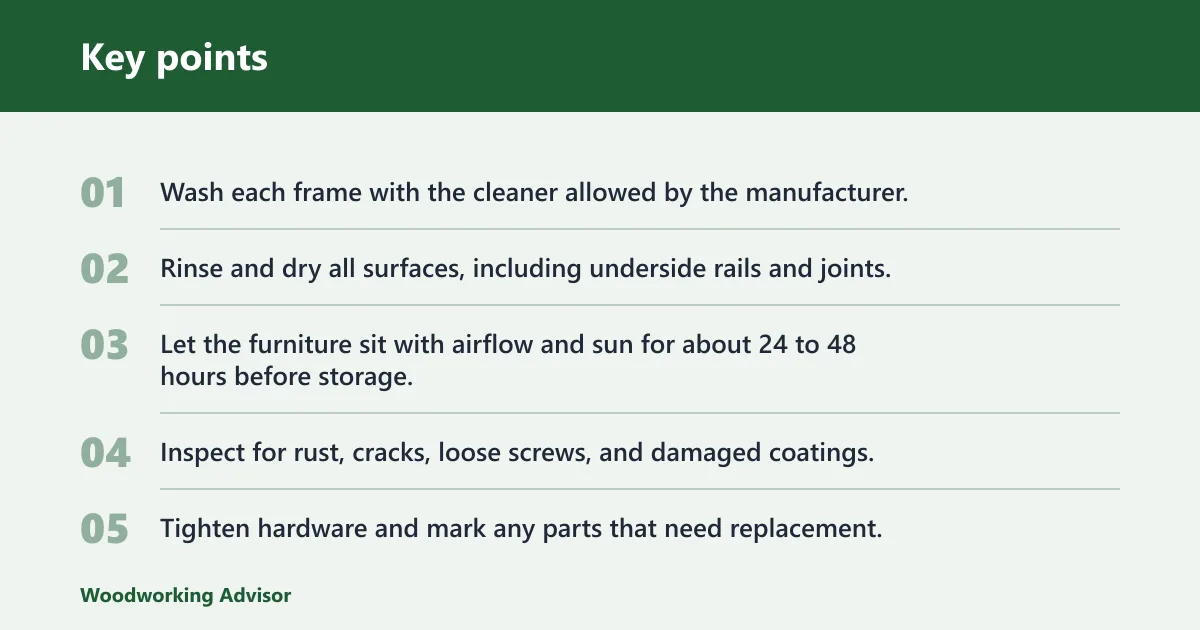
- Wash each frame with the cleaner allowed by the manufacturer.
- Rinse and dry all surfaces, including underside rails and joints.
- Let the furniture sit with airflow and sun for about 24 to 48 hours before storage.
- Inspect for rust, cracks, loose screws, and damaged coatings.
- Tighten hardware and mark any parts that need replacement.
Drying time matters. Competitors commonly advise at least 24 hours of sun drying before storage, and 24 to 48 hours is a better cushion target when seams and foam cores are involved. If the patio stays shaded, use a fan or move the pieces to a brighter, drier spot.
Say your aluminum dining chairs are clean but the slings still feel cool to the touch at dusk. Wait until the next afternoon before covering them. If you box the cushions early, trapped moisture can sit in the foam core and seams through the first cold snap.
Where should cushions go?
Cushions need to be fully dry before storage. They can go in indoor shelving, a lidded bin, or a deck box with a weather seal. They should never go in sealed trash bags, because foam and seam stitching can hold moisture that turns into mildew.
Indoor shelves and closets
For the least moisture risk, store cushions in a dry basement, garage, or closet only if the space stays dry. Competitors often point to basements, attics, or garages for dry cushions. Keep them off the floor on shelving or a raised rack.
Deck boxes and lidded bins
Small cushions fit a 20-30 gallon lidded bin. A 50-gallon box can hold about 8 to 10 throw pillows. A 100-gallon deck box is about 13 cubic feet, and a 150-gallon box is about 20 cubic feet. Lid clearance matters more than footprint, so check the opening height before you buy.
A deck box should have a raised base and vents. Look for a latching lid and weather seal if the box will sit outdoors. If the lid bulges, the box is too full, airflow is too limited, or the contents are still damp.
Can you leave patio furniture outside?
Yes, but only certain pieces and only with the right setup. Leave weatherproof frames outside under a breathable cover if indoor or shed space is not available. Use a breathable cover with vents or fitted hems, and keep the furniture off wet paving or bare concrete.
Covered patio and under-deck storage
Covered patios work best for stackable or folding frames that can stay dry without wall contact. Under-deck storage can also work, but only on gravel or pavers. Bare soil invites splashback and standing dampness, which keeps feet and joints wet longer than they should be.
Use a breathable cover instead of a tarp
Breathable covers are preferred over thick plastic sheets. Plain plastic tarps can trap condensation under the cover, especially when daytime warmth and night frost cycle repeatedly. That freeze-thaw cycle can worsen damage to feet, joints, coatings, and fasteners.
Picture a steel loveseat left on a covered patio with a tarp pulled tight to the ground. Moisture from the day stays under the sheet, then condenses overnight. By midwinter, rust shows up at screw heads and the finish starts to blister near the arm joints.
How do I keep patio furniture off wet ground in winter?
Lift every frame off wet paving or bare concrete before storage. Use blocks, pavers, rubber feet, or a raised base so the lowest parts do not sit in standing moisture. This matters most for metal feet, wood legs, and fasteners near the ground line.
- Set pavers or blocks under each foot before moving the piece into place.
- Check that the frame does not rock after placement.
- Add thin shims if one foot sits lower than the others.
- Recheck after the first freeze and adjust if the base settles.
If that didn’t work, move the piece to a drier surface before the next thaw. Under-deck gravel or a shed floor is better than wet concrete that stays cold and damp. A top-up adjustment should be no more than one shim per foot before you recheck stability.
Common mistakes
Storing damp cushions is the fastest route to mildew. So is putting furniture directly on wet paving or bare concrete. Plastic tarps that touch the frame can hold condensation against the finish, and an overfilled deck box can prevent the lid from closing and sealing properly.
Another common miss is skipping the manufacturer instructions. That can matter for teak oil, powder-coated steel, resin wicker, and cushion care. If a label gives a different cleaning method or cover rule, follow that direction instead of a generic winter routine.
Frequently asked questions
Where to store patio furniture for the winter
The best place is the driest space that fits the furniture without squeezing airflow. Use a garage, shed, basement, covered patio, or under-deck zone, in that order of protection only if the space stays dry and you can keep a 36-inch path clear.
How do I store patio furniture for winter?
Check the manufacturer instructions first, then clean and dry the furniture. Store cushions in a dry lidded bin or indoors, and place frames on pavers or blocks if they must stay outside. A ventilated cover is better than a plastic tarp for long storage.
Do patio cushions need to be fully dry before storage?
Yes. Dry cushions for at least 24 hours, and preferably 24 to 48 hours, before boxing or shelving them. Foam cores and seams can hold hidden moisture, so feel the edges and underside before closing a lid or stacking them indoors.
Can I leave patio furniture outside under a cover all winter?
Only if the furniture and cover are suited to that use. Choose a breathable cover with vents or fitted hems, raise the feet off the ground, and avoid bare concrete or soil. A plastic tarp can trap condensation and speed up corrosion or finish damage.
What kind of storage box fits patio cushions?
Small cushions often fit a 20-30 gallon lidded bin. Check lid clearance before buying.
Sponsored / affiliate links. As an Amazon Associate I earn from qualifying purchases. I may earn additional commission from eligible campaigns.