Is Cedar Weather Resistant? What It Handles Outdoors
Yes—cedar is naturally weather resistant, but only moderately so. For best results, keep it above ground, let water drain, and treat ground-contact use as a separate problem. If you ignore that limit, checking, rot, loose fasteners, and shorter service life follow. This guide explains how cedar performs outdoors, which cedar species hold up better, and where finish, ventilation, and soil contact change the answer.
How cedar’s natural oils and density block decay
Yes. Cedar resists outdoor exposure better than many softwoods because its natural oils and extractives slow moisture uptake and decay, and its low density helps it stay stable through seasonal changes. That still does not make it weatherproof. Sun, standing water, and poor detailing can shorten service life fast.
What weather resistance means outdoors
Weather resistance covers rain, humidity, sun, temperature swings, and the wear that comes from repeated wetting and drying. Cedar handles those conditions better than many framing woods, but it still weathers. Expect color change first, then surface checking and roughening if you leave it unfinished.
Why cedar outperforms many softwoods
Cedar’s reputation comes from chemistry and structure. Natural oils and extractives help it resist decay and make it less attractive to some insects. In Western Red Cedar, thujaplicins are part of that defense, and the wood’s dense, low-permeability structure slows liquid movement through the cells.
How cedar resists moisture, rot, and insects
Cedar’s outdoor performance comes from separate traits that often get lumped together. Moisture resistance, rot resistance, insect resistance, and fire resistance are different questions. Cedar scores well on the first three compared with many common softwoods, but none of them means the board can sit wet forever or survive neglect indefinitely.
Natural oils and extractives
The oils and extractives in cedar help water move more slowly into the wood and make decay less favorable. That matters around fasteners, cuts, and joints, where untreated lumber often fails first. It also helps explain why cedar is a common choice for fences, siding, trim, and other outdoor parts that dry between rains.
Thujaplicins and decay resistance
Thujaplicins are one of the better-known compounds tied to cedar’s fungicidal and antimicrobial behavior. They help slow the fungi that cause rot. That protection is real, but it is not a shield against bad site design. Trapped moisture, soil contact, and persistent end-grain wetting can still overwhelm it.
Dimensional stability and low moisture uptake
Cedar’s low density and lower moisture absorption help it move less than many softwoods as humidity changes. That means less warping and reduced cracking when the piece is detailed well. The shrinkage factor is around 6.8%, and the fiber saturation point is between 18-23%, which helps explain why cedar tends to behave predictably outdoors.
Which cedar species perform best outdoors?
Not all cedar performs the same way outside. Western Red Cedar, Northern White Cedar, and Yellow Cedar each bring different strengths, and the right pick depends on exposure. If you choose only by species name, you can overspend on one job and underbuy for another.
Western Red Cedar
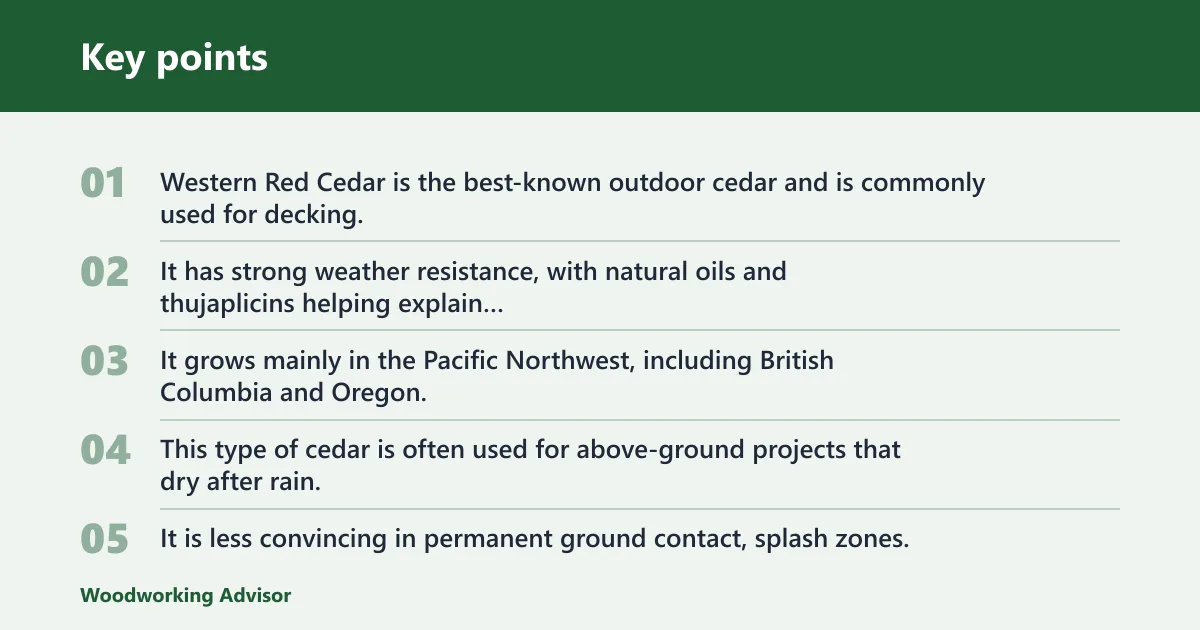
Western Red Cedar is the best-known outdoor cedar and is commonly used for decking, siding, and DIY projects. It has strong weather resistance, with natural oils and thujaplicins helping explain that durability. It grows mainly in the Pacific Northwest, including British Columbia and Oregon, and it is valued for its lightweight feel and outdoor durability reputation.
This type of cedar is often used for above-ground projects that dry after rain, such as fencing, cladding, trim, and furniture. It is less convincing in permanent ground contact, splash zones, or places with poor drainage. That is where detailing matters as much as species.
Northern White Cedar
Northern White Cedar is a useful comparison point because it performs well in cold, wet climates and is associated with long-lived stands that exceed 1,650 years. It thrives in eastern Canada, New England, and the Great Lakes region. It is often chosen where dimensional stability and rot resistance matter more than appearance matching.
It can do well in exterior uses, but it is usually not the first pick for highly exposed furniture or hard-wearing deck surfaces when a user wants the strongest long-term weathering performance. Its strengths show up most clearly in climates that cycle between wet, cold, and dry conditions.
Yellow Cedar
Yellow Cedar is known for resistance to weather, insects, and rot, plus high stability. It is commonly recommended for decks, docks, and fencing. It also tends to take finish and stain well, which makes it attractive when you want a more controlled appearance on an exterior project.
For demanding outdoor exposure, Yellow Cedar is often the strongest cedar choice in this group. Its straight grain and stability help it stay flatter, which is useful where movement creates trouble at joints or fasteners. Finish choice still matters, especially in full sun.
Cedar outdoor-use decision matrix
This table gives a practical way to match species to exposure level. Rot, insect, and UV risk change with location, not just with the board itself. Use the least-exposed option that still fits the job, and do not treat all cedar as equal.
| Species | Exposure type | Rot risk | Insect risk | UV risk | Recommended finish or maintenance | Ground contact | Covered areas | Exposed furniture |
|---|---|---|---|---|---|---|---|---|
| Western Red Cedar | Above-ground siding, trim, fencing | Low to moderate | Low | Moderate to high in full sun | Penetrating stain or clear water repellent; recoat as finish wears | No, unless detailing and local conditions are carefully controlled | Yes | Yes, with regular UV maintenance |
| Northern White Cedar | Cold-climate fences, light exterior work | Low to moderate | Low | Moderate | Sealer or stain if appearance matters; inspect joints and end grain | Limited use only | Yes | Possible, but less common for premium furniture |
| Yellow Cedar | Decks, docks, fencing, timbers | Low | Low | Moderate | Stain or finish for color control; maintain on a regular schedule | Better than most cedar types, but still not a free pass | Yes | Yes, if you want better stability and finish performance |
Where cedar works well and where it fails

Cedar is a smart buy for many outdoor projects, especially when the part can dry quickly and is not buried in soil. It is less convincing where water sits, airflow is poor, or the wood stays wet for long stretches. Those conditions drive the failures people usually blame on the species itself.
Decking, siding, fencing, and furniture
Cedar is widely used for decking, siding, trim, fences, and outdoor furniture because it balances appearance, workability, and outdoor durability. For furniture and decorative work, its lighter weight is a plus. For decking, choose the species carefully and expect maintenance. For siding and fences, design details often matter more than raw thickness.
Ground contact and splash zones
Ground contact is the hardest test. Soil holds moisture, invites decay, and keeps wood from drying. Even cedar can fail there if the post, board end, or base detail stays damp. Splash zones under roof drip lines, planters, and poorly drained steps create similar trouble because they keep the wood wet after rain.
Picture a cedar fence post set in a low area where mulch touches the base. The visible face may still look fine while the bottom stays wet for weeks at a time. That is how rot starts: not from one storm, but from repeated trapped moisture and poor drainage.
Full sun versus covered use
Full sun changes cedar’s appearance quickly. UV exposure causes fading and greying, even when decay has not started. Under cover, the wood often lasts longer because it dries faster and sees less direct sunlight, but the edges still need protection if rain can reach them sideways.
Say your cedar bench sits on an open patio facing afternoon sun. The frame may remain sound for years, but the top surfaces can grey and dry out much faster than the shaded underside. That is a finish problem first, then a maintenance problem, not proof that the cedar failed structurally.
Do you need to treat cedar for outdoor use?
For many projects, yes. Cedar does not need heavy pressure treatment to perform outdoors, but it often benefits from stain, paint, or a clear water repellent if you want slower weathering and easier upkeep. The right finish depends on exposure, appearance goals, and how often you are willing to maintain it.
Stain, paint, and clear sealers
Penetrating stains are a common choice because they slow water uptake without trapping moisture as aggressively as a poor paint job can. Clear sealers can help, but they usually need more frequent renewal and offer less UV protection. Paint blocks sun better, yet it demands careful prep and is less forgiving of movement.
How often to recoat
There is no single interval that fits every project, but exposed cedar usually needs more frequent attention than shaded cedar. Recoat when water stops beading, color fades noticeably, or the surface starts to dry and roughen. Full sun, horizontal surfaces, and furniture often need the shortest maintenance cycle.
End grain, fasteners, and drainage
End grain is a failure point because it absorbs moisture more readily than face grain. Seal cut ends, keep boards off standing water, and design for drainage. Use corrosion-resistant fasteners, because cedar extractives and outdoor moisture can shorten the life of cheap hardware and stain the wood around the fastener heads.
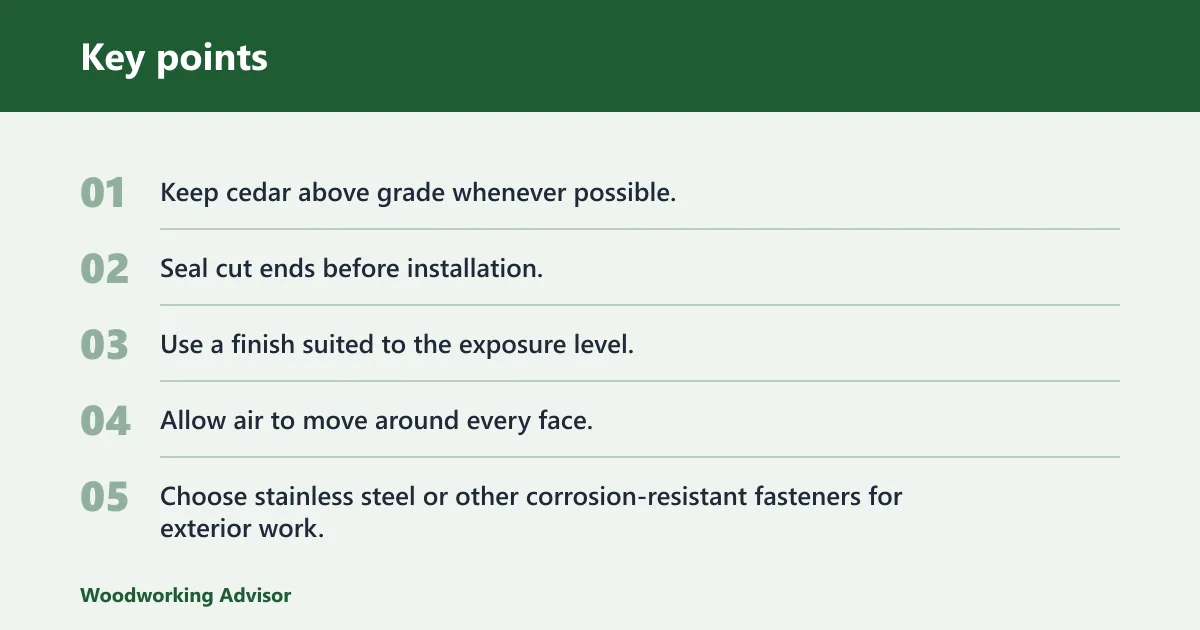
- Keep cedar above grade whenever possible.
- Seal cut ends before installation.
- Use a finish suited to the exposure level.
- Allow air to move around every face.
- Choose stainless steel or other corrosion-resistant fasteners for exterior work.
- Recoat before the surface turns dry, chalky, or badly faded.
Is cedar fire resistant?
Cedar is generally not considered fire resistant for exterior safety or code compliance. It can be used outdoors, but that is different from resisting ignition or slowing fire spread. Do not treat outdoor durability as a substitute for fire-rated material requirements.
What cedar can and cannot do
Cedar may char and perform differently from some denser woods, but it is still wood. Its natural decay resistance does not make it safe from flame. If a project needs fire performance, check the local code or the product listing for a rated assembly rather than assuming cedar qualifies.
Why fire resistance is a separate question
Moisture resistance, rot resistance, insect resistance, and fire resistance are separate traits. A board can do well in rain and still be a poor choice where ignition risk matters. That is why cedar should be selected for outdoor exposure and appearance, not as a fire protection material.
Frequently asked questions
Is cedar weather resistant?
Yes, cedar is weather resistant, especially compared with many common softwoods. Its natural oils, extractives, and stable structure help it handle rain and seasonal movement. It is still not weatherproof, and it performs best when you keep it above ground, allow drainage, and maintain finishes on exposed surfaces.
Is cedar naturally water resistant?
Cedar is naturally water resistant to a degree because its oils and extractives slow moisture uptake. That does not mean water cannot enter the wood. End grain, cuts, and long wetting periods still matter. If water sits on the surface or behind a joint, cedar can still deteriorate over time.
Is cedar resistant to rot?
Yes, cedar is resistant to rot, but the level of resistance depends on species, exposure, and detailing. Western Red Cedar, Northern White Cedar, and Yellow Cedar all perform better than many softwoods outdoors. Even so, poor drainage, soil contact, and trapped moisture can still cause decay.
Is cedar insect resistant?
Cedar has natural insect resistance because its oils and extractives make it less attractive to some pests. That resistance is helpful, especially in outdoor use, but it is not absolute protection. If the wood stays damp, is buried, or is left in poor condition, insects and decay can still become a problem.
Is cedar good for outdoor use?
Yes, cedar is good for outdoor use when the species matches the exposure and the detailing supports drying. It works well for siding, fencing, trim, decks, and furniture. It is less suitable for constant soil contact or wet, poorly drained spots unless the design and maintenance are carefully managed.
Is red cedar rot resistant?
Yes, Western Red Cedar is rot resistant and is one of the best-known exterior cedar species. Its natural oils and thujaplicins help explain that performance. It still needs proper detailing, though. Rot resistance does not cancel out standing water, poor drainage, or failure at end grain and fasteners.
Sponsored / affiliate links. As an Amazon Associate I earn from qualifying purchases. I may earn additional commission from eligible campaigns.