Can I Leave My Outdoor Furniture Outside in Winter?
Yes, if the material is winter-safe, the spot drains well, and the cover fits tightly; if any one of those fails, store it. Poor winter protection can lead to cracking, rust, mildew, and warped frames that cost more to replace than to protect. This guide gives you a simple material-by-material checklist for deciding what can stay out, what needs a cover, and what should be stored.
Which Outdoor furniture withstands winter?


The short answer: when outside is reasonable and when it is not
Some patio furniture can stay outside through winter. Aluminum, teak, and high-quality synthetic resin are the strongest candidates when you also have a breathable winter cover and a spot that sheds water and snow. Natural wicker, untreated wood, iron, and steel should move indoors or under real winter storage.
The key question is not only the furniture type. It is also how much snow, ice, wind, and freeze-thaw cycling the piece will face. A covered patio is safer than an open yard. A balcony is safer than bare ground in a wind corridor, but only if the cover cannot flap loose.
The winter risks that change the answer
Snow can sit on a table top, bow a frame, strain joints, and crush a weak cover. Ice and meltwater can seep into hardware, then freeze again. That expansion and contraction is the freeze-thaw cycle, and it can crack finish layers, open seams, and speed corrosion.
Moisture is the other problem. If a cover traps damp air, condensation can collect under it and feed mold, mildew, and rust. Wind matters too. A loose cover can rub through finish, lift at the edges, and leave one side exposed.
A quick rule for open yards, covered patios, and balconies
Use this rule: leave furniture outside only when the material is winter-tolerant, snow exposure is low to moderate, and the cover system is breathable, snug, and secured. If the piece is wood with a worn finish, natural wicker, or metal with visible rust, move it to a garage, shed, basement, or covered patio.
When space is tight, a covered patio or wall can be a compromise. It helps block direct snowfall and wind, but it does not erase moisture or cold. Elevation and airflow still matter.
Winter furniture checklist
Use the checklist below to turn a vague winter guess into a simple yes or no. Start with the material, then look at snowfall, storage, and cover type. If two or more boxes fall into the riskier column, treat the piece as a storage candidate instead of an outdoor winter candidate.
| Material | Snowfall level | Storage available | Cover type | Recommendation | Yes/no score |
|---|---|---|---|---|---|
| Teak | Light to moderate | No indoor storage, but a dry patio exists | Breathable winter cover | Leave outside with care | Yes |
| Aluminum | Moderate | No indoor storage | Breathable, snug cover | Leave outside if elevated and dry | Yes |
| Synthetic resin / all-weather wicker | Light to moderate | Limited indoor storage | Weatherproof cover with ventilation | Can stay outside, but monitor cold brittleness | Yes, with caution |
| Untreated wood | Any regular winter snow | Garage or shed available | Any cover only | Store indoors | No |
| Iron or steel | Any meaningful snowfall | Basement, shed, or garage available | Cover only | Store indoors to limit rust and corrosion | No |
| Natural wicker or rattan | Any winter exposure beyond brief dry spells | Covered patio only | Light cover | Store indoors; covered patio is only a temporary bridge | No |
How to read the checklist
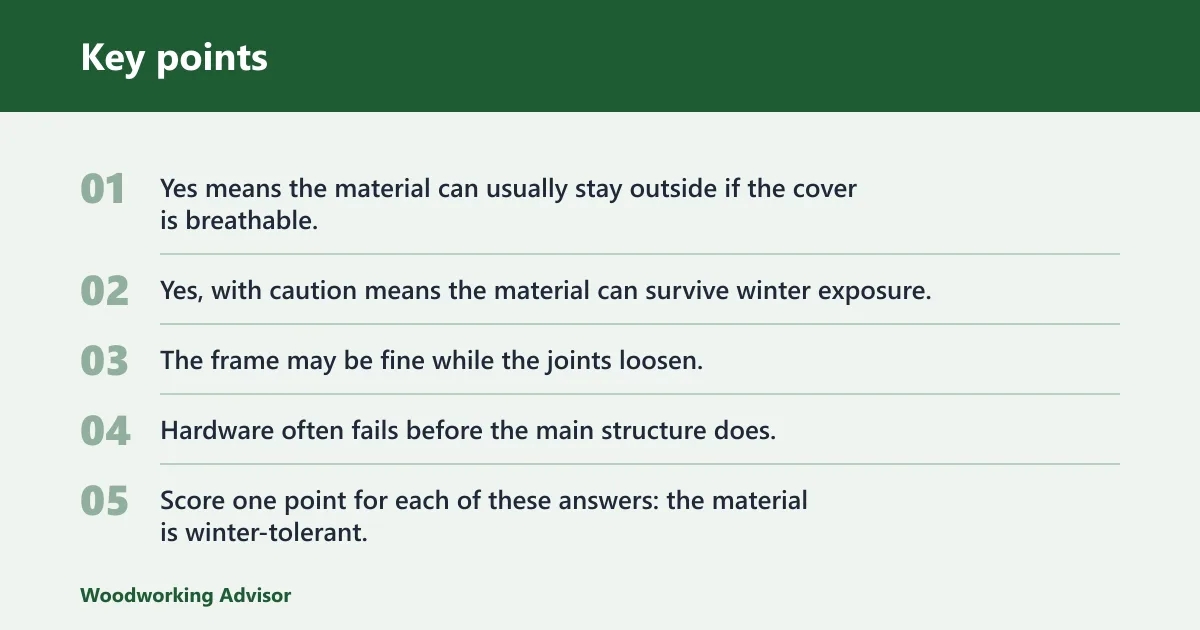
Yes means the material can usually stay outside if the cover is breathable, the furniture is clean and dry, and the site is not a snow trap. No means indoor storage is the better call. Yes, with caution means the material can survive winter exposure, but only with close attention to moisture, snow load, and cold brittleness.
Think in terms of parts, too. The frame may be fine while the joints loosen, or the frame may hold while cushions mildew. Hardware often fails before the main structure does.
The yes/no score for leave outside, move under cover, or store indoors
Score one point for each of these answers: the material is winter-tolerant; the location is a covered patio or sheltered wall rather than open yard; the cover is breathable and secured; the piece can sit off the ground; and the item has no fragile cushions attached. A total of about 4 to 5 points can support leaving the furniture outside in winter.
A score of about 2 to 3 points generally calls for moving the furniture under cover or into a protected space. A score of about 0 to 1 point generally means storing the furniture indoors. That rule is strict for a reason: winter damage usually starts when more than one risk stacks up.
Which materials can stay outside?
Some materials handle winter much better than others. Teak, aluminum, and high-quality synthetic resin can often stay outside if properly protected. They still need a sensible setup, because winter-safe does not mean damage-proof.
Teak and other weather-resistant wood
Teak furniture can be left outside during winter with a breathable cover. Wood furniture can be left outside all year if properly treated and cared for. The difference is that untreated lumber left out in winter will quickly rot, and worn finish leaves the surface open to moisture.
If you leave wood outdoors, make sure it is sealed or otherwise treated, lifted off wet ground, and given airflow underneath. Freeze-thaw cycling can still crack finish and open joints, especially when water sits on horizontal surfaces.
Aluminum and other rust-resistant frames
Aluminum outdoor furniture is one of the best choices for winter exposure. It is rust-resistant and generally winter-friendly. That makes it a strong option for a covered patio, balcony, or open yard when the cover is secure and the site does not collect standing water.
Even so, check the fasteners, welds, and glides. A good frame can still have weak points at joints or hardware. Aluminum handles moisture better than steel or iron, but it still benefits from cleaning before the first hard freeze.
Synthetic resin and all-weather wicker
Plastic and resin furniture have almost no issues in the winter months. High-quality synthetic resin and all-weather wicker can often stay outside if properly protected. The catch is cold. In subzero temperatures, even durable resin may become brittle enough to crack under impact or heavy snow.
Cheap plastic patio furniture is a different case. It is likely to crack and fall apart from wind and snow. If the piece flexes easily in mild weather, treat winter as a storage season rather than a test of luck.
Which furniture should be stored?
Some pieces should not sit outside through winter, even with a cover. The material itself is the problem, not just the weather. Untreated wood, iron, steel, natural wicker, and most cushions belong in dry storage.
Untreated wood and wood with worn finish
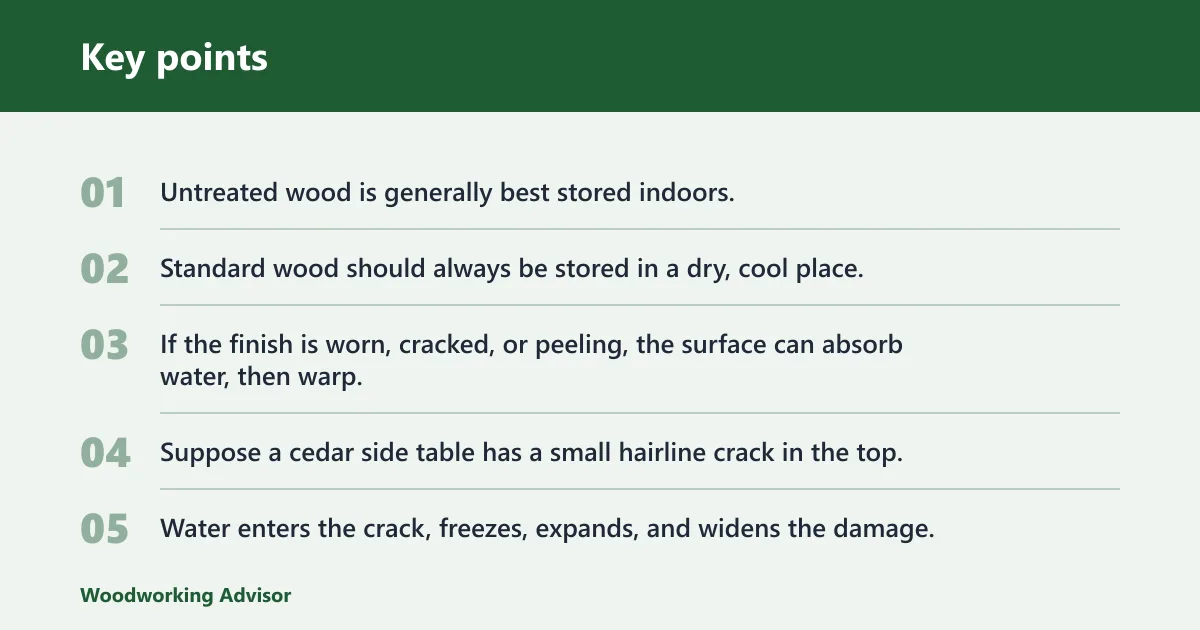
Untreated wood is generally best stored indoors. Standard wood should always be stored in a dry, cool place. If the finish is worn, cracked, or peeling, the surface can absorb water, then warp, crack, or rot as temperatures swing above and below freezing.
Suppose a cedar side table has a small hairline crack in the top. One snowstorm may not ruin it. Several freeze-thaw cycles can. Water enters the crack, freezes, expands, and widens the damage. That is how a small flaw becomes a split seam.
Iron and steel furniture
Metal patio furniture should be stored inside to prevent rust and corrosion. Steel and untreated iron are commonly among the higher-risk frames for rust and corrosion, since surface moisture, salt, and winter condensation can affect them quickly. Even a coated frame needs inspection if chips or scratches expose bare metal.
If you cannot bring the piece fully indoors, at least keep it under a dry roof and off wet ground. A covered patio helps, but it is not equal to a dry storage room when the forecast brings repeated thaw and refreeze.
Natural wicker and rattan
Wicker should be stored inside for winter. Natural wicker and rattan are not winter-safe materials for open exposure. High-quality rattan may be left out only in light snowfall, but that is a narrow exception, not a general rule.
Resin wicker is more durable than natural wicker, and it can handle winter better. Even then, heavy snow makes outdoor storage riskier. Weight can flatten the weave, and trapped moisture can work into the frame beneath it.
Cushions, pillows, and fabric accessories
Outdoor cushions should usually be stored indoors. They are prone to mold and mildew, and they need to be fully dry before storage. Leaving them outside under a cover is a common mistake because the cover can trap damp air and keep the fabric from drying out.
Store cushions in a dry basement, closet, or sealed bin only after they have dried completely. If they feel even slightly damp near seams or zippers, wait longer. Fabric that goes into storage wet will often come out with odor, staining, or mildew.
Do you need a cover?
Yes, for most outdoor furniture that stays outside in winter. A breathable furniture cover is one of the most useful protections available, but only when the material can tolerate winter and the cover is the right fit. A bad cover can create a new problem instead of solving one.
What a breathable cover should do
A winter cover should be water-resistant or waterproof on the outside and breathable enough to reduce condensation underneath. It should fit snugly, cover the full piece, and allow some ventilation so moist air can escape. It should also resist wind lift at the seams and hem.
That combination matters because water resistance alone is not enough. If the cover blocks rain but traps damp air, the furniture can stay wet under the fabric. Moisture that cannot escape is one of the fastest ways to grow mildew and corrode hardware.
Common cover failures
Condensation is the first failure mode. Warm air trapped under a tight, non-breathable cover can condense on colder surfaces and keep the furniture damp. Wind lift is the second. A loose cover can act like a sail and expose the frame at the corners.
Trapped moisture is the third. If the cover touches wet cushions, leaves, or dirt, it can keep those materials in contact with the furniture for weeks. That is why a cover should be paired with cleaning, drying, and airflow, not used as a shortcut.
When a cover helps and when storage is better
A cover helps with teak, aluminum, and quality resin furniture, especially on a patio or balcony with limited exposure. Storage is better for untreated wood, natural wicker, iron, steel, and cushions. If the piece is fragile, already damaged, or difficult to dry fully, choose storage instead of a cover-only plan.
How do snow, ice, and freeze-thaw damage furniture?
Winter damage usually comes from repeated small stresses rather than one dramatic event. Snow, ice, moisture, and freeze-thaw cycling all work together. That is why the same furniture may look fine after one storm and then fail after a month of changing temperatures.
Why freeze-thaw cycles crack wood and stress finishes
Snow and ice can cause freeze-thaw cycles that lead to cracking, warping, and corrosion. Water enters pores, seams, screw holes, and finish breaks. When that water freezes, it expands. When it thaws, it moves deeper. Repeated cycling weakens wood fibers and finish layers.
This is especially important for untreated or poorly sealed wood. Once the surface opens, the material starts absorbing more water. Each cycle increases the next one’s damage.
How heavy snow loads affect frames and joints
Heavy snow pushes down on horizontal surfaces and strains crossbars, table tops, and arm rests. It can also hold moisture against the furniture long after the storm ends. That matters for all materials, but it is hardest on light frames and pieces with thin joints.
A covered patio reduces direct accumulation, but it does not remove load from drifting snow or wind-blown slush. If a cover sags under snow, clear it before the weight pulls on stitching, straps, or frame corners.
Why moisture trapped in hardware speeds wear
Hardware often fails first because screws, bolts, hinges, and brackets collect water in tiny gaps. When water sits there and freezes, it can loosen fit and speed corrosion. That is why a dry winter storage spot is better than a damp corner that never fully dries.
Keep furniture off the ground if possible. A small gap under the legs improves airflow and reduces direct contact with snowmelt or wet concrete. That simple step helps more than many people expect.
How should you winterize furniture before freezing weather?
Winterizing is simple, but it should be done in order. Clean first, dry fully, raise the piece, then cover or store it. Skipping the drying step is one of the fastest ways to trap moisture and create a problem under the cover.
Clean and dry every piece before covering or storing
- Remove leaves, dirt, pollen, and food residue.
- Wash according to the material’s care needs.
- Rinse away soap residue.
- Let every surface dry completely, including joints, undersides, and hardware.
- Only then cover it or move it to storage.
Furniture should be cleaned thoroughly and completely dry before covering it. If you skip that step, dirt can hold moisture against the finish and speed wear through the winter.
Lift furniture off the ground and keep airflow underneath
Use furniture feet, blocks, or another dry base to keep legs off wet concrete or soil. The goal is not height for its own sake. The goal is to prevent standing water from sitting against the lowest part of the frame and to allow air to move underneath.
That matters most for wood and metal, but it helps resin too. Airflow reduces condensation and shortens drying time after storms.
Store cushions indoors and make sure they are fully dry
Store cushions indoors even if the frame stays outside. Remove pillow inserts, open zippers if the care label allows it, and let fabric dry before packing it away. A dry storage location beats a cover every time for soft goods.
If storage is limited, a covered patio or wall can be a compromise for the frame, not for the cushions. Keep the soft parts indoors whenever possible.
Frequently asked questions
Can I leave my outdoor furniture outside in the winter?
Yes, some outdoor furniture can stay outside in winter if the material is durable, the site drains well, and you use a breathable cover. Teak, aluminum, and quality synthetic resin are the best candidates. Untreated wood, natural wicker, iron, steel, and cushions should be stored indoors.
Do I need to cover my outdoor furniture in the winter?
Usually, yes, if the furniture stays outside. A breathable cover helps block snow, rain, and debris while reducing condensation. It should fit snugly and allow some ventilation. If the material is fragile or already damaged, storage is a better choice than relying on a cover alone.
Which outdoor furniture materials can stay outside all winter?
Teak, aluminum, and high-quality synthetic resin can often stay outside if they are clean, dry, and properly covered. Teak still benefits from a breathable cover. Aluminum is one of the safest winter choices. Resin can work well, but severe cold can make cheaper pieces brittle.
Should I store cushions indoors even if the furniture stays outside?
Yes. Outdoor cushions should usually be stored indoors because they can hold moisture and grow mold or mildew. They must be fully dry before storage. Even a good cover can trap damp air, so cushions are safer in a dry indoor space than outside on the frame.
Will snow and ice damage patio furniture?
Yes, snow and ice can damage patio furniture through weight, moisture, and freeze-thaw cycling. Water can enter joints, seams, and finish cracks, then expand as it freezes. Heavy snow also strains frames and covers. The risk is highest for untreated wood, natural wicker, and rust-prone metal.
Is it better to leave furniture on a covered patio or in the yard?
A covered patio is better than an open yard because it reduces direct snow and wind exposure. It is still not equal to dry indoor storage. If you must choose between the two, a covered patio with elevation and a breathable cover is the safer outdoor option.
Sponsored / affiliate links. As an Amazon Associate I earn from qualifying purchases. I may earn additional commission from eligible campaigns.