How to Transport Plywood Without a Truck: 6 Real Options
The fastest fix is to get the sheet cut down before you leave the store. For a full 4×8 sheet, fold the back seats flat in a hatchback or SUV, or strap it to a roof rack with real ratchet straps (never bungee cords) in a crisscross pattern.
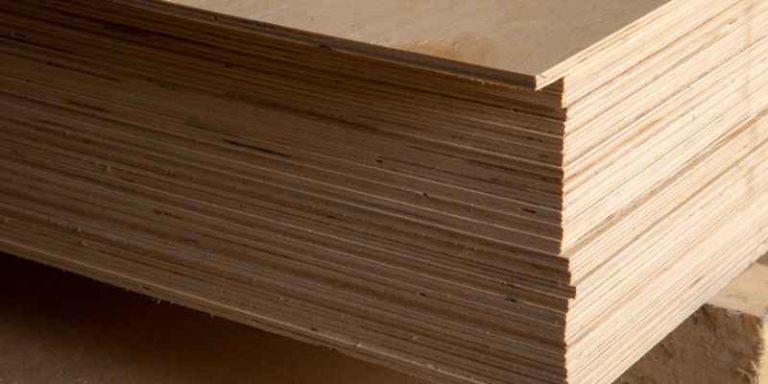
Most people who need to move plywood do not own a pickup, and that is not actually a problem if you plan the load correctly. A full 4×8 sheet of 3/4-inch plywood weighs roughly 70 to 90 pounds depending on the species and glue type, which is manageable for one or two people but too much sheet to just toss loose in a trunk. The real risk is not whether the plywood fits, it is whether it stays put once you are on the road. This guide covers the methods that actually hold up: cutting the sheet down first, loading it in a hatchback or SUV, strapping it to a roof rack the right way, and the legal points most guides skip.
Strap It Down Correctly (Skip the Bungee Cords)
A lot of older advice on this topic recommends bungee cords for holding plywood to a roof rack. Skip that. Bungee cords stretch under load, their hooks can shake loose from highway vibration within a few miles, and a sheet of plywood coming off a moving vehicle is a well-documented cause of accidents, not a rare fluke. Ratchet straps are the correct tool: they lock in place mechanically instead of relying on elastic tension, and a rated set will not loosen the way a bungee cord does.
Run at least two straps in a crisscross X pattern over the sheet, not two parallel straps, so the plywood cannot shift side to side or slide backward under braking. Use rubber-coated S-hooks or soft-loop anchors rather than bare metal hooks, since bare hooks can scratch your roof rack, bite into the plywood edge, or work loose from vibration over a long drive. Stop after the first 10 to 15 minutes on the road and re-check the tension; straps almost always need a second crank once the load has settled.
Best Roof-Rack Tie-Down Pick
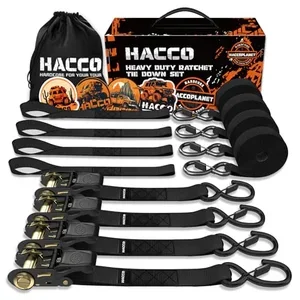 |
Haccoplanet Heavy-Duty Ratchet Tie-Down Straps (4-Pack) – $24.97 A set of real ratchet straps, not bungee cords, is the single biggest upgrade you can make before strapping a sheet of plywood to a roof rack or into an open hatch.
|
Get It Cut to Size at the Store First
This is the option most people skip, and it is usually the easiest one. Most Home Depot and Lowe’s locations will make a limited number of free cuts on wood you buy in that store, commonly around two cuts, with a small per-cut charge, often 25 cents to a dollar, after that. Store policy varies by location and staffing, so call ahead and confirm before you drive over with a tape measure and a plan. A store will generally only cut wood purchased there, not lumber you bring in from home.
Ask for the sheet to be split into pieces that will actually clear your trunk opening or back seat, not just cut in half. A 4×8 sheet ripped into two 2×8 strips, or crosscut into two 4×4 squares, will usually slide into a sedan trunk or a folded-down back seat without needing a roof rack at all. If you already know the finished dimensions your project needs, bring that cut list with you. See our guide on getting plywood cut to size for how to plan the cuts so you are not stuck with awkward leftover pieces.
Fold-Down Seats: Hatchback and SUV Loading
A full 4×8 sheet is 96 inches long, which is longer than the load floor of most sedans and even many hatchbacks. If your vehicle has at least 90 to 100 inches of interior length with the rear seats folded flat, a full sheet can go in diagonally, corner to corner, with the tailgate closed or lightly propped. Check that measurement for your specific vehicle before you buy the plywood, since it varies a lot between compact hatchbacks and mid-size SUVs.
Lay a moving blanket or an old comforter down first so the plywood is not resting directly on carpet or plastic trim, and slide the sheet in slowly rather than dragging a corner across the bumper lip. If the tailgate will not fully close, use a ratchet strap or a bungee-free tie-down looped through the trunk anchor points to keep the tailgate from bouncing, and add a bright cloth or flag to the exposed corner so it stays visible to traffic behind you.
Roof Rack Transport: Protecting the Sheet and the Paint
Before the sheet ever touches the roof, split a length of foam pipe insulation and clip it over your roof rack’s crossbars, or lay down an old moving blanket, so the plywood is not sitting directly on bare metal. That padding does two things: it protects your roof paint from scratches, and it keeps the crossbar from denting the underside of the sheet on a rough road.
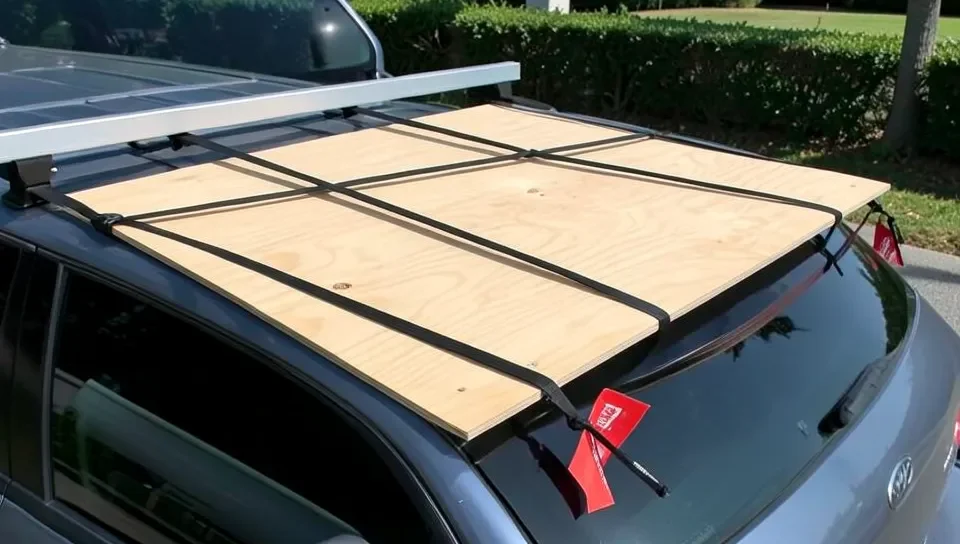
Place the sheet flat against the crossbars, not tilted or angled, and center it so the weight is even front to back. Cross two ratchet straps over the top and run them down through the roof rack’s factory anchor points rather than around the door frames, which can crack window trim under tension. Check your rack’s rated dynamic weight limit before loading, since factory crossbar systems are commonly rated somewhere in the 130 to 165 pound range while the vehicle is moving, and a single sheet of thicker plywood can already use up a good portion of that.
The Legal Side: Overhang, Flags, and Weight Ratings
This part gets skipped in most guides, but it matters if you get pulled over. Many state vehicle codes require a visible red flag, cloth, or reflective marker on any load that extends a meaningful distance, often cited around 4 feet, past the rear bumper or side of the vehicle. Rules on exactly how far a load can legally overhang, and what marking is required, vary by state, so it is worth a quick search for your state’s specific load and overhang statute before a long highway drive with a sheet hanging out the back of a hatchback.
Separately from the flag requirement, never load more than your roof rack or crossbars are actually rated to carry, even if the straps themselves are rated much higher. The straps only hold the load to the rack; the rack itself, and the roof it is bolted to, are the real weight limit. If you are not sure of your vehicle’s rating, it is printed on a sticker on the crossbar itself or in the owner’s manual under cargo or roof load capacity.
Other Options: Trailers, Rentals, and Delivery
If you are moving more than a sheet or two, a small utility trailer is often worth the rental fee, since it removes the size and weight limits of your own vehicle entirely. Home centers that sell lumber commonly also rent box trucks or pickup trucks by the hour for a flat fee, which is frequently cheaper than the time and risk of an improvised roof-rack trip for a large order. Many stores also offer local delivery for a set fee that is often lower than what people expect, especially for orders over a certain amount, so it is worth asking at checkout before you start figuring out how to strap anything to your own car.
Frequently Asked Questions
How do I transport plywood without a truck?
The easiest fix is to have the store cut the sheet down before you leave, since most home centers will make a few free cuts on wood you buy there. For a full sheet, fold the rear seats flat in a hatchback or SUV, or strap it to a roof rack with ratchet straps in a crisscross pattern rather than bungee cords, which stretch and can release under vibration.
Can bungee cords hold plywood on a roof rack?
Not reliably. Bungee cords stretch under load and their hooks can pop loose from road vibration, which is a documented cause of cargo coming off moving vehicles. Use ratchet straps rated well above the sheet’s weight instead, and run at least two straps in a crisscross pattern over the load.
Will Home Depot or Lowe’s cut a full sheet of plywood down to size?
Most Home Depot and Lowe’s locations will make a limited number of cuts free on wood purchased in that store, commonly around two cuts, with a small per-cut fee after that. Policy varies by store, so call ahead and ask them to cut the sheet into pieces that will actually fit your trunk or back seat.
Do I need a flag on plywood that overhangs my car?
In many states, yes. Vehicle codes commonly require a visible red flag or marker on any load that extends a significant distance, often around 4 feet, past the rear of the vehicle, and require the load to stay within your roof rack’s rated weight limit. Check your specific state’s rules before you drive.
Bottom Line
You do not need a truck to move plywood safely, you need the right combination of prep and hardware. Get the sheet cut down at the store whenever you can, since that solves the problem before it starts. When a full sheet is unavoidable, fold your seats flat for a hatchback or SUV, or strap it to a roof rack with real ratchet straps in a crisscross pattern, padded against the roof, and flagged if it overhangs. That combination is what actually keeps the load, your car, and the drivers behind you safe.
Sponsored / affiliate links. As an Amazon Associate I earn from qualifying purchases. I may earn additional commission from eligible campaigns.