4x8x3/4 Treated Plywood: Actual Thickness, ACQ vs Hi-Bor
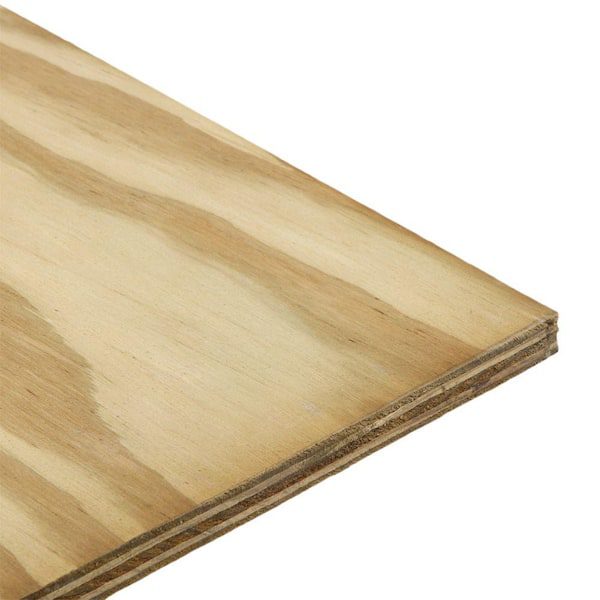
4 x 8 x 3/4 treated plywood is a full 4-foot by 8-foot sheet of ACX-grade pressure-treated plywood that is nominally 3/4 inch thick, though its actual measured thickness is closer to 23/32 inch (about 0.7 inch) under the PS 1 softwood plywood standard. Using the wrong screw on it can undo the treatment’s rot protection within a few years, since copper-based preservatives corrode standard fasteners. This guide covers the real thickness, ACQ vs. Hi-Bor treatment differences, retailer options, and which fasteners each treatment requires.
Quick Answer
A 4x8x3/4 treated plywood sheet is an ACX-grade panel pressure-treated with either a copper-based preservative (ACQ) or a borate-based preservative (Hi-Bor) to resist rot, decay, and insects. Despite the “3/4” label, it measures roughly 23/32 inch thick, weighs noticeably more than untreated plywood, and needs corrosion-resistant fasteners unless it’s borate-treated.
What “4 x 8 x 3/4 Treated Plywood” Actually Means
The “4 x 8” refers to the sheet’s face dimensions in feet, and “3/4” is the nominal thickness class stamped on the panel and used at the lumber counter. Nominal plywood thickness is not the same as measured thickness. Under the American Plywood Association’s PS 1 voluntary product standard, a plywood panel sold as “3/4 inch” is manufactured to a target of 23/32 inch (0.703 inch) to account for sanding during finishing. That is roughly 1/32 inch thinner than a true 3/4 inch (0.75 inch) board.
This gap matters for two practical reasons: a router or dado blade set to exactly 0.75 inch will leave a sloppy fit in a 3/4-inch plywood groove, and a deck or subfloor spec sheet that assumes true 3/4-inch thickness for a span rating is actually using the panel’s PS 1 nominal class, not a caliper measurement. Always check the panel’s stamped span rating rather than assuming “3/4 inch” means exactly 0.75 inch on a tape measure.
Best Fastener Pick for Treated Plywood
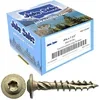 |
Jake Sales #14 x 1-1/2″ Torx Lag Screws (100 ct.) Exterior-coated, ACQ-treated-lumber compatible structural screws with a Torx/star drive head, sized for fastening plywood sheathing and subfloor into framing.
|
As an Amazon Associate we earn from qualifying purchases.
ACX and CCX Grades: What the Letters Actually Mean
Most 4x8x3/4 treated plywood on the shelf is graded ACX or CCX. The first letter is the face-veneer grade, the second is the back-veneer grade, and the “X” means the glue bond is exterior-rated. An A-grade face is sanded smooth with patched voids, a C-grade veneer is a utility grade that can show open knots and overlaps. So ACX plywood has one presentable, paintable side and one rougher structural side, while CCX has two utility-grade faces meant to be hidden inside a wall or under a floor, not shown.
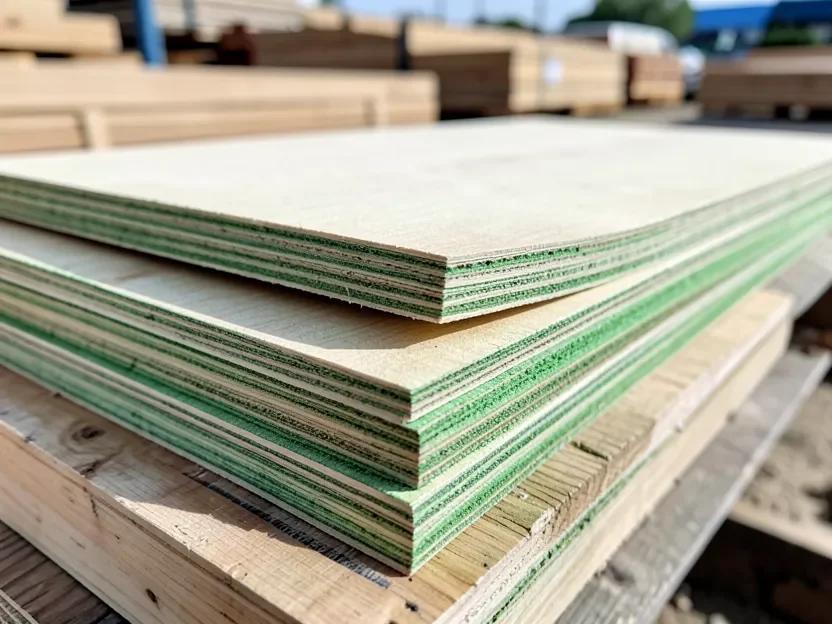
Real retail examples of this exact 4x8x3/4 size: Home Depot sells a 3/4 in. x 4 ft. x 8 ft. ACX Sanded Hi-Bor Pressure-Treated Plywood (SKU 95355), Lowe’s carries a 3/4-in Severe Weather Pressure Treated Douglas Fir ACX panel, and Menards stocks an AC2 3/4 x 4 x 8 above-ground green pressure-treated CCX sheathing panel. The grade and treatment chemical differ between all three, so check the tag on the actual sheet rather than assuming they’re interchangeable. See 3/4-inch plywood pricing at Lowe’s for what the untreated equivalent runs, as a baseline for comparison.
ACQ vs. Hi-Bor Treatment: Why It Changes Which Screws You Need
Treated plywood is preserved with one of two chemical families, and they are not interchangeable when it comes to hardware. Alkaline Copper Quaternary (ACQ) is a copper-based preservative used on most ground-contact-rated treated lumber and plywood; the copper content is what makes ACQ-treated wood corrode standard electro-galvanized or plain steel fasteners within a season or two outdoors. Hi-Bor is a borate-based preservative (used on Home Depot’s 95355 panel, among others) that resists rot and insects without copper, so it does not carry the same corrosion risk for ordinary fasteners, though it is also less resistant to sustained ground contact than ACQ.
| Treatment Type | Preservative | Fastener Requirement | Best For |
|---|---|---|---|
| ACQ (copper-based) | Alkaline Copper Quaternary | Stainless steel or hot-dip galvanized, ACQ-rated coated screws | Ground contact, decks, exterior framing |
| Hi-Bor (borate-based) | Sodium borate / boron compound | Standard exterior-coated screws are generally fine | Above-ground sheathing, shelving, indoor-adjacent structural use |
| CCA (older stock) | Chromated Copper Arsenate | Stainless steel or hot-dip galvanized only | Legacy structures (largely phased out for residential use) |
If the tag or stamp on the sheet does not say which chemical was used, treat it as copper-based (ACQ) and use stainless steel or hot-dip galvanized fasteners rated for treated lumber. The cost difference between a box of ACQ-rated screws and standard screws is small compared to replacing corroded fasteners in an exterior deck or shed floor a few years later. For ground-contact or marine applications, also see how marine-grade plywood compares to pressure-treated plywood.
Best Uses for 4x8x3/4 Treated Plywood
At 3/4 inch nominal thickness, this is the heaviest-duty plywood size most home centers stock, and it is rated for genuine structural spans rather than light-duty covering. Common uses include:
- Deck and shed subfloors: the thickness spans standard 16-inch or 24-inch on-center joist spacing without excessive deflection
- Exterior wall sheathing on structures exposed to weather before siding goes on
- Utility shelving in garages, barns, and outbuildings where moisture exposure is likely
- Fence panel backing and gate cores that need to resist ground splash and rain
- Truck bed liners and trailer flooring, where the combination of thickness and rot resistance holds up to repeated loading
It is generally overkill, and more expensive than necessary, for cabinetry, furniture, or any indoor application that never sees moisture. Compare treated plywood against cedar if the project is a visible outdoor structure where appearance matters as much as durability.
How to Cut, Handle, and Install It
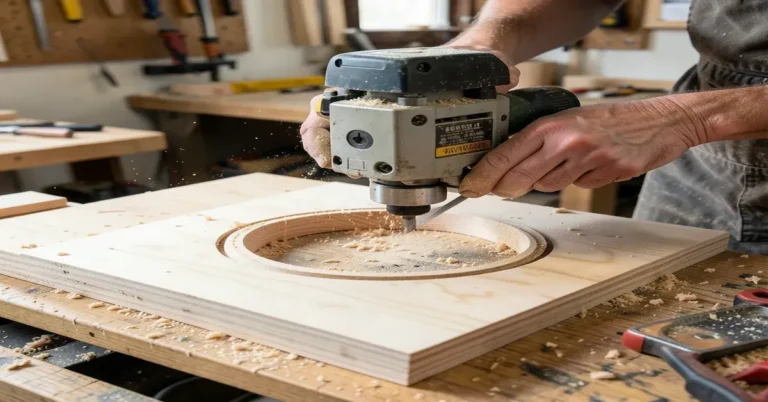
A full 4x8x3/4 treated sheet typically weighs somewhere in the 70-90 lb range depending on how much moisture the treatment process left in the panel, noticeably heavier than an equivalent untreated CDX sheet, which matters for carrying it up a ladder or onto a deck frame alone.
- Support the full sheet before cutting: Rest it on foam blocks or 2×4 stringers so the blade does not bind as the cut closes under the panel’s own weight.
- Use a carbide-tipped blade: The preservative treatment is mildly abrasive on standard steel blades and dulls them faster than untreated lumber.
- Wear gloves and eye protection: Treated plywood dust should not be inhaled or burned; sweep and bag sawdust rather than burning offcuts.
- Drill pilot holes near edges: This prevents the outer veneer layers from splitting when a screw is driven within 2 inches of an edge.
- Match the fastener to the treatment chemical: Stainless or hot-dip galvanized for ACQ/CCA, standard exterior-coated screws are acceptable for Hi-Bor borate panels.
- Space fasteners on a 6-inch edge / 12-inch field pattern: This is the typical structural sheathing schedule; confirm against your local code or engineered span table for load-bearing installs.
- Store flat and off the ground until installed: Leaning a sheet against a wall for weeks invites warping, even with a treated panel.
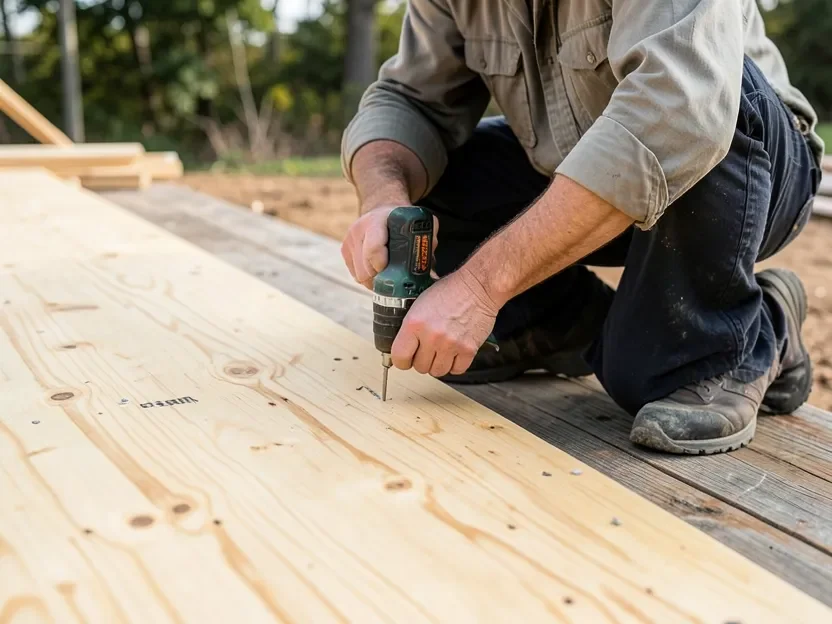
APA (The Engineered Wood Association) publishes guidance on preservative-treated wood structural panels: fasteners in direct contact with copper-based treated wood should be stainless steel or a coating specifically tested and rated for that preservative; generic zinc-plated screws are explicitly not recommended for ACQ or CCA-treated panels in exterior or ground-contact use.
Environmental Considerations and Disposal
Treated plywood is manufactured to resist decay and insects for decades, which cuts down on how often a structure needs materials replaced: a real sustainability advantage over untreated wood in exterior applications. Most mills source veneer from certified forestry programs that require replanting, and clean, unpainted offcuts can sometimes be reused in secondary projects rather than discarded.
Disposal is where treated plywood differs from regular lumber: never burn it, in a fireplace, wood stove, or open burn pile. Combustion of copper- or borate-treated wood releases the preservative chemicals into smoke and ash, which is both a health hazard and, in many jurisdictions, illegal. Take offcuts and demolition waste to a landfill or a construction-and-demolition recycling center that explicitly accepts treated wood; check with your local waste authority, since rules vary by state and county.
Frequently Asked Questions
Is 4x8x3/4 treated plywood actually 3/4 inch thick?
No. “3/4 inch” is the nominal thickness class under the PS 1 plywood standard; the panel is manufactured to a target of 23/32 inch (about 0.7 inch) to allow for sanding. Measure with calipers if a project’s tolerance depends on the exact thickness.
Can treated plywood be used indoors?
Yes, but it’s rarely necessary. Treated plywood is built for outdoor or high-moisture exposure; using it indoors adds cost with no benefit unless the space is a bathroom, basement, or another area with sustained moisture. Ensure ventilation if it’s installed indoors, since freshly treated panels can off-gas mild chemical odor for a short period.
Is treated plywood safe for raised garden beds?
Only if it is labeled ground-contact rated and free of older chemical treatments like CCA, which is no longer approved for residential use. For vegetable beds specifically, many gardeners still prefer untreated wood, food-safe liners, or a plastic barrier between the soil and any treated panel to avoid any preservative leaching into edible plants.
How is treated plywood different from regular plywood?
Regular plywood has no chemical preservative and will rot, warp, and attract insects if it stays wet. Treated plywood goes through a pressure process that forces a preservative, either copper-based (ACQ/CCA) or borate-based (Hi-Bor), deep into the wood fibers, which is what gives it a multi-decade service life outdoors or in ground contact.
Why does treated plywood cost more than untreated plywood?
The pressure-treating process itself, the preservative chemical, and the additional handling/drying steps all add cost on top of the base plywood price. Expect a 4x8x3/4 treated sheet to run noticeably higher than an equivalent untreated CDX sheet at the same retailer; exact pricing varies by region and by which treatment chemical (ACQ vs. Hi-Bor) is used.
Conclusion
4x8x3/4 treated plywood is a genuinely heavy-duty building material, but “3/4 inch” is a nominal label, not a caliper measurement; plan on roughly 23/32 inch in practice. Before buying, confirm whether the sheet is ACQ (copper-based) or Hi-Bor (borate-based) treated, since that decision determines whether you need stainless or hot-dip galvanized fasteners or can use standard exterior-coated screws. Match the grade (ACX vs. CCX) to whether the finished surface will be visible, and always dispose of offcuts through a proper waste stream rather than burning them.
Sponsored / affiliate links. As an Amazon Associate I earn from qualifying purchases. I may earn additional commission from eligible campaigns.