Is Dogwood a Hardwood? Yes, and Harder Than Oak or Maple
Yes, dogwood is a hardwood, and it is one of the hardest woods that grows in North America. Flowering dogwood measures about 2,150 lbf on the Janka scale, well above red oak and hard maple. This guide explains why the word hardwood has little to do with hardness, lists real Janka numbers side by side, and shows what dogwood is actually used for. For the wider picture on the tree, see our guide to what dogwood is good for.
Is Dogwood a Hardwood? The Short Answer
Best Carbide Tool for Turning Dogwood
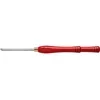 |
Easy Wood Tools Mid-Size Easy Finisher (6300) with Replaceable Carbide Cutter Dogwood is dense enough to dull steel edges quickly, and a replaceable carbide cutter means you swap the tip instead of grinding.
|
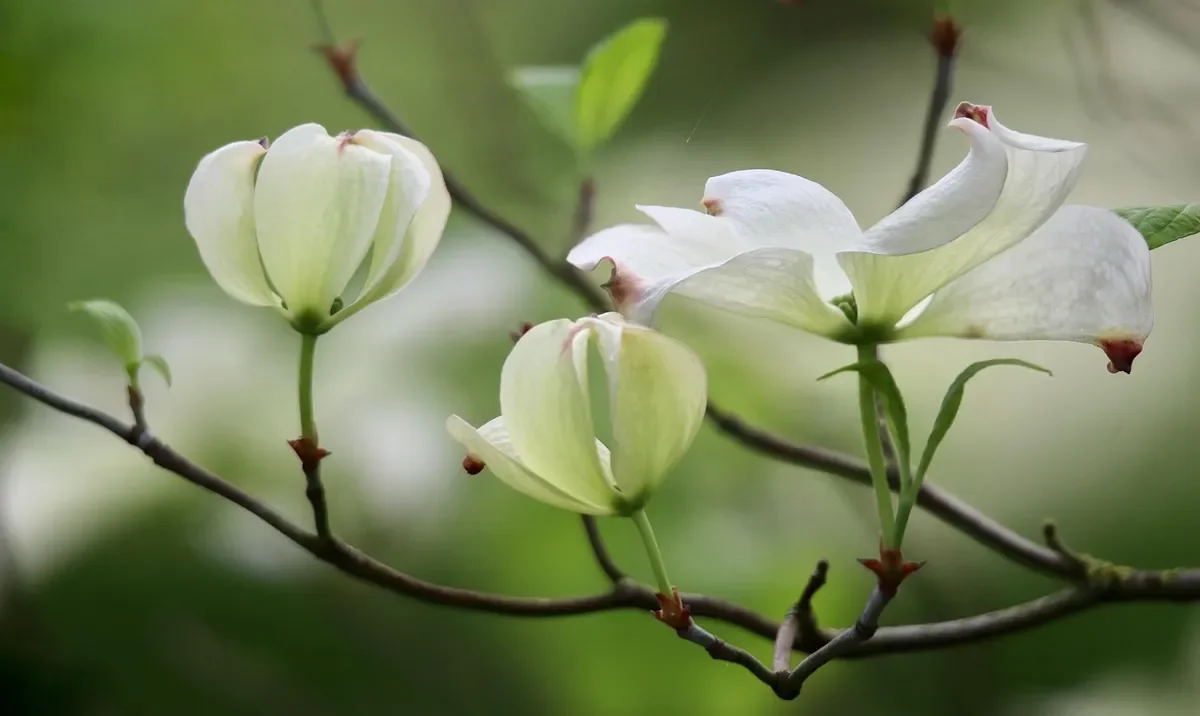
Dogwood counts as a hardwood in both senses of the word. Botanically it is a broadleaf flowering tree, and physically it is dense and tough. The Wood Database lists flowering dogwood (Cornus florida) as a hardwood native to eastern North America, with a Janka hardness of 2,150 lbf and an average dried weight of 51 lbs per cubic foot (815 kg/m3). Its own comments call it one of the hardest domestic woods of the United States or Canada.
Many older pages, including earlier versions of this one, quote dogwood at 1,200 to 1,600 lbf. That understates it by a wide margin, so use the figure below when you compare species.
Why Hardwood Does Not Mean Hard: The Myth Most Guides Repeat
The words hardwood and softwood describe the type of tree, not how hard the timber is. Hardwoods come from broadleaf flowering trees and softwoods come from conifers. That is why some hardwoods are soft and some softwoods are surprisingly hard, as the chart shows. All values below are side-grain Janka ratings from The Wood Database.
| Wood | Class | Janka hardness (lbf) |
|---|---|---|
| Balsa | Hardwood | 67 |
| Eastern white pine | Softwood | 380 |
| Northern red oak | Hardwood | 1,220 |
| Hard maple | Hardwood | 1,450 |
| European yew | Softwood | 1,520 |
| Black locust | Hardwood | 1,700 |
| Flowering dogwood | Hardwood | 2,150 |
Balsa is a hardwood at 67 lbf, softer than any pine on the chart, while yew is a softwood at 1,520 lbf, harder than red oak. Dogwood tops this list on both counts: it is a hardwood by classification and the hardest wood in the chart. If you are sorting other species, our guide asking whether pine is a hardwood applies the same test.
Dogwood Wood Properties in Numbers
| Property | Flowering dogwood (Cornus florida) |
|---|---|
| Janka hardness | 2,150 lbf (9,560 N) |
| Average dried weight | 51 lbs/ft3 (815 kg/m3) |
| Specific gravity | 0.64 basic, 0.82 at 12% moisture |
| Modulus of rupture | 16,720 lbf/in2 (115.3 MPa) |
| Crushing strength | 8,740 lbf/in2 (60.3 MPa) |
| Shrinkage (radial / tangential / volumetric) | 7.1% / 11.3% / 19.9% |
| Tree size | 30 to 40 ft tall, 1 to 1.3 ft trunk diameter |
| Grain and texture | Interlocked grain, fine uniform texture |
Source: The Wood Database dogwood profile. A tangential shrinkage of 11.3% against a radial figure of 7.1% gives a T/R ratio of 1.6, which is why dogwood moves noticeably as humidity changes.
What the Numbers Mean at the Bench
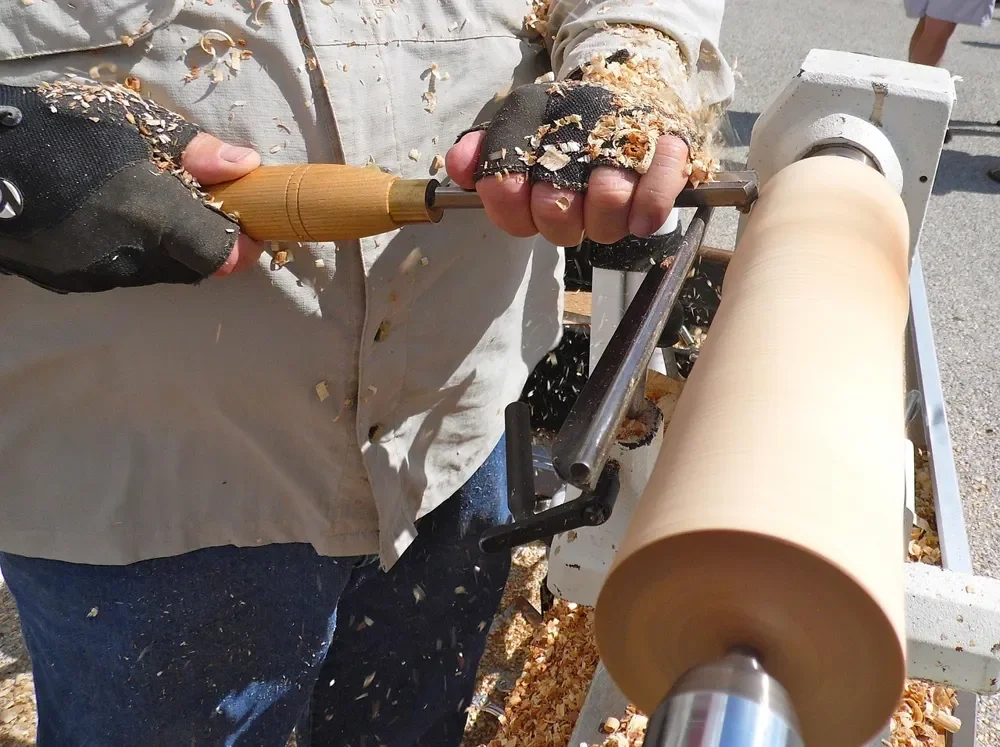
- It is hard to dent but tough on tools. The Wood Database notes that dogwood gives decent results with hand and machine tools despite its density and interlocked grain, but it can have a blunting effect on cutters. Keep edges sharp and expect to sharpen more often than you would on maple.
- It turns, glues and finishes well. Those are the source’s words, so dogwood suits small lathe work and can take a smooth finish.
- It moves a lot. With nearly 20% volumetric shrinkage, the source says its use is usually restricted to unglued, standalone components that can expand and contract freely. Do not build a glued-up tabletop from it.
- It is not for outdoors. Most dogwood is sapwood, which is rated non-durable to perishable and open to insect attack.
The stability problem is the part most articles skip. A wood can be hard and still be a bad furniture wood. If you are weighing hardness against movement for a real project, our wood density calculator helps you estimate the weight of a part before you commit to a species.
How the Janka Number Is Measured
The Janka test records the force needed to embed a 0.444 inch (11.28 mm) steel ball halfway into the wood, measured on the side grain at 12% moisture content. The result is in pounds-force, so a higher number means a harder surface. It predicts denting and wear resistance well, but it says nothing about how much a board will move, how strong it is in bending, or how long it lasts outside. Dogwood scores very high on the first and poorly on the others, which is why the number alone can mislead a buyer.
What Is Dogwood Wood Used For?
The Wood Database lists golf club heads, textile shuttles, bows, mallets, pulleys and turned objects. These share a pattern: small, solid parts that take repeated impact or friction and do not need glue. Dogwood has excellent shock resistance and a fine, uniform texture, which suits those jobs.
| Use | Why dogwood suits it |
|---|---|
| Textile shuttles | Dense, smooth and resistant to wear from repeated passes |
| Mallets and pulleys | Hard face that resists denting and shock |
| Bows and golf club heads | Toughness and shock resistance |
| Turned objects and handles | Fine, uniform texture that finishes well |
Because trunks are only about a foot across, dogwood comes in small billets rather than wide boards. That is why it is priced high for a domestic hardwood and rarely stocked at lumberyards. For the ornamental, wildlife and cultural side of the tree, read our dogwood uses guide, and for other species see our types of wood guide.
Dogwood vs Maple, Oak and Black Locust
| Wood | Janka (lbf) | Times harder than red oak | Best fit |
|---|---|---|---|
| Northern red oak | 1,220 | 1.0 | Furniture, flooring, cabinets |
| Hard maple | 1,450 | 1.2 | Workbenches, cutting boards, flooring |
| Black locust | 1,700 | 1.4 | Posts and outdoor structures |
| Flowering dogwood | 2,150 | 1.8 | Small turned or solid unglued parts |
The ratios are simple division of the Janka values above, rounded to one decimal. Only dogwood combines top-of-chart hardness with a small tree size, which is why it stays a specialty wood while oak, maple and locust supply everyday lumber. Black locust is the better choice when you need hardness plus outdoor durability, since the dogwood profile rates its wood perishable.
Is Dogwood Right for Your Project?
- Choose dogwood for a mallet head, tool handle, small turned piece or any solid part that takes impact and lives indoors.
- Skip dogwood for glued panels, tabletops, outdoor pieces or anything needing boards wider than a few inches.
- Plan for waste. Short billets and heavy shrinkage mean you should rough-turn oversized and let the piece settle before the final cut.
- Budget for supply. With little commercial availability, expect to source from a local sawyer or a tree service rather than a store.
Working With Dogwood Safely
- Wear a dust mask or respirator. The Wood Database says no specific health reactions are tied to dogwood beyond the standard risks of any wood dust, but fine dust is still worth avoiding.
- Use sharp tools and light passes. Dense, interlocked grain can grab a dull edge, and a catch on the lathe is a real injury risk.
- Clamp small stock securely. Short, hard billets can kick out of a hand grip.
Frequently Asked Questions
Is dogwood a hardwood or a softwood?
Dogwood is a hardwood. Flowering dogwood (Cornus florida) comes from a broadleaf flowering tree, which is what the hardwood label means. It is also physically hard, with a Janka rating of about 2,150 lbf according to The Wood Database.
How hard is dogwood compared to oak and maple?
Much harder. The Wood Database lists flowering dogwood at 2,150 lbf, hard maple at 1,450 lbf and northern red oak at 1,220 lbf, so dogwood is roughly 1.5 times harder than hard maple and about 1.8 times harder than red oak.
Can you buy dogwood lumber?
Rarely. The Wood Database says dogwood is not generally available commercially, and small quantities are harvested and used locally. The tree only reaches about 30 to 40 feet with a trunk around 1 foot across, so boards are short and narrow.
Is dogwood good for woodworking projects?
It is good for small, solid, unglued parts such as mallet heads, tool handles and turned objects. It is a poor choice for large glued furniture because it shrinks and swells a lot as humidity changes.
Is dogwood wood rot resistant?
No. Most dogwood lumber is sapwood, and The Wood Database rates it non-durable to perishable and susceptible to insect attack, so keep it dry and indoors.
Conclusion
Dogwood is a hardwood in every sense: a broadleaf tree with a Janka rating of about 2,150 lbf, higher than red oak, hard maple or black locust. The catch is that it is small, unstable and hard on tools, so it shines in mallets, handles and turnings rather than in furniture. Now you have the real numbers to compare it against any other species.
Sponsored / affiliate links. As an Amazon Associate I earn from qualifying purchases. I may earn additional commission from eligible campaigns.