What Does Palm Tree Wood Look Like? (Grain, Color & Real Facts)
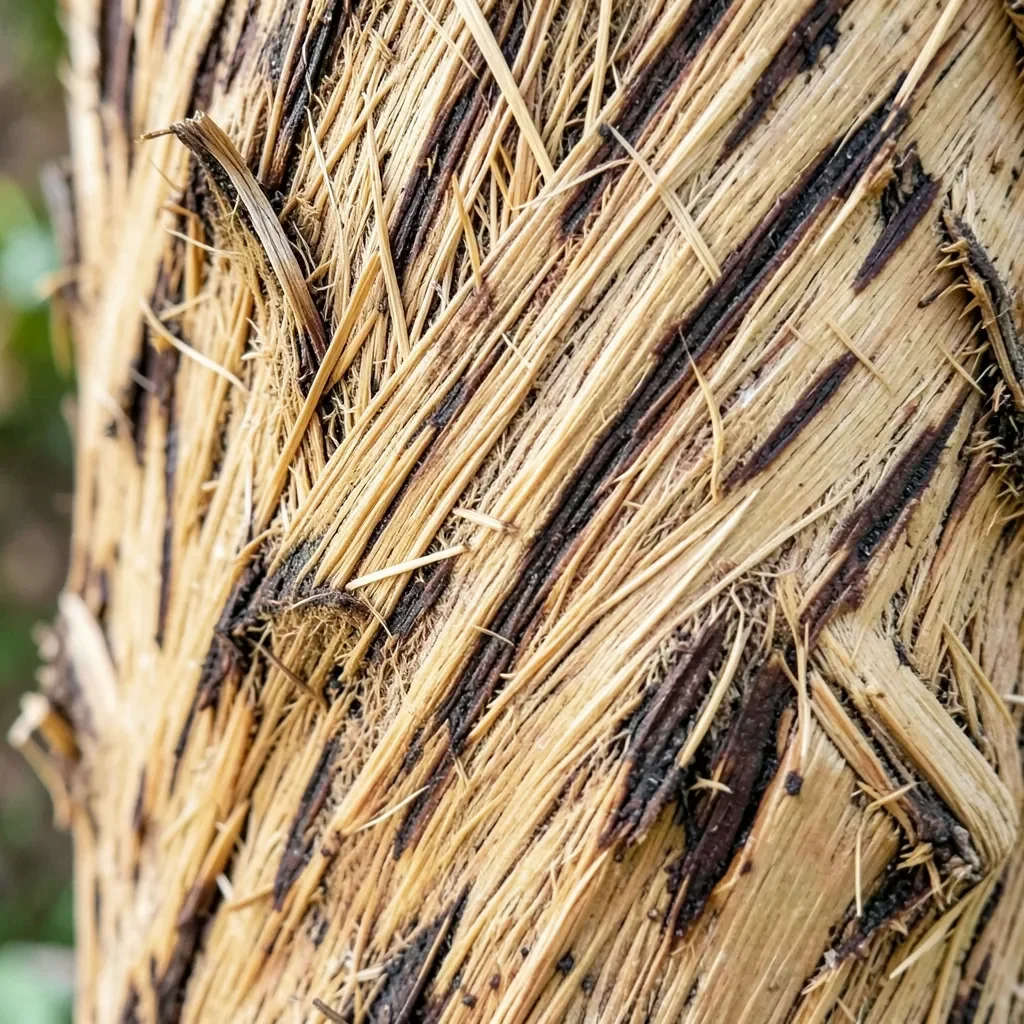
Palm tree wood shows light tan to dark brown streaks running through a fibrous, straw-like grain — but it isn’t true wood at all, because palms are monocots with no vascular cambium, so a cut trunk shows no annual growth rings the way oak or maple does. That’s why palm lumber needs different cutting and drying than hardwood. This guide covers its appearance by species, how it differs from hardwood, and how to care for finished pieces.
Why Palm “Wood” Isn’t Actually Wood
Best Palm Wood Care Pick
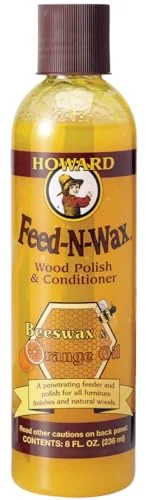 |
Howard Feed-N-Wax Wood Polish & Conditioner (8 oz) – $6.45 A beeswax-and-orange-oil conditioner like this is exactly what the maintenance section below recommends – it feeds the wood’s fibers and helps prevent the drying and cracking palm wood is prone to.
|
Palms are monocots — the same plant group as grasses and bamboo — and monocots have no vascular cambium, the growth layer that produces true wood’s annual rings in oak, maple, and every other hardwood. Instead of adding new rings each year, a palm trunk thickens through diffuse growth of existing tissue. Cut one open and you’ll see scattered fiber bundles running through softer tissue, not the concentric rings a dicot tree shows.
📊 Palms lack a vascular cambium entirely, so a cut palm trunk shows no annual growth rings — the structure that defines true wood in dicot trees like oak and maple never forms. — Source: UC Davis Botany (LibreTexts), Secondary Stem Growth
That fibrous structure also means finished palm wood pieces dry out and crack more easily than dense hardwood, so a conditioning product matters more here than it would on a solid oak table.
What Palm Wood Actually Looks Like
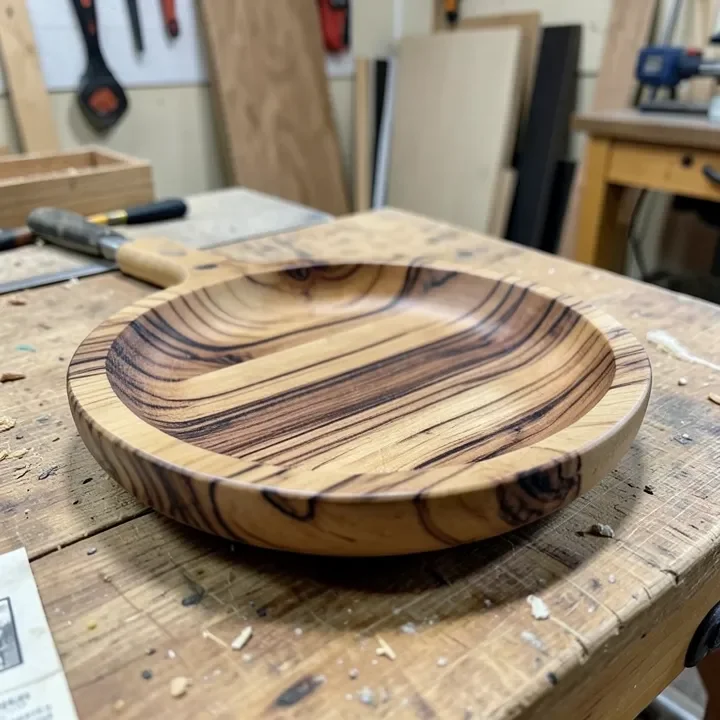
Cut and finished, palm wood shows a base color anywhere from light tan or cream to a rich medium brown, with darker brown to nearly black fiber streaks scattered through it — the density and darkness of those streaks depend on species and which part of the trunk the piece came from (streaks are typically denser near the outer trunk). The texture reads as fibrous and slightly stringy up close, more like tightly packed straw than the smooth, continuous grain of a hardwood board.
| Species | Typical Appearance |
|---|---|
| Coconut palm | Dark brown to nearly black fiber streaks in a tan-to-brown base, often the most dramatic contrast |
| Canary Island date palm | Lighter cream-to-tan base with finer, more evenly distributed streaking |
| Areca palm | Pale cream to light tan, subtle streaking, softer overall density |
Palm Wood vs. True Hardwood
Beyond the missing growth rings, palm wood behaves differently in the shop. Density varies enormously within a single trunk — the outer layer is much denser and harder than the soft, almost foam-like core — whereas a hardwood board is comparatively uniform edge to edge. That density gradient is also why palm lumber needs slower, more controlled kiln drying than dicot hardwood; drying it too fast causes the soft core to shrink and crack away from the denser outer fibers.
| Property | Palm Wood | True Hardwood (e.g. oak) |
|---|---|---|
| Growth structure | No rings; scattered fiber bundles | Annual rings from vascular cambium |
| Density | Highly variable, dense outer / soft core | Relatively uniform |
| Grain pattern | Fibrous streaks, straw-like | Continuous grain lines |
| Workability | Dulls blades faster near the dense outer layer | Predictable across the board |
Common Uses for Palm Wood
- Furniture and tabletops: the dense outer layer is sliced and used as a decorative veneer or slab.
- Flooring: engineered palm flooring laminates the dense outer fiber layer over a stable core.
- Bowls, carvings, and decor: the streaked grain pattern is prized for turned and carved pieces.
- Structural uses in its native range: traditionally used for roof beams and posts where the dense outer trunk provides real load-bearing strength.
Caring for Palm Wood Products
Palm wood’s fibrous structure absorbs and loses moisture readily, so it’s more prone to drying, cracking, and warping than dense hardwood if left unprotected. Dust with a soft, dry or barely damp cloth, avoid harsh chemical cleaners, and keep pieces out of direct sunlight and away from heating vents, which accelerate moisture loss.
Reapply a beeswax-based wood conditioner (see the product pick above) every few months for pieces in regular use, more often in dry climates. For furniture or flooring that sees heavy wear, add a separate polyurethane or varnish topcoat over the conditioned surface for real abrasion resistance.
Common Myths About Palm Wood
- “Palm wood is weak.” The dense outer trunk layer is genuinely strong and has been used structurally for centuries — it’s the soft inner core that’s fragile, not the wood overall.
- “It’s basically bamboo.” Both are monocots without a vascular cambium, but they’re unrelated plant families with different fiber structure and working properties.
- “All palm wood looks the same.” Appearance varies significantly by species and by which part of the trunk a piece is cut from, as the table above shows.
Frequently Asked Questions
Is palm tree wood considered a hardwood or softwood?
Neither, technically. Hardwood and softwood both describe dicot and conifer trees with a vascular cambium. Palms are monocots with no cambium and no growth rings, so botanically they’re not classified as true wood at all, even though the material is often called “palm wood.”
What does canary island palm cut wood look like?
Canary Island date palm typically shows a lighter cream-to-tan base color with fine, evenly distributed dark streaking, generally more subtle than the high-contrast streaking seen in coconut palm.
How does palm wood compare to acacia wood?
Acacia is a true hardwood with a vascular cambium and annual growth rings, giving it consistent density and a continuous grain pattern edge to edge. Palm wood has no growth rings and highly variable density within a single trunk, with a fibrous, streaked appearance instead of continuous grain.
Is palm tree wood sustainable?
Often yes, especially when it’s sourced from palms removed for land management, storm damage, or end-of-productive-life plantation trees rather than cut specifically for lumber — using material that would otherwise be discarded.
Palm wood’s light tan to dark brown fiber-streak pattern and fibrous texture make it instantly different from true hardwood grain — and that difference traces back to a real botanical fact: palms have no vascular cambium and never form growth rings. Match your care routine and cutting expectations to that structure, not to hardwood habits, and palm wood pieces hold up well for years.
Sponsored / affiliate links. As an Amazon Associate I earn from qualifying purchases. I may earn additional commission from eligible campaigns.