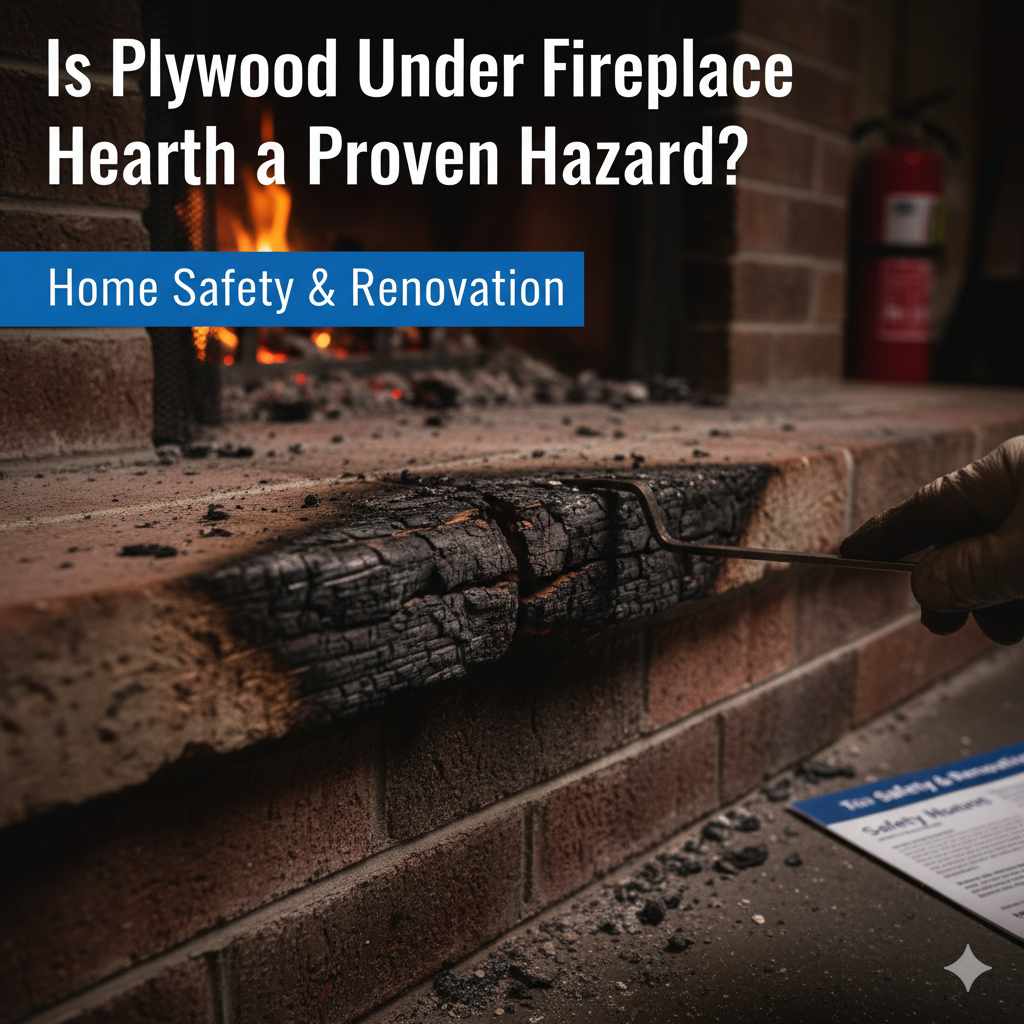
Is Plywood Under Fireplace Hearth a Proven Hazard?
Is Plywood Under a Fireplace Hearth a Fire Hazard? Plywood, when installed correctly and at a safe distance from heat sources according to building codes, is generally not considered a direct fire hazard for a fireplace hearth. However, it’s crucial to understand the proper clearances and materials required to ensure safety.
Hello there, fellow DIYers and homeowners! Ever found yourself staring at your fireplace hearth and wondering about the materials underneath? It’s a common question, especially if you’re planning a renovation or a new build. You might have heard whispers about fireplaces and combustible materials, and one that often pops up is plywood. It’s a super versatile material for woodworking, and it’s easy to see why someone might think of using it. But when it comes to something as important as a fireplace, safety is always the number one priority. We’re going to break down exactly what you need to know about plywood near your hearth, demystifying it so you can feel confident about your home’s safety. We’ll cover the building codes, the reasons behind them, and the safe alternatives, ensuring you have all the information needed to make smart choices for your cozy fireplace. Let’s get to the bottom of this, safely and effectively!
Understanding Fireplace Hearth Safety Standards
When we talk about fireplaces, we’re talking about a controlled fire, but a fire nonetheless! That means keeping extreme heat away from anything that could catch fire. Building codes are essentially a set of rules designed by experts to keep us safe. They dictate how far flammable materials, like wood products including plywood, must be from the heat of a fireplace. These codes aren’t there to make things difficult; they are there to prevent devastating house fires.
Historically, before modern building codes were as sophisticated, there might have been instances where combustible materials were closer to hearths than is now considered safe. These incidents, unfortunately, led to fires and helped experts develop the safety guidelines we rely on today. Understanding these standards is the first step to ensuring your fireplace is both beautiful and safe.
Why the Concern with Wood Products?
Wood products, including plywood, are organic materials. They contain components that can combust, or ignite, when exposed to sufficient heat over a period of time. Think of it like this: a giant log can burn for hours in a fireplace. Smaller wood components, even if they aren’t directly in the flames, can still be affected by radiant heat.
The primary concern isn’t that plywood will instantly burst into flames from being near a hearth. Instead, it’s about the potential for prolonged exposure to heat to cause the wood to char, degrade, and eventually ignite. This process can be slow and insidious, and it’s why building codes specify minimum clearances. These clearances create an air gap or use non-combustible materials as a buffer, preventing the plywood from reaching its ignition temperature over time. For more detailed information on building safety standards, the International Code Council (ICC) offers a wealth of resources on fire safety in construction.
Plywood and Fire Codes: What You Need to Know
Building codes are specific about how close combustible materials can be to fireplace openings and heat sources. Plywood, being a combustible material, falls under these regulations. The exact requirements can vary slightly by region and the specific type of fireplace or stove, but the general principle remains the same: provide adequate separation.
When installing a fireplace, you’ll often see requirements for non-combustible materials extending a certain distance onto the hearth itself, and a minimum clearance between the fireplace opening and any combustible materials on the wall behind it. Plywood is typically not permitted as part of the immediate hearth structure that is exposed to significant heat or as a direct wall covering too close to the fireplace opening.
National Fire Protection Association (NFPA) Guidelines
The National Fire Protection Association (NFPA) also provides crucial guidelines for fire safety, including those related to residential heating equipment. These standards often inform local building codes. For example, NFPA 211, “Standard for Chimneys, Fireplaces, Vents, and Solid Fuel-Burning Appliances,” details requirements for clearances to combustible construction. While it can be quite technical, the core message is always to keep combustible materials away from heat and flame. For a DIYer, this translates to understanding that a standard plywood sheet cannot typically form the surface of your hearth or be directly against a chimney breast without proper non-combustible shielding.
Building Code Examples (General Guidance)
While I can’t give you exact local codes, here are some common principles you’ll find in building codes regarding hearths and combustible materials:
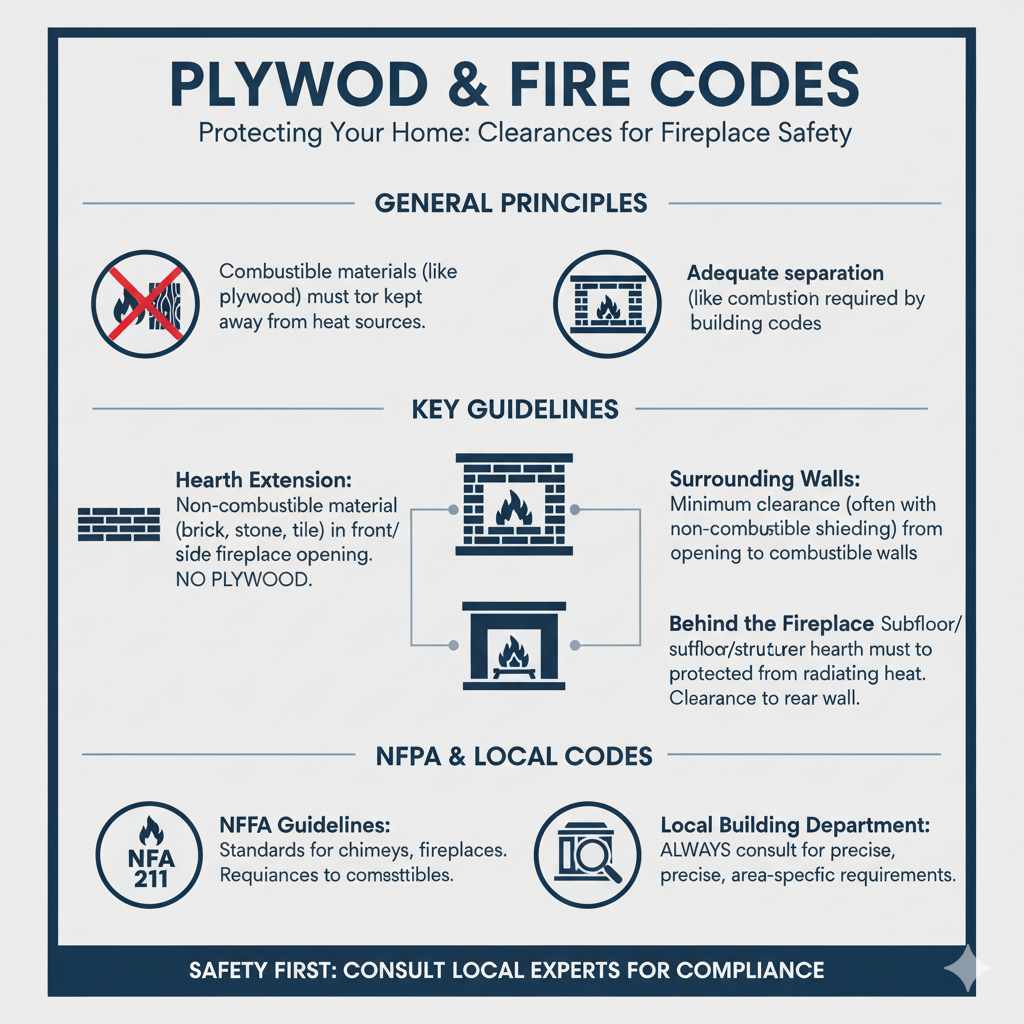
Hearth Extension: Most codes require a non-combustible hearth extension that extends a specific distance in front of and to the sides of the fireplace opening. This extension is typically made of materials like brick, stone, tile, or concrete. Plywood is not suitable for this primary hearth surface.
Surrounding Walls: The walls directly around the fireplace opening also need protection. There are minimum clearances required between the fireplace opening and any combustible materials (like drywall, wood paneling, or plywood) for the wall. This clearance is often measured from the fireplace opening itself.
Behind the Fireplace: If you have a hearth that’s just a raised platform and the fireplace sits on top, the subfloor or any wood structure supporting it must be adequately protected from heat radiating downwards, and there needs to be sufficient clearance from the back of the fireplace structure to any combustible walls.
It’s essential to consult your local building department to get the precise requirements for your area. They are the final authority on what is permissible and safe.
When Plywood Might Be Used (Safely!)
So, does this mean plywood has no place around a fireplace? Not necessarily! It’s all about where and how it’s used. Plywood is an excellent material for building the structure that supports non-combustible hearth materials, provided it’s kept at a safe distance.
For instance, when building a decorative fireplace surround or a mantelpiece that is constructed away from the direct heat of the firebox and adheres to established clearances, plywood can be a perfectly acceptable and strong material for framing or as a substrate for other finishes.
Structural Support for Hearth Materials
Imagine you’re building a raised hearth. The actual surface you stand on or place objects on needs to be non-combustible (like stone or tile). However, underneath that, you might have a sturdy wooden frame to give it structure. This frame could be constructed using plywood and lumber. The key here is that the plywood is not the material exposed to heat. It’s part of the foundational support, situated well below and away from the heat source, with a layer of non-combustible material between it and any potential flame or high heat.
Mantelpieces and Decorative Surrounds
If you’re building a beautiful mantelpiece that sits above the heat source, or a decorative surround that frames the fireplace but doesn’t directly face the fire, plywood can be used for the substrate. For example, you might use plywood to build the basic box structure of a floating mantel shelf, and then cover it with wood veneer, paint, or other decorative finishes. The critical factor is ensuring that the mantelpiece itself is installed at a height where it is not subjected to excessive radiant heat, adhering to the clearances specified by the manufacturer’s instructions and local codes.
Clearing the Air: Always maintain the manufacturer’s recommended clearances between combustible materials like wooden mantels and the fireplace opening.
Heat Shielding: For added safety, especially if there’s any doubt, consider installing a heat shield between the fireplace opening and any wooden decorative elements.
Safe Alternatives for Hearth Construction
When direct contact with heat or proximity to the fireplace opening is a concern, there are many excellent non-combustible materials you can use. These materials are specifically designed to withstand high temperatures and provide a safe barrier.
Non-Combustible Hearth Materials
The most common and safest materials for the actual hearth surface are those that do not burn. These are often required by code to extend a specific distance from the fireplace opening.
| Material | Description | Pros | Cons |
|---|---|---|---|
| Brick | Classic and durable, available in many colors and styles. | Very durable, heat resistant, traditional look. | Can be heavy, requires proper mortar installation. |
| Stone (e.g., Granite, Slate, Marble) | Natural beauty, varies in toughness and appearance. | Extremely durable, highly heat resistant, elegant appearance. | Can be expensive, heavy, some stones can be porous and stain. |
| Ceramic/Porcelain Tile | Wide variety of designs, colors, and sizes. Needs to be rated for high heat. | Versatile in design, easy to clean, relatively affordable. | Can chip or crack under heavy impact, grout lines can be hard to clean. (Ensure it’s rated for hearth use). |
| Concrete/Cement Board | A solid, stable underlayment material. | Excellent base for other coverings, durable, fire-resistant. | Plain appearance, usually needs a top layer (tile, stone, etc.). |
Protecting Walls and Surrounds
For the areas around the fireplace opening, where direct heat might not be as intense as the hearth itself, but still a concern, materials like cement board or specialized fire-rated drywall can be used as a substrate before applying finishes like tile, stone, or even paint.
Cement Board: This is a fantastic choice for areas near heat. It’s naturally fireproof and moisture-resistant. You can tile directly over it.
Fire-Rated Drywall: Some drywall products are made with additives to increase their fire resistance compared to standard drywall. These can be used at specific clearances.
Metal or Stone Veneers: For decorative surrounds, even if the substrate is something like cement board, you can finish it with thin stone veneers, metal panels, or tiles specifically designed for fireplace applications.
Installation Best Practices and Safety Tips
Safety around a fireplace is paramount. It’s not just about meeting code minimums; it’s about understanding the risks and taking proactive steps. Here’s how to ensure your fireplace project is safe:
Consult Local Building Codes and Fire Departments
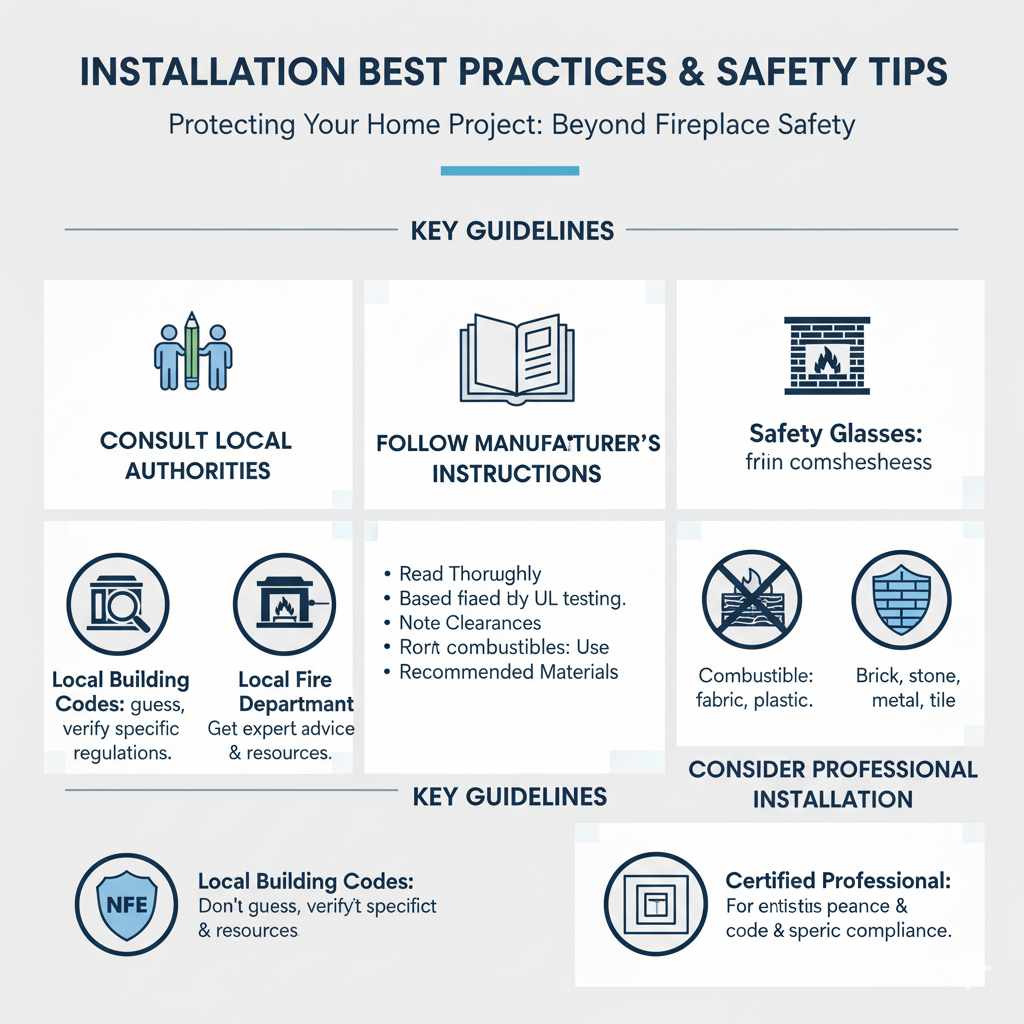
- Always Check Local Codes: The most crucial step! Your local building department has specific regulations for fireplace construction and clearances. Don’t guess; find out for sure.
- Talk to Your Local Fire Department: They often have excellent advice and resources on fire safety, including residential heating. They want homes to be safe, and usually are happy to offer guidance.
Follow Manufacturer’s Instructions
Every fireplace insert or unit comes with specific installation instructions. These instructions are often based on UL (Underwriters Laboratories) testing and often exceed minimum code requirements for safety.
- Read Thoroughly: Before you even buy materials, read the manual for your fireplace.
- Note Clearances: Pay close attention to the required clearances to combustible materials specified by the manufacturer.
- Use Recommended Materials: Follow any recommendations for hearth extensions, wall protection, and chimney components.
Understand “Combustible” vs. “Non-Combustible”
Combustible: Materials that can burn, such as wood, plywood, particleboard, drywall, fabric, and most plastics.
Non-Combustible: Materials that will not burn or ignite. Examples include brick, stone, concrete, metal, glass, and ceramic tile.
Consider Professional Installation
For peace of mind and assurance that everything is up to code, consider hiring a certified professional, especially for the fireplace and chimney components themselves. They have the experience and knowledge to ensure a safe installation.
Frequently Asked Questions (FAQ)
Can I use plywood as the subfloor under my hearth?
Generally, yes, but it depends on the specific fireplace and clearances. The plywood subfloor must be separated from the fireplace firebox by a thick layer of non-combustible material (like concrete or cement board) that extends far enough to prevent the plywood from reaching ignition temperatures. Always check your fireplace manufacturer’s instructions and local building codes for the exact requirements.
Is it safe to put a wooden mantel above a fireplace?
Yes, wooden mantels are very common, but safety depends on the clearance. Most building codes and fireplace manufacturers specify a minimum distance (often 12 inches or more) between the top of the fireplace opening and any combustible mantel. Ensure your mantel is installed at a sufficient height and away from excessive heat.
What is the minimum thickness for a hearth extension?
The required thickness of the hearth extension (the non-combustible material in front of the fireplace) typically depends on the type of fireplace and the diameter of the chimney. Building codes usually specify minimum dimensions and thicknesses for these extensions. For example, it might need to be at least 16 inches in front and 8 inches on each side.
Can I use regular drywall on the wall behind my fireplace?
Standard drywall is typically considered combustible. For walls directly behind a fireplace, you will likely need to install a non-combustible material like cement board or specialized fire-rated drywall, and maintain specific clearances from the fireplace opening as required by code.
What are the safest materials for a fireplace hearth?
The safest materials for a fireplace hearth are non-combustible materials. These include brick, stone (like granite or slate), ceramic tile rated for hearth use, concrete, and porcelain tile. These materials can withstand high temperatures and are resistant to fire.
How far does the hearth need to extend from the fireplace?
This varies significantly based on local building codes and the specific fireplace type. Commonly, hearth extensions are required to extend at least 16 inches in front of the fireplace opening and at least 8 inches to each side. Always verify the exact requirements with your local building authority or the fireplace manufacturer’s specifications.
Is it okay to use plywood for framing a fireplace surround that isn’t directly heated?
Yes, if the plywood framing is part of a structure that is installed with adequate clearance from the fireplace opening and any heat sources, it can be a safe and effective framing material. The key is that the plywood itself will not be subjected to high temperatures. Ensure decorative finishes are also installed with appropriate clearances.
Conclusion
Navigating the world of home renovations, especially around something as critical as a fireplace, can seem daunting. When it comes to plywood and fireplace hearths, the primary takeaway is that its use is highly dependent on its proximity to heat sources and adherence to building codes. While plywood is not a suitable material for the direct hearth surface or for areas too close to the fireplace opening due to its combustible nature, it can certainly play a role in the structural aspects of a fireplace project when installed at a safe distance and used as framing or support beneath non-combustible materials.
Your safety, and the safety of your home and loved ones, is the most important craftsmanship you can achieve. By understanding the difference between combustible and non-combustible materials, consulting your local building codes, and always following manufacturer guidelines, you can confidently plan and execute your fireplace project. Whether you’re building a new hearth, installing a surround, or adding a mantel, always prioritize safety and use the right materials for the job. Happy (and safe) building!