Is Redwood a Hardwood? No – Here’s the Real Classification
Redwood is a softwood, not a hardwood — it comes from Sequoia sempervirens, a coniferous species, and the hardwood/softwood system classifies trees by botany, not by how hard the wood feels. The confusion is understandable: redwood’s Janka hardness rating of 450-480 lbf and its natural decay resistance make it perform better than its “soft” label suggests. This guide explains the real classification, redwood’s actual hardness numbers, and why the label doesn’t tell you what you’d think it does.
Quick Answer
No, redwood is a softwood. Hardwood/softwood is a botanical classification based on whether a tree is a broadleaf flowering species (hardwood) or a cone-bearing conifer (softwood) — redwood is a conifer. Its actual Janka hardness (450-480 lbf) is also well below true hardwoods like oak or maple, so it’s soft by both definitions, despite being unusually durable for a softwood.
Is Redwood a Hardwood or a Softwood?
Best Redwood Finish Pick
 |
Penofin Transparent Redwood Stain & Sealer – $48.95 Formulated specifically for redwood’s natural oils and grain, not a generic exterior stain — matches the maintenance guidance in this article’s care section below.
|
As an Amazon Associate we earn from qualifying purchases.
Redwood is classified as a softwood. The hardwood/softwood system isn’t actually about hardness at all — it’s a botanical split based on how a tree reproduces and grows. Hardwoods come from angiosperms: broadleaf, flowering trees like oak, maple, and walnut that typically lose their leaves seasonally. Softwoods come from gymnosperms: cone-bearing conifers like pine, cedar, fir, and redwood, most of which stay evergreen year-round. Since coast redwood (Sequoia sempervirens) is a conifer, it’s a softwood by definition, regardless of how strong or durable the lumber actually is.
This naming system trips people up constantly because it implies something about actual hardness that isn’t true. Balsa wood is one of the softest woods in the world, yet it’s botanically a hardwood (it comes from a broadleaf flowering tree). Yew is a conifer — a softwood by classification — but it’s harder than many actual hardwoods. Redwood isn’t as extreme a mismatch as balsa, but the same logic applies: its softwood label describes its family tree, not its performance.
How Hard Is Redwood, Really?
Redwood’s Janka hardness rating — the industry-standard measure of a wood’s resistance to denting and wear — averages 450 lbf, with old-growth lumber reaching up to about 480 lbf, according to the Wood Database. That puts it in the middle of the pack among common softwoods: softer than Douglas fir but noticeably harder than western red cedar or eastern white pine.
| Species | Type | Janka Hardness (lbf) |
|---|---|---|
| Western red cedar | Softwood | 350 |
| Eastern white pine | Softwood | 380 |
| Redwood | Softwood | 450-480 |
| Douglas fir | Softwood | 620 |
| Red oak | Hardwood | 1,220 |
| Hard maple | Hardwood | 1,450 |
📊 Redwood: 450 lbf average, up to 480 lbf for old-growth lumber — Source: The Wood Database, Coast Redwood
Why Redwood Performs Better Than Its Softwood Label Suggests
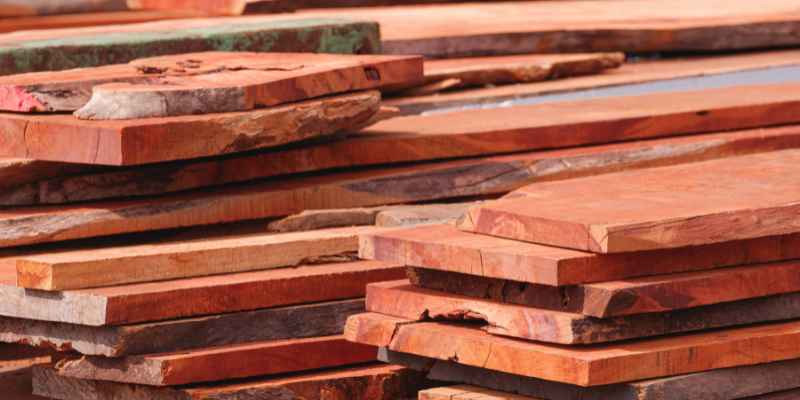
Redwood’s reputation for strength and longevity is real — it just isn’t connected to the hardwood/softwood classification. Three actual properties do the work: natural oils and tannins that resist decay, insects, and fungal growth; slow, even growth that produces fewer knots and defects than many other softwoods; and old-growth lumber in particular, which the Wood Database notes is measurably more durable than lumber from younger second-growth trees. That last distinction matters if you’re comparing boards — not all “redwood” performs identically, and old-growth stock costs more for a reason.
Best Uses for Redwood
- Decking and fencing: redwood’s natural decay resistance suits ground-adjacent and weather-exposed structures without pressure treatment.
- Outdoor furniture: stable dimensions and moderate weight make it easy to build and move.
- Siding and trim: takes stain and oil finishes well, and resists warping better than many softwoods.
- Interior paneling and trim: its color and grain read as a premium material indoors, away from weather entirely.
If you’re comparing redwood against another common decay-resistant option, see our cedar vs. redwood fence comparison. For finishing advice once your project is built, our guide to the best finish for an outdoor wood table covers the same oil/sealer categories referenced above.
Frequently Asked Questions
Is redwood a hardwood or a softwood?
Redwood is a softwood. Botanically, hardwood and softwood classify trees by their reproduction and leaf type, not by how hard the wood actually is — hardwoods are broadleaf, flowering trees (angiosperms), while softwoods are cone-bearing conifers (gymnosperms). Redwood comes from a conifer, Sequoia sempervirens, so it’s a softwood by definition.
Why do so many people think redwood is a hardwood?
Because redwood is unusually strong and rot-resistant for a softwood, and those qualities are commonly associated with hardwoods in everyday language. The confusion comes from mixing up the botanical classification (based on tree type) with performance qualities like strength and durability, which don’t actually track with the hardwood/softwood label — balsa wood, for example, is botanically a hardwood despite being one of the softest woods that exists.
What is redwood’s Janka hardness rating?
Redwood averages 450 lbf on the Janka scale, with old-growth lumber reaching up to about 480 lbf, according to the Wood Database. That’s softer than Douglas fir (620 lbf) but harder than western red cedar (350 lbf) and eastern white pine (380 lbf) — solidly mid-range among common softwoods, and far below true hardwoods like red oak (1,220 lbf) or hard maple (1,450 lbf).
Is redwood still good for outdoor projects even though it’s a softwood?
Yes. Redwood’s natural oils and tannins give it real decay and insect resistance regardless of its softwood classification, and old-growth redwood in particular has a long track record in decking, fencing, and siding. Its hardness classification doesn’t change its suitability — cedar and pine are also softwoods used outdoors, just with less natural rot resistance than redwood.
Conclusion
Redwood is a softwood, full stop — the hardwood/softwood split is about tree botany, not performance, and redwood comes from a conifer. What makes it valuable isn’t a hardwood classification it doesn’t have; it’s a genuinely useful combination of natural decay resistance, dimensional stability, and a mid-range Janka hardness that outperforms cedar and pine. Judge it on those real properties, not on a name that was never about hardness in the first place.
Sponsored / affiliate links. As an Amazon Associate I earn from qualifying purchases. I may earn additional commission from eligible campaigns.