Is Spar Varnish Food Safe? No, Here’s What Is
No, spar varnish is not food safe, even after it fully cures. It’s formulated for marine brightwork and exterior trim, where the job is standing up to UV rays, rain, and temperature swings, not sitting under a sandwich. No major spar varnish manufacturer tests, certifies, or labels their product for food contact, and full cure only means the film has hardened, not that repeated contact with hot plates, vinegar, or a knife blade is safe.
Looking for a finish that actually does carry food-contact certification instead? Rubio Monocoat’s Oil Plus 2C is EN71-3 and EU food-contact certified once fully cured, unlike spar varnish.
If you’ve already got a cutting board, salad bowl, or dining table finished in spar varnish, there’s no need to panic and strip it off. The everyday risk from a fully cured film sitting under a plate is low. But if you’re deciding what to put on a surface that food will actually touch, spar varnish is the wrong tool. Here’s exactly why, what the real risk factors are, and which finishes are genuinely built and labeled for food contact.
Is Spar Varnish Food Safe? The Short Answer
Short version: no. Spar varnish, whether it’s a traditional oil-based formula or a modern spar urethane like Rust-Oleum Spar Urethane or Minwax Helmsman, is designed and sold as an exterior wood finish, not a food-contact coating. Its resin and solvent package is chosen for UV resistance and flexibility outdoors, and manufacturers’ own safety data sheets and product labels don’t claim FDA food-contact compliance. That’s true even after the finish has fully cured for weeks.
Genuinely Food-Safe Pick
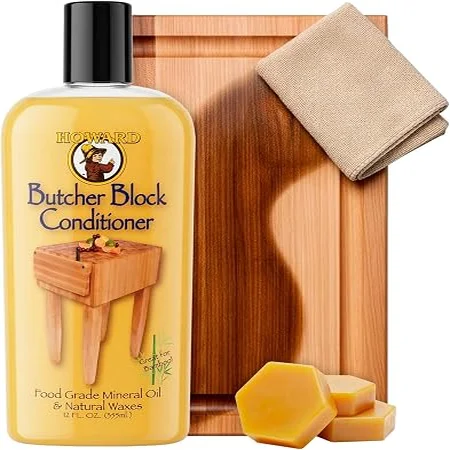 |
Howard Butcher Block Conditioner – $9.98 A food-grade mineral oil and beeswax blend built for exactly the surfaces spar varnish should never touch: cutting boards, salad bowls, and wooden utensils.
|
What Spar Varnish Is Actually Formulated For
Spar varnish gets its name from wooden ship spars, the masts and booms that take constant sun, salt spray, and flexing. To survive that, most formulas combine a phenolic or alkyd resin with tung oil or soybean oil, UV absorbers, and enough plasticizer to keep the cured film flexible instead of cracking as the wood underneath expands and contracts with the weather. Modern “spar urethane” swaps some of that resin for polyurethane, which adds abrasion resistance but is still built around the same outdoor-durability goal.
None of that formulation work is aimed at food safety. UV inhibitors and mildewcides that make a finish last on an outdoor railing have no business being anywhere near something you’ll eat off of, and manufacturers don’t reformulate spar varnish for indoor food-contact use. They make a completely different product line, butcher block oils and salad bowl finishes, for that job.
What Actually Happens Once Spar Varnish Fully Cures
Curing and food-safe are two different questions. A fully cured spar varnish film, which typically takes 2 to 4 weeks to cure completely rather than the 24 hours it takes to feel dry to the touch, is chemically much more stable than wet varnish. Most of the solvents have evaporated and the resin has cross-linked into a hard, plastic-like layer. In that state, brief, incidental contact, like a cured tabletop under a placemat or a serving tray with a napkin between the food and the wood, isn’t the same hazard as raw varnish.
The real risk shows up with repeated, direct, unprotected food contact over time. Hot pans or mugs can soften the film’s surface, acidic foods like vinegar, citrus, or tomato sauce can slowly etch and break it down, and a knife blade used for cutting will scratch straight through the cured layer and expose fresh material underneath with every use. None of that is theoretical, and it’s the exact reason woodworking forums consistently steer people away from film finishes for cutting boards regardless of brand: a cutting board needs a finish that’s soft, renewable, and inert, like mineral oil, not a hard film at all, food-safe-labeled or not.
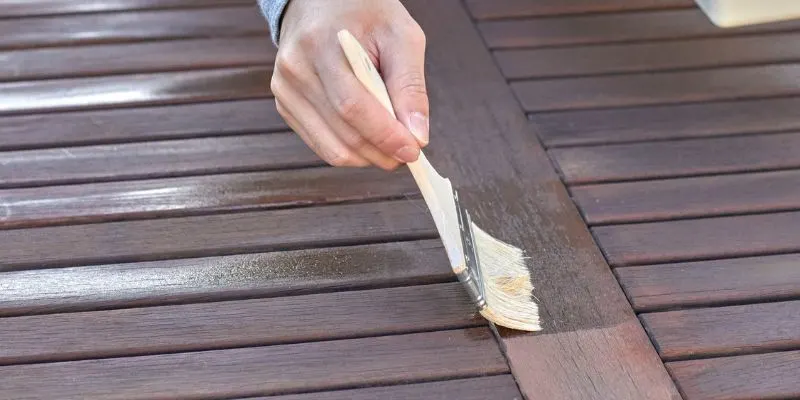
Why No Manufacturer Certifies Spar Varnish for Food Contact
The FDA does regulate resinous and polymeric coatings intended for food contact under 21 CFR 175.300, and plenty of finishes are formulated and tested to meet it: dewaxed shellac, certain catalyzed conversion varnishes sold specifically as “salad bowl finish,” and food-grade mineral oil among them. Spar varnish brands simply aren’t in that category. Check the product page or safety data sheet for any consumer spar varnish, Minwax, Rust-Oleum, McCloskey, or Epifanes included, and you won’t find an FDA food-contact claim, because the product was never formulated or tested for it.
That absence matters more than a vague “it’s probably fine once it’s dry” assumption. A manufacturer that wanted to sell into the food-contact market would say so on the can, the same way butcher block oil bottles do front and center. Silence on the label is the label.
Genuinely Food-Safe Finish Alternatives
If the project needs to actually touch food, a cutting board, salad bowl, wooden spoon, or butter dish, these are the finishes that are actually built and labeled for it:
- Food-grade mineral oil / butcher block conditioner – the cheapest and most common option. It doesn’t form a film, so there’s nothing to scratch through, but it needs reapplying every few weeks with regular use.
- Pure tung oil (100%, not “tung oil finish”) – penetrates and hardens without film-forming solvents. Read the label carefully: many bottled “tung oil finishes” are actually varnish blends cut with metallic driers and thinners, and those are not food safe.
- Raw or polymerized walnut oil – food-grade and marketed specifically for wood kitchenware, though households with a tree-nut allergy should avoid it entirely.
- Dewaxed shellac – the same material the FDA allows as a coating on candy and pills (confectioner’s glaze). Safe once cured, though less water-resistant than an oil finish.
- Dedicated “salad bowl finish” products (General Finishes Salad Bowl Finish, Waterlox Original) – catalyzed finishes actually tested and marketed for food contact, giving more durability than oil alone.
Whichever you choose, the tradeoff is consistent: food-safe finishes prioritize being inert and renewable over being hard and low-maintenance. That’s the opposite of what spar varnish optimizes for, which is exactly why the two don’t overlap.
Where Spar Varnish Is Still the Right Choice
None of this makes spar varnish a bad product, just the wrong one for food contact. It’s still the right call for exterior doors, deck railings, porch furniture, tool handles, and genuine marine brightwork, exactly what it was engineered for. A dining table finished in spar varnish for durability is fine for plates and cups sitting on top of it; it’s cutting directly on the surface, or using it as a salad bowl or utensil finish, that crosses into food-contact territory it was never built for.
Frequently Asked Questions
Is spar varnish food safe once it’s fully cured?
No. A fully cured film is more chemically stable than wet varnish, but manufacturers still don’t test or certify spar varnish for food contact, and everyday hazards like heat, acidic foods, and knife scratches can compromise the cured layer over time.
What happens if food touches a spar-varnished surface?
Brief, incidental contact with a cured surface, such as a plate resting on a finished table, isn’t a significant hazard. The concern is repeated, direct contact: cutting on it, storing acidic food against it, or using it like a salad bowl, since none of those uses were part of the finish’s design or testing.
Can I use spar varnish on a serving tray or decorative bowl?
For a decorative bowl that never holds food, or a tray where food sits on plates or liners rather than touching the wood directly, spar varnish is fine. For a bowl or tray that will have food placed directly on the wood, use a finish labeled for food contact instead, such as mineral oil or a dedicated salad bowl finish.
What’s the easiest food-safe alternative to spar varnish?
Food-grade mineral oil or a butcher block conditioner blend is the simplest option. It requires no cure time beyond wiping off the excess, doesn’t form a film that can crack or scratch through, and just needs reapplying every few weeks with regular use.
Bottom Line
Spar varnish earns its reputation on boats, doors, and deck rails, not cutting boards. If a project is ever going to touch food directly, skip it in favor of mineral oil, pure tung oil, dewaxed shellac, or a finish that’s actually labeled for food contact. The extra reapplication is a small price for not gambling with what’s on your dinner table.
Sponsored / affiliate links. As an Amazon Associate I earn from qualifying purchases. I may earn additional commission from eligible campaigns.