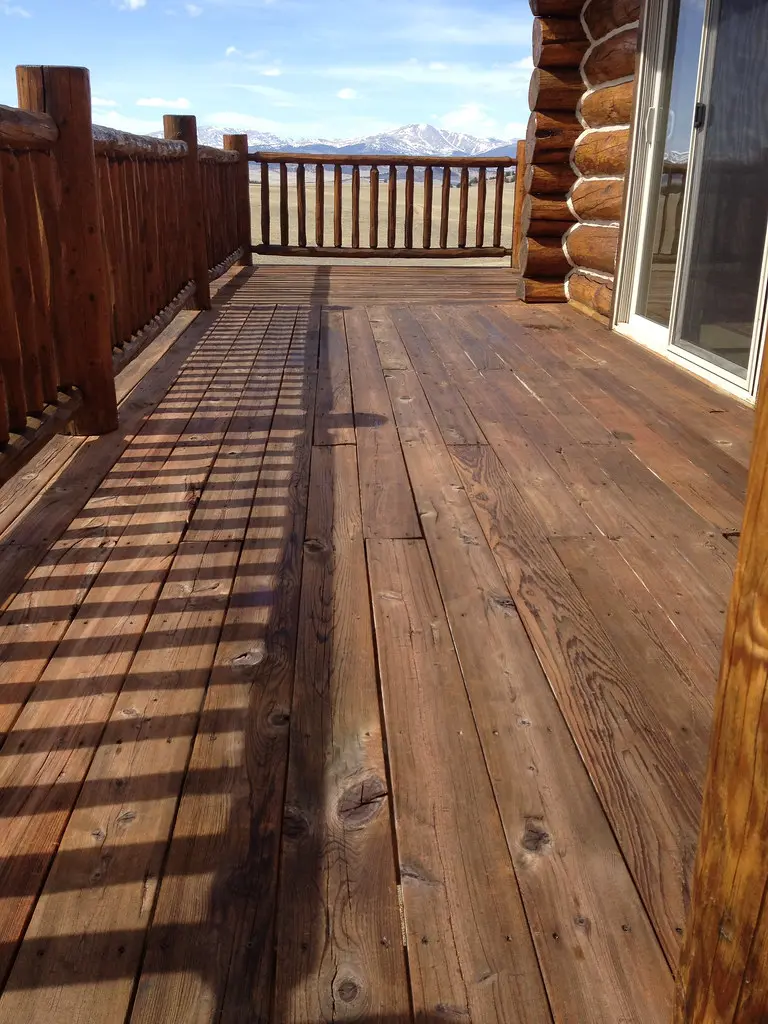
How Much Does It Cost to Stain a Deck Professionally?
Professional deck staining often costs roughly $1.50 to $4.50 per square foot, or about $600 to $2,000 for a typical 300- to 400-square-foot deck; weathered decks that need washing, sanding, or board repairs can cost more. Skip prep or hire a poor crew, and the finish can peel early, leaving you to pay twice. This guide breaks down labor, materials, prep, restoration triggers, and the quote details that change the price.
Deck staining price guide



National pricing often starts around $1 to $3 per square foot for professional staining, with some sources placing the range closer to $1.50 to $4 per square foot. That spread comes from scope. Some quotes cover stain only, while others include cleaning, light prep, and basic cleanup.
For a typical project, the full job often lands between $500 and $1,500. A 300 sq ft deck runs $300 to $900 professionally stained, before larger adders such as railings, stair treads, or stripping a failed coating.
What labor and materials usually include
A stain quote should separate labor and materials if the contractor prices them separately. Labor pays for cleaning, surface prep, application, and site protection. Materials cover stain, cleaners, brighteners, and masking supplies when they are needed.
Some bids look low because they quote stain application only. Others include prep. Ask which version you are getting, or the final bill can climb after the crew finds weathering, mildew, or peeling finish.
Why some quotes exclude prep
Prep time changes with deck condition. On a proper deck staining job, prep accounts for 40 to 60 percent of total labor hours. That is why one contractor may quote a clean deck at a base rate and another may price the same deck much higher after inspection.
Deck cleaning alone adds $150 to $350 to the project. A full-strip scope can add $300 to $700 to the total. Drying time matters too; crews often need about 24 to 48 hours, and sometimes 48 to 72 hours, before stain can go on.
Deck staining quote breakdown

| Deck size | Condition | Prep level | Railing/stair complexity | Stain type | Realistic total price bands |
|---|---|---|---|---|---|
| 100–200 sq ft | Clean and well-maintained | Light cleaning only | Few railings, no stairs | Semi-transparent | $300–$700 |
| 12 x 16 deck | Greyed or weathered | Cleaning, brightening, light sanding | Short railing runs | Water-based stain | $600–$1,200 |
| 200–400 sq ft | Previously stained, minor fading | Cleaning plus drying window | Stairs and balusters add time | Penetrating oil-based stain | $600–$1,500 |
| 300–500 sq ft | Mildew or algae present | Wash, brighten, spot sanding | Several railings and one stair set | Semi-solid | $900–$1,400 |
| 400–600 sq ft | Peeling finish or failed coating | Strip, clean, sand, dry | Posts, balusters, fascia boards | Solid stain | $1,400–$2,500+ |
| 20 x 20 deck | Previously painted | Full restoration scope | Heavy rail and stair detail | Painted finish or solid stain | $1,800–$3,000+ |
A 12 x 16 deck is 192 square feet, so it often sits in the lower middle of the pricing range if the wood is clean. A 20 x 20 deck is 400 square feet, which usually pushes the quote into the midrange before any stripping or repairs.
Say your 12 x 16 deck has one stair run and basic railings. A contractor may price it near the lower end if the boards are sound and the surface only needs washing. Add peeling stain, and the quote changes fast because the crew must remove failed material first.
Suppose a 20 x 20 deck has balusters, two stair runs, and a faded solid coating. That job can move from a simple restain into a restoration quote, since the contractor must budget for stripping, extra labor around trim parts, and longer dry time.
What changes the price?
Deck staining price changes when the crew has to spend more time on prep, detail work, or coating removal. Cleaning, brightening, sanding, pressure washing, and drying all affect the labor total. So do railings, stairs, posts, balusters, and fascia boards.
Cleaning, brightening, and sanding
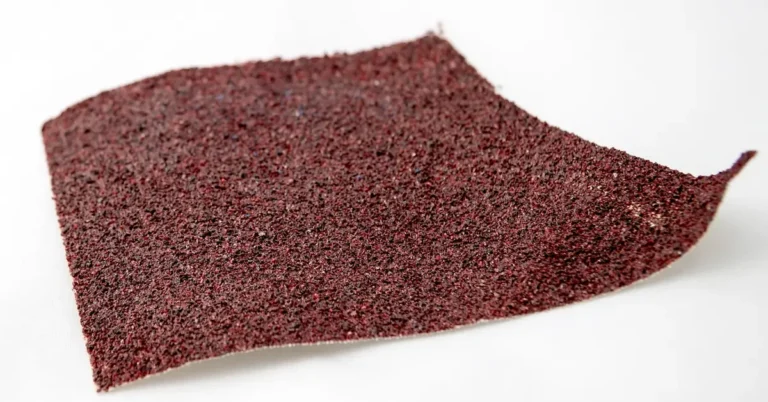
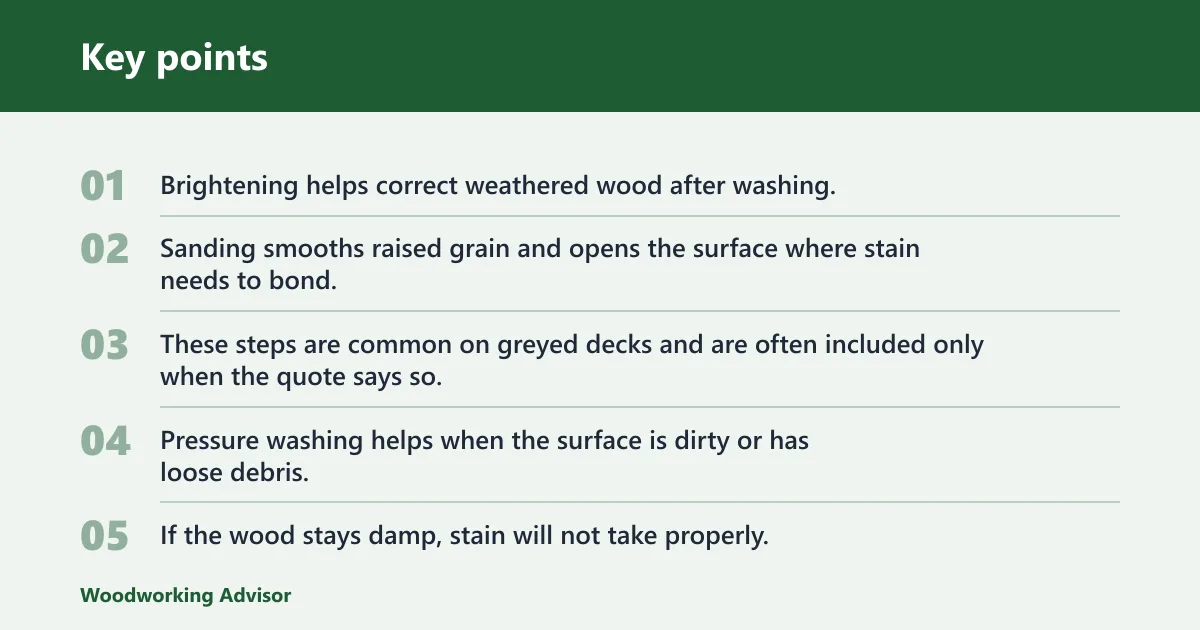
Cleaning removes dirt and surface grime. Brightening helps correct weathered wood after washing. Sanding smooths raised grain and opens the surface where stain needs to bond. These steps are common on greyed decks and are often included only when the quote says so.
Pressure washing and drying time
Pressure washing helps when the surface is dirty or has loose debris, but it does not replace proper drying. If the wood stays damp, stain will not take properly. That is why quotes often build in 24 to 48 hours, or 48 to 72 hours, before application.
A common first-timer mistake is assuming the washing fee is the whole prep bill. It is not. Drying time can hold the crew schedule open, and that time has labor value even if no one is spraying stain yet.
Stripping old paint or failing stain
Stripping is the biggest cost jump. If the old coating is peeling or the deck was painted before, the rate can rise to $2.50 to $5.50 per square foot. That is because the contractor has to remove the failed layer before any new coating can bond well.
Full stripping can add $300 to $700 to the total. Repainting a deck is published at $3 to $9 per square foot, which is why many owners prefer stain on deck floors when the wood is still in good shape.
How deck condition changes cost
Deck condition changes both the labor hours and the risk of callback. A clean, well-maintained deck is the cheapest to stain. Greyed, weathered, mildewed, painted, or peeling surfaces need more prep and often a more expensive finish plan.
Clean and well-maintained decks
These are the simplest jobs. The boards are sound, the coating is still performing, and the surface mainly needs washing and stain. Quotes for this type of deck usually track near the lower end of national ranges.
Greyed, weathered, or mildewed wood
Greyed wood usually needs cleaning and brightening before stain. Mildew or algae adds another layer of labor because the crew has to clean the growth and check that moisture is not trapped in the fibers. That extra time raises the bid even when the deck is not failing.
Previously painted or peeling surfaces
Painted decks are harder to price because the coating may need removal before a new stain or finish can go on. Peeling finishes almost always increase the quote. If the coating is already coming off in sheets, the job is no longer a basic restain.
What should be included in a quote?
A useful quote should spell out prep scope, product type, coverage on detail parts, and cleanup. If the bid only says “stain deck,” ask what that means. The answer should tell you whether cleaning, sanding, railings, stairs, and disposal are included.
- Prep scope: cleaning, brightening, sanding, stripping, and the expected dry time.
- Coverage area: deck boards only, or railings, stairs, posts, balusters, and fascia boards too.
- Product choice: clear sealer, semi-transparent, semi-solid, solid stain, or a paint system.
- Coat count: one coat or two, plus any back-brushing or touch-up work.
- Cleanup: masking removal, debris handling, and final site cleanup.
Railings are extra at $4 to $12 per linear foot. That matters because railings often take more time than the main deck surface, especially with balusters and corners. Small parts add labor quickly.
Stain type also belongs in the quote. Semi-transparent stain is recommended for most decks, and semi-transparent decks are restained every 2 to 3 years. Clear sealer usually gives the least color change, while semi-solid and solid stains cover more of the grain.
When should you restore instead of restain?
Restore instead of restain when the finish has failed, the wood is blotchy, or water no longer beads on the surface. If the deck only looks tired, stain may be enough. If the coating is peeling or flaking, restoration is usually the smarter spend.
Water beading test
Put a few drops of water on the wood. If they bead up, the coating still has some life left. If they soak in fast, the surface is no longer protected and a restain or restoration plan is needed.
Signs the finish has failed
Look for peeling edges, bare patches, soft gray fibers, and areas that hold moisture. Those signs point to a failed finish, not just normal fading. At that stage, a basic stain quote may be too low unless the contractor has inspected the full surface.
When stripping adds cost
Stripping is worth paying for when the old coating blocks adhesion. It changes the job from maintenance to restoration. If the deck was painted, or if an older stain is flaking, the added work is often unavoidable.
How often should a deck be restained?
Most stained decks need fresh coating every few years. Semi-transparent decks are restained every 2 to 3 years. Many homeowners stretch that to 3 to 5 years on shaded decks or decks with lighter use, but strong sun and heavy weather shorten the cycle.
Sun exposure and moisture
Direct sun breaks coatings down faster, especially on south- and west-facing boards. Moisture matters too. If the deck stays damp, mildew and algae return sooner, and the finish can fail before the wood should need another full service.
When maintenance timing shifts
If the deck still beads water and the color looks even, you may be able to wait. If the wood absorbs water quickly or looks patchy after rain, plan to restain sooner. That timing is usually cheaper than waiting for a full strip and repair cycle.
Frequently asked questions
How much does it cost to stain a deck professionally?
Most homeowners see professional pricing around $1 to $3 per square foot, with some markets landing at $1.50 to $4.50 per square foot. A typical deck often totals $500 to $1,500, while weathered surfaces with heavier prep can cost more.
What factors change the price of deck staining?
Deck size, wood condition, prep time, stain type, railings, stairs, and local labor rates all change the quote. A clean deck costs less than a greyed or peeling one because the labor is faster and the prep list is shorter.
Does deck prep add to the total cost?
Yes. Light sanding, brightening, pressure washing, and drying time all increase the final price when the deck needs them.
How much more does stripping an old finish cost?
Peeling paint or failing stain is the usual reason that cost appears.
Is staining a deck cheaper than painting it?
Usually yes, especially for deck floors. Repainting a deck is published at $3 to $9 per square foot, which is above common stain pricing. Stain is usually the better spend when the goal is protection and a natural wood look.
What size deck costs about $300, $600, or $1,200 to stain?
About $300 usually fits a very small deck near the low end of the market. Around $600 often fits a 12 x 16 deck with modest prep. About $1,200 usually points to a mid-size deck with more prep, railings, or a higher-end stain system.
Sponsored / affiliate links. As an Amazon Associate I earn from qualifying purchases. I may earn additional commission from eligible campaigns.