Is Tung Oil Waterproof? No, It’s Only Water-Resistant
No, tung oil is not waterproof – it’s water-resistant. Fully cured tung oil repels splashes, spills, and everyday moisture well, but it doesn’t form a continuous, impermeable film the way polyurethane or epoxy does, so it won’t protect wood from standing water or prolonged submersion. Even brands that market their tung oil as “waterproof” on the label are using the term loosely; the technical distinction actually matters for how you use it.
Waterproof vs. Water-Resistant: The Real Difference
The Real Deal on Tung Oil
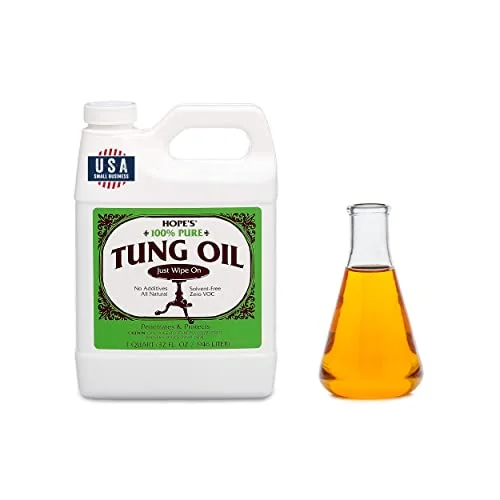 |
Hope’s 100% Pure Tung Oil, 32 fl oz Food-safe and genuinely 100% pure – not a “tung oil finish” blend cut with varnish and solvents.
|
A truly waterproof finish forms a continuous plastic-like film across the wood surface – think polyurethane, epoxy, or spar varnish – that physically blocks water from reaching the wood at all, as long as the film stays intact. Tung oil works completely differently: it soaks into the wood fibers and hardens inside them (a process called polymerization), which fills the wood’s pores and makes the surface repel water reasonably well, but it never creates a continuous surface film. That’s a meaningful structural difference, not just marketing semantics.
What This Means in Practice
| Scenario | Tung Oil Performance |
|---|---|
| Quick spill wiped up promptly | Handles this well |
| A wet glass sitting on the surface for hours | Can leave a ring or dark spot |
| Standing water or a submerged item | Will eventually penetrate – not protected |
| Outdoor exposure to rain over months | Needs frequent reapplication to keep working |
Real Tung Oil vs. “Tung Oil Finish”
This distinction matters as much as the waterproof question. Pure tung oil is exactly what it sounds like – oil pressed from tung tree seeds, nothing else. “Tung oil finish” (a common product name on hardware store shelves) is typically a blend of a small amount of actual tung oil cut with varnish, solvents, and driers, which behaves more like a thin wipe-on varnish than pure oil. The blended products often do build more of a surface film than pure tung oil and can offer somewhat better water resistance as a result – but check the label carefully, since “tung oil finish” and “pure tung oil” are genuinely different products with different real-world performance.
Why Tung Oil Cures So Slowly
Tung oil hardens through oxidative polymerization – it absorbs oxygen from the air and the individual oil molecules cross-link into a solid network, rather than drying through solvent evaporation the way lacquer does. This is the same basic chemistry linseed oil uses, but tung oil’s molecular structure (it’s rich in eleostearic acid, which has three conjugated double bonds) lets it cross-link more completely and resist water better once cured. The tradeoff for that better water resistance is a slower, more temperature- and humidity-sensitive cure: below 65°F or above 80% relative humidity, a coat that would normally set in 24 hours can take 48-72 hours, and rushing a second coat over an incompletely cured layer traps uncured oil underneath, which stays soft and tacky indefinitely.
Tung Oil vs. Other Common Wood Finishes
| Finish | Water Protection | Cure Time | Food Safe | Repair Difficulty |
|---|---|---|---|---|
| Pure Tung Oil | Water-resistant | ~30 days full cure | Yes | Easy – spot-recoat |
| Polyurethane | Waterproof (film) | 24-72 hrs per coat | Only food-safe rated versions | Hard – needs stripping/sanding |
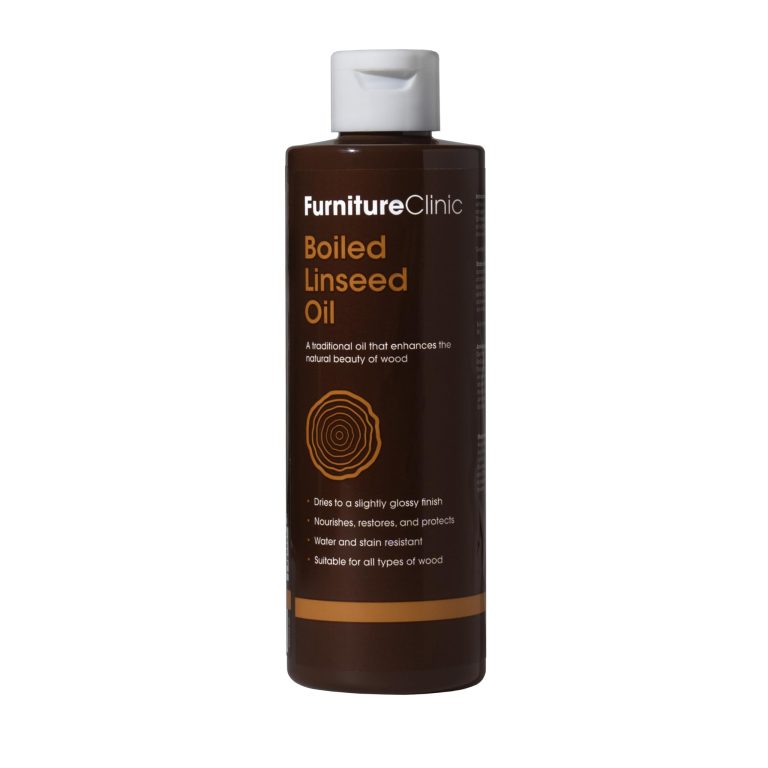
| Linseed Oil | Water-resistant (less than tung) | ~7-14 days | Boiled linseed: no (metal driers) | Easy – spot-recoat |
| Epoxy Resin | Waterproof (film) | 24-48 hrs | Only certified food-safe formulas | Very hard – often full removal |
This is the tradeoff in one table: film finishes like polyurethane and epoxy give you true waterproofing but are harder to repair when they eventually scratch or chip, since you’re often sanding back to bare wood. Penetrating oils like tung oil and linseed oil give up some water protection in exchange for a finish you can spot-repair in minutes with a rag and a little more oil – no stripping required. That’s a major reason tung oil stays popular for cutting boards specifically: they get scratched constantly, and an oil finish shrugs that off in a way a film finish can’t.
How to Apply Pure Tung Oil Correctly
- Sand the wood smooth (220-320 grit) and remove all dust before the first coat.
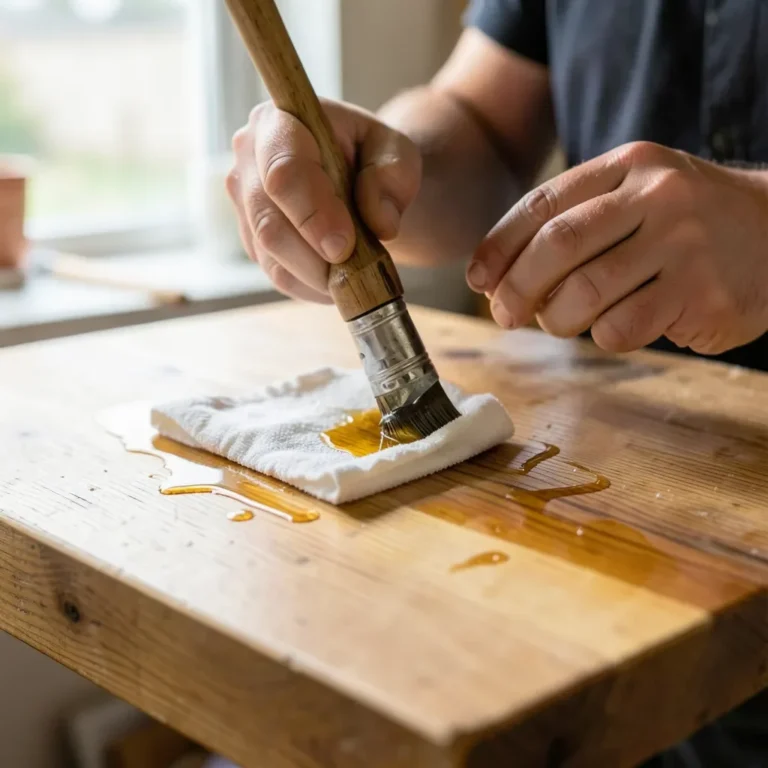
- Apply a thin coat with a lint-free cloth, working with the grain.
- Let it soak in for 20-30 minutes, then wipe off all excess – leftover surface oil gets tacky and never fully cures.
- Allow 24-72 hours between coats depending on humidity and temperature; pure tung oil cures much slower than most finishes.
- Apply at least 3-5 coats for real water resistance – a single coat gives minimal protection.
- Allow a full 30 days for the finish to fully cure before considering it at its maximum water resistance.
- Test water resistance before committing a piece to heavy use: drip a few drops on the cured surface and watch whether they bead up (good cure) or soak in and darken the wood (needs more coats or more cure time).
Best and Worst Uses for Tung Oil
- Good fit: Cutting boards and butcher blocks (food-safe, easy to spot-refresh), indoor furniture, tool handles, and any project where a natural look matters more than heavy-duty water protection.
- Poor fit: Outdoor furniture left fully exposed to weather without frequent reapplication, kitchen countertops around sinks, bathroom vanities, or anything that will see regular standing water.
A quick gut-check for whether tung oil fits a project: ask how often the surface will sit wet, and for how long. A cutting board gets rinsed and dried within minutes; a birdhouse left outdoors sits wet for days at a stretch during a rainy week. The first is squarely in tung oil’s comfort zone, and the second is where a true waterproof film finish, or at minimum a much more aggressive reapplication schedule, becomes worth the extra effort.
How Wood Species Affects the Result
Open-grained woods like oak and ash soak up more tung oil per coat than tight-grained woods like maple or cherry, since the oil has more pore volume to fill – this generally means better water resistance on oak once cured, but it also means more coats and more wiped-off excess before the surface stops feeling tacky. Very dense, oily woods like teak or rosewood can actually resist tung oil absorption altogether, since their natural oils already occupy the wood’s pores; a test patch on scrap of the same species before committing to a full project avoids finding this out on the finished piece. Softwoods like pine take tung oil unevenly because of the contrast between soft earlywood and hard latewood grain bands, which can leave visibly blotchy color unless a wash coat is applied first to even out absorption.
Maintenance to Keep It Working
Because tung oil doesn’t form a permanent film, its water resistance genuinely fades with wear and needs periodic renewal – unlike a film finish that stays protective until it physically fails. Reapply a fresh thin coat every 3-6 months on high-use surfaces like cutting boards, or annually on furniture that sees lighter use. Clean with mild soap and water, dry immediately rather than air-drying, and avoid harsh chemicals or dishwashers, both of which strip the cured oil out of the wood’s pores and shorten the finish’s working life.
Frequently Asked Questions
What are the disadvantages of tung oil?
Slow curing (up to 30 days for full cure), needs multiple coats for real protection, doesn’t form a true waterproof film, and requires periodic reapplication to maintain its water resistance.
How long before tung oil is water-resistant?
It offers some resistance after each coat cures (24-72 hours), but reaches its best water resistance after a full 30-day cure with 3-5 applied coats.
Does tung oil need a sealer?
Not strictly, but if you need genuine waterproofing (a kitchen counter, an outdoor piece in real weather exposure), adding a film-forming topcoat over cured tung oil gives you both the look of oil and the protection of a true waterproof film. A wipe-on polyurethane over cured tung oil is a common hybrid approach: it keeps most of the warm, low-sheen look people choose tung oil for, while adding a thin film layer that genuinely blocks standing water.
Does tung oil protect against water at all?
Yes, meaningfully – it’s a real, useful water-resistant finish for everyday spills and moisture. It’s specifically standing water and prolonged wet exposure that it doesn’t handle the way a true waterproof film finish would.
Conclusion
Tung oil is a genuinely good water-resistant finish, not a waterproof one – the difference matters for cutting boards left in a wet sink versus a piece that only sees occasional spills. Use it where its real strengths (natural look, food safety, easy spot repair) fit the project, and reach for a true film finish when the project genuinely needs waterproofing.
Sponsored / affiliate links. As an Amazon Associate I earn from qualifying purchases. I may earn additional commission from eligible campaigns.