Wood Finishing Guide: Stains, Oils, Sealers, Paint & Cure Times
If you’re applying polycrylic to a large flat surface like a floor or tabletop, see whether you can roll it on and the technique that actually prevents bubbles.
ragraph”>Wood finishing means applying a protective coating — penetrating oils, film-forming finishes like lacquer or polyurethane, or paint — that seals and often colors the wood grain. Skip a step, like rushing past 220-grit sanding, and even a premium finish from a brand like Osmo or Minwax will show runs, blotching, or peeling within months. This guide covers every finish type, how to choose between them, the step-by-step application process, and the mistakes that ruin most first attempts.For an existing finish, first check whether polyurethane can go over varnish, whether water-based polyurethane can go over an oil-based coat, understand what polyurethane can and cannot waterproof, and check how much polyurethane will darken your specific wood before committing a whole project to it. When the project is complete, follow the correct process to dispose of leftover polyurethane safely.
Quick Answer
Wood finishing has three main types: penetrating finishes (oils, stains) that soak in and show grain; film finishes (polyurethane, lacquer, varnish, shellac) that form a hard protective layer; and paint, which hides the grain. Most projects use a stain for color plus a clear film finish for protection.
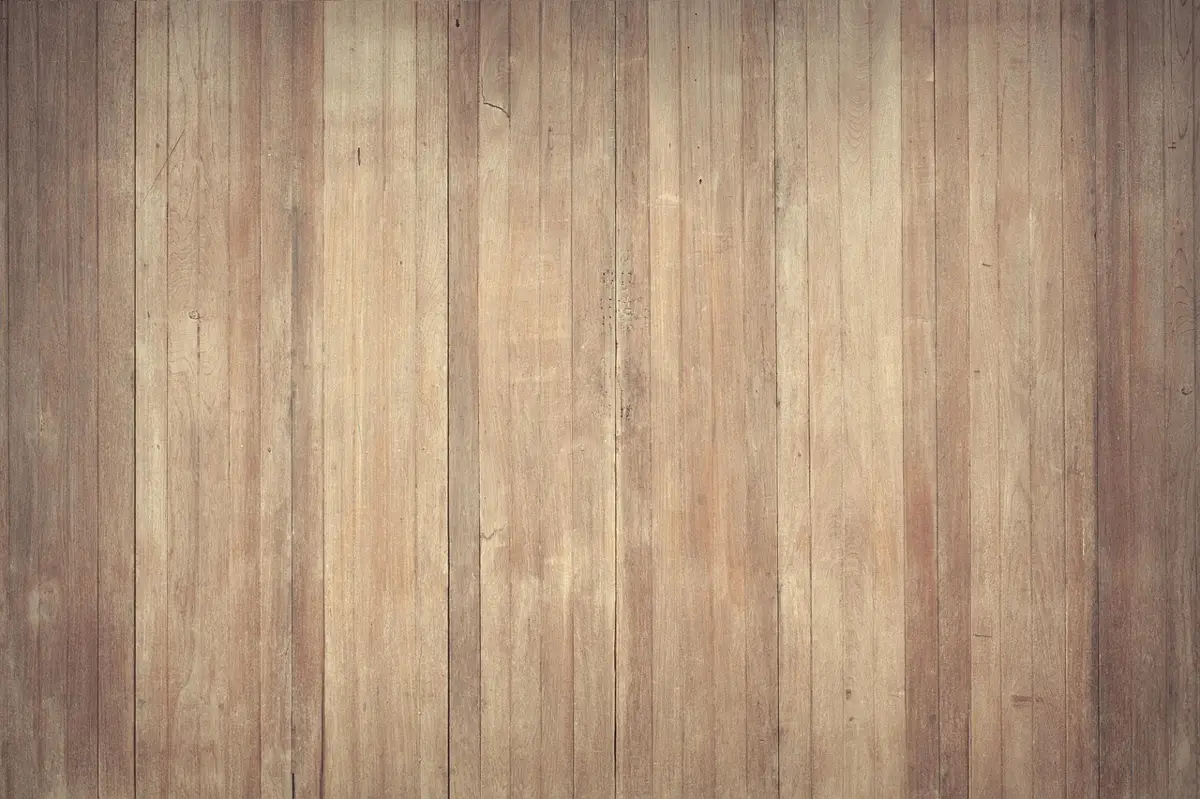
What are the main types of wood finish?
Best Finishing Essentials Pick
Minwax Oil-Based Wipe-On Polyurethane, 1 Quart, Satin
A wipe-on film finish that skips brush marks entirely — just apply with a cloth, the same motion used for staining.
- Best for: sealing any stained or bare wood project with a durable, easy wipe-on film finish
- Why we picked it: no brushing required, and satin sheen matches what most furniture projects call for
- Main drawback: oil-based formula ambers slightly and needs about 24 hours between coats — see how many coats you actually need for a full breakdown by project type
Compare more wood finishing essentials
 Option 1 Dura-Gold Tack Cloth, 6-Pack
|
 Option 2 Royal Brush Foam Brush, 3-Pack
|
 Option 3 3M Sanding Sponge, Medium Grit, 6-Pack
|
As an Amazon Associate we earn from qualifying purchases.
Every wood finish either soaks into the wood or forms a film on the surface. In our own finishing work, choosing between these two is the first decision:
- Penetrating finishes — oils (linseed, tung, Danish) and most wood stains soak into the fibers, enhancing grain with a natural, low-sheen look. Easy to apply and repair, but less surface protection.
- Film-forming finishes — polyurethane, lacquer, varnish, and shellac build a hard protective layer on top. Best durability and water resistance; harder to repair.
- Paint — an opaque film that hides the grain entirely; used when color matters more than the wood look.
Two supporting products round out finishing: sealers (prep/seal the surface, add water resistance) and waxes (a soft, low-protection top layer for sheen).
Want to see what each of these actually looks like on real wood before you pick one? Our wood finish examples guide lines up photos of oil, shellac, lacquer, wax, varnish, polyurethane, and paint side by side, with a comparison table of sheen, durability, and reapplication schedule for each.
Prep first: sanding before you finish
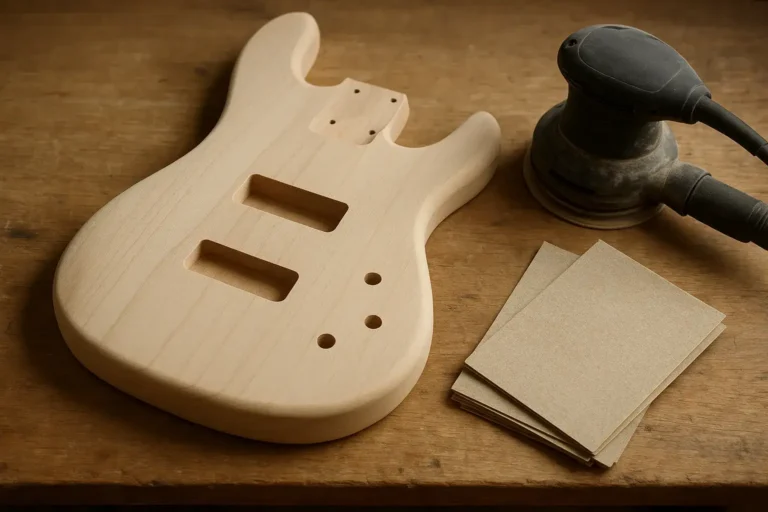
Surface prep determines up to 80% of your result — no finish can hide poor sanding. Start with 120-grit to remove imperfections, then step up to 180 and 220-grit, always sanding with the grain, not across it. Vacuum and wipe with a tack cloth to remove all dust before the first coat. On open-grain woods like oak and ash, apply grain filler first for a glass-smooth result. For furniture-specific grit selection by project stage, see our complete furniture sandpaper grade guide. For rough, unfinished lumber straight off the saw, start with our guide to smoothing out rough wood before you ever pick up a finish. Not sure which sandpaper type or grit pack to buy in the first place? See our guide to the best sandpaper for wood.
Wood stains (color)
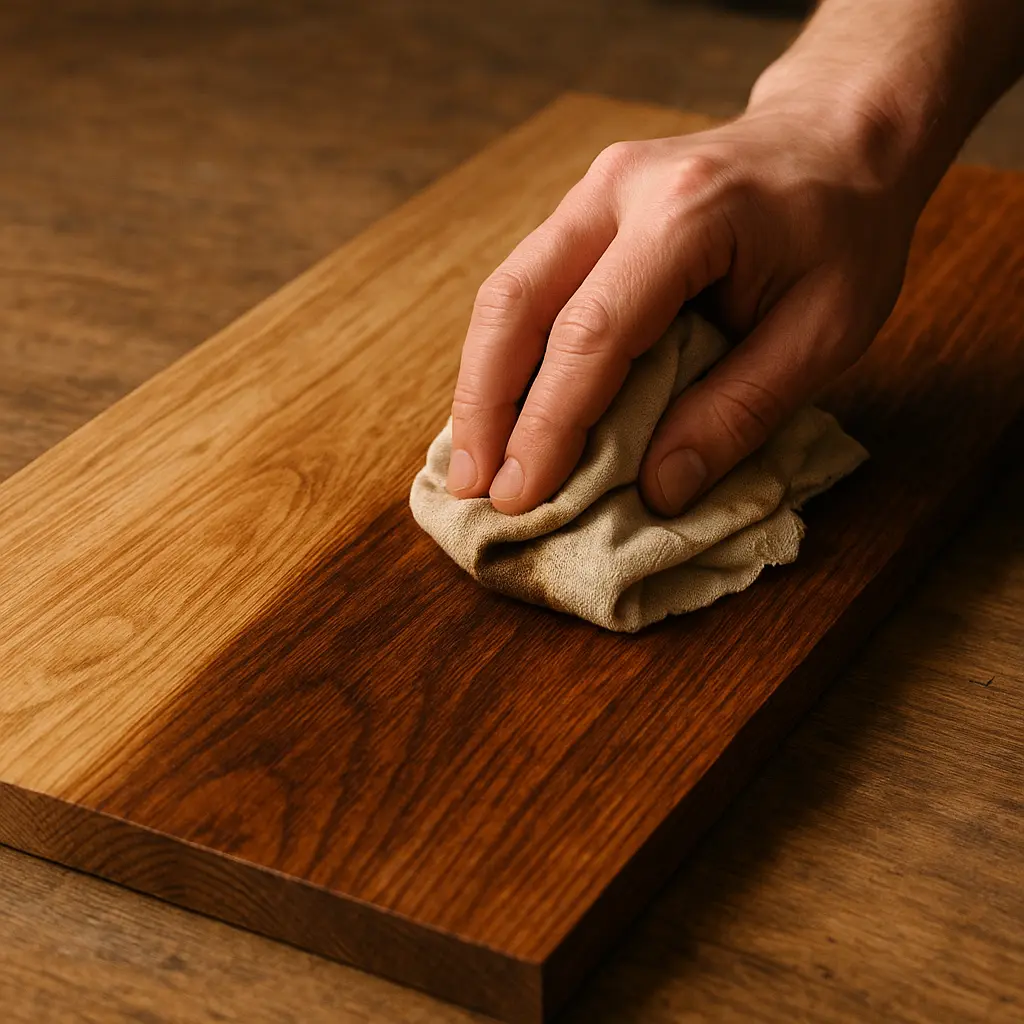
Stain adds color while letting the grain show. Match the brand chart to your wood and test on a scrap first — the same stain looks very different on pine versus oak, and stain typically dries lighter than it looks while wet, so judge the color only once it has fully dried. See the Sherwin-Williams, Minwax, and Behr stain color charts. After staining, always seal the wood to lock in color and add protection. Need to take an old finish off first? See our guide on wood stain removers for the solvent, caustic, and citrus-based options and which fits your situation. Just touching up a scratch or worn spot on an already-finished piece, not restaining the whole thing? See our guide to the wood finish stain marker for how it works and how to match the color.
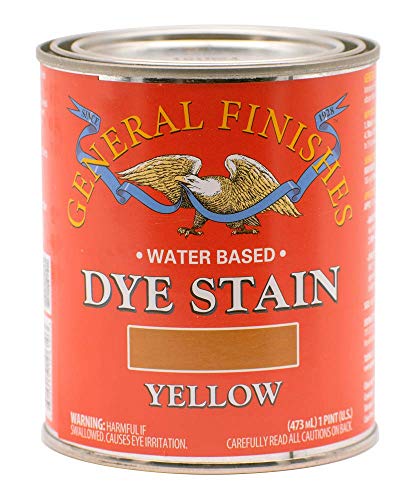
Stains come in a few types: pigment stains (colored particles that lodge in the grain — the most common), dye stains (transparent, richer color, ideal for figured wood), and gel stains (sit on top, great for blotch-prone or vertical surfaces). On softwoods like pine and maple, brush on a wood conditioner first to prevent blotchy, uneven color. And before you even open the can, make sure you’re reaching for the right applicator — our guide to choosing a stain brush breaks down natural vs. synthetic bristle and when to skip the brush entirely. Gel stain’s thick, non-drip body also makes it the easiest choice for a deliberate two-tone stain effect on the same piece. Alder is another species prone to blotching — see our full guide to finishing alder wood for the complete step-by-step process.
Buying more than you need is easy to do here — our quart of wood stain coverage guide breaks down real per-brand square-foot ratings and maps them to common project sizes, so you know whether a quart is enough before you’re standing at the paint counter.
Penetrating oils
Oils like linseed, tung, and Danish oil soak in for a warm, natural, easily-repaired finish — ideal for furniture and food-adjacent items. Learn how to apply linseed oil correctly (thin coats, wipe off excess, and dispose of oily rags safely). If the wood is already stained, see our guide on applying tung oil over stain for the exact cure times each stain type needs first.
Film finishes: polyurethane, lacquer, varnish & shellac
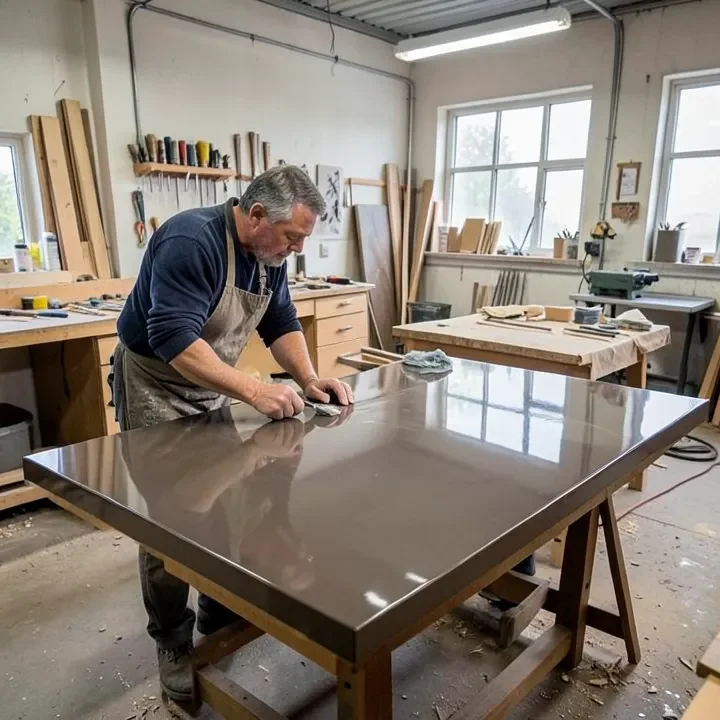
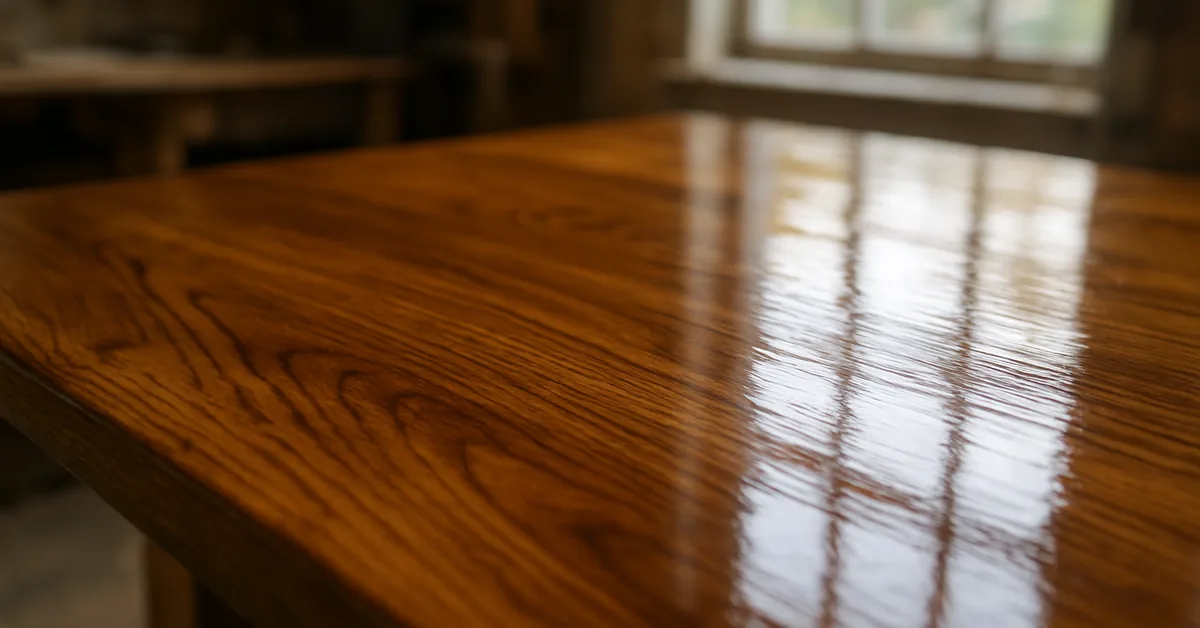
Film finishes give the toughest protection. Polyurethane (and water-based polycrylic) is the most popular for floors and tabletops — see how to apply Minwax Polycrylic, make your own wipe-on polyurethane by thinning it with mineral spirits, check whether Behr oil-based polyurethane is still sold in your state, or compare specific satin-sheen products in our satin clear coat roundup. Applying it with a sprayer instead of a brush? See tips for spraying Minwax polyurethane for thinning ratios and technique. Lacquer dries fast and sprays beautifully, though it’s only water-resistant, not waterproof; varnish handles outdoor/marine use — see how it stacks up directly against wood stain in our stain vs. varnish guide; shellac is a fast, natural sealer. Not sure whether a sanding-sealer pre-coat is worth the extra step before you topcoat? See our sanding sealer vs polyurethane breakdown. Pick your sheen — matte vs satin — before you start. Want to know how sheen and surface feel combine into one thing? See our guide to wood finish texture.
Hardwax oils (Osmo & Rubio Monocoat)
Hardwax oils are a modern hybrid — a penetrating oil blended with wax that soaks in yet leaves a thin, durable, natural-matte protective layer. Brands like Osmo Polyx and Rubio Monocoat cure in just one or two coats, are easy to spot-repair, and are food-safe once cured — a favorite for tabletops and floors where you want a natural look — see our comparison of eight rustic-look table finishes for the full cost and food-safety breakdown with real protection.
Painting wood
Paint hides the grain for a solid color. Prime first for adhesion, then use the right paint for the surface — see what kind of paint to use on wood. Know the difference between primer and paint so you prep correctly. When it is time to pick an actual product, our comparison of eight wood primers and undercoats ranks them by cost per 100 sq ft of published coverage. Not every species paints equally well, either — see our best wood for painted furniture breakdown before you pick a board for a painted piece. Once you’ve chosen a paint and a board, the last decision is how to apply it — our brush vs. spray paint guide breaks down which method wins for cabinets, furniture, and trim.
Sealers & waterproofing
Sealers block moisture and prep the surface. For outdoor wood, sealing is critical — for example, how to keep wood posts from rotting in the ground relies on proper sealing and end-grain protection. For a full walkthrough of sealant, oil, and wax options, see how to make wood water resistant.
Waxes
Wax adds a soft, hand-rubbed sheen and light protection, often over another finish. Paste wax is the classic choice — read why Johnson Paste Wax was discontinued and what to use instead. For a natural alternative, plain beeswax works as a wood finish too — white keeps pale wood neutral, yellow adds a warm amber tone.
Wood glue (prep & assembly)
Strong joints come before finishing. Match glue to the job — Gorilla Glue for gap-filling polyurethane bonds, PVA for general woodworking, and know cure times before stressing a joint. If the piece is already primed, check whether wood glue actually sticks to primer before you glue it.
Understanding sheen: matte, satin, semi-gloss & gloss
Sheen is how much light the finish reflects. Gloss is the raw finish; lower sheens are made by adding flatting agents — more added, flatter the look. Matte/flat hides scratches; satin is the popular all-rounder; semi-gloss and gloss are most durable and wipeable but show flaws. See matte vs satin, or our guide to where flat finish paint works on wood furniture.
Oil-based vs water-based finishes
Oil-based is tougher and adds warmth but dries slowly, smells strong, and ambers with age; water-based dries fast, stays clear, and cleans up with water:
| Factor | Oil-based | Water-based |
|---|---|---|
| Durability | Higher (best for floors) | High (great for most) |
| Dry time | Slow (8-24 hrs) | Fast (2-4 hrs) |
| Color | Warm amber, yellows | Clear, stays true |
| Odor / cleanup | Strong; mineral spirits | Low; soap and water |
| Best for | High-wear floors, dark wood | Light wood, indoor |
How long does each wood finish take to dry and cure?
“Dry” and “cured” are not the same thing — a finish can be dry to the touch in an hour and still weeks away from full hardness. Times below are typical for a single thin coat at room temperature; always check the product label, since formulas vary by brand.
| Finish | Touch-dry | Recoat time | Full cure |
|---|---|---|---|
| Water-based poly / polycrylic | 30-60 min | 2-4 hrs | 2-3 weeks |
| Oil-based polyurethane | 4-6 hrs | 8-24 hrs | Up to 30 days |
| Lacquer (sprayed) | 15-30 min | 30-60 min | 3-7 days |
| Shellac | 30-60 min | 1-2 hrs | 2-3 days |
| Penetrating oil (tung, Danish) | 4-8 hrs | 24 hrs | 3-4 days per coat, full cure over several weeks |
| Hardwax oil (Osmo, Rubio Monocoat) | 8-10 hrs | 24 hrs | 7 days light use, 3-4 weeks full cure |
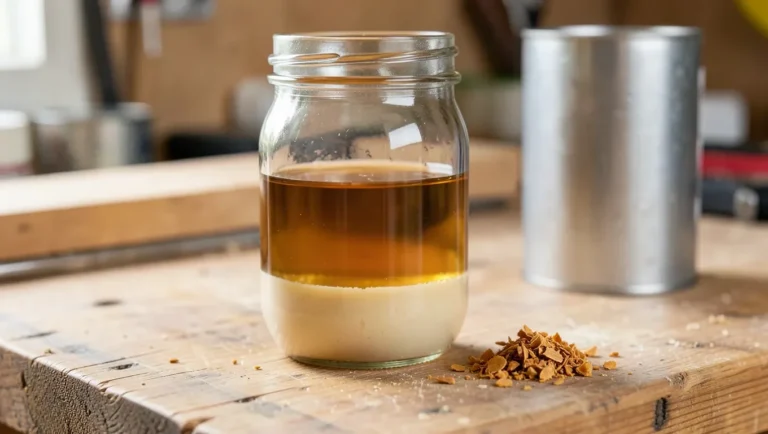
One more number worth knowing before you buy: mixed shellac has a shelf life of about a year, so don’t stock up years ahead — buy flakes or a small can and mix only what a project needs.
Food-safe wood finishes
For cutting boards, bowls, and utensils use a food-safe finish: food-grade mineral oil, pure tung oil, walnut oil, a beeswax/oil blend, or shellac. Polyurethane is food-safe only once fully cured (~30 days); most makers prefer a penetrating oil for items that meet knives and food because it is easy to reapply.
Small worn items need the same thinking: wood sunglasses frames sit against skin and sweat all day, so the right wood finish for sunglasses matters as much as it does for a cutting board, whether that means a re-oilable penetrating finish or a factory UV-cured coating.
Wood finish types compared
| Finish | Protection | Look | Difficulty | Best for |
|---|---|---|---|---|
| Penetrating oil | Low-Medium | Natural | Easy | Furniture, food items |
| Wax | Low | Soft sheen | Easy | Antiques, over finishes |
| Shellac | Medium | Warm, glossy | Medium | Sealing, indoor |
| Lacquer | Medium-High | Any sheen | Hard (spray) | Cabinets, fine work |
| Polyurethane | High | Any sheen | Medium | Floors, tabletops |
| Spar varnish | High (outdoor) | Satin-gloss | Medium | Outdoor, marine |
How to apply a wood finish (step by step)
- Sand & clean: sand to 220 grit with the grain, remove dust with a tack cloth.
- Stain (optional): apply evenly, wait, wipe off excess, let dry.
- First coat: thin, even coat with the grain — brush, wipe, or spray.
- Dry: follow label time (2-4 hrs water-based, 8-24 hrs oil-based).
- Sand between coats: hand-sand 320-grit, wipe clean. Never power-sand. See our guide on how to smooth wood after staining for the full post-stain sanding process.
- Repeat: at least 3 thin coats (4+ for floors), sanding between.
- Cure: let it harden fully before heavy use (up to 30 days for poly).
Common wood finishing mistakes to avoid
- Rushing the sanding — the #1 mistake; poor prep shows in every coat.
- Coats too thick — causes runs and drips; thin coats win.
- Not enough dry time — recoating too soon stays tacky. For paint specifically, see how long Behr paint needs between coats.
- Skipping between-coat sanding — leaves a rough, dust-flecked surface, and can weaken adhesion enough to cause peeling later. See what actually happens if you skip it.
- Finishing in dust or cold — ruins the final coat.
Safety: dispose of oily rags properly
⚠️ Rags soaked in oil-based finishes (linseed, tung, Danish oil, or teak oil) can spontaneously combust as they dry. Never ball them in the trash — lay them flat outdoors to dry fully, or seal them in a water-filled metal container before disposal.
Key wood finishing terms
Grain filler is a paste that fills the open pores of woods like oak and ash so a film finish dries glass-smooth.
Wood conditioner is a thin pre-stain sealer that evens out absorption on softwoods to prevent blotchy staining – it has to go on before the stain, since polyurethane applied afterward cannot fix uneven color.
Sanding sealer is a fast-drying base coat that seals the wood and sands easily, giving topcoats a smoother foundation.
Flatting agent is the additive that lowers a finish’s sheen — more of it makes matte, less makes gloss.
VOCs is the volatile solvents that evaporate as a finish dries; low-VOC water-based finishes have less odor and are more eco-friendly.
Curing is the full hardening of a finish over days to weeks, distinct from surface drying, which takes only hours.
Everything above covers picking and applying a finish yourself. If you’re weighing a DIY finish against hiring someone, see how professional finishers actually get a flawless coat — the equipment, techniques, and real cost difference.
How do you choose the right wood finish?
Match the finish to the use, the look you want, and the effort you can give:
| Goal | Best finish | Typical use |
|---|---|---|
| Natural look, easy repair | Penetrating oil (linseed, tung, Danish) | Furniture, carvings, food-safe items |
| Maximum durability / water | Polyurethane or spar varnish | Floors, tabletops, outdoor |
| Color + grain visible | Stain + clear topcoat | Most furniture |
| Solid color, hide grain | Primer + paint | Cabinets, trim, painted furniture |
| Fast, sprayable, pro look | Lacquer | Cabinetry, small pieces |
| Soft sheen / touch-up | Wax (often over another finish) | Antiques, low-wear pieces |
Frequently asked questions
What is the most durable wood finish?
For everyday durability, oil-based polyurethane is the toughest common finish for floors and tabletops. For outdoor and marine use, spar varnish resists sun and water best.
Do I need to seal wood after staining?
Yes. Stain adds color but little protection, so seal wood after staining with a clear finish (polyurethane, polycrylic, or varnish) to lock in the color and protect the surface.
What’s the difference between matte and satin finish?
Matte has almost no shine and hides scratches well; satin has a soft, low-gloss sheen that’s more durable and easier to clean. Satin is the most popular all-round choice.
Should I use oil-based or water-based polyurethane?
Oil-based poly is more durable and adds warmth but ambers over time and smells strong; water-based poly dries fast, stays clear, and has low odor. Use oil-based for high-wear floors, water-based for light-colored wood.
How many coats of finish should I apply?
Most finishes need 2–3 thin coats, sanding lightly between them. Thin coats level better and are far more durable than one thick coat.
What’s the difference between drying and curing a finish?
Drying means the surface is touch-dry (hours); curing means it has fully hardened through (days to weeks). Wait for a full cure before heavy use — polyurethane can take about 30 days.
Do you have to sand between coats of finish?
Yes, lightly. A quick hand-sand with 320-grit between coats removes dust nibs and helps the next coat bond. Wipe off the dust before recoating, and never power-sand between coats.
Sponsored / affiliate links. As an Amazon Associate I earn from qualifying purchases. I may earn additional commission from eligible campaigns.